Quick Verdict: A Commuter EV With Honest Limitations
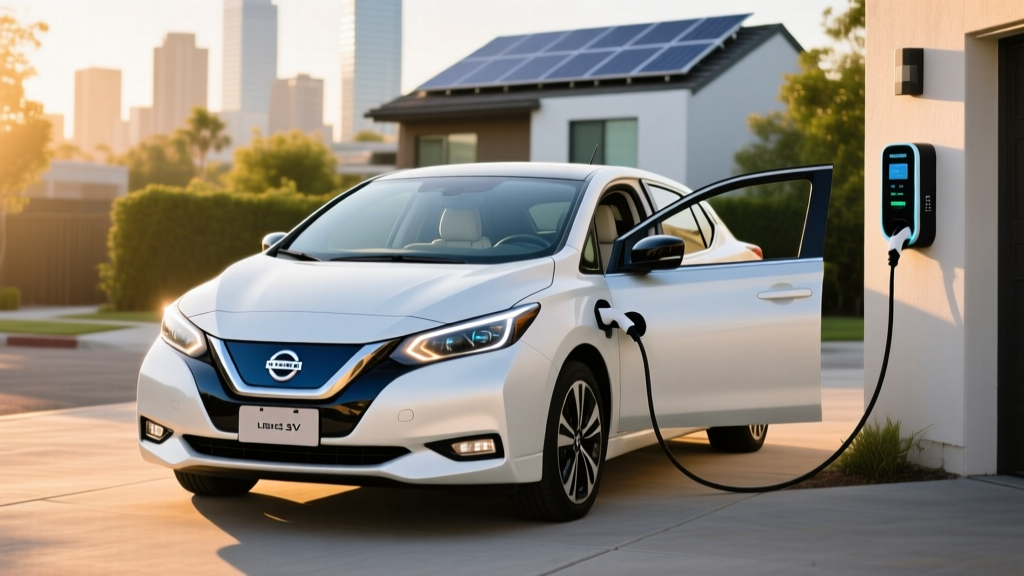
The 2022 Nissan Leaf SV occupies a specific niche in the used-EV market: an affordable, comfortable daily commuter with adequate city range but real compromises on highway road trips and DC fast charging. With the standard 62 kWh battery pack, the SV trim delivers a 149-mile EPA-estimated range, a 110 kW (147 hp) front-wheel-drive motor, and Nissan's ProPILOT Assist driver-assistance suite. In 2026, it competes not with new EVs but with a flood of off-lease and used EVs offering 200+ miles of range and faster charging — making the Leaf SV a value play for buyers who understand exactly what they're getting.
EPA sticker: 149 miles (combined)
Real-world expectation: ~120–135 miles on mixed highway driving at 70 mph; ~100–115 miles in sub-freezing winter conditions. City commuters using regenerative braking can approach or slightly exceed the EPA figure.
Why the gap: The Leaf SV's single-speed reduction gear, passive battery thermal management (air-cooled), and 40 kWh-equivalent usable capacity mean highway speeds and cold weather hit range harder than in liquid-cooled competitors.
2022 Nissan Leaf SV: Full Specification Table
| Spec | Value |
|---|---|
| EPA Range | 149 miles (combined) |
| Battery Capacity | 62 kWh total / ~58 kWh usable (NMC lithium-ion) |
| EPA Efficiency | 111 MPGe combined / 30 kWh per 100 miles |
| Motor / Drivetrain | 110 kW (147 hp) / 236 lb-ft torque, FWD |
| 0–60 mph | ~7.4 seconds |
| Max DC Fast Charge | ~50 kW peak (CHAdeMO connector) |
| DC 10–80% Time | ~60–70 minutes |
| Level 2 Home Charge | 6.6 kW onboard charger / ~25 miles per hour |
| Cargo Volume | 23.6 cu ft (rear seats up) / 30.0 cu ft (seats folded) |
| Battery Warranty | 8 years / 100,000 miles (capacity loss warranty: 9 bars of 12) |
| Original MSRP (SV trim) | $32,620 (before incentives) |
Range and Efficiency: The Numbers Behind the Commute
The 2022 Leaf SV uses Nissan's larger 62 kWh battery pack (the base S trim uses a smaller 40 kWh pack rated at 149 miles). Wait — both the S and SV with 62 kWh carry the same 149-mile EPA rating? That's correct for the 2022 model year: Nissan's EPA filing lists 149 miles for the standard Leaf and 212 miles for the Leaf Plus (which uses a larger 62 kWh pack in a different configuration with a 160 kW motor). The SV with the standard powertrain falls into the 149-mile category.
Real-world range reconciliation: On a 75°F day with mixed city/highway driving at moderate speeds (55–65 mph), expect 130–145 miles before reaching 10% State of Charge (SoC). Push highway speeds to 70–75 mph continuously and that drops to 115–130 miles. In winter conditions (below 32°F), the passive air-cooling system offers no battery preconditioning, and cabin heating draws directly from the traction battery — expect 95–115 miles of usable range. This is a meaningful limitation compared to liquid-cooled competitors like the Chevrolet Bolt EV or Hyundai Kona Electric.
Efficiency in practice: The EPA rates the Leaf SV at 111 MPGe combined (30 kWh/100 mi). Real-world energy consumption hovers around 28–33 kWh/100 mi depending on conditions. At an average US electricity rate of $0.16/kWh, that translates to roughly $4.50–$5.25 per 100 miles of driving — competitive with a 50 MPG hybrid on $3.50/gallon gas.
Charging Speed: The Leaf's Most Significant Compromise
If you're considering a 2022 Leaf SV as a used EV purchase, charging speed is the single most important factor to evaluate against your driving patterns. The Leaf uses the CHAdeMO DC fast-charging standard — not CCS or NACS — which limits your public charging options as networks increasingly standardize on NACS (Tesla Supercharger) and CCS.
| Charging Level | Power (kW) | Miles Added per Hour | Notes |
|---|---|---|---|
| Level 1 (120V household) | ~1.4 kW | ~4–5 mi/hr | Emergency/trickle only; full charge in ~40+ hours |
| Level 2 (240V home/public) | 6.6 kW (max onboard) | ~25 mi/hr | Full charge in ~9 hours; ideal overnight |
| DC Fast (CHAdeMO 50 kW) | ~50 kW peak | ~150 mi/hr (peak) | 10–80% in ~60–70 min; tapers significantly above 80% |
DC fast-charging reality check: The Leaf SV peaks at approximately 50 kW on a compatible CHAdeMO station. Unlike the Leaf Plus (which can reach ~100 kW), the standard SV is limited. On a 50 kW charger, a 10–80% session takes roughly 60–70 minutes. Worse, the Leaf's passive thermal management means repeated DC fast charges in warm weather trigger charge throttling — Nissan's battery management system reduces charge rate to protect cell temperatures, sometimes dropping to 20–30 kW on the second or third fast charge of the day. This phenomenon, known in the Leaf community as "Rapidgate," was improved in the 2022 model year compared to earlier generations but remains a factor on hot days or back-to-back charging sessions.
Home charging is where the Leaf shines: With a 6.6 kW Level 2 onboard charger and a ~58 kWh usable battery, a full overnight charge takes about 9 hours. Install a 240V/32A Level 2 home charger (a $500–$800 unit plus $600–$2,000 electrician installation depending on panel proximity), and you'll wake up to a full battery every morning. For a 30-mile round-trip commute, that's more than sufficient.
Performance and Drivetrain
The 2022 Leaf SV's 110 kW (147 hp) AC synchronous electric motor drives the front wheels through a single-speed reduction gear. Torque is rated at 236 lb-ft, available instantly from zero RPM. The result is a 0–60 mph time of approximately 7.4 seconds — adequate for highway merging and city driving but not sports-sedan quick. The instantaneous torque makes the Leaf feel peppy around town, even if the power delivery tapers noticeably above 50 mph.
Ride quality is a genuine strength. The Leaf's suspension tuning prioritizes comfort over sportiness, absorbing potholes and road imperfections with a composure that outclasses the firmer-riding Chevrolet Bolt EV. Cabin noise levels are low at city speeds, though wind and tire noise become more apparent above 65 mph. The e-Pedal system (Nissan's one-pedal driving mode with aggressive regenerative braking) works well for stop-and-go traffic, though it doesn't bring the car to a complete hold at very low speeds — you'll still need to use the friction brake to stop fully.
Interior, Tech, and Cargo
The 2022 Leaf SV interior is functional if dated. The 8-inch touchscreen infotainment system supports Apple CarPlay and Android Auto (wired), and the SV trim adds navigation and a 360-degree camera. Physical buttons for climate control and volume are a usability win over touch-only interfaces. However, the instrument cluster uses a mix of analog and digital displays rather than a full digital dash, and the overall material quality leans hard-plastic — acceptable at the original $32,620 MSRP, less impressive compared to a used Tesla Model 3 or Hyundai Ioniq 5.
Cargo space: 23.6 cubic feet behind the rear seats and 30.0 cubic feet with the 60/40 split rear seats folded. That's competitive for the compact EV hatchback segment (the Bolt EV offers 16.6 cu ft; the Kona Electric offers 19.2 cu ft). The Leaf's hatchback design makes it practical for grocery runs, luggage for two, or a folded bicycle. There is no front trunk (frunk) — the space under the hood houses the motor and power electronics.
Passenger space: Front legroom is 42.1 inches and rear legroom is 33.5 inches. The rear seat fits two adults comfortably for short trips but feels tight for tall passengers on longer drives. Headroom is generous front and rear thanks to the hatchback roofline.
Driver-assist technology: The SV trim includes Nissan's ProPILOT Assist, an SAE Level 2 system combining adaptive cruise control with lane-centering steering. It works well on divided highways and reduces fatigue on longer drives. Critical clarification: this is not self-driving. You must keep your hands on the wheel and eyes on the road at all times. The system will issue warnings and disengage if it detects driver inattention.
ProPILOT Assist is an SAE Level 2 driver-assistance system. It does NOT autonomously navigate intersections, stop lights, construction zones, or unmapped roads. The driver is legally and operationally responsible for the vehicle at all times. Hands-off-wheel detection will trigger escalating alerts and eventual system disengagement.
Pricing, Tax Credits, and 2026 Used-EV Value
The 2022 Nissan Leaf SV originally carried an MSRP of $32,620 (including destination). The base S trim started at $28,370, and the range-topping SL at $35,620. In 2026, used 2022 Leaf SV examples typically list between $14,000 and $19,000 depending on mileage, condition, and battery State of Health (SoH).
Federal tax credit — used-EV rules (IRS §25E): As a used vehicle purchase in 2026, the 2022 Leaf SV may qualify for the Used Clean Vehicle Credit under IRC §25E — up to $4,000 or 30% of the sale price, whichever is less. Key eligibility requirements:
- Sale price cap: Vehicle must be sold for $25,000 or less (most used Leaf SVs qualify)
- Buyer income limits: Adjusted gross income ≤ $75,000 (single), $112,500 (head of household), $150,000 (married filing jointly)
- Vehicle age: Must be at least 2 model years old (2022 model qualifies in 2026)
- Dealer requirement: Must be purchased from a licensed dealer; private-party sales do not qualify
- One-time use: The specific VIN can only receive this credit once
At a typical used price of $16,000, the 30% calculation yields $4,800, but the credit is capped at $4,000 — bringing your effective cost to approximately $12,000 after the credit. This is exceptional value for a 149-mile EV with ProPILOT Assist. Consult a tax professional to confirm your eligibility.
Battery Health, Warranty, and Longevity
The 2022 Leaf SV uses a 62 kWh NMC (nickel manganese cobalt) lithium-ion battery pack. Nissan provides an 8-year/100,000-mile battery capacity warranty, guaranteeing the pack will retain at least 9 of 12 capacity bars (approximately 70–75% of original capacity) during the warranty period.
The air-cooling concern: Unlike the liquid-cooled battery packs in the Bolt EV, Model 3, and Ioniq 5, the Leaf relies on passive air cooling. Over years of DC fast charging and hot-climate driving, this can accelerate degradation. Early-generation Leafs (2011–2017) showed significant capacity loss; the 2022 model benefits from improved cell chemistry and management, but the thermal limitation remains. If you live in a hot climate (Arizona, Texas, Florida) and plan frequent DC fast charging, expect faster degradation than a liquid-cooled competitor. Battery State of Health (SoH) can be checked via the dashboard's capacity bar display or a dealer diagnostic tool — always verify SoH before purchasing a used Leaf.
Battery replacement cost: Out-of-warranty, a 62 kWh Leaf battery replacement runs approximately $8,000–$10,000 including labor as of 2026. Third-party refurbished packs may be available for less, but official Nissan replacement is the standard reference.
Pros, Cons, and the Competition
- Low used purchase price + $4,000 federal credit potential
- Comfortable ride quality; quiet cabin at city speeds
- ProPILOT Assist (Level 2) included on SV trim
- Practical hatchback cargo space (23.6 cu ft)
- e-Pedal one-pedal driving for commuter convenience
- Proven reliability of Nissan's EV powertrain
- CHAdeMO connector — shrinking public network access
- 50 kW peak DC charge rate; 60+ min 10–80%
- 149-mile EPA range; ~100–115 mi in cold weather
- Passive air-cooled battery — degradation risk in heat
- Dated interior materials and infotainment design
- No battery preconditioning for fast charging
Key competitors in the 2026 used-EV market:
- 2022 Chevrolet Bolt EV (used ~$15,000–$20,000): 259-mile EPA range, CCS connector, 55 kW DC charging, liquid-cooled battery. Significantly more range and better charging infrastructure compatibility. The Bolt is the strongest alternative for most buyers.
- 2022 Hyundai Kona Electric (used ~$17,000–$22,000): 258-mile EPA range, CCS connector, 75 kW DC charging, liquid-cooled battery. More range and faster charging, but typically costs more on the used market.
- 2022 Tesla Model 3 Standard Range (used ~$22,000–$28,000): 272-mile EPA range, NACS connector, Supercharger access, 170 kW DC charging. A tier above in tech and charging speed, but at a higher price point.
Who Should Buy the 2022 Nissan Leaf SV?
- You have reliable Level 2 home charging and a commute under 60 miles round-trip
- Your budget is $12,000–$18,000 after tax credits and you want the lowest entry cost into EV ownership
- You rarely take road trips exceeding 100 miles one-way, or you have a second vehicle for longer drives
- You value ride comfort and ProPILOT Assist over cutting-edge infotainment
- You live in a moderate climate (not extreme heat) where passive battery cooling is less of a concern
- You need 200+ miles of range for regular highway driving or road trips
- You rely on public DC fast charging and need access to the growing NACS/Supercharger network
- You live in a hot climate and plan to keep the vehicle 5+ years (degradation risk)
- You want the fastest possible home or public charging speeds
Frequently Asked Questions
What is the real-world range of the 2022 Nissan Leaf SV?
The EPA rates the 2022 Leaf SV at 149 miles combined. In real-world mixed driving at moderate temperatures, expect 130–145 miles. Highway driving at 70+ mph reduces this to 115–130 miles, and winter conditions (below freezing) can drop usable range to 95–115 miles due to the lack of battery preconditioning and resistive cabin heating drawing from the traction battery.
How fast does the 2022 Leaf SV charge?
On a CHAdeMO DC fast charger, the Leaf SV peaks at approximately 50 kW, achieving a 10–80% charge in about 60–70 minutes. On a 240V Level 2 home charger, the 6.6 kW onboard charger adds roughly 25 miles of range per hour, fully charging the battery overnight in approximately 9 hours. Note that CHAdeMO stations are becoming less common as the industry shifts to NACS and CCS.
Does the 2022 Nissan Leaf SV qualify for a federal tax credit?
As a used vehicle in 2026, the Leaf SV may qualify for the IRS §25E Used Clean Vehicle Credit — up to $4,000 or 30% of the sale price, whichever is less. The vehicle must be purchased from a dealer for $25,000 or less, and the buyer must meet income caps ($75K single / $150K joint). It does not qualify for the new-vehicle §30D credit, which expired for this model year. Always verify eligibility with a tax professional and the IRS guidelines.
Is the 2022 Leaf SV worth buying versus a used Chevrolet Bolt EV?
For most buyers, the used Bolt EV is the stronger choice: it offers 259 miles of EPA range (vs. 149), CCS charging compatibility (vs. CHAdeMO), a liquid-cooled battery (vs. air-cooled), and a comparable used price. The Leaf SV wins on ride comfort, ProPILOT Assist availability, and potentially lower purchase price — but the range and charging infrastructure gaps are significant. If your commute is short and you charge at home, the Leaf SV's comfort and value make it viable. For anything beyond that, the Bolt EV is the more future-proof used EV.
How long will the 2022 Leaf SV battery last?
Nissan warranties the battery for 8 years or 100,000 miles against capacity loss below 9 of 12 bars (~70–75% SoH). With moderate use and home Level 2 charging in a temperate climate, many Leaf owners report 85–90% SoH after 5 years. Heavy DC fast charging in hot climates accelerates degradation. Always check the battery capacity bars on the dashboard before purchasing a used Leaf.