The 2019 Audi e-tron Premium Plus at a Glance
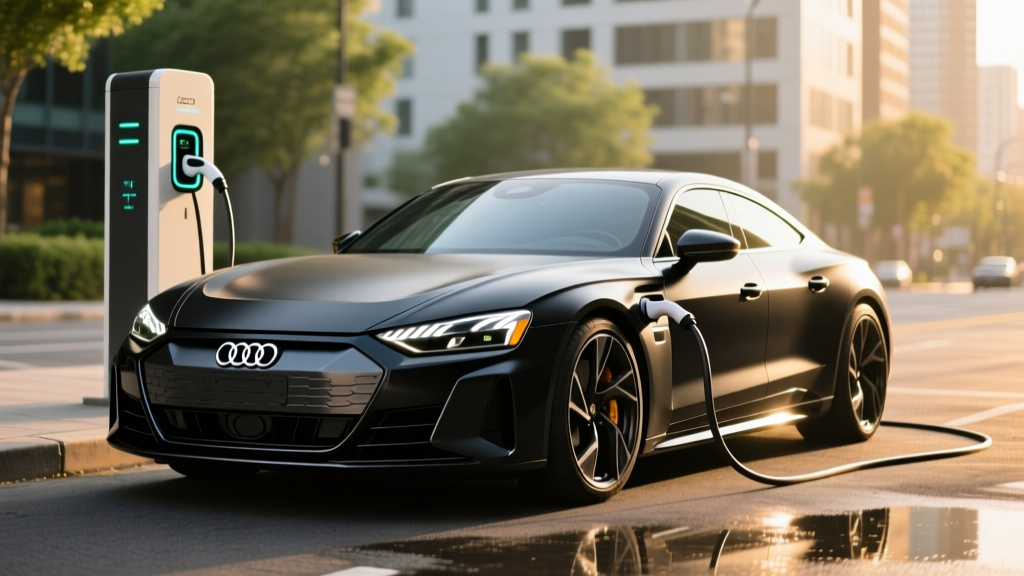
Audi's first mass-production electric SUV arrived for the 2019 model year as a direct competitor to the Tesla Model X and Jaguar I-PACE. The Premium Plus trim sat in the middle of the lineup, offering a well-equipped luxury EV experience without the top-tier Prestige price tag. Now in 2026, the 2019 e-tron is firmly a used-EV proposition — but one that remains compelling for buyers who prioritize build quality, ride refinement, and DC fast-charging capability over headline-grabbing range figures.
This review breaks down what you need to know before purchasing a 2019 Audi e-tron Premium Plus on the used market, including real-world range expectations, charging speeds, battery health considerations, and whether it still qualifies for any federal tax incentives.
| Specification | Value |
|---|---|
| EPA Range | 204 miles |
| Battery (Usable / Gross) | 83.6 kWh / 95 kWh (NMC) |
| DC Fast-Charge Peak | 150 kW (CCS1) |
| 10–80% DC Charge Time | ~30 minutes |
| Level 2 Home Charging | 11.5 kW (~25 mi/hr) |
| 0–60 mph | 5.5 seconds |
| Horsepower / Torque | 355 hp (402 hp boost) / 414 lb-ft (490 boost) |
| Drivetrain | Dual-motor AWD (quattro) |
| MPGe (Combined) | 74 MPGe |
| Efficiency | 46 kWh/100 mi |
| Cargo Volume (behind 2nd row) | 28.5 cu ft (57.0 cu ft folded) |
| Original MSRP (Premium Plus) | $75,795 (before destination) |
| Battery/Powertrain Warranty | 8 years / 100,000 miles |
Real-World Range: What to Actually Expect
Real-World Highway (70 mph, mild weather): ~170–185 miles
Real-World City/Mixed: ~185–200 miles
Cold Weather (below 32°F): ~140–165 miles (20–30% reduction)
The 2019 e-tron's 204-mile EPA rating was modest even at launch, and it remains the vehicle's most debated characteristic. Audi deliberately engineered a large top and bottom battery buffer — roughly 12 kWh of the 95 kWh gross capacity is locked off — to protect long-term battery health and sustain repeatable fast-charging speeds. That engineering choice sacrifices range on paper but yields measurable benefits in battery longevity.
In practice, expect about 170–185 miles on a highway road trip at 70 mph in moderate temperatures. City and mixed driving with regenerative braking can push closer to the EPA figure. In cold weather (below freezing), the e-tron's range drops meaningfully to roughly 140–165 miles. The e-tron uses a resistive PTC heater rather than a heat pump, which draws significant energy from the traction battery in winter. If you live in a cold climate, plan your routes around charging stops accordingly.
According to fueleconomy.gov, the 2019 e-tron achieves 74 MPGe combined (73 city / 74 highway), translating to 46 kWh per 100 miles. That efficiency figure is on the high side for the segment — the Tesla Model X 100D of the same era used roughly 38 kWh/100 mi — but the e-tron compensates with its ability to sustain high charging speeds.
Charging Speed: The e-tron's Hidden Strength
| Charging Level | Power (kW) | Speed | Notes |
|---|---|---|---|
| Level 1 (120V household) | ~1.4 kW | ~3 mi/hr | Emergency/trickle only |
| Level 2 (240V home/public) | 11.5 kW | ~25 mi/hr | Full charge in ~8.5 hours |
| DC Fast Charge (CCS1) | 150 kW peak | ~165 mi/hr (peak) | 10–80% in ~30 min |
The e-tron's charging architecture is where Audi's buffer strategy pays off. Unlike many competitors that hit a peak kW number and taper almost immediately, the 2019 e-tron sustains close to its 150 kW peak from roughly 10% through 70% state of charge. This flat charge curve means real-world charging sessions at a 150+ kW DC fast charger deliver consistently fast results — you're not watching the rate collapse at 50%.
A 10–80% session takes approximately 30 minutes on a capable DC fast charger. On Electrify America's 150 kW and 350 kW stations, the e-tron pulls its maximum rate without issue. The CCS1 connector is standard, and with the industry's shift toward NACS (Tesla's connector), CCS remains widely supported at non-Tesla networks including Electrify America, EVgo, and ChargePoint.
At home, the onboard 11.5 kW charger replenishes the battery at roughly 25 miles of range per hour. A full charge from near-empty takes about 8.5 hours on a Level 2 home station. Audi originally included a complimentary 1,000 kWh of Electrify America charging with new purchases — check whether any of that allocation transfers with a used vehicle (it typically does not, as it was tied to the original owner's account).
Performance, Ride Quality, and Drivetrain
The 2019 e-tron uses a dual-motor all-wheel-drive configuration Audi markets as electric quattro. The front motor produces 184 hp and the rear motor 224 hp, for a combined 355 hp in normal driving. Engaging Boost mode (via the transmission selector) temporarily raises output to 402 hp and 490 lb-ft of torque for 60-second bursts — enough to drop the 0–60 mph time from 5.5 seconds to approximately 5.1 seconds.
The e-tron's adaptive air suspension delivers a plush, compliant ride that is genuinely a class standout. Where the Tesla Model X feels sporty and firm, the e-tron prioritizes comfort, making it an excellent highway cruiser. The cabin is remarkably quiet at speed, aided by acoustic laminated glass on the Premium Plus trim. Towing capacity is rated at 4,000 pounds when properly equipped — useful for light trailer or small boat duty.
Regenerative braking on the 2019 e-tron is modest by EV standards. Audi opted for a coasting-focused approach rather than aggressive one-pedal driving. The regen can be adjusted via steering-wheel paddles (three levels), but even at maximum, it won't bring the car to a complete stop. Drivers transitioning from a Tesla or Nissan LEAF may find the regen feel underwhelming.
Interior, Cargo, and Technology
The Premium Plus trim includes Audi's Virtual Cockpit (12.3-inch digital instrument cluster), dual-touchscreen MMI infotainment (10.1-inch upper, 8.6-inch lower), Apple CarPlay, Android Auto, navigation, and a 16-speaker Bang & Olufsen sound system. The interior materials — real leather, open-pore wood, aluminum trim — are a clear step above the Tesla Model X's minimalist cabin and rival the best in the luxury SUV segment.
Passenger space is generous for five occupants:
- Front legroom: 40.0 inches
- Rear legroom: 39.1 inches
- Headroom (front/rear): 38.6 / 38.1 inches
Cargo volume measures 28.5 cubic feet behind the second row and 57.0 cubic feet with the rear seats folded. There is no front trunk (frunk) — the space under the hood houses electronics and HVAC components. A small under-floor storage compartment in the rear adds about 2.0 cubic feet for charging cables.
Driver-assistance features on the Premium Plus include adaptive cruise control with stop-and-go, lane-keeping assist, traffic sign recognition, parking system plus with 360-degree cameras, and Audi pre sense basic/city (forward collision warning with automatic emergency braking). These are SAE Level 2 driver-assist systems — they require continuous driver attention and hands on the wheel. This is not a self-driving vehicle.
Pricing, Used Market Value, and Tax Credits in 2026
| Item | Amount |
|---|---|
| Original MSRP (Premium Plus, before destination) | $75,795 |
| Original MSRP (with destination & typical options) | $78,000–$84,000 |
| Estimated 2026 Used Market Price (50k–80k mi) | $28,000–$38,000 |
| Federal Used EV Tax Credit (§25E, if eligible) | Up to $4,000 (30% of sale price, capped) |
| Effective Price After Potential Credit | ~$24,000–$34,000 |
The 2019 e-tron Premium Plus originally started at $75,795 before destination, with well-optioned examples reaching $82,000–$84,000. On the 2026 used market, examples with 50,000–80,000 miles typically trade between $28,000 and $38,000 depending on condition, mileage, and battery state of health.
Federal tax credit eligibility for used buyers: The 2019 e-tron is no longer eligible for the new-vehicle §30D credit (which applies only to new purchases). However, it may qualify for the §25E Previously-Owned Clean Vehicle Credit, which provides up to $4,000 (30% of the sale price, capped at $4,000). Key requirements per the IRS include:
- Sale price must be $25,000 or less
- Buyer income caps: $75,000 single / $112,500 head of household / $150,000 joint filers (modified AGI)
- Vehicle must be at least 2 model years old (2019 qualifies in 2026)
- Vehicle must have a battery capacity of at least 7 kWh (e-tron's 95 kWh gross exceeds this)
- Purchased from a licensed dealer (private-party sales do not qualify)
- Credit is non-refundable and can only be claimed once per vehicle VIN across its lifetime
Note that the $25,000 sale-price cap is restrictive: many 2019 e-tron Premium Plus examples list above that threshold. Buyers targeting the credit should negotiate purchase price to $25,000 or below and verify the VIN has not previously been claimed under §25E. Always consult a tax professional before relying on credit eligibility.
Battery Health, Degradation, and Warranty
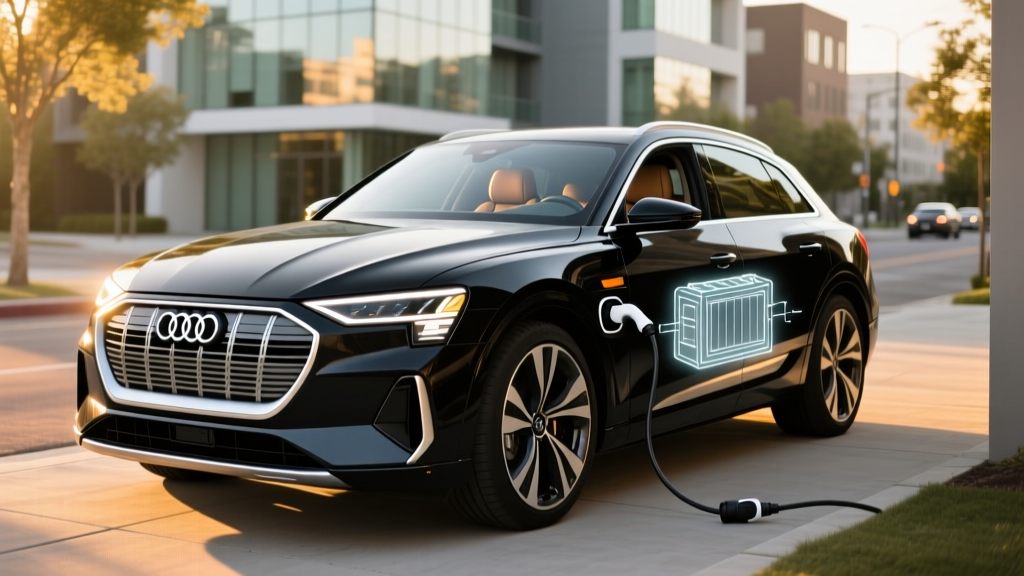
The 2019 e-tron's 95 kWh (gross) / 83.6 kWh (usable) battery pack uses NMC (nickel-manganese-cobalt) lithium-ion chemistry supplied primarily by LG Chem. Audi's conservative buffer strategy — locking away roughly 6 kWh at the top and 6 kWh at the bottom — has proven effective at limiting degradation.
Real-world data from owner communities and fleet analyses suggest the 2019 e-tron battery retains approximately 90–94% of its usable capacity after 80,000 miles and 5–6 years of use. That translates to a range loss of roughly 12–20 miles from the original 204-mile EPA figure — noticeable but not alarming.
Audi's battery warranty covers 8 years or 100,000 miles (whichever comes first) against defects and capacity loss below a defined threshold. For the 2019 model year, that warranty window extends through 2027 or until the odometer hits 100,000 miles. If you're buying a 2019 e-tron with 65,000 miles in early 2026, you still have roughly 1–2 years and 35,000 miles of battery warranty coverage remaining.
Before purchasing, request a battery state-of-health (SoH) reading from an Audi dealer or use an OBD-II diagnostic tool compatible with the e-tron's BMS. A SoH reading above 90% is typical and healthy; below 85% warrants caution and potential warranty investigation.
Pros and Cons
Pros
- Exceptional ride quality and cabin quietness — true luxury EV comfort
- Sustained 150 kW DC fast-charging with flat charge curve
- Premium interior materials that outclass Tesla competitors
- Standard AWD (electric quattro) with 4,000-lb towing capacity
- Conservative battery management promotes long-term SoH
- Potential eligibility for $4,000 used-EV tax credit (§25E)
Cons
- 204-mile EPA range is short for the segment, even at launch
- No heat pump — significant cold-weather range penalty
- Modest regenerative braking; no true one-pedal driving
- High energy consumption (46 kWh/100 mi) increases charging costs
- No front trunk (frunk) for charging cable storage
- Infotainment dual-screen setup can be distracting and slow to respond
Who Should Buy the 2019 Audi e-tron Premium Plus?
Choose the 2019 e-tron Premium Plus if: You want a luxury electric SUV with outstanding ride comfort and build quality, you primarily commute or drive regionally (under 180 miles between charges), you have access to reliable Level 2 home charging, and you value sustained fast-charging on road trips over maximum range.
Look elsewhere if: You regularly drive 250+ miles between charging stops, you live in a very cold climate where the range penalty compounds, you prioritize one-pedal driving and aggressive regen, or you need maximum cargo space with a frunk.
The 2019 e-tron Premium Plus is best suited as a daily commuter and regional road-tripper for buyers who value luxury refinement. Its 204-mile range is manageable with home charging and planned DC fast-charging stops, but it requires more route awareness than a 300+ mile EV like the Tesla Model X or Rivian R1S. For a two-car household where the e-tron handles daily duties and a gas or long-range vehicle covers extended trips, the trade-offs are very livable — especially at 2026 used-market prices.
Frequently Asked Questions
What is the real-world range of the 2019 Audi e-tron Premium Plus?
Expect 170–185 miles on the highway in moderate weather, 185–200 miles in mixed city/highway driving, and 140–165 miles in cold weather below freezing. The EPA sticker reads 204 miles, but real-world conditions — especially highway speeds and cold temperatures — reduce that figure noticeably.
How fast does the 2019 e-tron charge at home and on the road?
On a Level 2 home charger (240V, 48A), the e-tron charges at 11.5 kW, adding roughly 25 miles of range per hour for a full charge in about 8.5 hours. On a DC fast charger, it peaks at 150 kW and sustains that rate unusually well, reaching 10–80% in approximately 30 minutes.
Does the 2019 Audi e-tron qualify for a federal tax credit in 2026?
Not the new-vehicle §30D credit. However, it may qualify for the §25E Previously-Owned Clean Vehicle Credit of up to $4,000 if the sale price is $25,000 or less, buyer income is under the cap ($75k single / $150k joint), and the vehicle is purchased from a licensed dealer. Verify VIN eligibility and consult a tax professional before purchase.
Is the 2019 e-tron worth buying over a used Tesla Model X?
It depends on priorities. The e-tron wins on ride comfort, cabin quietness, interior material quality, and sustained fast-charging reliability. The Model X wins on range (289–325 mi EPA depending on variant), Supercharger network access, over-the-air updates, and cargo versatility (optional third row, standard frunk). If luxury comfort matters most, the e-tron is the stronger choice; if range and tech ecosystem matter most, the Model X edges ahead.
How long will the 2019 e-tron battery last?
Audi's NMC battery pack with its conservative buffer strategy shows approximately 90–94% capacity retention after 80,000 miles based on owner data. The battery warranty covers 8 years / 100,000 miles (through 2027 for 2019 models). Out-of-warranty battery replacement, if ever needed, is estimated at $15,000–$25,000 depending on labor and parts availability.
What connector does the 2019 e-tron use?
The 2019 e-tron uses the CCS1 (Combined Charging System) connector for both Level 2 AC and DC fast charging. It is compatible with Electrify America, EVgo, ChargePoint, and other CCS-equipped networks. It does not natively support Tesla's NACS connector; a CCS-to-NACS adapter (available from Tesla and third parties) is needed for Supercharger access where permitted.