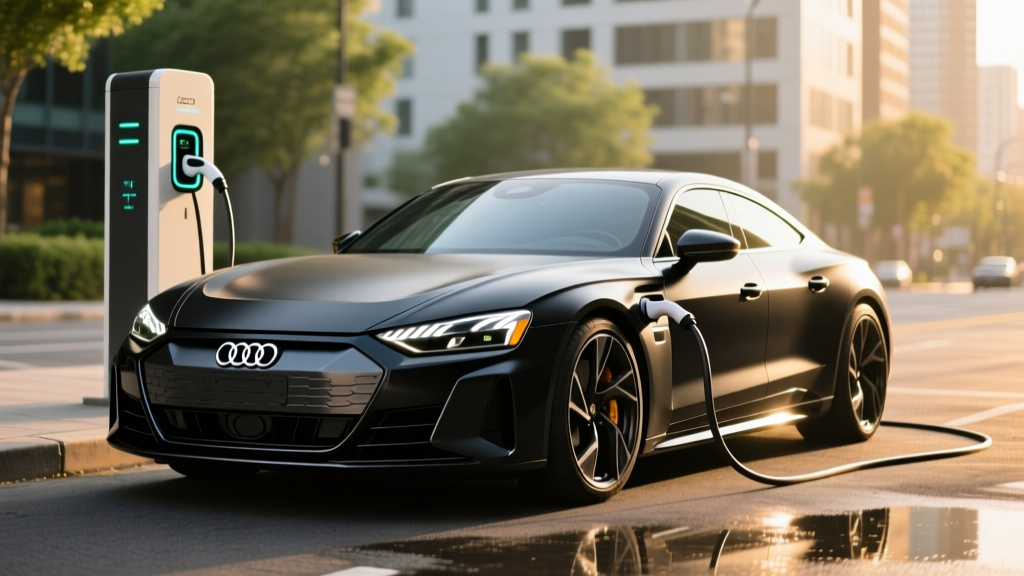
Quick Verdict: The 2026 Audi e-tron GT
The 2026 Audi e-tron GT is a luxury electric grand tourer that trades maximum range for striking design, 800-volt charging architecture, and Porsche Taycan-shared underpinnings. With an EPA-estimated 238 miles of range in base form and up to 300 miles in the revised e-tron GT quattro variant, it sits below rivals like the Mercedes-AMG EQS and Lucid Air on distance-per-charge but compensates with one of the fastest charging curves in the luxury EV segment. If you prioritize build quality, 800V fast-charging capability, and understated performance over range bragging rights, the e-tron GT remains a compelling — if expensive — proposition.
| Specification | e-tron GT quattro | RS e-tron GT Performance |
|---|---|---|
| EPA Range | 300 mi (est.) | 278 mi (est.) |
| Battery (usable) | 97.0 kWh (NMC) | 97.0 kWh (NMC) |
| Horsepower | 522 hp (boost) | 912 hp (boost) |
| 0-60 mph | 3.9 sec | 2.5 sec |
| Drivetrain | Dual-motor AWD | Dual-motor AWD |
| Max DC Charge Rate | 320 kW | 320 kW |
| 10-80% DC Time | ~18 min | ~18 min |
| Level 2 Rate | 11 kW (~33 mi/hr) | 11 kW (~33 mi/hr) |
| MPGe (combined) | 85 MPGe | 78 MPGe |
| Base MSRP | $107,995 | $164,995 |
| Battery Warranty | 8 yr / 100,000 mi | 8 yr / 100,000 mi |
Real-World Range: What the EPA Sticker Doesn't Tell You
The 2026 Audi e-tron GT receives an updated battery pack for this model year, moving to a 97.0 kWh usable capacity (up from 83.7 kWh in prior years). This is a nickel-manganese-cobalt (NMC) lithium-ion pack — chosen for its higher energy density versus LFP chemistry, which matters in a low-slung sedan where packaging space is limited.
EPA Estimate: 300 miles (e-tron GT quattro) / 278 miles (RS e-tron GT Performance)
Real-World Expectation: Plan for approximately 240-260 miles on a mixed highway commute at 70-80 mph. In cold weather (below 32°F), expect a 15-25% reduction, dropping effective range to roughly 200-220 miles for the quattro trim. The e-tron GT's standard heat pump helps mitigate winter losses compared to EVs without active thermal management, but highway speeds and low temperatures remain range killers for any EV.
Audi's efficiency rating of 85 MPGe combined (quattro) translates to roughly 39 kWh per 100 miles. That's competitive with the Taycan 4S but trails the Lucid Air Pure (146 MPGe combined) and BMW i5 eDrive40 (97 MPGe). The trade-off for the e-tron GT's all-wheel-drive grip, heavier curb weight (~5,100 lbs), and wide performance tires is measurably higher energy consumption.
For context, a 300-mile highway road trip at sustained 75 mph in 45°F weather will likely require one DC fast-charge stop. Plan your route around Electrify America or compatible 350 kW stations to take advantage of the 800V architecture.
Charging Speed: 800V Architecture Pays Off
The e-tron GT shares its J1 platform with the Porsche Taycan, and that means 800-volt charging architecture — a genuine differentiator in a segment where many luxury EVs still rely on 400V systems. Higher voltage allows the e-tron GT to accept more power at the charger without requiring extreme current, which translates to faster sustained charging and less thermal stress on the battery.
| Charging Level | Power / Voltage | Speed |
|---|---|---|
| Level 1 (120V household) | 1.4 kW | ~4 mi/hr added |
| Level 2 (240V home) | 11 kW | ~33 mi/hr added (full charge in ~9.5 hr) |
| DC Fast Charge (peak) | 320 kW (800V) | 10-80% in ~18 min |
Understanding the charge curve: The 320 kW peak rate is available only between roughly 10-40% state of charge (SoC) at a compatible 350 kW station. Above 50%, the rate tapers progressively — expect ~150-180 kW through 60%, dropping to under 100 kW past 80%. This is normal lithium-ion behavior: the battery management system reduces current as cells approach full to protect longevity. The 10-80% window is where the e-tron GT shines, adding roughly 200 miles of range in under 20 minutes under optimal conditions (preconditioned battery, warm ambient temperature, high-power station).
Preconditioning matters: The e-tron GT will automatically warm or cool the battery pack when you set a DC fast-charger as your navigation destination. Skip this step and arrive at a cold battery, and your peak charge rate could drop to 150 kW or less — effectively doubling your stop time. Always navigate to the charger.
At home on a Level 2 wall connector (NACS or CCS1 with adapter, depending on your delivery configuration), the 11 kW onboard charger replenishes the pack in roughly 9.5 hours from empty. That's sufficient for overnight top-ups, and most owners will plug in nightly and rarely charge below 30% SoC in daily use.
Performance and Driving Dynamics
The 2026 RS e-tron GT Performance is the headline act: 912 horsepower in launch-control boost mode, a 2.5-second 0-60 mph time, and a top speed electronically limited to 155 mph. That puts it in hypercar territory for straight-line acceleration, and the dual-motor all-wheel-drive system delivers it with the kind of drama-free traction that only electric powertrains can provide.
The base e-tron GT quattro, at 522 hp and a 3.9-second 0-60, is hardly slow. It matches a BMW M5 Competition in acceleration while operating silently. The two-speed rear transmission (a carryover from the J1 platform) gives the e-tron GT a unique advantage: a short first gear for explosive launches and a tall second gear for efficient highway cruising. Most competing EVs use a single-speed reduction gear.
Ride quality benefits from standard three-chamber air suspension with adaptive dampers. The e-tron GT absorbs highway imperfections better than the Taycan while still offering taut, responsive handling when you select Dynamic mode. Steering feel is precise but lightly weighted — typical Audi — and the regenerative braking system offers three levels of regen (including a coasting mode) selectable via steering-wheel paddles. One-pedal driving is available but not as aggressive as Tesla or Hyundai/Kia implementations.
Interior, Tech, and Cargo Space
The e-tron GT's cabin is unmistakably Audi: minimalist, material-rich, and built with the kind of panel-gap precision that still separates German luxury from most EV startups. The 10.1-inch central touchscreen runs Audi's latest MMI infotainment with wireless Apple CarPlay and Android Auto, a 12.3-inch digital instrument cluster (Virtual Cockpit Plus), and an available head-up display with augmented-reality navigation overlays.
Driver assistance: The e-tron GT comes with Audi's Adaptive Cruise Assist with lane centering — a Level 2 SAE driver-assist system. This means the car can manage speed, following distance, and lane position on highways, but you must keep your hands on the wheel and eyes on the road at all times. It is not autonomous driving. The system is competent for long highway stretches but less assertive than GM's Super Cruise or Ford's BlueCruise on compatible roads. A surround-view camera, parking assist, and intersection assist are included.
Cargo and passenger space:
- Rear trunk: 9.2 cu ft (shallow but wide, with a power liftgate)
- Front trunk (frunk): 3.5 cu ft (enough for a charging cable bag and small duffel)
- Rear legroom: 32.1 inches (tight for tall adults on long trips)
- Front legroom: 41.5 inches
The e-tron GT is a four-seater with individual rear buckets separated by a center console. This is a grand tourer, not a family hauler. If you need space for child seats, weekend gear, or more than one passenger in the back, look at the Audi Q8 e-tron SUV or the BMW i5 instead.
Notable drawback: The rear visibility is compromised by the sloping roofline and thick C-pillars. The standard rearview camera and available digital rearview mirror are essential — spec the mirror if you frequently drive in traffic or rain.
Pricing, Trims, and Federal Tax Credit Eligibility
The 2026 Audi e-tron GT is offered in two trims:
- e-tron GT quattro Premium Plus: $107,995 MSRP (including destination)
- RS e-tron GT Performance: $164,995 MSRP (including destination)
Both trims exceed the IRS §30D federal tax credit MSRP cap of $55,000 for sedans. This means the e-tron GT does not qualify for the $7,500 new clean vehicle credit, regardless of buyer income or battery sourcing. This is a firm rule — no workaround applies to vehicles above the MSRP ceiling.
| Cost Factor | e-tron GT quattro | RS e-tron GT Performance |
|---|---|---|
| Base MSRP | $107,995 | $164,995 |
| Federal Tax Credit (§30D) | $0 (above MSRP cap) | $0 (above MSRP cap) |
| Estimated State Incentives | Varies (check DSIRE.org) | Varies (check DSIRE.org) |
| As-Tested (typical options) | ~$115,000-$120,000 | ~$172,000-$180,000 |
Some buyers may qualify for state-level EV rebates or utility charging incentives — these vary widely by jurisdiction. Check DSIRE.org and your local utility for current programs. Additionally, Audi occasionally offers lease incentives that can reduce monthly costs, and leasing bypasses the §30D MSRP cap (the credit passes to the lessor, who may reflect it in the lease terms).
Who Should Buy the 2026 Audi e-tron GT?
The e-tron GT is best suited for:
- Performance-oriented commuters who want silent, instant-torque acceleration and premium build quality for daily highway driving
- Home-charging owners with Level 2 access who can top up overnight and rely on DC fast charging for 2-3 road trips per year
- Design-conscious buyers who find the Tesla Model S aging and the Lucid Air too startup-adjacent for their taste
- Taycan cross-shoppers who prefer Audi's interior execution and slightly softer ride over Porsche's track focus
Look elsewhere if you need maximum range (Lucid Air Pure: 419 mi EPA), rear-seat space for families (BMW i5, Mercedes EQE), or federal tax credit eligibility (any EV sedan under $55,000 MSRP).
Pros
- 800V architecture enables 320 kW peak DC charging — among the fastest in class
- Exceptional build quality and cabin materials
- Standard air suspension with adaptive dampers
- Two-speed rear transmission for launch and efficiency
- Heat pump standard for cold-weather range preservation
Cons
- No federal tax credit eligibility (MSRP exceeds $55K sedan cap)
- Below-average EPA range vs. Lucid Air, BMW i5
- Tight rear legroom (32.1 in) and small trunk (9.2 cu ft)
- Infotainment touch controls can be distracting while driving
- High starting price with limited incentives
Frequently Asked Questions
What is the real-world range of the 2026 Audi e-tron GT?
The EPA estimates 300 miles for the e-tron GT quattro and 278 miles for the RS e-tron GT Performance. In real-world highway driving at 70-80 mph, expect 240-260 miles. In cold weather below freezing, plan for 200-220 miles effective range. Always factor in a buffer for detours and charging-station availability.
How fast does the e-tron GT charge at home and on the road?
On a DC fast charger rated at 350 kW, the e-tron GT peaks at 320 kW and charges from 10-80% in approximately 18 minutes with a preconditioned battery. At home on a Level 2 (240V, 48A) wall connector, it charges at 11 kW, adding about 33 miles per hour — a full charge takes roughly 9.5 hours.
Does the 2026 Audi e-tron GT qualify for the $7,500 federal EV tax credit?
No. Under current IRS §30D rules, new EV sedans must have an MSRP at or below $55,000 to qualify. The e-tron GT starts at $107,995, well above the cap. Leasing may allow the lessor to capture the commercial clean vehicle credit and pass savings through reduced monthly payments — consult your Audi dealer and a tax professional for specifics.
How does the e-tron GT compare to the Porsche Taycan?
Both share the J1 800V platform, so charging speeds and driving dynamics are similar. The Taycan offers a slightly sportier chassis tune and a wagon body style (Cross Turismo / Sport Turismo). The e-tron GT counters with a quieter cabin, more standard equipment at base price, and Audi's interior refinement. Range is comparable between similarly equipped trims. Choose the Taycan for track-day capability; choose the e-tron GT for daily grand-touring comfort.
Is the Audi e-tron GT worth buying in 2026?
If you want a luxury electric GT with exceptional charging speed, top-tier build quality, and don't need more than 250 real-world miles of range, yes — it's one of the most polished EVs on the market. If range, rear-seat practicality, or tax-credit eligibility are priorities, the BMW i5, Lucid Air, or even the Audi Q8 e-tron SUV may serve you better at a lower effective cost.
What is the battery warranty on the e-tron GT?
Audi covers the high-voltage battery pack for 8 years or 100,000 miles, whichever comes first. The warranty guarantees the battery will retain at least 70% of its original usable capacity during that period. The general vehicle warranty is 4 years / 50,000 miles. Based on NMC chemistry degradation data from similar J1-platform vehicles, expect roughly 5-8% capacity loss over the first 100,000 miles under normal charging habits (avoiding frequent 100% charges and deep discharges).
Sources and Further Reading
- EPA Fuel Economy (fueleconomy.gov) — official MPGe and range data
- IRS §30D New Clean Vehicle Credit — current eligibility rules, MSRP caps, and income limits
- Audi USA e-tron GT — manufacturer specifications and pricing