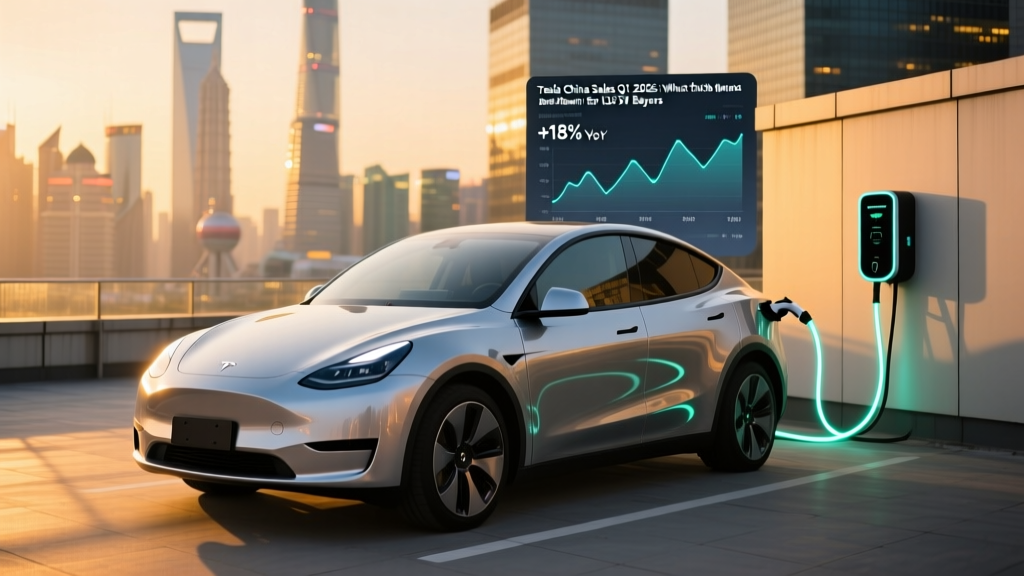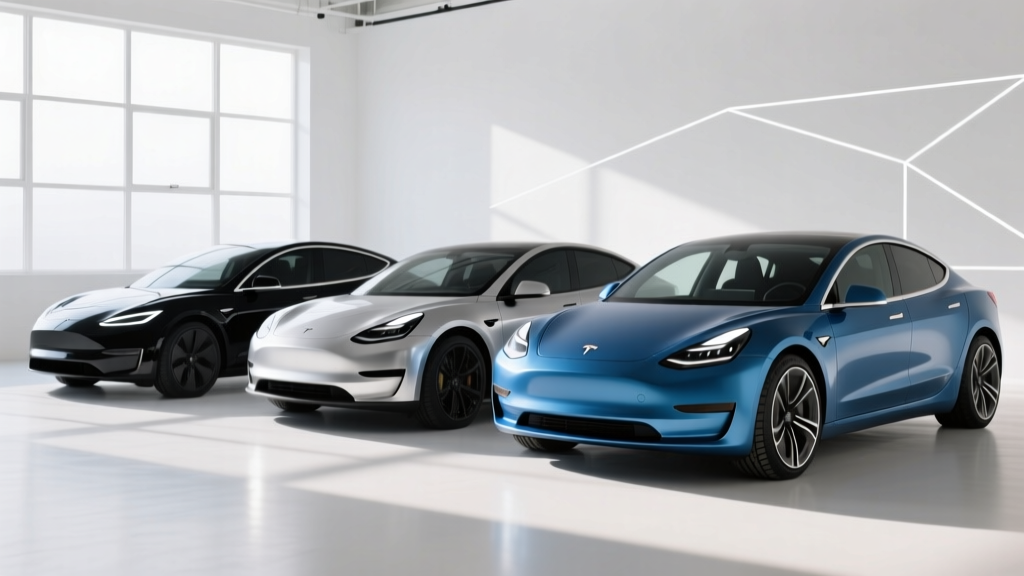
If you have been browsing financial news or EV forums lately, you have likely seen the question: what is Tesla's price-to-earnings ratio? For stock analysts, the P/E ratio is a snapshot of how much investors are willing to pay for every dollar of Tesla's earnings — a number that often hovers well above legacy automakers, reflecting expectations around energy, autonomy, and manufacturing scale. But for EV buyers, the more pressing question is how Tesla's financial positioning translates into the vehicles on the showroom floor. In this review, we bridge Wall Street metrics with driveway reality, examining the 2026 Tesla lineup — Model 3, Model Y, Model S, and Model X — through the lens of range, charging, pricing, tax credits, and real-world ownership.
Tesla's P/E Ratio in Context: Why It Matters to Buyers
Tesla's forward P/E ratio in early 2026 sits in the mid-to-high range relative to traditional automakers like Toyota or Ford, which typically trade at single-digit or low-teens multiples. Tesla's premium reflects investor bets on Full Self-Driving (FSD) revenue, Megapack energy deployments, and the Optimus robotics program — not just vehicle sales margins. For buyers, this matters in two concrete ways:
- Pricing power and margin strategy: Tesla has aggressively cut MSRPs over the past two years to maintain volume, meaning today's buyers benefit from some of the lowest Tesla prices in the company's history.
- Long-term support and software: A high-valuation company has strong incentives to keep its existing fleet happy with OTA updates, Supercharger expansion, and service infrastructure — a plus for ownership longevity.
Now let's see what that financial strategy delivers in metal, lithium, and electrons.
2026 Tesla Model Lineup: Core Specs at a Glance
| Spec | Model 3 Long Range AWD | Model Y Long Range AWD | Model S Long Range | Model X Long Range |
|---|---|---|---|---|
| EPA Range | 341 mi | 320 mi | 402 mi | 348 mi |
| Battery (usable, est.) | ~75 kWh (NMC) | ~75 kWh (NMC) | ~95 kWh (NMC) | ~95 kWh (NMC) |
| Max DC Fast Charge | 250 kW | 250 kW | 250 kW | 250 kW |
| 10–80% DCFC Time | ~28 min | ~28 min | ~33 min | ~33 min |
| Level 2 (11.5 kW AC) | ~44 mi/hr | ~42 mi/hr | ~52 mi/hr | ~50 mi/hr |
| 0–60 mph | 4.2 sec | 4.8 sec | 3.1 sec | 3.8 sec |
| Horsepower | ~346 hp | ~384 hp | ~670 hp | ~670 hp |
| Drivetrain | Dual-Motor AWD | Dual-Motor AWD | Dual-Motor AWD | Dual-Motor AWD |
| MPGe (combined) | 132 MPGe | 122 MPGe | 120 MPGe | 109 MPGe |
| Base MSRP | $42,380 | $44,380 | $72,880 | $77,880 |
| Battery Warranty | 8 yr / 120,000 mi | 8 yr / 120,000 mi | 8 yr / 150,000 mi | 8 yr / 150,000 mi |
Sources: fueleconomy.gov, Tesla.com specifications. Figures reflect 2026 model year as published. Rear-wheel-drive trims are available on Model 3 and Model Y at lower MSRPs with reduced range.
Real-World Range: What the EPA Sticker Doesn't Tell You
EPA estimates are measured under controlled lab conditions. In real-world driving, expect the following from a 2026 Tesla Model 3 Long Range AWD (EPA 341 mi):
- Highway (70–80 mph, moderate weather): ~275–295 mi
- City / mixed suburban: ~310–330 mi (regen braking recovers energy)
- Cold weather (below 32°F, highway): ~220–260 mi — a 20–35% loss depending on cabin heating demands and whether the battery is preconditioned
Tesla's trip planner in the navigation system is among the most accurate in the industry — it factors elevation, wind, speed, and temperature into arrival SoC predictions. Still, on a 300-mile road trip in January through the Rockies, we recommend planning one Supercharger stop as a buffer regardless of the dashboard estimate.
Charging Speed: Supercharger Network and Home Level 2
Tesla's Supercharger network remains the benchmark for DC fast-charging reliability in North America, with over 20,000 stalls in the U.S. alone. Here is what charging looks like across levels:
| Charging Level | Power | Miles Added per Hour (Model 3 LR) | Notes |
|---|---|---|---|
| Level 1 (120V household) | ~1.4 kW | ~3–5 mi/hr | Emergency/top-up only |
| Level 2 (240V, 48A) | 11.5 kW | ~44 mi/hr | Full overnight charge in ~7–8 hrs |
| DC Fast (Supercharger V3) | Peak 250 kW | ~170 mi in 15 min (10–50% SoC) | Tapers significantly above 80% |
Charging curve reality check: The 250 kW peak applies only at low states of charge (roughly 10–30% SoC) and with a warm battery. By 60% SoC, the rate drops to ~120 kW, and above 80% it falls below 50 kW. A 10–80% session takes approximately 28 minutes on Model 3/Y, but an 80–100% top-off can add another 25–30 minutes. For road trips, the optimal strategy is short hops between 10% and 70% rather than filling to full.
At home, a Tesla Wall Connector on a 60A circuit (48A continuous) delivers 11.5 kW — enough to fully replenish any Tesla overnight. Installation costs range from $500–$1,500 if your electrical panel has capacity, up to $3,000+ if a panel upgrade to 200A is needed. Always get a quote from a licensed electrician before committing.
With the 2025 adoption of NACS (North American Charging Standard) by Ford, GM, Rivian, and others, Tesla Superchargers now serve non-Tesla EVs at many locations — which means slightly more stalls occupied at peak travel times, but also a growing network Tesla owners can rely on.
Pricing, Trims, and Federal Tax Credit Eligibility
Tesla's pricing has shifted dramatically since 2022. Here is the 2026 lineup with federal tax credit context:
| Model / Trim | Base MSRP | As-Tested (typical config) | §30D Credit Eligible? | Effective Price (if eligible) |
|---|---|---|---|---|
| Model 3 RWD | $36,380 | $38,880 | Partial — up to $3,750 (battery sourcing dependent) | ~$32,630–$35,130 |
| Model 3 Long Range AWD | $42,380 | $45,880 | Partial — up to $3,750 | ~$38,630–$42,130 |
| Model 3 Performance | $49,380 | $52,880 | Partial — up to $3,750 | ~$45,630–$49,130 |
| Model Y Long Range AWD | $44,380 | $47,880 | Up to $7,500 (if sourcing requirements met) | ~$36,880–$40,380 |
| Model Y Performance | $49,380 | $52,380 | Up to $7,500 | ~$41,880–$44,880 |
| Model S Long Range | $72,880 | $82,880 | No — exceeds $55,000 sedan MSRP cap | $72,880+ |
| Model X Long Range | $77,880 | $88,880 | No — exceeds $80,000 SUV MSRP cap | $77,880+ |
§30D tax credit rules (2026): The federal credit under IRS Section 30D is subject to three major gates:
- MSRP cap: Sedans (Model 3) must be ≤$55,000; SUVs/trucks (Model Y, Model X) must be ≤$80,000.
- Income cap: Buyer AGI must not exceed $150,000 (single) / $300,000 (joint) / $225,000 (head of household).
- Battery sourcing: The credit is split into two halves ($3,750 each) — one for critical minerals sourcing and one for battery component manufacturing. Tesla's Fremont and Austin-built vehicles have progressively increased domestic sourcing, but the exact credit amount varies by production batch. Check IRS.gov clean vehicle credits for the current VIN-eligible list.
The point-of-sale transfer option allows qualified buyers to apply the credit directly at purchase, reducing the out-of-pocket price immediately. Tesla's checkout page typically displays the estimated credit, but always verify with your tax professional.
Interior, Tech, and Driver Assistance
Tesla's interior philosophy is minimalist to a fault. The Model 3 "Highland" refresh and Model Y "Juniper" update have added ventilated seats, ambient lighting, rear-seat touchscreens, and improved sound insulation — addressing the most common complaints from 2022–2024 owners.
Standout tech features:
- 15.4-inch center touchscreen (Model 3/Y) or 17-inch (Model S/X) with over-the-air updates
- Tesla Vision (camera-only) Autopilot standard; FSD (Supervised) available as a $8,000 option or $99/month subscription
- Native Supercharger routing with battery preconditioning
- Sentry Mode dashcam recording, Dog Mode climate control, Camp Mode
- HEPA air filtration (Bioweapon Defense Mode) on Model S/X and newer Model Y
Tesla Autopilot and FSD (Supervised) are SAE Level 2 driver-assistance systems. They require continuous driver supervision — hands on or near the wheel, eyes on the road. They do not make the vehicle autonomous. Only Level 4 services like Waymo (operating in Phoenix, San Francisco, and Los Angeles) qualify as true driverless systems. Tesla's FSD has improved significantly in urban scenarios, but it can still make errors at unprotected left turns, construction zones, and unusual intersections. You are the driver. Always.
Cargo and passenger space:
- Model 3: 23 cu ft trunk + frunk; rear legroom 35.2 in
- Model Y: 30 cu ft behind rear seats (76 cu ft with seats folded) + frunk; rear legroom 41.6 in
- Model S: 28 cu ft trunk + frunk; rear legroom 35.4 in
- Model X: Up to 88 cu ft with seats folded (5-seat config); optional third row; falcon-wing rear doors aid car-seat loading
Pros and Cons Across the 2026 Lineup
- Best-in-class Supercharger network access
- Industry-leading efficiency (MPGe) per kWh
- Frequent OTA updates add features post-purchase
- Strong resale value relative to most EVs
- Model Y qualifies for up to $7,500 federal credit
- Excellent trip-planning and preconditioning integration
- Model S/X exceed MSRP caps — no federal credit
- Camera-only Tesla Vision can struggle in heavy rain/fog
- Minimalist interior not for everyone (no physical stalks on newer models)
- Service center wait times can be long in rural areas
- 250 kW peak charge rate trails Hyundai/Kia's 800V architecture (~350 kW)
- FSD (Supervised) remains an expensive add-on with uncertain ROI
Who Should Buy a Tesla in 2026?
- Choose Model 3 if: You want the most affordable entry point to the Tesla ecosystem, commute under 80 miles daily, and prioritize efficiency over cargo space. At ~$33K after partial credit, it undercuts most competitors on cost-per-mile.
- Choose Model Y if: You need family-friendly cargo room, qualify for the full $7,500 credit, and take regular road trips. It is the best-selling EV in America for good reason — practical, spacious, and well-supported.
- Choose Model S if: You want 400+ miles of range, sub-3.5-second 0–60 performance, and premium comfort — and you don't need the federal credit. It competes with the Lucid Air and Mercedes EQS on luxury metrics.
- Choose Model X if: You need three-row seating (optional), falcon-wing doors for tight parking garages, and maximum towing (5,000 lbs). But the Rivian R1S and Kia EV9 offer strong alternatives at lower price points.
Competitor Comparison: Model Y vs. Key Rivals
| Attribute | Tesla Model Y LR | Hyundai Ioniq 5 LR AWD | Ford Mustang Mach-E ER AWD |
|---|---|---|---|
| EPA Range | 320 mi | 290 mi | 290 mi |
| Max DCFC | 250 kW | 350 kW (800V) | 150 kW |
| 10–80% DCFC | ~28 min | ~18 min | ~45 min |
| Base MSRP | $44,380 | $49,200 | $48,000 |
| §30D Credit | Up to $7,500 | Up to $7,500 | Up to $7,500 |
| Cargo (rear seats up) | 30 cu ft | 27 cu ft | 29 cu ft |
| Charging Network | Supercharger (native) | NACS adapter for Superchargers | NACS adapter for Superchargers |
The Ioniq 5 charges faster thanks to 800V architecture, and the Mach-E offers a more traditional interior with physical controls. But the Model Y's combination of range, efficiency (122 MPGe vs. 110–114 for rivals), and seamless Supercharger integration remains hard to beat for road-trip-heavy buyers.
Frequently Asked Questions
What is Tesla's price-to-earnings ratio in 2026?
Tesla's trailing P/E ratio fluctuates with quarterly earnings but has generally ranged between 60–90x in recent quarters — far above legacy automakers (typically 5–12x). The forward P/E is somewhat lower, reflecting expected earnings growth. This premium prices in Tesla's energy storage business (Megapack), FSD software revenue potential, and manufacturing scale advantages. For buyers, the practical takeaway is that Tesla has both the financial incentive and resources to maintain its charging and software infrastructure long-term.
What is the real-world range of a 2026 Tesla?
Real-world range depends on model, weather, and driving style. A Model 3 Long Range (EPA 341 mi) typically delivers 275–295 mi at highway speeds in fair weather and 220–260 mi in cold conditions. The Model S Long Range (EPA 402 mi) achieves roughly 330–350 mi highway. Always budget a 15–25% buffer below the EPA number for trip planning.
How fast does a Tesla charge at home and on the road?
At home on a Level 2 Wall Connector (11.5 kW / 48A), a Tesla adds roughly 42–52 miles of range per hour, fully charging overnight. On DC fast charging, Tesla's 250 kW Superchargers deliver a 10–80% charge in approximately 28 minutes (Model 3/Y) or 33 minutes (Model S/X). The charge rate tapers significantly above 80% SoC.
Does a 2026 Tesla qualify for the $7,500 federal EV tax credit?
It depends on the model and your income. The Model Y Long Range and Performance can qualify for up to $7,500 under IRS §30D, provided the buyer's AGI is under the cap ($150K single / $300K joint) and the specific VIN meets battery-sourcing requirements. The Model 3 qualifies for a partial credit (typically $3,750). The Model S and Model X exceed MSRP caps and do not qualify. Always verify on IRS.gov before purchasing.
Is a Tesla worth buying vs. competitors in 2026?
For buyers who prioritize road-trip charging convenience, over-the-air software updates, and energy efficiency, Tesla remains the default choice — especially the Model Y with the $7,500 credit. However, if you value faster peak charging (Hyundai/Kia 800V), a more traditional interior (Ford, BMW), or off-road capability (Rivian), strong alternatives exist. Test-drive at least one competitor before committing.
What are the biggest pros and cons of owning a Tesla?
Pros include the Supercharger network, class-leading efficiency, OTA updates, and strong resale value. Cons include the camera-only vision system's limitations in poor weather, the lack of physical controls (turn-signal buttons replace stalks on refreshed models), variable service-center availability, and the fact that FSD (Supervised) is an expensive add-on that still requires full driver attention.
Editorial note: All pricing, range, and tax-credit figures reflect publicly available data as of early 2026 and are subject to change. Tesla frequently adjusts MSRPs and the IRS updates VIN-eligible credit lists quarterly. Always confirm current figures at Tesla.com and fueleconomy.gov before purchasing.