Quick Verdict: A Used Family EV With Falcon-Wing Flair
The 2018 Tesla Model X 75D occupies a specific niche in the used EV market: it is the most affordable entry point into Tesla's flagship SUV lineup, offering dual-motor all-wheel drive, up to seven seats, and access to the Supercharger network. With an EPA-estimated 237 miles of range and a 75 kWh (nominal) battery pack, the 75D was the volume seller of the Model X lineup when new. In 2026, it remains a compelling used purchase for families who need space and AWD but do not require the 300+ mile range of newer Long Range variants.
However, prospective buyers must weigh that value against real-world range that falls meaningfully below the EPA sticker, aging battery chemistry, and the Model X's well-documented build-quality quirks. This review breaks down every spec that matters for a used purchase decision.
| Spec | Value |
|---|---|
| EPA Range | 237 miles |
| Battery (Nominal / Usable) | 75 kWh / ~72.5 kWh |
| Battery Chemistry | NMC (Nickel Manganese Cobalt) |
| Drivetrain | Dual-Motor AWD |
| Horsepower | ~328 hp (combined) |
| 0–60 mph | 4.9 seconds |
| Max DC Fast Charge | ~120 kW peak (Supercharger V2) |
| 10–80% DC Charge Time | ~40 minutes |
| Level 2 Home Charge Rate | 11.5 kW (48A) / ~29 mi/hr |
| EPA Efficiency | 92 MPGe combined (36 kWh/100 mi) |
| Cargo (behind 3rd row / max) | 12.6 cu ft / 81.0 cu ft |
| Seating | 5, 6, or 7 passengers |
| Battery Warranty (original) | 8 years / 150,000 miles |
| Original Base MSRP | ~$79,500 (before incentives) |
| Typical Used Price (2026) | $28,000–$38,000 |
Range and Efficiency: EPA vs. the Real World
EPA Estimated Range: 237 miles
Real-World Expectation: 195–220 miles highway; 170–195 miles in cold weather (below 32°F)
The 75D's 237-mile EPA figure was competitive in 2018 but trails today's 300+ mile standard. More critically, real-world range diverges significantly from the sticker. According to fueleconomy.gov, the 2018 Model X 75D achieves 92 MPGe combined, translating to roughly 36 kWh consumed per 100 miles driven.
In practical terms, highway driving at 70–75 mph pushes consumption closer to 38–40 kWh/100 mi, dropping effective range to approximately 195–220 miles on a full charge. Cold weather compounds the problem: NMC batteries lose roughly 15–25% of usable capacity in sub-freezing temperatures due to increased internal resistance and cabin-heating demands. The Model X 75D does not include a heat pump (that arrived with the 2021 refresh), relying instead on resistive heating that draws heavily from the pack.
For daily commuting under 80 miles round-trip, the 75D's range is more than adequate with home charging. For road trips, plan Supercharger stops every 170–190 miles to maintain a comfortable buffer and avoid the steep charge-curve taper above 80% state of charge.
Charging Speeds: DC Fast Charging and Home Level 2
| Charging Level | Power (kW) | Speed | Notes |
|---|---|---|---|
| Level 1 (120V / 12A) | ~1.4 kW | ~3 mi/hr | Emergency/trickle only |
| Level 2 (240V / 48A) | 11.5 kW | ~29 mi/hr | Full charge in ~8.5 hours |
| DC Fast (V2 Supercharger) | ~120 kW peak | 10–80% in ~40 min | Tapers sharply above 60% |
| DC Fast (V3 Supercharger) | ~120 kW (capped) | 10–80% in ~40 min | 75D cannot use V3's 250 kW peak |
| CCS Adapter (EA/others) | ~100–120 kW | 10–80% in ~42 min | Requires Tesla CCS adapter ($175) |
The 2018 Model X 75D uses Tesla's proprietary connector (now called NACS) and charges natively on the Supercharger network. Its onboard charge management limits peak DC intake to roughly 120 kW, meaning V3 Superchargers (capable of 250 kW) offer no speed advantage over V2 stalls for this model.
The charge curve is the critical detail most used-buyer guides omit. The 75D sustains its peak ~120 kW rate only between roughly 10–40% state of charge. From 40–60%, power drops to approximately 80–90 kW, and above 60% it tapers further to 40–60 kW. This means the 10–80% charge takes around 40 minutes — not dramatically slower than newer EVs, but the taper above 80% makes topping off at a Supercharger inefficient. Plan to leave at 80% and charge more frequently.
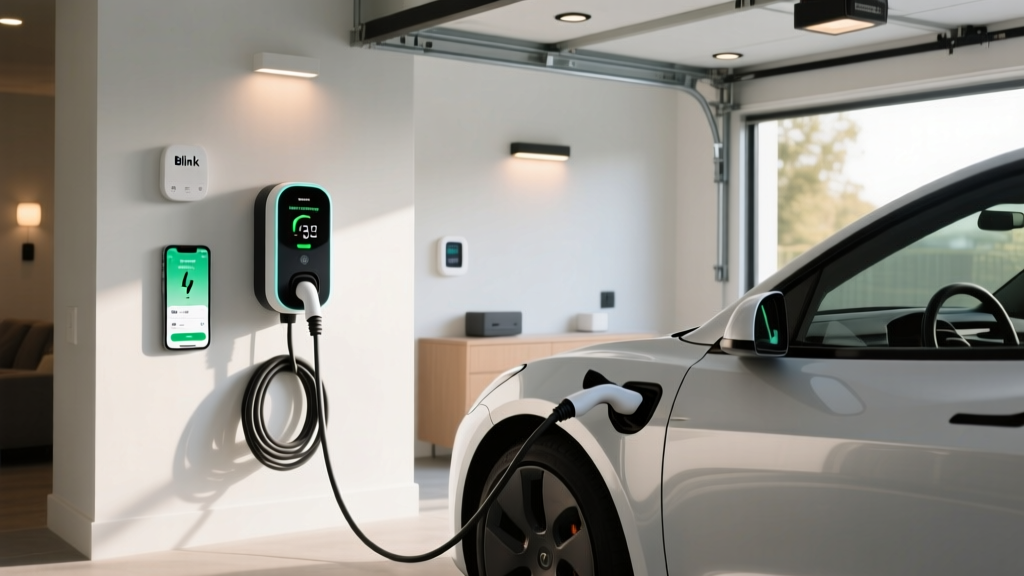
For home charging, the onboard 11.5 kW (48-amp) AC charger is a strong point. On a properly installed 60-amp circuit Level 2 wall connector, you gain roughly 29 miles of range per hour, fully replenishing the pack in about 8.5 hours — easily enough for overnight charging. Note that a NEMA 14-50 outlet (50-amp circuit) delivers approximately 9.6 kW or ~24 mi/hr, still practical for daily use. Always have a licensed electrician assess your panel capacity before installation.
Performance, Drivetrain, and Ride Quality
The 75D's dual-motor all-wheel-drive powertrain produces approximately 328 combined horsepower, launching the 5,000+ pound SUV to 60 mph in 4.9 seconds — quick by any measure, and effortless for highway merging. The instantaneous torque delivery that defines EVs is fully present here; there is no hesitation from a turbo or transmission downshift.
Ride quality is where the 2018 Model X shows its age relative to newer competitors. The air suspension provides adjustable ride height and generally compliant damping, but early Model X examples are known for premature air-strut failures — a repair that can cost $1,500–$2,500 per corner on the used market. The steering is precise but numb, and the regenerative braking offers only one level of intensity (no adjustable regen as in some competitors), making true one-pedal driving possible but not as aggressive as Tesla's later implementations.
Towing capacity is rated at 5,000 pounds when properly equipped, though towing significantly reduces range — expect a 35–45% reduction at highway speeds with a loaded trailer.
Interior, Cargo, and Technology
The Model X's cabin is dominated by the 17-inch portrait-oriented touchscreen that controls virtually every vehicle function, from climate to suspension height. In 2018, Tesla had already eliminated most physical buttons, which looks clean but demands screen interaction for simple adjustments like fan speed or mirror positioning.
Passenger and cargo dimensions:
- Front legroom: 41.2 inches
- Second-row legroom: 38.4 inches
- Third-row legroom: 32.7 inches (tight for adults)
- Cargo behind 3rd row: 12.6 cu ft
- Cargo behind 2nd row (3rd folded): 35.7 cu ft
- Max cargo (all rear seats folded): 81.0 cu ft
- Front trunk (frunk): 6.6 cu ft
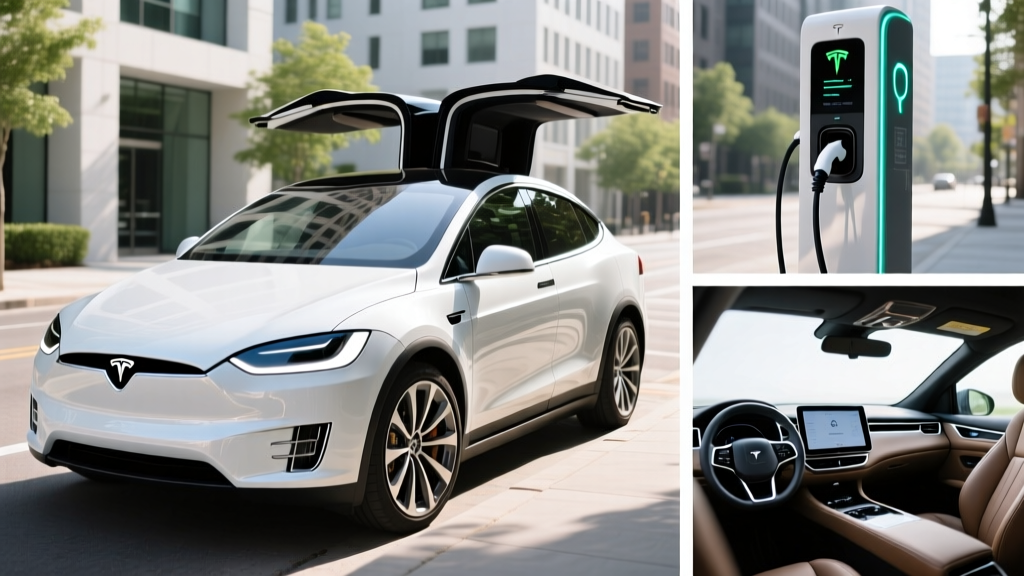
The Falcon Wing rear doors are the Model X's signature feature. They open vertically with dual-hinged articulation, providing excellent access to the second and third rows in tight parking spaces — when they work. Early Model X door actuators and sensors were prone to faults; by 2018, Tesla had improved reliability, but used buyers should test every door cycle repeatedly during a pre-purchase inspection.
Driver-assistance technology: The 2018 Model X comes with Tesla Autopilot (basic), which includes adaptive cruise control and lane-centering. This is an SAE Level 2 system — the driver must keep hands on the wheel and eyes on the road at all times. Enhanced Autopilot (EAP) and Full Self-Driving (FSD) were optional upgrades; EAP adds auto lane-change and Navigate on Autopilot, while FSD (still Level 2 despite its name) adds traffic-light recognition and city-street steering assist. Neither system makes the vehicle autonomous.
Pricing, Tax Credits, and Used-Buying Economics
| Item | Amount |
|---|---|
| Original Base MSRP (2018) | ~$79,500 |
| Typical Used Price (2026, private party) | $28,000–$38,000 |
| Typical Used Price (dealer/CPO) | $32,000–$42,000 |
| Federal Used EV Tax Credit (§25E) | Up to $4,000 (30% of sale price) |
| Federal New EV Credit (§30D) | Not applicable — discontinued model |
The 2018 Model X 75D does not qualify for the federal §30D new-vehicle tax credit — it is a discontinued model and was never subject to the current battery-sourcing and critical-minerals requirements that govern new-vehicle credits under the Inflation Reduction Act.
However, it may qualify for the §25E Used Clean Vehicle Credit, which provides 30% of the sale price up to $4,000 for qualifying used EVs. Key eligibility requirements per irs.gov:
- Sale price must be $25,000 or below (many 75D examples now fall at or under this threshold)
- Buyer income caps: $75,000 single / $112,500 head of household / $150,000 joint (modified AGI)
- Vehicle must be at least two model years old (2018 qualifies)
- Must purchase from a licensed dealer for point-of-sale transfer
- Credit is non-refundable and can only be claimed once per vehicle (check VIN history)
If you find a 75D listed at $24,500 from a qualifying dealer, the §25E credit could reduce your effective cost to approximately $20,500 — exceptional value for a dual-motor AWD SUV with Supercharger access. Consult a tax professional to confirm your eligibility, as rules may shift.
Battery Health, Warranty, and Longevity
The 75D's NMC battery pack carries an original warranty of 8 years or 150,000 miles (whichever comes first), with a minimum 70% capacity retention threshold. For a 2018 model, that warranty window extends through the 2026 model year — meaning many examples are approaching or have just exceeded warranty expiration.
NMC degradation data from Tesla fleet telemetry and owner reports suggests typical capacity loss of 8–12% over the first 100,000 miles, with the curve flattening significantly afterward. A well-maintained 2018 75D at 80,000 miles might retain 88–92% of its original capacity, yielding roughly 208–218 miles of effective range. However, vehicles that were frequently DC fast-charged to 100% or regularly sat at high state of charge in hot climates may show accelerated degradation.
Pre-purchase battery check: Request the vehicle's State of Health (SoH) reading from the service menu or have a Tesla Service Center perform a battery health evaluation. Compare the displayed "typical" range at 100% charge against the original 237-mile EPA figure. A reading below 200 miles at full charge signals meaningful degradation and should factor into price negotiation.
Battery replacement for the 75 kWh pack runs $12,000–$16,000 out of warranty (parts and labor), based on current Tesla Service pricing. This is the single largest financial risk in a used Model X purchase.
Pros, Cons, and Who Should Buy
Pros
- Supercharger network access — still the most reliable DC fast-charging ecosystem
- Quick 4.9-second 0–60 and smooth dual-motor AWD
- Spacious cabin with available 7-seat layout and large frunk
- Falcon Wing doors offer unmatched rear-seat access in tight spots
- Over-the-air updates continue to add features years after purchase
- §25E used-EV credit can drop effective price below $21,000
Cons
- Real-world highway range of ~200 miles requires frequent road-trip stops
- No heat pump — cold-weather range loss is substantial (20–25%)
- Falcon Wing door mechanisms are expensive to repair out of warranty
- Air suspension strut failures are common and costly
- Interior build quality (panel gaps, wind noise) trails German competitors
- 120 kW peak DC charge rate is slow vs. 2024+ EVs capable of 200+ kW
Who this EV suits best: Families who primarily commute under 80 miles daily, have reliable home Level 2 charging, and need AWD plus 6–7 seat flexibility. The 75D is a strong school-run and grocery-hauler with enough range for weekend trips under 150 miles. It is less ideal for high-mileage road-trippers (the ~200-mile real-world range and 40-minute charge stops add significant travel time) or buyers in extreme cold climates where the lack of a heat pump is a meaningful disadvantage.
Key competitors to cross-shop:
- 2018–2019 Jaguar I-PACE: Similar price, 234-mile EPA range, better build quality, but no Supercharger access and slower DC charging (100 kW peak)
- 2019 Audi e-tron: 204-mile EPA range, superior ride and interior, 150 kW DC charging, but smaller cargo area and only 5 seats
- 2019 Tesla Model S 75D: Same powertrain, 259-mile EPA range, better efficiency (lower and lighter), but sedan cargo limitations
Frequently Asked Questions
What is the real-world range of the 2018 Tesla Model X 75D?
Expect 195–220 miles on the highway in moderate temperatures and 170–195 miles in cold weather (below freezing). The EPA sticker says 237 miles, but that figure assumes a mix of city and highway driving at moderate speeds. Sustained 75 mph driving, cold weather, and elevation changes all reduce range below the sticker.
How fast does the 2018 Model X 75D charge?
On a V2 Supercharger, the 75D peaks at approximately 120 kW and charges from 10–80% in roughly 40 minutes. On a home Level 2 charger (240V/48A), it charges at 11.5 kW, adding about 29 miles of range per hour for a full overnight replenishment in ~8.5 hours. The vehicle cannot utilize V3 Supercharger 250 kW speeds due to its battery architecture.
Does the 2018 Model X 75D qualify for the federal EV tax credit?
Not the §30D new-vehicle credit — the vehicle is discontinued. However, it may qualify for the §25E used clean vehicle credit of up to $4,000 (30% of sale price) if purchased from a dealer for $25,000 or less, and if the buyer meets income caps ($75K single / $150K joint). Verify eligibility with a tax professional and check that the specific VIN has not previously had the credit claimed.
Is the 2018 Model X 75D worth buying in 2026 vs. competitors?
It depends on priorities. If Supercharger network access, 7-seat availability, and AWD are essential, the 75D is one of the few options in the $28K–$38K range. If build quality, ride refinement, or DC charging speed matter more, the used Audi e-tron or Jaguar I-PACE are strong alternatives — though neither offers 7 seats or Supercharger access. The deciding factor is often whether you can charge at home: if yes, the 75D's range is manageable; if you rely solely on public charging, the 40-minute charge stops and 200-mile real-world range become frustrating.
What are the biggest reliability concerns for a used 2018 Model X?
Top concerns include Falcon Wing door actuator and sensor failures ($1,000–$3,000 per door to repair), air suspension strut leaks ($1,500–$2,500 per corner), and MCU1 (Media Control Unit) screen delamination or failure (~$1,500–$2,500 replacement). The drive units and battery pack have proven generally reliable, but out-of-warranty battery replacement remains a $12,000–$16,000 risk. A pre-purchase inspection at a Tesla Service Center is strongly recommended.
Can I charge a 2018 Model X 75D on non-Tesla charging networks?
Yes, with Tesla's CCS adapter (approximately $175 from Tesla). This allows access to Electrify America, EVgo, and other CCS-equipped networks at up to roughly 100–120 kW. The Model X cannot use CHAdeMO connectors without a third-party adapter, which is uncommon and not recommended for regular use.