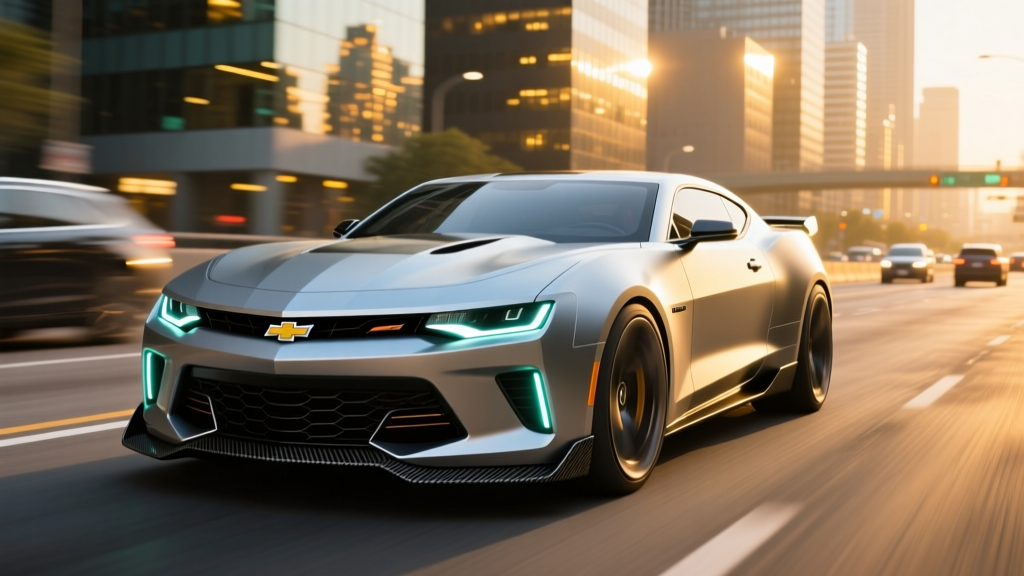
The short answer: As of 2026, Chevrolet does not sell a Camaro electric car. The sixth-generation Camaro ended production in January 2024 with no direct electric successor confirmed. However, GM has repeatedly signaled that the Camaro nameplate could return as an EV, and the closest current alternative from Chevy is the Blazer EV SS — a 557-hp, all-electric performance SUV starting around $53,200. If you want electric muscle from GM today, the Blazer EV SS, Cadillac Lyriq-V, or the upcoming Chevrolet Silverado EV Trail Boss are your options.
What Happened to the Camaro — and Why an EV Version Makes Sense
Chevrolet retired the sixth-generation Camaro after the 2024 model year, citing declining sales (just 31,528 units sold in 2023) and GM's broader pivot toward electrification. The Camaro's Alpha platform was aging, and emissions regulations were tightening. But GM executives, including then-President Mark Reuss, publicly stated the Camaro name wasn't dead — it was being "reimagined."
The logic for a Camaro EV is straightforward. GM's Ultium battery platform supports rear-wheel and all-wheel-drive configurations, up to 200 kWh battery packs, and 0-60 mph times under 3.0 seconds in performance trims. The GMC Hummer EV already demonstrates that Ultium can deliver absurd power (1,000 hp) in a heavy vehicle. A lighter, lower-slung coupe built on a shortened Ultium architecture could theoretically slot in as a genuine muscle car successor.
But "theoretically" is doing heavy lifting here. GM has not announced a Camaro EV production timeline, pricing, or specifications. Everything below is based on GM's existing Ultium platform capabilities, industry reporting, and the closest comparable vehicles currently in showrooms.
The Closest Thing Today: Blazer EV SS as Camaro Alternative
If you walked into a Chevy dealer today asking for electric performance, the salesperson would point you to the 2026 Chevrolet Blazer EV SS. Here's how it stacks up against what a hypothetical Camaro EV might look like, based on Ultium platform parameters:
| Specification | 2026 Blazer EV SS (Actual) | Hypothetical Camaro EV (Estimated) | 2024 Camaro ZL1 (Gas, Final Gen) |
|---|---|---|---|
| Powertrain | Dual-motor AWD | Dual-motor AWD or RWD | 6.2L Supercharged V8, RWD |
| Horsepower | 557 hp | 500–700 hp | 650 hp |
| 0-60 mph | ~3.4 sec | ~2.8–3.2 sec (est.) | 3.5 sec |
| Battery / Engine | 102 kWh usable (NMC) | 85–100 kWh (est.) | N/A |
| EPA Range | ~279 mi | 280–340 mi (est.) | ~320 mi (16-gal tank) |
| Peak DC Fast Charge | 190 kW | 200–250 kW (est.) | N/A |
| 10-80% Charge Time | ~28 min | ~20–25 min (est.) | ~5 min (gas station) |
| Curb Weight | ~5,600 lbs | ~4,800–5,200 lbs (est.) | 3,880 lbs |
| Starting MSRP | $53,200 | $50,000–$65,000 (est.) | $68,395 (final MSRP) |
The weight problem is real. The Blazer EV SS tips the scales at roughly 5,600 pounds — nearly 1,800 pounds heavier than the last Camaro ZL1. A dedicated EV coupe on a lower, lighter architecture would need significant engineering to hit sub-5,000-pound targets. That's possible with GM's newer Ultium cell chemistries and structural battery pack designs, but it's not guaranteed.
Real Costs: Electric Muscle vs. Gas Muscle
Let's compare what owning a high-performance electric Chevy actually costs versus the gas Camaro ZL1 you could have bought two years ago. We'll use the Blazer EV SS as our stand-in, since it's the real-world option.
| Cost Factor (5-Year Estimate) | Blazer EV SS ($53,200) | 2024 Camaro ZL1 ($68,395) |
|---|---|---|
| Purchase Price (before incentives) | $53,200 | $68,395 |
| Federal Tax Credit (§30D) | Up to $7,500 (see eligibility below) | $0 |
| Effective Purchase Price | ~$45,700 | $68,395 |
| Fuel/Energy (15,000 mi/yr) | ~$1,050/yr (home charging, $0.14/kWh avg) | ~$2,880/yr (premium gas, $4.00/gal, 14 mpg) |
| 5-Year Fuel/Energy Total | ~$5,250 | ~$14,400 |
| Maintenance (5 years) | ~$1,200 (no oil changes, fewer brake replacements due to regen) | ~$3,800 (oil, brakes, supercharger belt service) |
| Insurance (avg annual) | ~$2,400/yr | ~$2,600/yr |
| 5-Year Insurance Total | ~$12,000 | ~$13,000 |
| 5-Year Total Cost | ~$64,150 | ~$99,595 |
The EV wins on total cost, primarily because of the federal tax credit and dramatically lower fueling costs. But there are critical caveats:
- Tax credit eligibility is not guaranteed. The §30D credit requires the buyer to meet income caps ($150,000 single / $300,000 joint modified AGI), the vehicle must have MSRP under $80,000 (SUVs) or $55,000 (sedans/coupes), and battery components and critical minerals must meet phased-in domestic sourcing thresholds. The Blazer EV SS at $53,200 MSRP clears the SUV cap, but sourcing requirements tighten annually. Always verify current-year rules at IRS.gov before purchasing.
- Home charging is where the savings live. The $1,050/year energy estimate assumes predominantly Level 2 home charging at residential electricity rates. If you rely on DC fast charging at $0.35-$0.50/kWh, your annual energy cost jumps to $2,500-$3,500 — erasing much of the advantage.
- Depreciation is the wild card. EVs have depreciated faster than comparable gas cars in recent years. The Blazer EV SS could lose 50-60% of its value in five years, while a final-generation Camaro ZL1 — now a collector's item — may hold value far better than typical.
What a First-Time EV Buyer Needs to Know
If you're coming from a Camaro, Mustang, or any gas performance car and considering an EV for the first time, these realities matter more than horsepower numbers:
Home Charging Is Non-Negotiable for Cost Savings
A Level 2 home charger (240V, 48-amp circuit) costs $500-$1,500 for the equipment and $800-$2,500 for professional installation by a licensed electrician, depending on whether your electrical panel needs an upgrade. Total: expect $1,300-$4,000. If you live in an apartment or can't install a home charger, public charging costs 2-4x more per mile and adds significant friction to daily ownership.
Cold Weather Cuts Range 20-30%
An EV rated at 280 miles EPA may deliver only 190-220 miles in sustained sub-freezing temperatures. This is physics — lithium-ion cells have higher internal resistance in cold, and cabin heating draws from the battery. If you live in the northern US and regularly drive more than 150 miles one-way in winter, plan accordingly. Preconditioning the battery while plugged in mitigates some loss but doesn't eliminate it.
DC Fast Charging Tapers Above 80%
The "190 kW peak charge rate" on the Blazer EV SS is exactly that — a peak. Charging from 10-80% might take 28 minutes, but 80-100% can take nearly as long due to the charge curve taper. On road trips, the efficient strategy is to charge to 80% and go, stopping more frequently for shorter sessions rather than waiting for a full battery.
Performance EVs Eat Tires
Instant torque and heavy curb weight (5,600 lbs on the Blazer SS) accelerate tire wear significantly. Expect to replace tires every 20,000-25,000 miles on a performance EV versus 35,000-50,000 on a gas car driven normally. Budget $800-$1,400 per set for EV-rated touring tires.
Common Misconceptions About Electric Muscle Cars
| Myth | Fact |
|---|---|
| "EVs can't be real muscle cars — they have no soul." | Subjective, but the data is clear: a 557-hp dual-motor EV hits 60 mph in 3.4 seconds with no shift lag, no powerband, and instant torque at 0 rpm. Whether that feels engaging is personal — but it is objectively fast. |
| "The battery will need replacing in 5 years." | GM's Ultium battery warranty covers 8 years / 100,000 miles with a capacity retention threshold (typically 70% or above). Real-world data from older GM EVs like the Bolt shows degradation of roughly 8-12% over 100,000 miles. Full replacement, if ever needed, runs $12,000-$18,000 but is rare within the warranty period. |
| "Charging takes too long for road trips." | At a 190 kW DC fast charger, 10-80% takes ~28 minutes — comparable to a sit-down meal stop. The issue is charger availability and reliability, not speed. GM's partnership with EVgo and access to the Tesla Supercharger network (via NACS adapter) has significantly improved the road-trip charging map. |
| "An electric Camaro would be too heavy to handle." | The Blazer EV SS weighs 5,600 lbs — that's a legitimate concern for a tall SUV. But a low-slung coupe with a structural battery pack mounted low in the chassis would have a center of gravity far lower than any gas Camaro. Weight is still the enemy of tire wear and braking distances, but handling dynamics could actually improve with proper engineering. |
| "I'll save money immediately with an EV." | Upfront, no — EVs still carry a purchase premium. Savings accrue over 3-5 years through lower fuel and maintenance costs, plus the tax credit if you qualify. Break-even typically hits around year 3-4 for drivers covering 12,000-15,000 miles annually with home charging. |
Decision Framework: Should You Wait, Buy Now, or Look Elsewhere?
Choose the Blazer EV SS NOW if:
- You want a 557-hp electric Chevy today with warranty coverage and Super Cruise capability
- You have home charging access and drive under 250 miles daily
- You need four doors and practical cargo space alongside performance
- You qualify for the §30D tax credit (verify at IRS.gov)
Wait for a potential Camaro EV if:
- You specifically want a 2-door coupe with traditional muscle car proportions and lighter weight
- You're not in a rush — GM hasn't confirmed timing, and 2028-2029 is the earliest realistic window based on platform development cycles
- You're willing to risk that GM may never build it, or that it may be a crossover wearing a Camaro badge (as happened with the Blazer nameplate)
Look elsewhere (Ford Mustang Mach-E GT, Tesla Model 3 Performance, Dodge Charger Daytona EV) if:
- You want electric performance that's available now from other brands
- The Mustang Mach-E GT (480 hp, ~280 mi EPA, ~$55,000) offers a spiritual rival with an actual pony car badge
- The Dodge Charger Daytona EV (announced, 496-670 hp depending on trim) is the most direct muscle-car-EV competitor, though check current availability as Dodge has adjusted timelines
The Bottom Line on a Camaro Electric Car
There is no Camaro electric car you can buy today, and GM has not committed to building one with confirmed specs or a timeline. The brand's performance EV ambitions are real — the Blazer EV SS proves that — but they currently live in an SUV form factor. If GM does revive the Camaro as an EV, expect it on a dedicated Ultium coupe architecture with 500+ hp, 280-340 miles of range, and a starting price in the $50,000-$65,000 range. Until then, the Blazer EV SS, Mustang Mach-E GT, and Dodge Charger Daytona EV are the electric muscle options on the table.
Frequently Asked Questions
Did Chevrolet officially confirm a Camaro EV?
No. GM executives have said the Camaro nameplate could return and hinted at an electric future for it, but no production vehicle, concept, or timeline has been officially announced as of 2026.
What is the cheapest electric performance car available in 2026?
The Tesla Model 3 Performance starts around $47,000 and delivers 510 hp, a 3.0-second 0-60, and ~315 miles of EPA range. It remains the value leader in electric performance sedans.
Can I still buy a gas Camaro?
Not new. The 2024 model year was the final production run. Used Camaros, including the ZL1 and SS trims, are available on the secondary market, and final-generation examples are already appreciating in collector value.
Does the Blazer EV SS qualify for the $7,500 federal tax credit?
It may, depending on current-year battery sourcing requirements and your personal income. The Blazer EV SS MSRP falls under the $80,000 SUV cap. Check the latest eligibility rules and qualified vehicle list at IRS.gov or consult a tax professional before relying on the credit in your purchase decision.
How does Super Cruise work in the Blazer EV SS?
Super Cruise is GM's Level 2 hands-free driver-assistance system. It operates on over 750,000 miles of mapped divided highways in the US and Canada. The driver must remain attentive — an infrared camera monitors eye position — and must take over for construction zones, interchanges, and unmapped roads. It is not autonomous driving (that would require SAE Level 4, which no consumer vehicle currently offers).