Quick Verdict: The Original Tesla SUV a Decade Later
If you're searching for a tesla suv 2016 model year, you're almost certainly shopping the used market. The 2016 Tesla Model X was the brand's first SUV — a bold, falcon-wing-doored electric crossover built on the Model S platform. In 2026, it's a depreciated luxury EV with compelling tech but real ownership risks. This review breaks down exactly what you're getting: real-world range after battery degradation, charging speeds on modern networks, and the total cost picture for a used Model X today.
Real-World Expectation in 2026: 190–220 miles after 8–10 years of battery degradation; expect 160–180 miles at sustained highway speeds (75 mph) or in sub-40°F weather.
2016 Model X Specs at a Glance
| Specification | Model X 90D | Model X P90D |
|---|---|---|
| EPA Range (original) | 250 mi | 250 mi |
| Battery (usable) | ~90 kWh (NMC) | ~90 kWh (NMC) |
| Drivetrain | Dual-Motor AWD | Dual-Motor AWD |
| Horsepower | 518 hp | 532 hp (w/ Ludicrous: 762 hp) |
| 0–60 mph | 4.8 sec | 3.8 sec (Ludicrous: 3.2 sec) |
| MPGe (combined, EPA) | 92 MPGe | 89 MPGe |
| Efficiency | ~36 kWh/100mi | ~38 kWh/100mi |
| DC Fast Charge (max) | ~120 kW (Supercharger V2) | ~120 kW (Supercharger V2) |
| Level 2 Charge Rate | 11.5 kW (48A) | 11.5 kW (48A) |
| Cargo (behind 2nd row) | 26.6 cu ft | 26.6 cu ft |
| Cargo (max, seats folded) | 57.2 cu ft | 57.2 cu ft |
| Battery Warranty (original) | 8 yr / unlimited mi | 8 yr / unlimited mi |
| Original MSRP (2016) | ~$80,000 | ~$110,000+ |
| Used Price Range (2026) | $22,000–$32,000 | $25,000–$36,000 |
Battery Chemistry, Degradation & What's Left in 2026
The 2016 Model X uses an NMC (nickel manganese cobalt) lithium-ion battery pack. Tesla offered two main pack sizes that year: the 90D (approximately 90 kWh usable) and the earlier 75 kWh variant in some base models. The 90 kWh pack was the volume seller and the one most buyers will encounter.
NMC chemistry delivers high energy density — crucial for fitting 250 EPA miles into a heavy, aerodynamically challenged SUV — but it degrades more noticeably than the LFP (lithium iron phosphate) packs Tesla introduced in later, cheaper models. Based on owner-reported data aggregated by Teslalog and community forums, a 2016 Model X at 8–10 years old typically retains 75–85% of its original capacity.
That means your 250-mile EPA sticker translates to roughly 190–220 miles of real-world range in mixed driving. Highway driving at 75+ mph pushes consumption to 38–42 kWh/100mi, cutting range further. Cold weather (below 40°F) can reduce usable range by another 15–25%, as the battery management system diverts energy to thermal conditioning.
Critical check: Before purchasing any used 2016 Model X, pull up the battery health screen in Settings or use a third-party OBD-II tool to check the current State of Health (SoH). A pack showing below 70% retention is a red flag — replacement costs run $14,000–$22,000 at a Tesla Service Center or third-party shop.
Charging: How Fast Does a 2016 Model X Actually Charge?
| Charging Level | Power (kW) | Speed (mi/hr added) | Notes |
|---|---|---|---|
| Level 1 (120V household) | ~1.4 kW | ~3–4 mi/hr | Emergency/overnight trickle only |
| Level 2 (240V home, 48A) | 11.5 kW | ~30–34 mi/hr | Full charge in ~8–9 hours |
| Level 2 (public, 40A) | 9.6 kW | ~25–28 mi/hr | Common ChargePoint/EVgo L2 speed |
| DC Fast (Tesla Supercharger V2) | Peak ~120 kW | ~250–300 mi/hr (peak) | 10–80% in ~40–50 min |
| DC Fast (Supercharger V3/V4) | Capped at ~120 kW | Same as V2 for this vehicle | Vehicle can't accept V3's 250 kW |
The 2016 Model X charges at a maximum of roughly 120 kW on DC fast chargers. While Tesla's V3 and V4 Superchargers can deliver 250–350 kW to newer vehicles, the 2016 Model X's battery architecture caps its intake at the older rate. Expect a 10–80% charge in approximately 40–50 minutes at a Supercharger.
The charge curve tapers significantly above 80% — a 10–80% session takes 40–50 minutes, but 80–100% can add another 30+ minutes. Plan road-trip stops around the 10–80% window for efficiency.
At home, a Level 2 wall connector at 48 amps delivers 11.5 kW — enough to fully recharge the pack overnight. Installation typically costs $500–$1,500 (equipment + electrician) if you have a 200-amp panel with available capacity. Older homes with 100-amp panels may need a $2,000–$4,000 panel upgrade.
Connector note: The 2016 Model X uses Tesla's proprietary connector (now called NACS). It charges natively on the Tesla Supercharger network — a major advantage. For CCS-based public chargers (Electrify America, EVgo), you'll need a CCS-to-NACS adapter ($200–$250 from Tesla or third parties).
Performance, Interior & Technology
The 2016 Model X was never slow. The 90D delivers 518 hp and hits 0–60 in 4.8 seconds. The P90D with Ludicrous Mode drops that to 3.2 seconds — absurd for a 5,000+ lb SUV. Dual-motor AWD is standard across all trims, providing confident traction in rain and snow.
Inside, the 17-inch portrait touchscreen dominated the dash in 2016 and still feels modern. The infotainment system has received over-the-air updates through 2026, though the hardware (MCU1 or early MCU2) can feel sluggish compared to the Ryzen-based units in current Teslas. Apple CarPlay and Android Auto are not supported — Tesla's proprietary interface handles navigation, media, and vehicle settings.
Autopilot (SAE Level 2): 2016 Model X vehicles shipped with Hardware 1 (HW1) or early Hardware 2 (HW2). These support basic Autopilot — adaptive cruise control and lane-keeping assist — but are not capable of Full Self-Driving (Supervised). The driver must remain fully engaged at all times. This is an SAE Level 2 driver-assist system, not autonomous driving.
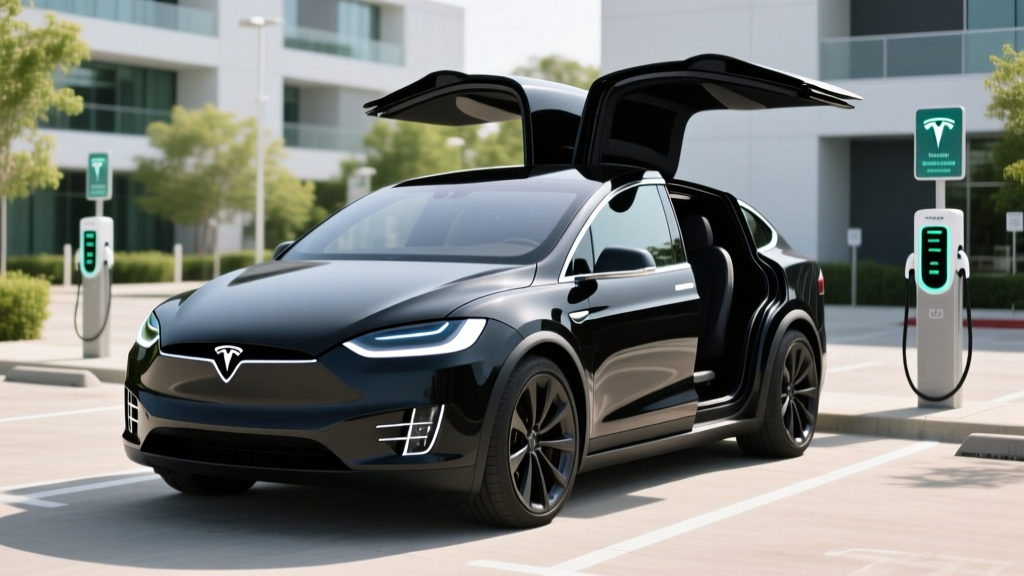
The falcon-wing rear doors are the Model X's signature party trick. They open vertically, making it easy to load car seats or access the third row in tight parking spaces. However, they're also the vehicle's most common source of maintenance complaints — sensor glitches, seal leaks, and alignment issues are well-documented in owner forums.
- Supercharger network access (reliability leader)
- Strong performance even in base 90D trim
- Spacious cabin with optional 3rd row (seats 7)
- Falcon-wing doors aid car-seat loading
- Over-the-air updates keep software current
- Low used price vs. original MSRP (60–70% depreciation)
- Battery degradation reduces range to ~190–220 mi
- DC fast charge capped at ~120 kW (slower road trips)
- Falcon-wing doors prone to costly repairs
- No Apple CarPlay / Android Auto
- Original 8-year battery warranty expired in 2024
- High insurance premiums ($2,500–$4,000/yr typical)
- No federal tax credit on used purchase (see below)
Pricing, Tax Credits & Total Cost of Ownership
Used 2016 Model X pricing in early 2026 typically falls between $22,000 and $36,000, depending on mileage, trim (90D vs P90D), condition, and battery health. This represents a steep drop from the $80,000–$130,000 original MSRP range.
| Cost Factor | Details |
|---|---|
| Used Price Range (2026) | $22,000–$36,000 |
| Federal Used EV Credit (§25E) | Up to $4,000 (30% of sale price, capped at $4,000) |
| §25E Income Caps | $75k single / $112,500 HOH / $150k MFJ (AGI) |
| §25E Vehicle Requirements | Sale price ≤$25,000; model year at least 2 yrs older than current (2016 qualifies in 2026); purchased from a licensed dealer |
| New EV Credit (§30D) | NOT applicable — this is a used vehicle |
| Annual Insurance (est.) | $2,500–$4,000 |
| Home Charging Cost (est.) | $0.13/kWh avg → ~$4.70 per 100 mi |
| Comparable Gas SUV (100 mi) | ~$12–$15 at 25 MPG, $3.50/gal |
Does the 2016 Model X qualify for a federal tax credit? Not the new-vehicle §30D credit ($7,500), which only applies to new purchases. However, the IRS §25E used EV credit may apply if you meet these criteria: the vehicle is purchased from a licensed dealer for $25,000 or less, your AGI falls under the income caps, and the model year is at least two years old (the 2016 model year qualifies in 2026). The credit is 30% of the sale price, capped at $4,000. Consult a tax professional to confirm your eligibility — rules can change, and state-level incentives may stack on top.
5-Year Ownership Cost Estimate (2026–2031):
| Category | Estimated 5-Year Cost |
|---|---|
| Purchase (mid-range 90D) | $28,000 |
| Federal Used EV Credit | −$4,000 |
| Insurance (5 years) | $15,000–$20,000 |
| Home Charging (12,000 mi/yr) | $2,800 |
| Maintenance & Repairs | $3,000–$6,000 (higher if falcon-wing or drive-unit issues) |
| Potential Battery Replacement | $0–$22,000 (risk increases after 10+ years) |
| Estimated Depreciation | $8,000–$12,000 |
How the 2016 Model X Compares to Alternatives
In the $22,000–$36,000 used EV SUV market in 2026, the 2016 Model X competes with:
- 2018–2020 Jaguar I-PACE: Similar price, 234 EPA miles, slower charging, no Supercharger access
- 2019–2021 Audi e-tron: ~204 EPA miles, excellent build quality, CCS charging, higher reliability
- 2021–2022 Tesla Model Y (used): More range (303–330 EPA), faster charging, newer tech, but higher used price ($32,000–$42,000)
- 2019–2021 Hyundai Kona Electric: 258 EPA miles, affordable ($18,000–$25,000 used), smaller cabin, no AWD
- You need 3 rows and Supercharger access for road trips
- You can verify battery SoH above 75% before purchase
- You have home Level 2 charging and accept ~200-mile real-world range
- You want the falcon-wing convenience for car seats
- You need reliable 300+ mile range — consider a newer Model Y
- You want low maintenance risk — the Audi e-tron or Hyundai Kona Electric are safer bets
- You rely on CCS public charging without wanting an adapter
- You want current-generation driver-assist hardware
Who the 2016 Model X Suits Best
The 2016 Model X makes most sense for families who need third-row seating, want Supercharger network access, and can charge at home. It's a capable road-trip vehicle if you plan stops around its ~200-mile real-world range and accept 40–50 minute charging breaks. It's less ideal for high-mileage commuters who can't charge at home, buyers in extreme cold climates, or anyone who prioritizes low-cost, low-risk ownership over tech and performance.
Frequently Asked Questions
What is the real-world range of a 2016 Tesla Model X in 2026?
Expect 190–220 miles in mixed driving with a degraded battery (75–85% SoH). Highway driving at 75 mph drops this to 160–180 miles. Cold weather below 40°F can cut range by an additional 15–25%.
How fast does the 2016 Model X charge?
On DC fast chargers (Supercharger V2/V3/V4), it peaks at ~120 kW, adding 10–80% in approximately 40–50 minutes. At home on Level 2 (240V, 48A), it charges at 11.5 kW, adding about 30–34 miles per hour — a full charge takes 8–9 hours.
Does the 2016 Model X qualify for the federal EV tax credit?
Not the new-vehicle §30D credit. However, the IRS §25E used EV credit may provide up to $4,000 if the purchase price is $25,000 or less, you buy from a licensed dealer, and your income falls under the AGI caps ($75k single / $150k married filing jointly). Verify current rules with a tax professional.
Is the 2016 Model X battery warranty still valid?
No. The original 8-year/unlimited-mile battery warranty expired in 2024 for all 2016 model-year vehicles. Any battery replacement is now out-of-pocket, costing $14,000–$22,000 depending on the pack and service provider.
What are the most common problems with the 2016 Model X?
Falcon-wing door malfunctions (sensors, seals, alignment), front drive unit failures, MCU1 screen delamination or freezing, and suspension wear (air suspension struts). Budget $1,500–$3,000 annually for unexpected repairs on a vehicle of this age.
Can the 2016 Model X use non-Tesla chargers?
Yes, with a CCS-to-NACS adapter ($200–$250). The 2016 Model X has a Tesla (NACS) port natively and works on all Superchargers without an adapter. For Electrify America, EVgo, and other CCS networks, the adapter is required.
Is it worth buying a 2016 Model X vs a newer used EV?
It depends on your priorities. At $22,000–$36,000, it offers Supercharger access, 3-row seating, and strong performance at a low price. But you accept degraded range (~200 mi), higher repair risk, and an expired battery warranty. A used 2021+ Model Y ($32,000–$42,000) offers better range, faster charging, and remaining warranty — at a higher entry price.