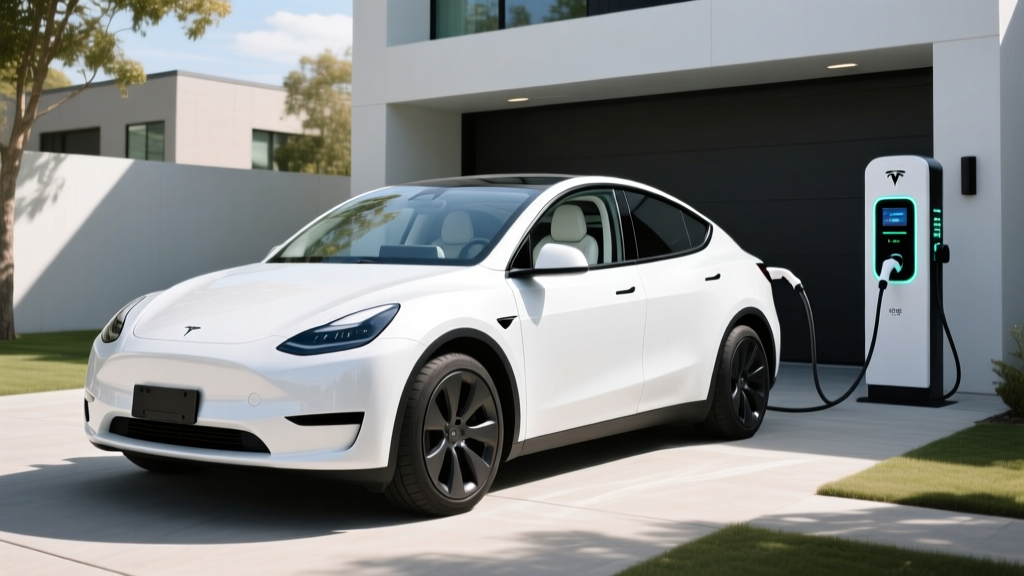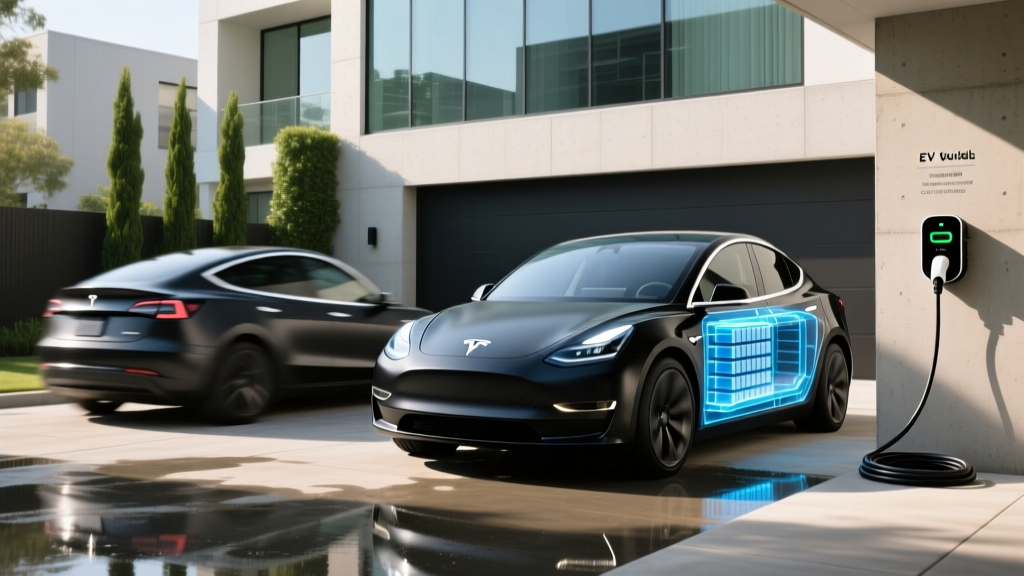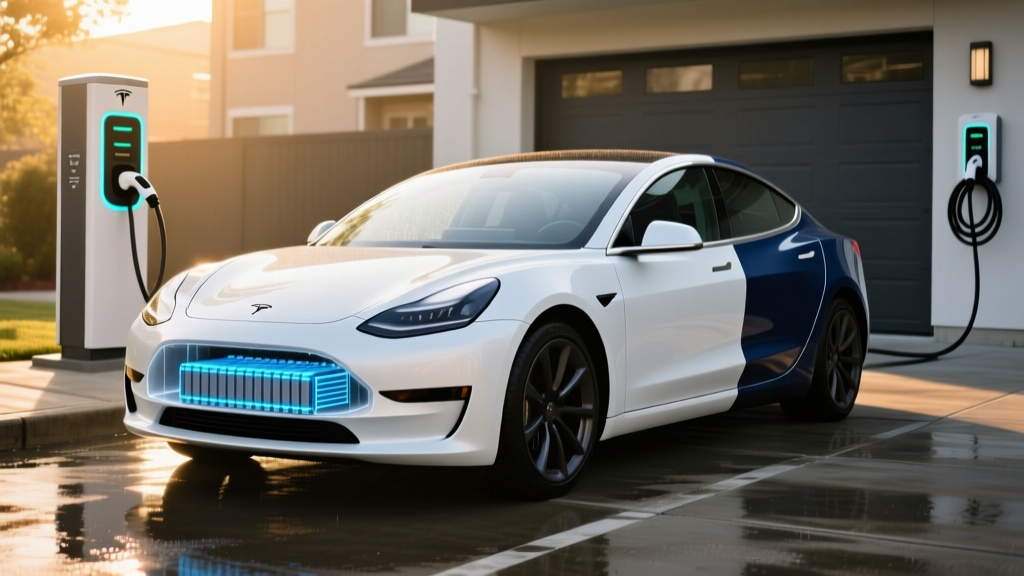
The 2016 Tesla Model 3 holds a unique place in electric vehicle history. Announced in March 2016 with over 375,000 reservations placed within weeks, it promised a mass-market EV with over 200 miles of range at an unprecedented price. But here's what matters for buyers in 2026: the first Model 3s didn't actually reach customers until mid-2017. What's often labeled a "2016" Model 3 in the used market is typically an early 2017 or 2018 production vehicle. That distinction affects battery chemistry, software capability, and hardware generation — all of which directly impact what you're actually getting today.
This review breaks down what early-production Model 3 sedans deliver nearly a decade later: real-world range after battery degradation, charging speeds on today's networks, ownership costs, and whether a used early Model 3 still makes sense against newer competition.
Range and Efficiency: What the EPA Said vs. Reality in 2026
The Long Range variant was the first Model 3 to ship, carrying an EPA-estimated 310 miles of range. The Standard Range (and Standard Range Plus) followed later with an EPA rating of 220–240 miles depending on model year and wheel configuration. Efficiency was class-leading at launch and remains competitive: approximately 26 kWh/100 mi (130 MPGe combined) for the Long Range AWD, per fueleconomy.gov.
Early Model 3s lack a heat pump (introduced with the 2021 refresh), relying instead on resistive cabin heating. This makes cold-weather efficiency noticeably worse than the current-generation car. Preconditioning the cabin while plugged in is essential in winter to preserve range.
Battery Chemistry, Capacity, and Long-Term Health
| Spec | Long Range (2017–2018) | Standard Range (2018–2019) |
|---|---|---|
| Battery Chemistry | NMC (Nickel Manganese Cobalt) | NMC (early) / LFP (late 2019+) |
| Gross Capacity | ~79.5 kWh | ~54 kWh |
| Usable Capacity | ~75 kWh | ~50 kWh |
| Expected Degradation (8+ yrs) | 10–15% | 8–12% (LFP holds better) |
| Battery Warranty | 8 yr / 120,000 mi (70% retention) | 8 yr / 100,000 mi (70% retention) |
All early Model 3 Long Range vehicles use NMC lithium-ion cells supplied primarily by Panasonic at the Gigafactory. NMC offers higher energy density but is more sensitive to sustained high state-of-charge. Tesla recommends daily charging to 80–90% for NMC packs and 100% only before long trips. The Standard Range variants introduced later in 2019 began using LFP (lithium iron phosphate) cells, which tolerate 100% daily charging and degrade more slowly but carry less energy per kilogram.
Battery degradation data from large-scale owner surveys (aggregated by sources like Recurrent Auto) shows early Model 3 packs losing roughly 10–12% capacity by 100,000 miles, with the curve flattening considerably after that. A well-maintained 2017–2018 Long Range pack with 90,000 miles may still retain 85–88% of its original capacity. Battery replacement cost, if needed outside warranty, runs approximately $12,000–$16,000 at a Tesla Service Center.
Charging Speed: DC Fast Charge and Home Level 2
Early Model 3s were built with CCS capability via the native NACS (Tesla) connector and Supercharger network access. Here's what charging looks like on a 2017–2018 Long Range Model 3:
| Charging Level | Max Power | Speed / Time |
|---|---|---|
| Level 1 (120V household) | ~1.2 kW | ~4–5 miles per hour |
| Level 2 (240V / 32A Mobile Connector) | 7.7 kW | ~30 miles per hour |
| Level 2 (240V / 48A Wall Connector) | 11.5 kW | ~44 miles per hour |
| DC Fast Charge (V2 Supercharger) | Peak ~145 kW | 10–80% in ~35 minutes |
| DC Fast Charge (V3 Supercharger) | Peak ~170 kW* | 10–80% in ~28–32 minutes |
*Early Model 3 Long Range vehicles are hardware-limited to roughly 145–170 kW peak on V3 Superchargers. The 250 kW peak advertised by Tesla applies to later hardware revisions. The charge curve tapers significantly above 60% SoC — expect the final 20% (60–80%) to take nearly as long as the first 50%.
For home charging, the onboard charger in early Model 3s accepts up to 11.5 kW (48 amps) on a Tesla Wall Connector or equivalent Level 2 station. This means a full overnight charge from 20% to 100% takes roughly 7–8 hours for the Long Range pack. Installation of a 240V/60A circuit typically costs $800–$2,000 depending on panel proximity and local permit fees.
Performance and Drivetrain
| Trim | Drivetrain | Horsepower | 0–60 mph |
|---|---|---|---|
| Standard Range RWD | Rear-Wheel Drive | ~258 hp | 5.3 sec |
| Long Range RWD | Rear-Wheel Drive | ~271 hp | 5.1 sec |
| Long Range AWD (Dual Motor) | All-Wheel Drive | ~346 hp | 4.5 sec |
| Performance AWD | All-Wheel Drive | ~450 hp | 3.3 sec |
The dual-motor AWD configuration uses a permanent-magnet motor on the rear axle and an induction motor up front, enabling efficient coasting and strong regen. The Performance variant adds larger brakes, a lower suspension, and Track Mode (introduced via OTA). All variants feature single-speed reduction gearing — no transmission to service.
Interior, Cargo, and Technology
The 2016-era Model 3 interior defined Tesla's minimalist approach: a single 15-inch center touchscreen handles all controls, with no physical instrument cluster. Passenger space offers 40.3 inches of front legroom and 35.2 inches rear, which is tight for adults on longer trips. Cargo volume is 15.0 cubic feet in the trunk, plus a small front trunk (frunk) adding approximately 2.1 cubic feet — enough for a charging cable bag and a backpack.
Technology was ahead of its time at launch and has been updated via over-the-air software. Early vehicles shipped with Hardware 2.5 (later HW3.0 via a free retrofit for FSD purchasers), enabling Autopilot and the Full Self-Driving (Supervised) capability suite. Autopilot is an SAE Level 2 driver-assistance system — it provides adaptive cruise control and lane centering but requires continuous driver supervision and hands on the wheel. It is not self-driving.
Notable drawbacks of early Model 3s include panel gaps that were inconsistent during the production ramp, a firm ride on the sport suspension, the absence of a heads-up display, and no native Apple CarPlay or Android Auto (Tesla uses its proprietary infotainment system).
Used-Market Pricing and Tax Credit Eligibility
Early Model 3s (2017–2019 production, often titled as 2018 or 2019 model years) trade on the used market in 2026 for roughly $14,000–$22,000 depending on mileage, condition, battery health, and trim. Long Range AWD examples with under 60,000 miles command the top of that range; Standard Range RWD cars with higher miles sit at the bottom.
The Used EV federal tax credit (IRS §25E) offers up to $4,000 or 30% of the sale price (whichever is less) for qualifying pre-owned electric vehicles. Key requirements per irs.gov:
- Sale price cap: Vehicle must sell for $25,000 or less
- Vehicle age: Must be at least two model years old (all 2017–2019 Model 3s qualify)
- Buyer income limits: AGI must not exceed $75,000 (single), $112,500 (head of household), or $150,000 (joint)
- Dealer requirement: Must be purchased from a licensed dealer (private-party sales excluded)
- One-time use: Buyer cannot have claimed the used EV credit in the prior 3 years
- Point-of-sale transfer: Credit can be applied at purchase to reduce the out-of-pocket price
| Scenario | Used Price | §25E Credit | Net Cost |
|---|---|---|---|
| Standard Range RWD, 80k mi | $15,000 | $4,000 | ~$11,000 |
| Long Range AWD, 55k mi | $21,000 | $4,000 | ~$17,000 |
| Long Range RWD, 70k mi | $18,500 | $4,000 | ~$14,500 |
Consult a tax professional to confirm your eligibility. Income thresholds and credit rules are subject to legislative change.
Pros, Cons, and How It Compares
- Extensive Supercharger network access (with NACS adapter, now standard for CCS vehicles too)
- OTA software updates still adding features to HW3.0 vehicles
- Strong efficiency — 26 kWh/100 mi beats most competitors even today
- Over-the-air diagnostics and mobile service reduce dealer visits
- Used EV credit makes net price extremely competitive
- Low running costs: ~$0.04–$0.06/mi on home electricity
- No heat pump — cold-weather range suffers significantly
- Slower DC fast charging (~145–170 kW peak) vs. 250 kW on newer EVs
- Build quality inconsistencies from early production ramp
- Firm ride, limited rear-seat comfort for taller passengers
- No Apple CarPlay or Android Auto
- Battery warranty nearing expiration on earliest vehicles
Key competitors in the used market: The 2018–2020 Chevrolet Bolt EV offers 238–259 miles EPA at lower used prices (~$10,000–$15,000) but charges far slower (55 kW peak DC) and lacks Supercharger access. The 2019–2020 Hyundai Kona Electric delivers 258 miles EPA and charges at 75 kW DC — adequate but not class-leading. The early Nissan Leaf Plus (226 miles, CHAdeMO) faces a shrinking charging network. Against these, the Model 3's combination of Supercharger access, efficiency, and software still gives it an edge for road-trip-capable daily driving.
Who Should Buy an Early Model 3 in 2026?
Choose an early Model 3 if: You want the lowest-cost entry into the Tesla Supercharger network, commute 30–60 miles daily with home charging access, and value software features and efficiency over ride comfort and rear-seat space.
Look elsewhere if: You regularly drive in sub-freezing climates (the lack of a heat pump is a real drawback), need faster DC charging for frequent road trips, or require more cargo/passenger room (consider a used Model Y or Hyundai Ioniq 5).
Frequently Asked Questions
What is the real-world range of a 2016-era Tesla Model 3 today?
A Long Range AWD with ~10% degradation delivers roughly 250–270 miles in mixed driving, 230–250 highway, and 175–200 in freezing temperatures. Standard Range variants deliver proportionally less — typically 185–210 miles mixed in 2026.
How fast does an early Model 3 charge?
On V3 Superchargers, expect a peak of ~145–170 kW with a 10–80% charge taking 28–35 minutes depending on battery temperature and preconditioning. Home Level 2 at 48A/11.5 kW adds roughly 44 miles per hour of charging.
Does a used 2017–2019 Model 3 qualify for the federal EV tax credit?
Yes — under IRS §25E (used clean vehicle credit), eligible buyers can receive up to $4,000 if the sale price is $25,000 or less, buyer income is under the caps, and the purchase is through a licensed dealer. Verify current rules at irs.gov.
Is the battery warranty still valid?
The 8-year/120,000-mile battery warranty on Long Range models is expiring or has expired for the earliest 2017 vehicles. Tesla covers batteries that fall below 70% retention during the warranty period. Third-party battery inspections and Tesla's in-app battery health readout are essential before purchase.
Is it worth buying vs. a newer EV?
At $11,000–$17,000 net after the used credit, an early Model 3 offers the best per-mile efficiency and charging-network access in its price bracket. However, buyers prioritizing cold-weather range, faster charging, or modern interior quality may prefer spending more on a 2021+ refreshed Model 3 or a competing platform like the Ioniq 5.