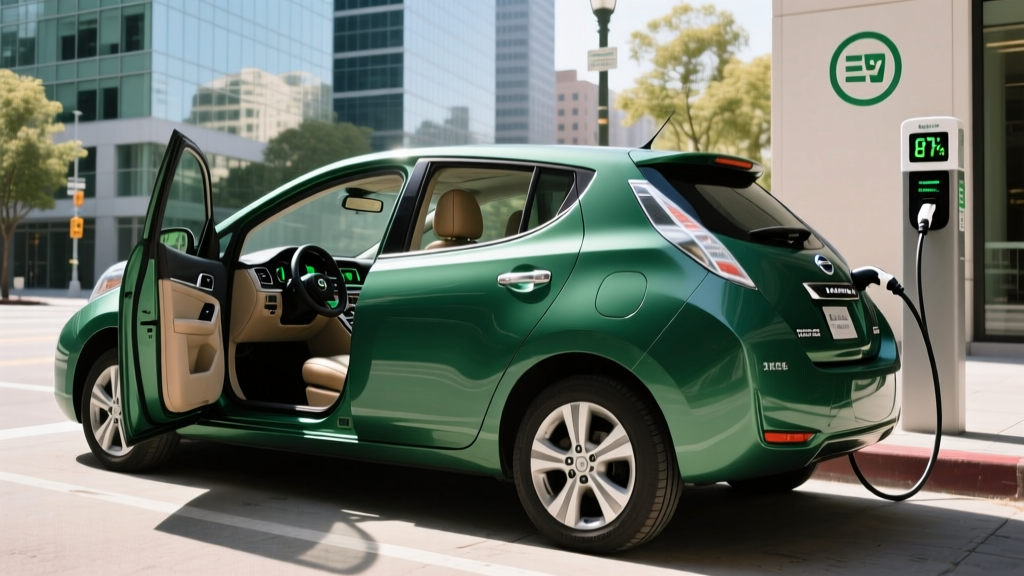
The 2016 Nissan Leaf S at a Glance: A Budget Commuter EV
If you're shopping for an affordable entry point into electric-vehicle ownership, the 2016 Nissan Leaf S frequently appears on used-car listings between $6,000 and $10,000. As the base trim of Nissan's pioneering battery-electric hatchback, the Leaf S was designed for one mission: efficient, zero-tailpipe-emission commuting at the lowest possible cost. A decade later, it still fulfills that role — but only if you understand exactly what you're signing up for.
This was the final model year for the first-generation Leaf's original body style before Nissan introduced the significantly upgraded 2018 model with 150 miles of range. The 2016 Leaf S carries a 24 kWh battery pack (air-cooled, NMC chemistry), an 80 kW electric motor, and an EPA-estimated range that was modest even at launch. In 2026, with battery degradation factored in, this is strictly a short-commute, second-car, or neighborhood-errand vehicle.
Here's everything you need to know before buying one — from real-world range and CHAdeMO charging realities to battery health checks and used-EV tax-credit eligibility.
| Spec | Value |
|---|---|
| EPA Range (new) | 84 miles |
| Battery Capacity | 24 kWh (usable ~22 kWh), NMC chemistry |
| Motor Output | 80 kW (107 hp), 187 lb-ft torque |
| Drivetrain | FWD, single-speed reduction gear |
| 0–60 mph | ~9.9 seconds |
| EPA Efficiency | 112 MPGe combined / 30 kWh per 100 mi |
| DC Fast Charge (CHAdeMO) | ~50 kW peak, 0–80% in ~30 min |
| Level 2 Charge (J1772) | 6.6 kW onboard charger (~22 mi/hr) |
| Cargo Volume | 24.0 cu ft (rear seats up) / 30.0 cu ft (folded) |
| Base MSRP (2016) | $29,010 (before incentives) |
| Used Price Range (2026) | $6,000–$10,500 depending on mileage & battery bars |
| Battery Warranty (original) | 8 yr / 100,000 mi (capacity-loss coverage) |
Real-World Range: What to Actually Expect in 2026
The 2016 Leaf's air-cooled battery management system is the single biggest factor in long-term range retention. Unlike liquid-cooled packs in Teslas, Chevy Bolts, or modern Hyundais, the Leaf's passive thermal management struggles to keep cells in their ideal temperature window. This means faster degradation in hot climates (Arizona, Texas, Southern California owners report the most capacity loss) and reduced charging speeds when the pack is cold or heat-soaked.
Nissan provides a battery capacity gauge on the dash — the rightmost bar cluster shows 12 bars when new. A 2016 Leaf showing 10–11 bars in 2026 has experienced moderate degradation and still offers usable commuting range. Anything at 9 bars or below signals significant capacity loss; negotiate the price down sharply or walk away. You can also request a LeafSpy OBD-II reading for precise State of Health (SoH) percentage — a reading above 75% is acceptable for the price point.
According to EPA data on fueleconomy.gov, the 2016 Leaf S achieves 112 MPGe combined (126 city / 99 highway). Efficiency in real-world mixed driving typically lands between 3.0 and 3.5 miles per kWh, translating to roughly 66–77 miles from a full charge on a healthy pack.
Charging Speeds: CHAdeMO, Level 2, and Network Realities
The 2016 Leaf S uses the CHAdeMO DC fast-charging standard and a J1772 inlet for Level 1 and Level 2 AC charging. This is a critical consideration in 2026: the North American EV industry has largely standardized on NACS (Tesla's connector) and CCS1, while CHAdeMO infrastructure is shrinking.
| Charge Level | Connector | Max Power | Charge Time | Miles Added per Hour |
|---|---|---|---|---|
| Level 1 (120V) | J1772 | 1.4 kW | Full charge: ~18–20 hr | ~4 mi/hr |
| Level 2 (240V) | J1772 | 6.6 kW | Full charge: ~4 hr | ~22 mi/hr |
| DC Fast | CHAdeMO | ~50 kW peak | 0–80%: ~30 min | N/A (session-based) |
A few important notes for prospective owners:
- CHAdeMO availability is declining. Electrify America stations are CCS-only. Some EVgo and older ChargePoint locations still carry CHAdeMO connectors, but you'll need to plan routes carefully using PlugShare or ChargeHub. Nissan did not offer a CCS adapter for the Leaf.
- The 50 kW DC peak is brief. The charge curve tapers significantly above 60% SoC. Expect 30 minutes for 0–80% under ideal conditions; a 60–80% top-up alone can take 15 minutes as the BMS throttles current to protect the air-cooled cells.
- Level 2 home charging is the sweet spot. A 6.6 kW onboard charger means a standard 240V/30A home station replenishes the 24 kWh pack in about 4 hours — more than adequate for overnight charging on a daily commute cycle.
- Level 1 is viable for low-mileage owners. At ~4 miles of range per hour on a standard 120V outlet, plugging in overnight (10–12 hours) adds 40–48 miles — enough for many daily commutes.
Performance and Drivetrain: Adequate for the Mission
The 2016 Leaf S is not a performance EV. Its 80 kW (107 horsepower) AC synchronous motor delivers 187 lb-ft of instant torque to the front wheels through a single-speed reduction gear. The 0–60 mph time of approximately 9.9 seconds is leisurely by modern EV standards (a 2026 Tesla Model 3 RWD does it in 5.8 seconds), but the instant torque makes it feel peppy around town at 0–35 mph.
Top speed is electronically limited to roughly 90 mph. The regenerative braking system offers two modes: standard "D" mode with mild regen and "B" mode with stronger regenerative deceleration for one-pedal-style driving in stop-and-go traffic. It's not true one-pedal driving (the car will creep at very low speeds), but it significantly reduces brake wear — many Leaf owners report original brake pads at 80,000+ miles.
Ride quality is compliant and comfortable for a compact hatchback. The low center of gravity from the under-floor battery pack gives it stable handling, though the eco-oriented low-rolling-resistance tires provide modest grip. This is a car optimized for comfort and efficiency, not canyon carving.
Interior, Tech, and Practicality
The 2016 Leaf S is the base trim, and it shows. You get a 5.0-inch color display (non-touchscreen on the S trim — controlled via steering-wheel buttons), a rearview camera, Bluetooth phone and audio, and a 4-speaker audio system. Navigation, the 7.0-inch touchscreen, and premium audio were reserved for the SV and SL trims.
Passenger space is surprisingly generous for a compact hatch:
- Front legroom: 42.1 inches
- Rear legroom: 33.5 inches
- Headroom (front/rear): 40.9 / 38.0 inches
- Cargo behind rear seats: 24.0 cu ft
- Cargo with rear seats folded: 30.0 cu ft
The cargo area is practical for groceries, luggage for two, or a week's worth of commuting gear. There is no frunk (front trunk) — the space under the hood houses the motor, inverter, and 12V auxiliary battery.
Notable technology includes the Eco Route drive-mode selector, a battery temperature gauge, and Nissan's CARWINGS telematics system (now largely deprecated for remote connectivity). The Leaf S lacks modern ADAS features: no automatic emergency braking, no lane-keeping assist, no adaptive cruise control. These were not widely available in affordable compacts in 2016.
Used Pricing, Ownership Costs, and Tax-Credit Eligibility
The 2016 Nissan Leaf S originally carried an MSRP of $29,010, which dropped to roughly $21,500 after the $7,500 federal tax credit available at the time. In 2026, used examples are a very different story — and a genuine bargain for the right buyer.
| Condition / Battery Bars | Typical Price Range | Mileage Range |
|---|---|---|
| Excellent (11–12 bars) | $9,000–$10,500 | 40,000–65,000 mi |
| Good (10 bars) | $7,500–$9,000 | 60,000–85,000 mi |
| Fair (9 bars or below) | $5,500–$7,000 | 80,000–110,000 mi |
Does the 2016 Leaf S qualify for the federal used-EV tax credit?
Possibly — but the rules are specific. Under IRS §25E (the previously owned clean vehicle credit), you may qualify for up to $4,000 (30% of the sale price, capped at $4,000) if all of the following are met:
- The vehicle is purchased from a licensed dealer (private-party sales do not qualify)
- The sale price is $25,000 or less (virtually all 2016 Leafs qualify)
- Your modified adjusted gross income does not exceed $75,000 (single) / $112,500 (head of household) / $150,000 (joint) — per IRS guidelines
- The vehicle is at least 2 model years old (a 2016 model qualifies)
- You have not claimed the used-EV credit in the prior 3 years
- The vehicle has not already had the used-EV credit claimed on it after August 16, 2022 (check the VIN history)
If eligible, a $7,500 Leaf S purchase could yield a $2,250 credit (30% of sale price), bringing your net cost to $5,250. A $9,500 example would yield the full $2,850 credit (still under the $4,000 cap), netting $6,650. Consult a tax professional to confirm your eligibility — rules are subject to change and individual circumstances vary.
Ongoing Ownership Economics
Running costs are where the 2016 Leaf S shines. At a national average electricity rate of ~$0.16/kWh and 3.3 mi/kWh efficiency, fuel cost is approximately $0.048 per mile — compared to $0.12–$0.15/mile for a 30 MPG gas car at $3.50/gallon. Over 10,000 annual miles, that's $480 in electricity vs. $1,200–$1,500 in gasoline, saving $720–$1,020 per year.
Maintenance is minimal: no oil changes, no spark plugs, no transmission fluid. Budget for cabin air filter replacement (~$25 annually), brake fluid flush every 2–3 years, and tire rotation. Insurance premiums are typically lower than average due to the vehicle's low value and modest performance.
Pros, Cons, and the Verdict
- Extremely low purchase price ($6K–$10K)
- Potential $2,250–$4,000 used-EV tax credit
- Cheap to operate (~$0.05/mile electricity)
- Comfortable ride, spacious hatchback cargo area
- Minimal maintenance requirements
- Strong regenerative braking reduces brake wear
- Reliable drivetrain — few mechanical failures reported
- Short real-world range (60–72 mi on a healthy used pack)
- Air-cooled battery accelerates degradation, especially in hot climates
- CHAdeMO fast-charging network is shrinking rapidly
- No modern driver-assistance features (AEB, LKA, ACC)
- Base S trim lacks touchscreen navigation
- Not viable for road trips or long highway commutes
- Winter range drops to 45–55 miles
Who Should Buy the 2016 Nissan Leaf S?
This car is an excellent fit if you need a dedicated commuter for trips under 30 miles round-trip, have reliable home Level 2 charging, live in a moderate climate, and want the lowest possible cost-per-mile transportation. It works well as a second household car for school runs, errands, and local driving. It's also a solid first EV for someone wanting to learn electric ownership habits before committing to a $40,000+ new EV.
Look elsewhere if you need highway range, road-trip capability, fast DC charging flexibility, modern safety tech, or live in an extreme-heat climate where the air-cooled battery will degrade faster.
2016 Leaf S vs. Key Used-EV Competitors
At the $7,000–$10,000 price point, the Leaf S competes with the 2016–2017 BMW i3 (80–100 mi range, more engaging to drive, pricier to maintain), the 2017 Chevy Bolt EV (238 mi range, liquid-cooled battery, but typically $12,000+ used), and the 2016–2017 Fiat 500e (84 mi range, fun but tiny). The Leaf S offers the best cargo space and the lowest entry price, but the Bolt is dramatically more capable if your budget stretches.
Frequently Asked Questions
What is the real-world range of a used 2016 Nissan Leaf S?
Expect 60–72 miles in moderate weather with a pack showing 10–11 capacity bars. Highway driving at 70 mph reduces this by 10–15%. Winter temperatures below freezing can drop range to 45–55 miles due to cabin heating and reduced battery efficiency.
How fast does the 2016 Leaf S charge?
On a Level 2 (240V) home charger at 6.6 kW, a full charge takes about 4 hours, adding roughly 22 miles of range per hour. On a CHAdeMO DC fast charger, it peaks at approximately 50 kW and reaches 80% in about 30 minutes — though charging speed tapers significantly above 60% SoC to protect the air-cooled battery.
How much does a 2016 Nissan Leaf S cost after tax credits?
Used prices range from $6,000 to $10,500 depending on condition and battery health. If you qualify for the IRS §25E used-EV credit (dealer purchase, income caps met, VIN not previously claimed), you can reduce your net cost by 30% of the sale price, up to $4,000. A $7,500 Leaf could net $5,250 after a $2,250 credit.
Is the 2016 Leaf S worth buying vs. competitors?
It's the most affordable entry into EV ownership with practical hatchback cargo space and proven reliability. If your commute is short and you can charge at home, the value is hard to beat. However, the 2017+ Chevy Bolt EV offers 238 miles of range and a liquid-cooled battery for a few thousand dollars more — a significantly more capable vehicle if your budget allows.
Does the 2016 Leaf S qualify for any federal EV tax credit?
Not the new-vehicle §30D credit (that's for new purchases). However, it may qualify for the §25E used clean vehicle credit of up to $4,000 if purchased from a dealer for $25,000 or less, your income falls under IRS thresholds, and the specific VIN hasn't already had the credit claimed post-August 2022. Verify with a tax professional and check IRS §25E guidelines.
How do I check the battery health before buying?
Look at the battery capacity bars on the dashboard (far right of the instrument cluster) — 12 bars is new, and anything above 10 is acceptable for the price. For a precise reading, use a LeafSpy OBD-II dongle with the LeafSpy Pro app, which reports State of Health (SoH) as a percentage. Aim for 75%+ SoH. Also check if the battery was ever replaced under Nissan's 8-year/100,000-mile warranty.
Can I road-trip in a 2016 Leaf S?
Technically yes, but it requires extensive planning around CHAdeMO-equipped DC fast chargers (an increasingly rare connector), 30-minute charge stops every 50–60 miles, and acceptance that highway speeds will reduce range further. This is a commuter car, not a road-trip vehicle. For occasional longer trips, renting a gas car or using a second household vehicle is the practical approach.