The 2015 BMW i3 in 2026: A Quirky Pioneer on the Used Market
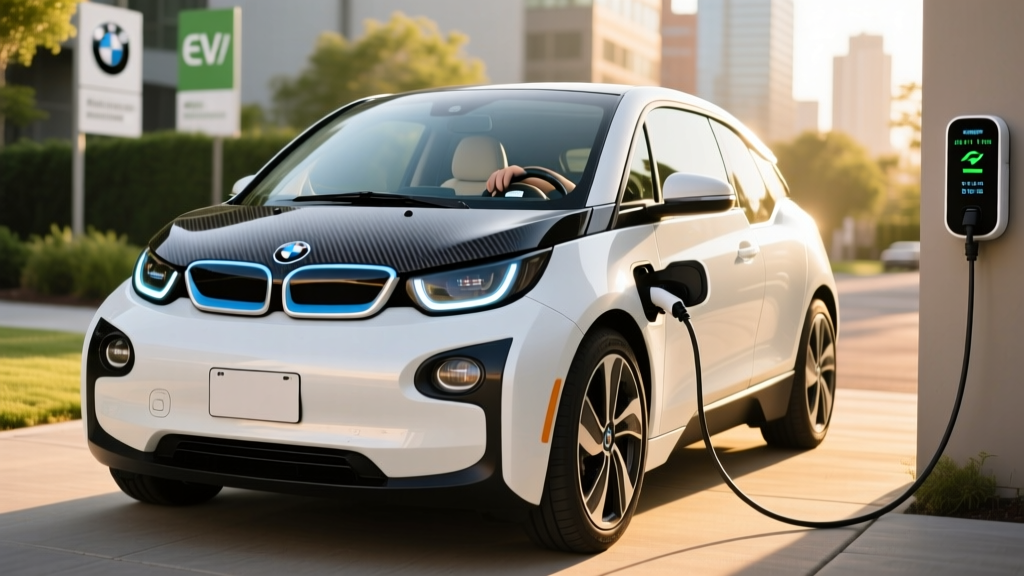
The 2015 BMW i3 was one of the first mass-market EVs built from the ground up as an electric vehicle, and a decade later it remains one of the most distinctive used EVs you can buy. Its carbon-fiber-reinforced plastic (CFRP) passenger cell, skinny low-rolling-resistance tires, and optional gasoline range extender (REx) made it unlike anything else on the road. In 2026, with used EV prices softening and the IRS used-vehicle tax credit still in play, the first-generation i3 is attracting a new wave of budget-conscious buyers looking for a premium-badge city commuter.
This review covers the 2015 model year specifically — the i3's debut year in the United States. We'll walk through real-world range, charging speeds, the REx powertrain, what ownership actually costs today, and whether this early EV still holds up against newer, longer-range competitors on the used market.
Range, Battery, and Real-World Efficiency
The 2015 BMW i3 shipped with a 22 kWh gross battery pack (approximately 18.8 kWh usable) using Samsung SDI NMC (nickel-manganese-cobalt) lithium-ion cells. This is not the larger 33 kWh (94 Ah) pack BMW introduced for the 2017 model year, nor the 42.2 kWh pack that arrived in 2019. If range is your top priority, those later model years are worth the premium.
| Spec | Value |
|---|---|
| EPA Range (BEV) | 81 miles |
| Battery (gross / usable) | 22 kWh / ~18.8 kWh |
| Chemistry | NMC (Samsung SDI 60 Ah cells) |
| EPA Efficiency | 124 MPGe combined (27 kWh/100 mi) |
| Motor Output | 170 hp / 184 lb-ft torque |
| Drivetrain | Rear-wheel drive (single-speed) |
| 0–60 mph | 7.0 seconds (BEV) |
| Cargo Volume | 15.1 cu ft (rear seats up) |
| Rear Legroom | 31.9 inches |
| Curb Weight | ~2,860 lbs (BEV) |
| Battery Warranty (original) | 8 years / 100,000 miles |
The EPA rates the 2015 i3 BEV at 81 miles. In real-world mixed driving at moderate temperatures (60–75°F), expect roughly 65–75 miles at highway speeds (70+ mph), where aerodynamic drag penalizes the tall, narrow body. In city driving with heavy regenerative braking, some owners report stretching to 80–90 miles. In cold weather (below 32°F) without preconditioning, range can drop to 50–60 miles — a 25–35% reduction typical of NMC packs without a dedicated heat pump (the 2015 i3 uses resistive cabin heating). A decade of battery degradation — typically 10–18% on these Samsung 60 Ah cells — further compresses usable range. Plan for 55–70 real-world miles on a 2026-purchased used example in mixed conditions.
The i3's efficiency is genuinely excellent. At 124 MPGe combined (27 kWh per 100 miles), it sips electrons thanks to its lightweight CFRP structure and narrow 155/70R19 tires. For context, that's roughly half the energy consumption of a 2026 Tesla Model Y RWD per mile. If your commute is short and your electricity rate is average (~$0.16/kWh nationally), your fuel cost per mile is under $0.05.
Charging: DC Fast, Level 2, and Level 1
The 2015 i3 uses the CCS1 (Combo) connector for DC fast charging and a standard J1772 inlet for Level 1 and Level 2 AC charging. It does not have a NACS (Tesla) port, though CCS-to-NACS adapters are increasingly available for Supercharger access.
| Level | Power | Time / Rate |
|---|---|---|
| Level 1 (120V, 12A) | ~1.4 kW | ~14–16 hours (0–100%); ~4 mi/hr |
| Level 2 (240V, 32A) | 7.4 kW (onboard charger) | ~3 hours (0–100%); ~22 mi/hr |
| DC Fast Charge (CCS1) | Up to 50 kW peak | ~28–30 min (10–80%); tapers sharply above 80% |
Charging curve reality: The i3's 50 kW peak DC charge rate is modest by 2026 standards, but with an 18.8 kWh usable battery, 50 kW represents roughly a 2.6C rate — meaning the battery fills quickly in absolute time. You'll hit 80% State of Charge (SoC) in about 28–30 minutes on a functioning 50 kW CCS station. Above 80%, the charge rate tapers to under 15 kW to protect cell health, so charging to 100% on DC adds significant time. For daily use, Level 2 home charging at 7.4 kW fully replenishes the pack overnight in roughly 3 hours — perfectly adequate for a commuter vehicle.
Important note on DC fast charging availability: Not all 2015 i3s were equipped with the CCS DC fast-charge port. BMW offered it as a $750 option. When shopping used, physically inspect the charge port — if you see only a J1772 inlet (no lower DC pins), the car lacks DC fast charging. This is a critical dealbreaker for anyone who road-trips or lacks home charging.
Performance and Driving Dynamics
The 2015 i3's synchronous electric motor produces 170 horsepower and 184 lb-ft of torque, all routed to the rear wheels through a single-speed reduction gear. BMW quotes a 7.0-second 0–60 mph time for the pure BEV variant, and the instant torque delivery makes it feel quicker than that number suggests in city traffic.
The driving experience is uniquely engaging. At roughly 2,860 lbs (BEV), the i3 is hundreds of pounds lighter than most modern EVs, and that low mass translates to nimble handling, quick steering response, and excellent ride quality over urban imperfections. The tall seating position, thin A-pillars, and expansive glass give it an airy, command-driving feel that owners consistently praise. The skinny tires do limit cornering grip, and crosswinds on the highway are noticeable — this is a city car that can handle highway duty, not a highway car that happens to work in the city.
Regenerative braking is aggressive and single-mode (no adjustable levels). Lift off the accelerator and the i3 decelerates at roughly 0.15g, enabling genuine one-pedal driving in most city scenarios. There is no traditional "creep" mode at stoplights — you hold the brake pedal.
The Range Extender (REx) Option: 2-Cylinder Insurance
BMW offered a Range Extender (REx) variant of the 2015 i3, pairing the electric drivetrain with a 647cc two-cylinder gasoline engine (sourced from BMW's motorcycle division, essentially a K1300 parallel-twin). The REx adds roughly 330 lbs and a 2.4-gallon fuel tank. The gasoline engine does not drive the wheels directly — it acts as a generator to maintain battery SoC once it drops to approximately 6%.
The EPA rates the i3 REx at 72 miles of electric-only range (slightly less than the BEV due to added weight), followed by 39 MPGe combined in charge-sustaining (gasoline) mode. Real-world owners report the REx extends total range to approximately 150–180 miles before needing to refuel and recharge. The engine is audible under hard acceleration and on sustained highway grades, and some owners note it struggles to maintain speed on steep mountain passes when the battery is depleted.
The REx adds complexity — you now have oil changes, spark plugs, a fuel filter, and emissions systems to maintain. However, for buyers who need occasional longer trips but want electric commuting most days, the REx was a pragmatic bridge in 2015 and still serves that niche today.
Interior, Tech, and Practicality
The i3's interior was radical in 2015 and still feels distinctive. BMW used eucalyptus wood dash trim, recycled wool-and-kenaf door panels, and olive-leaf-tanned leather on higher trims. The open-air cabin design (no traditional center console tunnel) creates a spacious feel despite compact exterior dimensions.
Infotainment: The 2015 model uses BMW's iDrive system with a 6.5-inch display (or optional 8.8-inch with the Navigation/Technology package). It includes Bluetooth, USB, and BMW's ConnectedDrive services. There is no Apple CarPlay or Android Auto — these were not offered on the i3 until later model years, and even then only wired CarPlay. Plan on using your phone mounted on the dash for modern navigation and music.
Driver assistance: Expect minimal ADAS. The 2015 i3 offers cruise control and parking sensors. There is no adaptive cruise, no lane-keeping assist, no automatic emergency braking, and no blind-spot monitoring as standard. The optional Technology + Driving Assistance package added a rearview camera and parking assistant, but this is SAE Level 0–1 assistance at best — the driver is fully responsible at all times.
Cargo and passenger space: The rear-hinged "coach doors" (suicide doors) provide wide access to the rear seats, but the rear legroom is tight at 31.9 inches — fine for children and short adults, cramped for taller passengers on longer rides. Cargo volume is 15.1 cubic feet behind the rear seats, expanding to approximately 36 cu ft with the 50/50 rear seats folded. There is no frunk — the front hood area houses the power electronics and (on REx models) the engine.
Pricing, Used Market, and Tax Credit Eligibility
The 2015 BMW i3 originally started at $42,200 MSRP (BEV base) and $46,050 (REx), before destination and options. A well-optioned Tera World or Giga World trim could push past $50,000.
In the 2026 used market, 2015 i3 BEVs typically trade between $8,000 and $14,000, depending on mileage, condition, battery State of Health (SoH), and trim. REx models command a $1,000–$2,000 premium. High-mileage examples with degraded batteries can dip below $7,000.
As a used vehicle, the 2015 i3 is not eligible for the new-vehicle §30D credit. Instead, it may qualify for the §25E Previously-Owned Clean Vehicle Credit, which provides 30% of the sale price, up to a maximum of $4,000. Per IRS guidelines, eligibility requirements include:
- Sale price must be $25,000 or less (virtually all 2015 i3s qualify)
- Buyer's adjusted gross income must not exceed $75,000 (single) / $112,500 (head of household) / $150,000 (joint)
- Vehicle must be at least 2 model years old (2015 qualifies)
- Must be purchased from a licensed dealer (private-party sales do not qualify)
- Buyer must not have claimed the used-EV credit in the prior 3 years
- Vehicle must have a battery capacity of at least 7 kWh (i3's 22 kWh qualifies)
Battery Health, Warranty, and Longevity
The original battery warranty on the 2015 i3 was 8 years / 100,000 miles against defects and excessive capacity loss (BMW defined "excessive" as dropping below 70% of original capacity). As of 2026, every 2015 i3 is past its original battery warranty unless an extended warranty was purchased and transferred. This is a critical consideration for used buyers.
Real-world battery degradation data from i3 owner communities shows the 22 kWh Samsung 60 Ah cells typically retain 82–90% State of Health (SoH) after 8–10 years and 60,000–100,000 miles, assuming no sustained DC fast-charging abuse or extreme-heat exposure. A battery at 82% SoH effectively reduces the already modest 18.8 kWh usable capacity to roughly 15.4 kWh — translating to perhaps 55–65 real-world miles.
Battery replacement cost: A refurbished 22 kWh i3 battery pack from a BMW dealer typically runs $8,000–$12,000 installed. Third-party battery rebuild services exist for $4,000–$7,000, replacing degraded cells while reusing the original housing and BMS. Before purchasing any used i3, request a battery SoH reading — either through the iDrive hidden service menu, an OBD-II dongle with an app like BimmerCode/BimmerLink, or a dealer diagnostic report.
Who Should Buy the 2015 BMW i3?
- Your daily round-trip commute is under 40 miles
- You have reliable home Level 2 charging
- You want a premium-badge EV under $10,000 (after credit)
- You value unique design, lightweight agility, and excellent visibility
- You primarily drive in urban or suburban environments
- You want ultra-low running costs (~$0.04–0.05/mile on electricity)
- Your commute exceeds 50 miles one-way
- You regularly drive in extreme cold without garage parking
- You need rear-seat space for adults or bulky car seats
- You want modern ADAS (AEB, lane-keeping, adaptive cruise)
- You road-trip frequently and cannot tolerate 30-minute charge stops every 60 miles
- You need Apple CarPlay or Android Auto integration
Competitor Comparison: 2015 i3 vs. Key Used EVs
| Spec | 2015 BMW i3 BEV | 2015 Nissan Leaf (30 kWh) | 2015 VW e-Golf |
|---|---|---|---|
| EPA Range | 81 mi | 107 mi | 83 mi |
| Battery (usable) | ~18.8 kWh | ~28 kWh | ~21.2 kWh |
| DC Fast Charge | 50 kW (CCS1) | 50 kW (CHAdeMO) | 50 kW (CCS1) |
| 0–60 mph | 7.0 sec | 9.8 sec | 9.2 sec |
| Horsepower | 170 hp | 107 hp | 115 hp |
| MPGe (combined) | 124 | 114 | 116 |
| Cargo (cu ft) | 15.1 | 24.0 | 22.8 |
| Typical 2026 Used Price | $8,000–$14,000 | $6,000–$10,000 | $7,500–$11,000 |
The i3 wins on efficiency (124 MPGe), performance (170 hp, 7.0 sec 0–60), and build quality. The Leaf offers more range and cargo space but suffers from passive air-cooled battery thermal management, leading to faster degradation and "Rapidgate" charge throttling in heat. The e-Golf feels more conventional but is slower and slightly less efficient. According to fueleconomy.gov, the i3's combined efficiency remains among the best of any EV sold in the U.S.
Frequently Asked Questions
What is the real-world range of the 2015 BMW i3 in 2026?
Expect 55–70 miles in mixed driving on a used example with moderate battery degradation. Highway driving at 70+ mph reduces this to 50–60 miles. Cold weather (below freezing) without preconditioning can drop range to 45–55 miles. The EPA sticker says 81 miles, but plan your charging around 60 miles of usable range for safety.
How fast does the 2015 i3 charge at home and on DC fast chargers?
On a Level 2 home charger (240V, 32A), the i3 charges at up to 7.4 kW, adding roughly 22 miles of range per hour and filling the battery in about 3 hours. On a DC fast charger, it peaks at 50 kW, reaching 80% SoC in approximately 28–30 minutes. Verify the car has the optional CCS port before relying on DC charging.
Does the 2015 BMW i3 qualify for any federal tax credit?
Not the new-vehicle §30D credit. However, it may qualify for the §25E used-EV credit: 30% of the sale price up to $4,000, subject to buyer income caps ($75K single / $150K joint), a $25,000 maximum sale price, and purchase through a licensed dealer. On a typical $10,000 used i3, that's a $3,000 credit. Always verify current rules on irs.gov and consult a tax professional.
Is the 2015 i3 worth buying over a newer used EV?
It depends on your commute. If you drive under 40 miles daily and charge at home, the i3 offers premium build quality, exceptional efficiency, and fun driving dynamics for under $10,000 after the used-EV credit. If you need more range, look at a 2017+ i3 (114-mile EPA, 33 kWh battery), a used Chevrolet Bolt EV (238 miles), or a used Hyundai Kona Electric (258 miles) — but expect to pay $14,000–$20,000+ for those alternatives.
What should I check before buying a used 2015 i3?
Three items are non-negotiable: (1) Battery State of Health — request a SoH reading; anything below 80% means significantly reduced range and potential replacement cost. (2) CCS DC fast-charge port — visually confirm it's present if you need road-trip capability. (3) REx maintenance records (if applicable) — the two-cylinder engine needs regular oil changes and fuel-system service even if rarely used, as stale fuel degrades.
Can I charge a 2015 i3 at a Tesla Supercharger?
Not natively — the 2015 i3 uses CCS1. However, CCS-to-NACS adapters are available (typically $150–$250) that enable access to Tesla's Supercharger network. Charge speeds will be limited to the i3's 50 kW maximum regardless of the station's capability.