Quick Verdict: The Mach-E Premium at a Glance
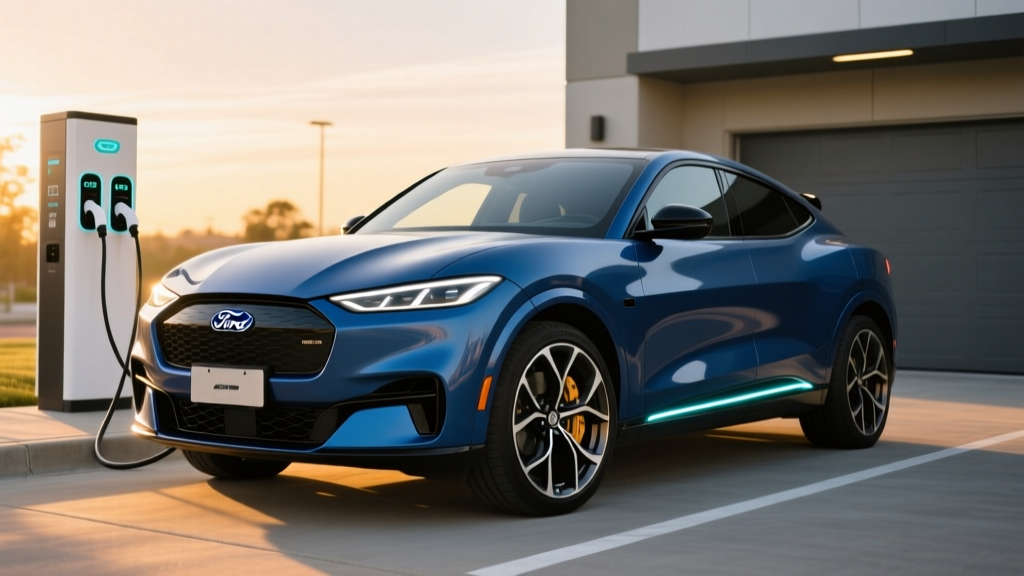
The 2023 Ford Mustang Mach-E Premium remains one of the most well-rounded electric crossovers on the used-EV market heading into 2026. With an EPA-estimated range of up to 312 miles (Extended Range RWD), a usable 91 kWh battery, and Ford's proven BlueCruise Level 2 driver-assist system, it delivers a compelling package for buyers who want mainstream dealer support without Tesla's ecosystem lock-in. The Premium trim specifically adds panoramic sunroof, premium audio, hands-free driving assist, and heated/cooled front seats over the Select base — making it the sweet-spot trim for most buyers.
However, real-world highway range falls short of the EPA sticker, DC fast charging peaks at 150 kW (slower than Hyundai/Kia's 800V rivals), and federal tax credit eligibility on used examples depends on strict IRS §30D resale rules. This review breaks down every number that matters.
Range, Battery, and Real-World Efficiency
| Spec | Standard Range (SR) | Extended Range (ER) RWD | Extended Range (ER) AWD |
|---|---|---|---|
| EPA Range | 250 mi | 312 mi | 290 mi |
| Battery (Usable / Gross) | 68 kWh / 75.7 kWh | 91 kWh / 98.8 kWh | 91 kWh / 98.8 kWh |
| Battery Chemistry | NMC (Nickel Manganese Cobalt) | NMC | NMC |
| Horsepower | 266 hp | 290 hp | 346 hp |
| Torque | 317 lb-ft | 317 lb-ft | 428 lb-ft |
| 0–60 mph | 5.8 sec | 6.1 sec | 4.8 sec |
| Drivetrain | RWD (single motor) | RWD (single motor) | AWD (dual motor) |
| Efficiency (Combined MPGe) | 101 MPGe | 104 MPGe | 98 MPGe |
| kWh/100 mi | 33 | 32 | 34 |
The EPA rates the Extended Range RWD Mach-E Premium at 312 miles. In real-world highway driving at 70–75 mph, expect approximately 255–275 miles before needing to charge. In cold weather (below 30°F), range can drop an additional 15–25%, yielding roughly 210–235 miles on the highway in winter conditions. City driving with regenerative braking recovers energy and gets closer to the EPA sticker — often 290+ miles in mild temperatures. The Standard Range model's 250-mile EPA figure translates to roughly 200–220 miles real-world highway.
The Mach-E uses NMC (nickel manganese cobalt) lithium-ion pouch cells supplied by LG Energy Solution. NMC offers higher energy density than LFP (lithium iron phosphate), which is why Ford fits 91 usable kWh into a package that keeps curb weight around 4,800 lbs. The trade-off: NMC degrades slightly faster than LFP over thousands of cycles, and Ford recommends charging to 80% for daily use to preserve long-term battery health — reserving 100% for road trips.
According to fueleconomy.gov, the ER RWD model achieves 104 MPGe combined (32 kWh/100 mi), which is competitive with the Tesla Model Y Long Range (122 MPGe) but trails the Hyundai Ioniq 5's 114 MPGe. The AWD version drops to 98 MPGe combined due to the second motor's parasitic losses and added weight.
Charging Speed: DC Fast, Level 2, and Level 1
| Charging Level | Power / Rate | Speed | Connector |
|---|---|---|---|
| Level 1 (120V household) | ~1.4 kW | ~3–4 mi/hr | J1772 (included mobile cord) |
| Level 2 (240V home/public) | 10.5 kW (max onboard) | ~28–32 mi/hr; full charge in ~10 hr (ER) | J1772 / NACS (2025+ adapter) |
| DC Fast Charge | 150 kW peak (ER) / 115 kW peak (SR) | 10–80% in ~45 min (ER); 10–80% in ~38 min (SR) | CCS1 (native); NACS via adapter |
The Mach-E Premium's DC fast-charging capability is its most debated spec. The Extended Range model peaks at 150 kW, but that peak is sustained only between roughly 10–35% state of charge. The charging curve tapers significantly above 60% SoC — by 80%, you're pulling roughly 50–60 kW. This means a 10–80% session takes approximately 45 minutes at a 150+ kW charger, which is 15–20 minutes slower than the Hyundai Ioniq 5 or Kia EV6 (both using 800V architecture capable of 350 kW peaks and 10–80% in ~18 minutes).
For home Level 2 charging, the Mach-E's 10.5 kW onboard charger is a strong point. On a 48-amp Level 2 circuit (the most common home install), you'll add roughly 30 miles of range per hour — enough to fully replenish the Extended Range battery overnight in about 10 hours. Ford's Mobile Power Cord is included and supports both 120V and 240V outlets, though a dedicated wall connector (such as the Ford Charge Station Pro at $599) provides faster, more reliable daily charging.
Connector note: The 2023 Mach-E ships with a CCS1 connector. Ford began providing NACS (Tesla Supercharger) adapters to Mach-E owners in 2024, and by 2026 most owners have access to Tesla's Supercharger network via this adapter — dramatically expanding DC fast-charging options on road trips. Check with your dealer for adapter availability on used models.
Pricing, Trims, and Federal Tax Credit Eligibility
| Configuration | Original MSRP (2023) | Est. Used Price (2026) | Used EV Credit Eligibility |
|---|---|---|---|
| Premium SR RWD | $48,995 | $27,000–$31,000 | Potentially up to $4,000 (§25E) |
| Premium ER RWD | $54,995 | $30,000–$35,000 | Potentially up to $4,000 (§25E) |
| Premium ER AWD | $57,995 | $32,000–$37,000 | Potentially up to $4,000 (§25E) |
As a 2023 model, the Mach-E Premium is now purchased on the used market. The federal §25E Used Clean Vehicle Credit offers up to $4,000 (or 30% of the sale price, whichever is less) on qualifying used EVs. Key eligibility rules per the IRS:
- Price cap: The used sale price must be $25,000 or less to qualify for the full $4,000 credit. Many Mach-E Premium ER examples hover near or above this threshold — negotiate carefully.
- Income cap: Buyer AGI must not exceed $75,000 (single), $112,500 (head of household), or $150,000 (joint).
- Vehicle age: Must be at least 2 model years old (2023 qualifies in 2026).
- Dealer requirement: Must be purchased from a licensed dealer, not a private party.
- First transfer: The credit applies only to the first qualified resale after August 16, 2022.
Interior, Cargo, and Technology
The Mach-E Premium's cabin is a step above the Select trim, featuring Ford's SofTex synthetic leather upholstery, a panoramic fixed-glass roof (which adds openness but no shade — bring sunglasses), a 10-speaker B&O premium audio system, and heated and ventilated front seats. The centerpiece is a massive 15.5-inch portrait-oriented touchscreen running Ford's SYNC 4A infotainment system, paired with a 10.2-inch digital instrument cluster.
Cargo and passenger dimensions:
- Cargo volume (behind rear seats): 29.7 cu ft
- Cargo volume (rear seats folded): 59.7 cu ft
- Front trunk (frunk): 4.7 cu ft (drainable — useful for tailgating or wet gear)
- Front legroom: 43.3 inches
- Rear legroom: 38.9 inches
- Front headroom: 40.4 inches (with panoramic roof)
- Rear headroom: 38.2 inches
Rear-seat space is adequate for adults on shorter trips but tighter than a Tesla Model Y or Hyundai Ioniq 5 for taller passengers. The frunk, while small, includes a drain plug — a practical touch for hauling ice or muddy gear.
Driver assistance: The Premium trim includes Ford's BlueCruise (SAE Level 2), which enables hands-free driving on pre-mapped divided highways (over 130,000 miles of BlueCruise zones in the US as of 2026). A driver-facing camera monitors attention — you must remain alert and ready to take over. BlueCruise is not autonomous driving; it's an advanced lane-centering and adaptive cruise system that works well in its operational domain. The Mach-E also includes Ford Co-Pilot360 2.0 with automatic emergency braking, blind-spot monitoring, rear cross-traffic alert, and evasive steering assist.
BlueCruise is a Level 2 driver-assist system. The driver must remain engaged, eyes on the road (monitored by cabin camera), and hands available. It does NOT drive the vehicle autonomously. Level 4 driverless operation is currently limited to geofenced robotaxi services like Waymo.
Warranty, Battery Longevity, and Ownership Costs
Ford backs the 2023 Mach-E with a competitive warranty package:
- Battery warranty: 8 years / 100,000 miles (whichever comes first), covering defects and capacity loss below 70% of original capacity.
- Electric powertrain warranty: 8 years / 100,000 miles (covers motors, inverter, onboard charger, and related components).
- Bumper-to-bumper: 3 years / 36,000 miles.
- Corrosion perforation: 5 years / unlimited miles.
NMC battery degradation data from early Mach-E owners (2021–2022 models now at 60,000–100,000 miles) shows approximately 6–10% capacity loss over the first three years, depending on charging habits and climate. Owners who charge primarily on Level 2 at home and avoid frequent 100% charges or DC fast charging report degradation closer to 5–6%. This is within industry norms for NMC chemistry and suggests the battery should retain 80%+ capacity well past the 8-year warranty period.
Insurance: Mach-E insurance premiums run 10–20% higher than comparable gas-powered crossovers, averaging $1,800–$2,400/year depending on state, driving record, and coverage level. Get quotes before purchasing.
Maintenance: EV maintenance costs are significantly lower than gas vehicles — no oil changes, no transmission fluid, no spark plugs. Expect to budget for tire rotation/replacement (EVs wear tires faster due to torque and weight), cabin air filter, brake fluid checks, and wiper blades. Annual maintenance averages $200–$400.
Pros and Cons
✓ Pros
- 312-mile EPA range (ER RWD) handles most road trips comfortably
- 10.5 kW Level 2 onboard charger — faster than many rivals
- BlueCruise hands-free highway driving on 130K+ miles of roads
- NACS adapter access to Tesla Supercharger network
- Drainable frunk for practical cargo use
- Strong B&O audio and large 15.5" infotainment screen
- Competitive 8-yr/100K-mi battery warranty
- Ford dealer network for service and support nationwide
✗ Cons
- 150 kW DC peak is slow vs. 800V rivals (Ioniq 5, EV6 at 235–350 kW)
- Real-world highway range ~255–275 mi, not the 312-mi sticker
- Cold-weather range loss of 15–25% is significant
- Rear seat space tighter than Model Y and Ioniq 5
- Panoramic glass roof has no retractable shade
- Insurance costs 10–20% higher than gas equivalents
- Used §25E credit requires sale price ≤$25,000 — hard to find at this trim
- No heat pump on 2023 model (reduces winter efficiency)
Who Should Buy the 2023 Mach-E Premium?
Choose the Mach-E Premium Extended Range RWD if:
- You primarily commute 40–80 miles/day and can charge at home on Level 2
- You want mainstream dealer service without relying on Tesla's ecosystem
- You value BlueCruise for highway commuting and road trips
- You need 29+ cu ft of cargo space for gear, groceries, or a stroller
Choose the Mach-E Premium Extended Range AWD if:
- You live in a snow-belt state and need dual-motor traction
- You want the 4.8-second 0–60 time for merging and passing confidence
Look elsewhere if:
- You frequently road-trip 400+ miles and need the fastest DC charging (consider Ioniq 5 or Model Y)
- You regularly carry tall adults in the rear seat (Model Y or EV6 offer more room)
- You need towing — the Mach-E is not rated for towing
How Does It Compare to Key Competitors?
| Spec | Mach-E Premium ER RWD | Tesla Model Y LR | Hyundai Ioniq 5 SEL AWD |
|---|---|---|---|
| EPA Range | 312 mi | 330 mi | 266 mi (AWD) |
| Battery (usable) | 91 kWh (NMC) | ~75 kWh (NMC) | 77.4 kWh (NMC) |
| DC Fast Charge Peak | 150 kW | 250 kW | 235 kW (800V) |
| 10–80% DC Time | ~45 min | ~30 min | ~18 min |
| 0–60 mph | 6.1 sec | 5.0 sec | 5.2 sec |
| Cargo (rear seats up) | 29.7 cu ft | 30.2 cu ft | 27.2 cu ft |
| Level 2 Assist | BlueCruise | Autopilot (FSD optional) | Highway Driving Assist 2 |
| Heat Pump | No | Yes | Yes |
The Mach-E wins on battery capacity and available BlueCruise highway zones but loses on charging speed to both the Model Y and especially the Ioniq 5. The lack of a heat pump on the 2023 Mach-E means winter efficiency suffers more than its rivals — a meaningful disadvantage in northern climates. According to IIHS, the 2023 Mach-E earned a Top Safety Pick designation, while the Model Y and Ioniq 5 also scored top marks.
Frequently Asked Questions
What is the real-world range of the 2023 Mustang Mach-E Premium?
The EPA rates the Extended Range RWD at 312 miles, but real-world highway driving at 70+ mph typically yields 255–275 miles in mild weather and 210–235 miles in freezing temperatures. City driving with regenerative braking gets closer to the EPA number, often 280–300 miles.
How fast does the Mach-E Premium charge at home and on the road?
On a 48-amp Level 2 home charger, the Mach-E adds ~30 miles per hour and fully charges overnight in about 10 hours (ER). On DC fast chargers, it peaks at 150 kW, reaching 10–80% in approximately 45 minutes. This is slower than 800V competitors like the Ioniq 5 (18 minutes).
Does the 2023 Mach-E qualify for a federal tax credit in 2026?
As a used vehicle, it may qualify for the §25E Used Clean Vehicle Credit of up to $4,000, but only if the sale price is $25,000 or less, buyer income is under IRS caps ($75K single / $150K joint), and the vehicle meets battery-component requirements. Verify eligibility by VIN on the IRS website before purchase.
Is the Mach-E Premium worth buying over a Tesla Model Y or Ioniq 5?
The Mach-E Premium makes sense if you want Ford dealer support, BlueCruise, and a large battery for range confidence. The Model Y wins on Supercharger convenience and charging speed. The Ioniq 5 dominates on DC charging speed (10–80% in 18 min) but has less range. Your choice depends on whether charging speed, dealer proximity, or maximum range matters most.
How long will the Mach-E battery last?
Ford warranties the battery for 8 years/100,000 miles against defects and capacity loss below 70%. Real-world data from early Mach-E owners shows 6–10% degradation over 3 years / 60K–100K miles. With proper charging habits (80% daily limit, moderate DC fast charging), the battery should retain 80%+ capacity well beyond the warranty period. Full battery replacement, if needed out of warranty, is estimated at $12,000–$18,000 depending on pack size and labor.
Can the Mach-E use Tesla Superchargers?
Yes. Ford provides a NACS adapter that allows CCS-equipped Mach-E vehicles to charge at Tesla Superchargers (V3 and V4). This significantly expands the available DC fast-charging network for road trips. Confirm adapter availability with your dealer when purchasing a used 2023 model.