Quick Answer: Is the 2014 Ford Focus EV Worth Buying in 2026?
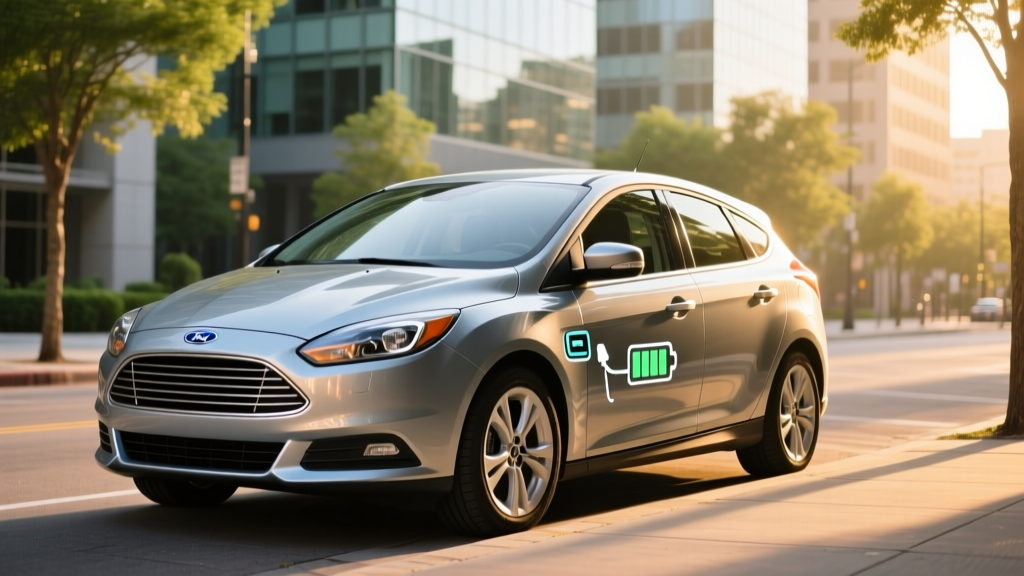
The 2014 Ford Focus EV delivers an EPA-rated 76 miles of range from its 23 kWh usable battery, making it strictly a city commuter and errand runner. In real-world driving, expect 55–65 miles of usable range on the highway or in cold weather. Used prices in 2026 typically range from $4,500 to $7,500. It can be a bargain second car for short-distance drivers with home charging access, but its 6.6 kW Level 2 charging (no DC fast charging) and degraded battery mean careful pre-purchase inspection is essential. If your daily round-trip commute is under 40 miles and you can charge at home, it remains one of the cheapest ways into EV ownership.
The 2014 Ford Focus EV by the Numbers
Ford built the Focus EV on the same platform as the gas Focus, converting it to battery-electric power. The result is a competent but range-limited hatchback that was competitive in 2014 but shows its age against modern EVs. Here are the specifications that matter for a used purchase:
| Specification | 2014 Ford Focus EV |
|---|---|
| EPA Range | 76 miles |
| Battery (usable) | 23 kWh (liquid-cooled, LG Chem NMC) |
| Motor Output | 107 kW (143 hp), 184 lb-ft torque |
| 0–60 mph | ~7.6 seconds |
| EPA Efficiency | 105 MPGe combined (32 kWh/100 mi) |
| Level 2 Charging (AC) | 6.6 kW onboard charger (~3.5 hours 0–100%) |
| DC Fast Charging | Not available |
| Connector | J1772 (Level 2) |
| Cargo Volume | 14.5 cu ft (reduced by battery pack) |
| Original MSRP | $35,200 (before incentives) |
| Typical 2026 Used Price | $4,500–$7,500 |
For full EPA data on this model, see the 2014 Ford Focus EV listing on fueleconomy.gov.
Real-World Range: What the Sticker Doesn't Tell You
The EPA's 76-mile rating assumes a mix of city and highway driving in moderate temperatures. In practice, several factors compress that number significantly:
EPA Sticker: 76 miles
Real-World Expectations:
- City driving (moderate climate): 70–80 miles — regenerative braking helps in stop-and-go traffic
- Highway driving (65–75 mph): 55–65 miles — higher speeds increase aero drag significantly on a car this efficient
- Cold weather (below 32°F): 45–55 miles — battery chemistry slows and cabin heating draws heavily from the pack; the Focus EV uses a resistive PTC heater, not a heat pump
- Hot weather (above 95°F with A/C): 60–70 miles — less penalty than cold, but A/C load is meaningful on a small pack
The Focus EV's liquid-cooled battery thermal management system was a strong point for 2014 — it helps prevent the extreme degradation seen in passively cooled packs like the early Nissan Leaf. But with a 23 kWh usable capacity, even modest degradation of 15–20% after 10+ years leaves you with roughly 18–19 kWh of real capacity, translating to 55–65 miles of range in mixed driving.
Pre-purchase tip: Use the car's dashboard "State of Charge" display. Charge to 100% and note the predicted range. If it shows fewer than 60 miles at full charge, the battery has degraded more than 20% and you should negotiate the price down or walk away.
Charging at Home and in Public: The 6.6 kW Limitation
The 2014 Focus EV comes equipped with a 6.6 kW onboard charger, which was excellent for its era but means you are entirely dependent on Level 2 AC charging. There is no DC fast-charging port — no CCS, no CHAdeMO, nothing. This is the single biggest practical limitation of the car in 2026.
| Charging Method | Power | Time (0–100%) | Miles Added per Hour |
|---|---|---|---|
| Level 1 (120V household outlet) | ~1.2 kW | ~20 hours | ~4 miles |
| Level 2 (240V, 32A home charger) | 6.6 kW (car-limited) | ~3.5 hours | ~22 miles |
| DC Fast Charge | N/A | N/A | N/A |
Here is what that means for ownership:
- Home Level 2 charging is mandatory for daily use. Level 1 at 1.2 kW adds only about 4 miles of range per hour — overnight, you would recover roughly 40–48 miles, which may not fully replenish a day's driving.
- Public Level 2 chargers at grocery stores or workplaces can top you up during errands, but at 6.6 kW you are adding about 22 miles per hour parked.
- Road trips are impractical. Without DC fast charging, a 200-mile trip requires multiple multi-hour stops. This is strictly a local-use vehicle.
If you do not have access to a 240V outlet at home or at work, the Focus EV is not a viable daily driver. Level 1 charging alone will leave you range-starved most days.
Cost Breakdown: Purchase, Charging, Maintenance, and Insurance
The used-market price is the Focus EV's strongest selling point. Here is a realistic 2026 ownership cost analysis:
| Cost Category | 2014 Ford Focus EV | Comparable Gas Car (2014 Ford Focus 2.0L) |
|---|---|---|
| Purchase Price (used) | $4,500–$7,500 | $6,000–$9,000 |
| Fuel/Energy Cost per Year (12,000 mi) | ~$430 (at $0.13/kWh) | ~$1,260 (at $3.15/gal, 30 MPG) |
| Annual Maintenance | ~$200–$350 (tires, cabin filter, brake fluid) | ~$600–$900 (oil, filters, plugs, brakes) |
| Insurance (avg annual) | ~$900–$1,200 | ~$850–$1,100 |
| 5-Year Fuel + Maintenance Total | ~$3,150–$3,750 | ~$9,300–$13,500 |
At the national average electricity rate of roughly $0.13/kWh (per EIA data), the Focus EV costs about $3.60 to "fill" its 23 kWh pack from empty. Over a year of 12,000 miles at 32 kWh/100 mi, you are spending roughly $430 on electricity versus $1,260 on gasoline for the gas Focus — a savings of about $830 per year.
Maintenance savings are real but modest on a car this simple. The Focus EV has no engine oil, no spark plugs, no transmission fluid, and no exhaust system. Brake pads last much longer due to regenerative braking. Your main recurring costs are tires, cabin air filter, brake fluid flushes, and eventually the 12V auxiliary battery (every 3–5 years, ~$150–$200).
Important tax credit note: The federal §30D new EV tax credit does not apply to the 2014 Focus EV since it is a used vehicle. However, the used clean vehicle credit under IRC §25E may offer up to $4,000 or 30% of the sale price (whichever is less) if you buy from a licensed dealer, your income falls below IRS thresholds ($75,000 single / $150,000 joint), and the sale price is $25,000 or less. At a typical $5,000–$7,500 price, that means a potential credit of $1,500–$2,250 — effectively reducing your purchase price by 25–30%. Verify current-year eligibility with a tax professional.
2014 Focus EV vs. Gas Focus vs. Modern Used EVs
How does this 12-year-old EV stack up against alternatives in 2026?
| Factor | 2014 Focus EV | 2014 Focus Gas (2.0L) | 2017–2018 Chevy Bolt EV (used) |
|---|---|---|---|
| Price Range | $4,500–$7,500 | $6,000–$9,000 | $10,000–$14,000 |
| EPA Range | 76 miles | ~370 miles (12.4 gal tank) | 238 miles |
| Annual Fuel Cost | ~$430 | ~$1,260 | ~$430 |
| DC Fast Charging | No | N/A | Yes (CCS, 55 kW) |
| Battery Warranty Remaining | Expired (8yr/100k ended 2022) | N/A | May still have coverage |
| Road Trip Capable? | No | Yes | Limited but possible |
| Best Use Case | City commuter, 2nd car | All-purpose | Primary car, moderate trips |
The Focus EV wins on upfront cost — it is one of the cheapest EVs available on the used market in 2026. But it loses decisively on range, charging flexibility, and remaining battery warranty. If you need only one car and drive more than 50 miles daily, the used Chevy Bolt EV is a far more capable choice despite costing $5,000–$8,000 more. If budget is the primary constraint and your commute is short, the Focus EV is hard to beat on price-per-mile of electric driving.
Common Misconceptions About the 2014 Focus EV
| Myth | Fact |
|---|---|
| "The battery will need a $15,000 replacement" | The liquid-cooled LG Chem pack degrades more slowly than passively cooled packs. Expect 15–25% capacity loss after 10–12 years, not catastrophic failure. Full replacement is rare; individual module repair is possible at independent EV shops for $1,500–$3,500. |
| "I can charge it on a regular outlet and be fine" | Level 1 charging at 1.2 kW adds ~4 miles/hour. An overnight charge (10 hours) gives you ~40 miles — not enough for many commutes. A 240V Level 2 home charger is practically required. |
| "It qualifies for the $7,500 federal tax credit" | The §30D new-vehicle credit expired for this car years ago. The used-vehicle credit (§25E) may provide up to $4,000 (30% of sale price), subject to income and dealer-sale requirements. |
| "It's basically a converted gas car with no trunk" | The battery does eat into cargo space (14.5 cu ft vs. 23.8 cu ft in the gas Focus), but it remains a functional hatchback for groceries and daily needs. |
| "EVs cost more to insure" | The Focus EV's low value and modest performance keep insurance competitive with the gas Focus — typically within $50–$100/year difference. |
Battery Health and Longevity: What to Check Before Buying
The 2014 Focus EV's battery warranty (8 years/100,000 miles) expired in 2022 for all examples. You are buying this car with no factory battery coverage. Here is how to assess risk:
- Check the State of Health (SoH): The Focus EV does not display a direct SoH percentage on the dash like a Leaf. However, charge to 100% and compare the "estimated range" readout to the original 76-mile EPA figure. A reading of 60+ miles suggests acceptable degradation (~20% or less). Below 55 miles indicates significant capacity loss.
- Look for uneven cell balancing: If the range estimate fluctuates wildly between charges (e.g., 70 miles one day, 50 the next with similar driving), cells may be unbalanced — a sign of aging that can worsen.
- Verify the thermal management system works: The liquid cooling loop should be serviced. Ask for records of coolant flushes. Overheating or undercooling accelerates degradation.
- Get a pre-purchase OBD-II scan: An EV-savvy mechanic with a scan tool can pull battery voltage data, cell delta readings, and charge cycle counts. Budget $100–$200 for this inspection — it is worth it.
Replacement battery packs for the Focus EV are available through salvage yards and independent EV shops, typically ranging from $2,500 to $5,000 for a used pack with installation. This is far less than the $15,000+ figure often cited, but it still represents 40–80% of the car's purchase price.
Decision Framework: Should You Buy the 2014 Ford Focus EV?
Buy the 2014 Focus EV if:
- Your daily round-trip commute is under 40 miles
- You have reliable access to Level 2 (240V) charging at home or work
- You want a second car for local errands and commuting
- Your total budget is under $8,000 and you want EV running costs
- You live in a moderate climate (less cold-weather range penalty)
- You can verify battery health before purchase (60+ miles at full charge)
Look elsewhere if:
- Your daily driving exceeds 50 miles regularly
- You only have access to Level 1 (120V) charging
- You need a primary/only vehicle
- You frequently drive in sub-freezing temperatures
- You want DC fast-charging capability for occasional road trips
- The battery shows fewer than 55 miles at full charge
Frequently Asked Questions
How long does the 2014 Ford Focus EV battery last?
With liquid-cooled thermal management, the LG Chem NMC pack typically retains 75–85% of its original capacity after 10–12 years and 80,000–120,000 miles. That means roughly 55–65 miles of real-world range from the original 76-mile EPA rating. Complete battery failure is uncommon; gradual capacity loss is the norm.
Can I install a home charger for the Focus EV myself?
No — a licensed electrician should install a 240V NEMA 14-50 outlet or hardwired Level 2 charger. Expect $500–$1,500 for installation if your electrical panel has capacity, or $1,500–$3,500 if a panel upgrade is needed. The car's 6.6 kW onboard charger means a 32-amp circuit (7.7 kW supply) is sufficient — you do not need a 48-amp charger.
Does the 2014 Focus EV use the Tesla (NACS) charging connector?
No. The 2014 Focus EV uses the J1772 connector for Level 2 AC charging. It has no DC fast-charging capability at all, so NACS/CCS/CHAdeMO adapters are irrelevant. Tesla Destination Chargers with J1772 compatibility will work; Tesla Superchargers will not.
What is the cheapest way to own an EV in 2026?
The 2014 Focus EV at $4,500–$7,500 is among the cheapest entry points, alongside the 2013–2016 Nissan Leaf (similar price, passive battery cooling) and the 2014–2016 Smart ED (even less range). For slightly more ($10,000–$14,000), a used 2017–2018 Chevy Bolt EV offers 238 miles of range and DC fast charging — a dramatically more capable vehicle.
Is the 2014 Focus EV safe?
The gas-version Ford Focus earned an IIHS Top Safety Pick rating for 2014, and the EV variant shares the same structure. The battery pack is mounted under the rear seat and cargo floor, with structural protection. See IIHS ratings for the 2014 Focus for detailed crash-test results. Note that the EV's added weight (roughly 600 lbs more than the gas model) may affect braking distances slightly.
Can I take the 2014 Focus EV on a road trip?
Realistically, no. Without DC fast charging, each recharge stop on a Level 2 public charger requires 2–3 hours to add meaningful range. A 150-mile trip would require two multi-hour charging stops. This car is designed for daily commuting within a ~35-mile radius of your home charger.