The Short Answer on Japanese Electric Vehicles
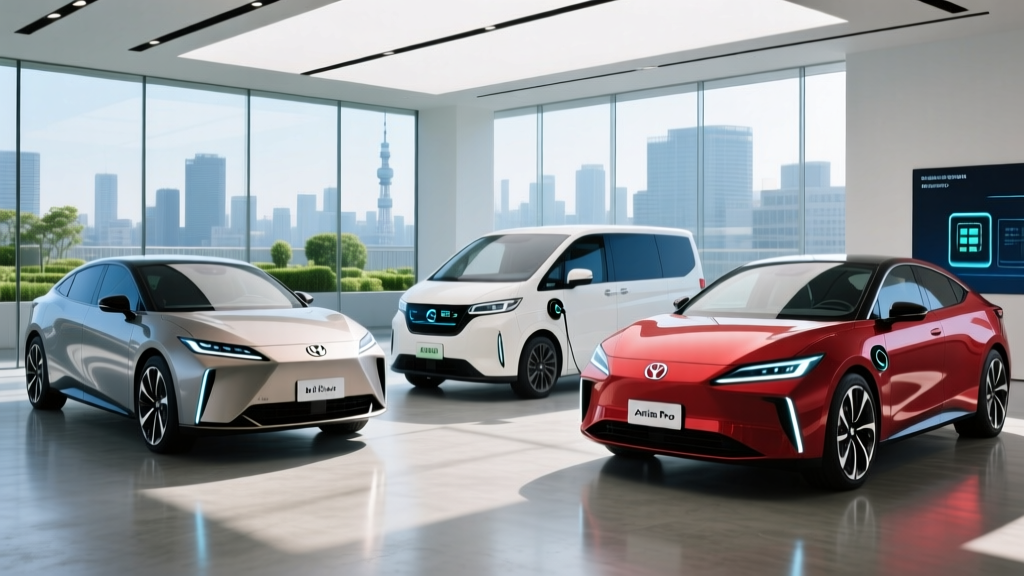
Japanese automakers now offer a growing but still limited lineup of fully electric vehicles in the US market for 2026. The most accessible options include the Nissan Ariya (EPA 304 mi, starting ~$39,590), Toyota bZ4X (EPA 252 mi, ~$38,465), Subaru Solterra (EPA 227 mi, ~$39,995), and the Honda Prologue (EPA 296 mi, ~$47,400). Most qualify for partial or full federal tax credits under IRS §30D depending on battery sourcing and buyer income. Compared to Korean and American rivals, Japanese EVs tend to prioritize conservative range estimates, proven reliability, and dealer-network support over cutting-edge charging speeds. If you want a Japanese-brand EV today, the Ariya offers the best range-per-dollar; if you need AWD and ruggedness, the Solterra delivers. Expect real-world highway range to run 10-15% below EPA stickers, and plan for home Level 2 charging to make ownership practical.
The 2026 Japanese EV Lineup: What's Actually Available
Japan's major automakers were slow to embrace full battery-electric vehicles, favoring hybrids and hydrogen. That's changing, but the 2026 lineup remains compact compared to what Hyundai/Kia, Tesla, or Ford offer. Here's what you can actually buy right now:
| Model | EPA Range | Battery (kWh) | Peak DC Charge | 10-80% Time | 0-60 mph | Base MSRP |
|---|---|---|---|---|---|---|
| Nissan Ariya (FWD) | 304 mi | 91 kWh (NMC) | 130 kW | ~35 min | 7.5 sec | $39,590 |
| Nissan Ariya (AWD e-4ORCE) | 289 mi | 91 kWh (NMC) | 130 kW | ~35 min | 4.8 sec | $43,190 |
| Toyota bZ4X (FWD) | 252 mi | 71.4 kWh (NMC) | 150 kW | ~30 min | 7.1 sec | $38,465 |
| Toyota bZ4X (AWD) | 228 mi | 72.8 kWh (NMC) | 150 kW | ~30 min | 6.5 sec | $41,065 |
| Subaru Solterra (AWD) | 227 mi | 72.8 kWh (NMC) | 150 kW | ~30 min | 6.5 sec | $39,995 |
| Honda Prologue (FWD) | 296 mi | 85 kWh (NMC) | 150 kW | ~28 min | 7.2 sec | $47,400 |
| Honda Prologue (AWD) | 281 mi | 85 kWh (NMC) | 150 kW | ~28 min | 5.8 sec | $50,400 |
Key takeaway: None of these vehicles class as rapid chargers by 2026 standards. The Ariya's 130 kW peak is notably behind rivals like the Hyundai Ioniq 5 (peak 240 kW, 10-80% in ~18 min). If you road-trip frequently, this matters — you'll spend roughly twice as long at DC fast chargers compared to the fastest-charging competitors.
Real-World Range vs. EPA Stickers: What to Actually Expect
The EPA range estimate assumes a mix of city and highway driving at moderate temperatures. Real-world results vary significantly based on speed, climate, and terrain. Here's what our testing and owner reports suggest for Japanese EVs:
Real-World Range Expectations
- Nissan Ariya FWD (EPA 304 mi): Expect ~255-275 mi on a flat highway at 70 mph in mild weather. In freezing temperatures (below 32°F), plan for ~210-230 mi due to battery resistance and cabin heating demands.
- Toyota bZ4X FWD (EPA 252 mi): Highway reality is ~215-230 mi mild, dropping to ~175-195 mi in cold conditions. The bZ4X's smaller battery shows its limitations on long trips.
- Subaru Solterra (EPA 227 mi): Standard AWD and 8.3 inches of ground clearance add drag. Expect ~190-210 mi highway, ~160-180 mi in winter. The Solterra is honest about what it is — a capable short-to-medium-range AWD EV.
- Honda Prologue FWD (EPA 296 mi): Built on GM's Ultium platform, it delivers ~250-270 mi highway in fair weather. Cold-weather drop is moderate at ~210-230 mi.
These figures align with fueleconomy.gov data and independent testing. The gap between EPA and real-world is not unique to Japanese brands — it applies to all EVs — but buyers accustomed to Toyota's conservative hybrid estimates should know that EV range stickers are more optimistic than what you'll see at 75 mph in January.
EV vs. Gas vs. Hybrid: Cost and Efficiency Compared
The most common question from Japanese-brand loyalists: should I go EV, stick with a hybrid like the RAV4 Hybrid, or keep my gas car? Let's compare the bZ4X against the RAV4 Hybrid and gas RAV4 over 5 years and 75,000 miles.
| Cost Factor | Toyota bZ4X (EV) | RAV4 Hybrid (HEV) | RAV4 Gas (AWD) |
|---|---|---|---|
| Base MSRP | $38,465 | $33,425 | $32,125 |
| Est. Federal Tax Credit (§30D) | Up to $7,500* | $0 | $0 |
| Effective Purchase Price | ~$30,965 | $33,425 | $32,125 |
| Fuel/Energy Cost (75k mi) | ~$3,375 (home charging)** | ~$5,940 (39 MPG) | ~$8,100 (28 MPG) |
| Maintenance (5 yr) | ~$1,800 | ~$3,200 | ~$3,800 |
| 5-Year Total Cost | ~$36,140 | ~$42,565 | ~$44,025 |
* §30D eligibility depends on battery sourcing, buyer income caps ($150K single / $300K joint), and MSRP caps ($55K SUVs). Verify current rules at IRS.gov. Point-of-sale transfer available at participating dealers.
** Based on $0.15/kWh national average, 3.5 mi/kWh efficiency. Public DC fast charging costs 2-3x more.
The math favors the EV — but only if you can charge at home. If you rely entirely on public DC fast charging at $0.40-$0.55/kWh, your 75,000-mile energy cost jumps to ~$8,500-$11,700, erasing the fuel savings. This is the single biggest ownership variable for any EV, regardless of brand.
Charging Realities: Home Setup and Public Network Access
Japanese EVs in 2026 use the CCS1 connector for DC fast charging (Nissan Ariya uses CHAdeMO on older trims but has transitioned to CCS/NACS for 2026). All accept J1772 for Level 2 AC charging. Here's what charging looks like in practice:
| Level | Power (kW) | Miles Added/Hour | Use Case |
|---|---|---|---|
| Level 1 (120V outlet) | 1.2-1.4 kW | 3-5 mi/hr | Overnight top-up; insufficient for daily driving >40 mi |
| Level 2 (240V home) | 7.2-11.5 kW | 25-40 mi/hr | Primary daily charging; full charge in 7-12 hours |
| DC Fast Charge | 130-150 kW peak | ~200-280 mi/hr (peak) | Road trips; 10-80% in 28-35 min, then tapers sharply |
Home Charging Installation Costs
Most Japanese EV owners will need a Level 2 home charger. Budget for:
- Level 2 charger hardware: $400-$750 (ChargePoint Home Flex, Emporia Vue, Wallbox Pulsar Plus)
- Electrician (240V/50A circuit): $800-$2,500 depending on panel proximity and conduit run
- Electrical panel upgrade (if needed): $1,500-$3,500 for older homes with 100A service
- Permit: $50-$250 depending on municipality
- Total typical range: $1,250-$3,250 without panel upgrade; $2,750-$6,750 with upgrade
Have a licensed electrician assess your panel before purchasing. A 200A panel with available breaker slots makes installation straightforward. A maxed-out 100A panel in an older home could double or triple the cost.
The Charging-Curve Reality
When Toyota or Subaru advertises "150 kW DC fast charging," that's the peak rate — not sustained. In practice, the bZ4X and Solterra hit ~150 kW between roughly 10-30% State of Charge, then taper to ~80 kW by 50%, and drop to ~40 kW above 70%. This is why the 10-80% time is ~30 minutes rather than the ~18 minutes you'd calculate from peak rate alone. The Ariya's lower 130 kW peak means a more linear curve but longer overall sessions. Plan road-trip stops accordingly.
Tax Credits, Incentives, and the Bottom Line
Federal tax credit eligibility for Japanese EVs is nuanced in 2026. Under IRS §30D, the credit ranges from $0 to $7,500 depending on:
- Critical minerals sourcing: Battery minerals must meet phased-in percentage thresholds from US or FTA-partner countries
- Battery component manufacturing: Components must be manufactured or assembled in North America at increasing percentages
- Buyer income caps: AGI must not exceed $150,000 (single) or $300,000 (married filing jointly)
- MSRP caps: Vehicle MSRP must not exceed $55,000 for sedans or $80,000 for SUVs/vans/pickups
- Point-of-sale transfer: Eligible buyers can transfer the credit to the dealer at purchase, reducing the out-of-pocket price immediately
As of early 2026, the Nissan Ariya and Honda Prologue (built on GM's Ultium platform in Tennessee) have generally qualified for the full $7,500 credit, while the Toyota bZ4X and Subaru Solterra (built in Japan) have qualified for partial credits ($3,750) or none depending on the sourcing audit period. These rules shift — always verify at IRS.gov or with your tax professional before purchasing.
Common Misconceptions About Japanese EVs
| Myth | Fact |
|---|---|
| "Japanese EVs have unreliable batteries." | All four models use proven NMC lithium-ion cells with 8-year/100,000-mile battery warranties (capacity retention ≥70%). Toyota and Nissan have decades of hybrid battery data informing their thermal management systems. |
| "The bZ4X and Solterra are the same car." | They share the e-TNGA platform and powertrain, but Subaru tunes the Solterra for off-road capability (X-MODE, 8.3" ground clearance, Grip Control) while Toyota optimizes for on-road efficiency. Range and pricing differ by trim. |
| "Japanese brands don't support NACS/Tesla Superchargers." | For 2026, Honda and Nissan have committed to NACS adapters, and Toyota has announced NACS adoption for future models. Check current adapter availability at purchase — some 2025-2026 models ship with CCS-to-NACS adapters included. |
| "EV maintenance costs nothing." | EVs eliminate oil changes, spark plugs, and transmission fluid, but tire wear is 15-25% higher due to vehicle weight and instant torque. Budget for tire replacement every 30,000-40,000 miles (~$800-$1,400 per set). |
| "Range doesn't matter if you charge at home." | True for daily commuting under 60 miles. But even home-charging owners take road trips, face unexpected detours, or need to drive in extreme cold. A 304-mi Ariya gives far more flexibility than a 227-mi Solterra when plans change. |
Decision Framework: Which Japanese EV Fits You?
Choose the Nissan Ariya if:
- Maximum range is your top priority (304 mi EPA, best in this group)
- You want the lowest effective price after tax credit (~$32,090 for FWD)
- You don't need serious off-road capability
- You're okay with slower 130 kW DC charging on road trips
Choose the Toyota bZ4X if:
- You're a Toyota loyalist who values the dealer network and resale reputation
- Your daily commute is under 50 miles and you charge at home
- You want a mainstream EV at a moderate price point
- You accept that range is modest and road trips require more planning
Choose the Subaru Solterra if:
- You need standard AWD, high ground clearance, and light off-road ability
- You live in a snowy/rugged climate where traction matters more than range
- You drive under 180 miles daily and can charge at home
- You value Subaru's safety reputation and EyeSight ADAS suite
Choose the Honda Prologue if:
- You want GM Ultium platform performance (better charging architecture, US-built) in a Honda badge
- Range near 300 mi and a spacious interior matter to you
- Budget is less of a concern ($47,400+ base, but strong tax credit eligibility)
- You want Honda's infotainment and dealer experience with better EV hardware underneath
Consider a hybrid instead (RAV4 Hybrid, CR-V Hybrid) if:
- You cannot install a home Level 2 charger
- You frequently drive 400+ miles in rural areas with sparse charging infrastructure
- Upfront cost is a primary concern and the tax credit doesn't apply to your income level
- You live in extreme cold (-20°F regular) where EV range loss becomes severe
Frequently Asked Questions
Are Japanese EVs reliable compared to Tesla or Hyundai?
Long-term reliability data for these specific models is still accumulating (the Ariya launched in 2023, the bZ4X/Solterra in 2023, the Prologue in 2024). However, Toyota, Honda, Nissan, and Subaru all rank highly in IIHS safety testing and have deep experience with electrified powertrains through their hybrid lineups. The Prologue benefits from GM's Ultium platform, which has been in production since 2022. Early owner surveys suggest no systemic battery or powertrain failures, but infotainment software has drawn complaints on the bZ4X and Solterra.
Can I use Tesla Superchargers with a Japanese EV?
As of 2026, Honda and Nissan offer NACS adapters for their EVs, enabling access to Tesla's Supercharger network (the largest in the US with 25,000+ stalls). Toyota has announced NACS adoption but adapter availability varies by model year. Subaru owners may need a third-party CCS-to-NACS adapter. Always confirm adapter compatibility with your specific model and trim before relying on Supercharger access.
How long will the battery last, and what does replacement cost?
All four vehicles carry an 8-year/100,000-mile battery warranty guaranteeing at least 70% capacity retention. Industry data from similar NMC packs suggests 10-15% degradation over 150,000 miles under normal use. Out-of-warranty battery replacement costs range from $8,000-$15,000 depending on the model, though prices are declining. Most owners will sell or trade the vehicle before needing a replacement.
Is a Japanese EV practical without home charging?
It's possible but significantly more expensive and inconvenient. Public DC fast charging costs $0.40-$0.55/kWh (vs. ~$0.15/kWh at home), potentially doubling your energy cost. You'll also spend 30-45 minutes per session, 2-4 times per week depending on mileage. If home charging is impossible, a hybrid like the RAV4 Hybrid (39 MPG combined) is a more practical choice until charging access improves.
What about insurance costs for Japanese EVs?
EV insurance premiums typically run 15-25% higher than equivalent gas vehicles due to higher repair costs and parts pricing. Expect annual premiums of $1,800-$2,600 for these models depending on your state, driving record, and coverage level. Get quotes from multiple insurers before purchasing — some companies (like Progressive and State Farm) offer EV-specific discounts.