Quick Verdict: A Pioneering City EV With Tight Limits
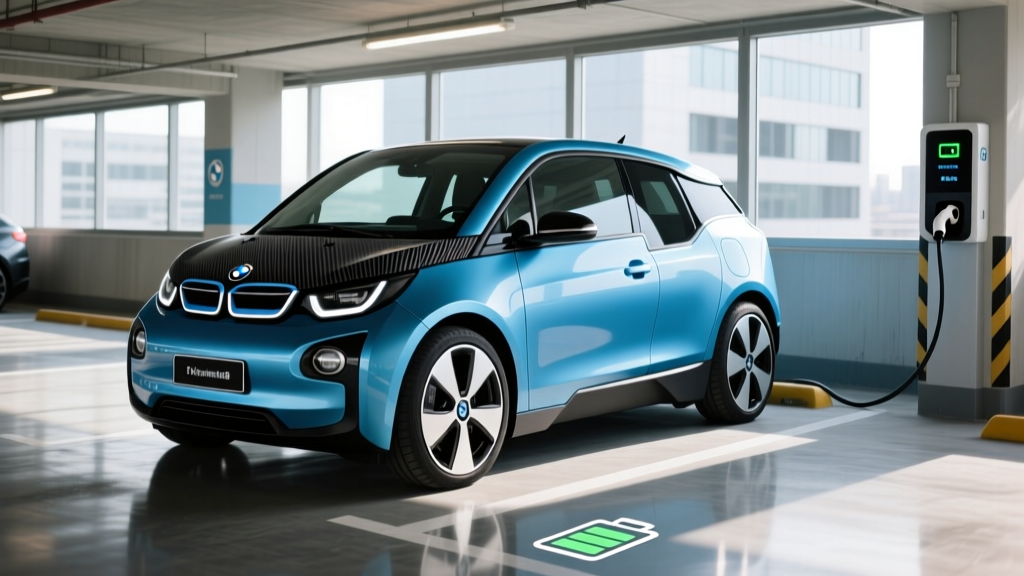
The 2014 BMW i3 was BMW's first mass-production battery electric vehicle, and it remains one of the most distinctive used EVs on the market. Built on a carbon-fiber-reinforced plastic (CFRP) passenger cell with an aluminum chassis, the i3 delivered a uniquely premium urban commuting experience wrapped in futuristic styling. But with an EPA-estimated range of just 81 miles from its 22 kWh (18.8 kWh usable) battery, it demands a buyer whose driving habits align tightly with its capabilities.
In 2026, the 2014 i3 trades hands for roughly $7,000–$12,000 on the used market depending on condition, mileage, and whether it's the pure BEV or the Range Extender (REx) variant with its onboard 647cc two-cylinder gasoline engine. For disciplined city commuters with reliable home charging, it's an engaging, efficient runabout. For anyone needing flexibility beyond a tight daily loop, newer used EVs offer substantially more capability.
Range, Efficiency, and the Real-World Reality Check
Real-World Expectation: 65–75 miles in mixed driving; 55–65 miles in cold weather (below 40°F) or sustained highway speeds above 70 mph. The REx adds approximately 80 miles of gas-powered range as a safety net.
The i3's 18.8 kWh usable battery (from a 22 kWh gross pack) uses Samsung SDI NMC (nickel-manganese-cobalt) lithium-ion cells arranged in eight modules of eight prismatic cells each. This chemistry was standard for the era and delivers solid energy density, but the small pack size means range margins are razor-thin.
Efficiency is genuinely impressive: the 2014 i3 achieves 124 MPGe combined (137 city / 111 highway) per fueleconomy.gov, consuming roughly 27 kWh per 100 miles. That efficiency is partly thanks to the i3's lightweight construction — the car weighs just 2,799 lbs — and its narrow, tall 155/70R19 low-rolling-resistance tires.
However, the real-world range penalty is significant. In winter testing, cabin heating (which uses a resistive heater, not a heat pump) can reduce range by 25–35%. Highway driving at 75 mph pushes consumption to roughly 32–35 kWh/100mi, dropping practical range to around 55 miles. If your daily round-trip commute exceeds 50 miles with no mid-day charging option, the pure BEV variant will cause anxiety. The REx variant mitigates this but adds gasoline complexity.
Charging Speed: DC Fast Charge and Home Level 2
| Charging Level | Power / Rate | Time / Range Added |
|---|---|---|
| Level 1 (120V household) | ~1.4 kW | ~4–5 miles per hour; full charge in ~14–16 hours |
| Level 2 (240V, 32A) | 7.4 kW | ~25 miles per hour; 0–100% in ~3 hours |
| DC Fast Charge (CCS Combo 1) | 50 kW peak | 0–80% in ~28–30 minutes; tapers sharply above 85% |
The 2014 i3 was one of the first non-Tesla EVs to offer CCS (Combined Charging System) DC fast charging, though it was an option on early models — verify the specific car has the CCS port before purchasing, as some 2014 base models shipped with CHAdeMO or AC-only configurations in certain markets.
At 50 kW peak, the i3's DC charging was competitive for 2014 but is slow by 2026 standards. The charge curve is relatively flat from 10–70% SoC, then tapers significantly. On a 150 kW or 350 kW public charger, the i3 will still pull only its 50 kW maximum — the car's onboard charge controller is the bottleneck, not the station.
For home charging, the 7.4 kW onboard charger is adequate. A Level 2 home station (e.g., ChargePoint Home Flex or Emporia Vue) wired to a 40A circuit will fully replenish the small battery overnight in about three hours. Level 1 trickle charging is technically viable given the tiny battery, but at 14+ hours for a full charge, it's impractical as a primary strategy if you drive more than 30 miles daily.
Performance and Drivetrain
| Specification | 2014 BMW i3 BEV | 2014 BMW i3 REx |
|---|---|---|
| Drivetrain | Rear-wheel drive (RWD) | RWD + 647cc 2-cyl gas engine (generator only) |
| Horsepower | 170 hp (125 kW) | 170 hp (electric motor) |
| Torque | 184 lb-ft | 184 lb-ft |
| 0–60 mph | 7.0 seconds | 7.7 seconds |
| Top Speed | 93 mph (electronically limited) | 93 mph |
| Curb Weight | 2,799 lbs | 3,130 lbs |
The i3's electric motor delivers instant torque from a standstill, making it genuinely quick off the line and excellent for urban merging. The 170 hp rear-mounted motor on a sub-2,800-lb chassis produces a power-to-weight ratio that feels livelier than the numbers suggest. Steering is sharp, the turning circle is tight (32.3 feet), and the tall seating position gives good visibility.
The REx variant's two-cylinder engine never drives the wheels directly — it acts as a series-hybrid generator to maintain battery charge once the EV range is depleted. It's noisy under load and adds roughly 330 lbs, slightly dulling the handling. But it transforms the i3 from a strict city car into a viable (if slow) intercity option.
Interior, Cargo, and Standout Technology
The i3's interior was genuinely innovative for 2014. Sustainable materials abound: the dashboard uses eucalyptus wood trim, door panels feature kenaf natural fiber, and seat upholstery options include recycled polyester and olive-leaf-tanned leather. The "Life Module" carbon-fiber passenger cell creates a flat floor and a surprisingly airy cabin despite the compact exterior footprint.
Dimensions:
- Front headroom: 39.6 inches
- Front legroom: 40.5 inches
- Rear headroom: 37.8 inches
- Rear legroom: 31.9 inches (tight for adults over 5'10")
- Cargo behind rear seats: 15.1 cu ft
- Cargo with rear seats folded: 39.2 cu ft
The rear-hinged "coach doors" (suicide doors) look dramatic but require the front door to be opened first for rear-seat access, which is awkward in tight parking spots. Rear seats are best suited for children or occasional use.
Technology highlights for 2014:
- iDrive infotainment with 6.5-inch display (10.2-inch optional with Navigation Professional)
- BMW ConnectedDrive with remote preconditioning and charge monitoring via smartphone app
- DC fast charging preconditioning (battery warming for optimal charge acceptance)
- Available parking sensors and rearview camera
- Regenerative braking strong enough for near one-pedal driving
Notable drawbacks: No Apple CarPlay or Android Auto (not available in 2014). No advanced driver-assistance features like adaptive cruise or lane-keeping — the i3 predates BMW's current ADAS suite. The thin, hard tires are expensive to replace (~$200+ per corner) and limit wet-weather grip. The cabin HVAC resistive heater is a range killer in winter.
Used Pricing and Federal Tax Credit Eligibility
| Item | Details |
|---|---|
| Original 2014 MSRP (BEV) | $42,275 (base, including destination) |
| Original 2014 MSRP (REx) | $46,125 (base) |
| 2026 Used Market Price | $7,000–$12,000 (BEV); $8,500–$14,000 (REx) |
| Federal Used EV Tax Credit (§25E) | Up to $4,000 (30% of sale price, capped at $4,000) |
| Credit-Adjusted Price (Best Case) | As low as ~$3,000–$8,000 after credit |
The 2014 BMW i3 does not qualify for the new-vehicle §30D federal tax credit, as it is no longer sold new. However, it may qualify for the §25E Previously Owned Clean Vehicle Credit, which provides 30% of the sale price up to a maximum of $4,000 for eligible used EVs. Key requirements per IRS guidelines:
- Sale price must be $25,000 or less (easily met for a used i3)
- Buyer income caps: $75,000 single / $112,500 head of household / $150,000 joint filers (modified AGI)
- Vehicle must be at least two model years old (2014 qualifies)
- Must be purchased from a licensed dealer (private-party sales do not qualify)
- The credit can be transferred to the dealer at point of sale as a price reduction
- Buyer cannot have claimed another used-EV credit in the prior three years
At typical 2026 used prices of $7,000–$12,000, the 30% calculation yields $2,100–$3,600 — below the $4,000 cap. A buyer purchasing a $10,000 i3 from a dealer could receive a $3,000 point-of-sale discount, bringing the effective cost to $7,000. Always confirm eligibility with a tax professional and verify the dealer is registered to process the credit transfer.
Battery Health, Warranty, and Longevity Concerns
The original BMW battery warranty was 8 years / 100,000 miles, guaranteeing the battery would retain at least 70% of its original capacity. For a 2014 model, this warranty has now expired in all cases (the 8-year window closed by 2022). This makes battery State of Health (SoH) the single most important factor in evaluating a used 2014 i3.
NMC batteries of this generation typically degrade 1.5–2.5% per year under moderate use. Real-world data from i3 owner communities shows most 2014 models retaining 75–85% SoH after 8–10 years, meaning roughly 14–16 kWh usable — translating to about 60–70 miles of real-world range. Some units in hot climates (Arizona, Texas) or those frequently DC-fast-charged show degradation to 70% or below.
Before buying: Request a battery health report. The i3's iDrive system displays a rough capacity indicator, but a more accurate reading can be pulled via an OBD-II dongle and apps like BimmerCode or LeafSpy-equivalent BMW tools. A replacement battery pack costs $8,000–$14,000 installed as of 2026, which can exceed the vehicle's value — making SoH verification essential.
Pros and Cons at a Glance
Pros
- Lightweight carbon-fiber construction delivers engaging, nimble handling
- 124 MPGe combined — among the most efficient EVs ever sold
- Strong regenerative braking enables near one-pedal driving
- Premium, sustainable interior materials ahead of their time
- Tight turning circle (32.3 ft) ideal for urban parking
- §25E used EV credit can reduce purchase price by up to $3,600
- CCS DC fast charging (on equipped models) for its era
Cons
- 81-mile EPA range is severely limiting for anything beyond city commuting
- No heat pump — resistive cabin heater slashes winter range by 25–35%
- Battery warranty has expired; replacement cost can exceed car value
- No Apple CarPlay, Android Auto, or modern ADAS features
- Expensive, hard-to-find 155/70R19 tires
- Rear coach doors are impractical in tight parking spaces
- 50 kW DC charging is slow by 2026 standards
Who Should Buy the 2014 BMW i3?
Choose the 2014 i3 BEV if: You have a sub-40-mile daily round-trip commute, reliable home Level 2 charging, a second vehicle for longer trips, and you value premium urban driving dynamics at a bargain used-EV price.
Choose the 2014 i3 REx if: You want the i3's city efficiency but occasionally need 100+ mile range and don't want to rely on public charging infrastructure.
Look elsewhere if: You need highway-capable range, carry rear-seat passengers regularly, live in a cold climate without garage parking, or want modern infotainment and driver-assistance features. Consider a used 2017+ i3 (which got a 33 kWh / 114-mile battery upgrade) or competitors like the 2017+ Chevrolet Bolt EV (238-mile range) for more versatility.
Frequently Asked Questions
What is the real-world range of the 2014 BMW i3?
Expect 65–75 miles in moderate weather with mixed city/highway driving. In cold weather (below 40°F) or sustained highway speeds, plan for 55–65 miles. The REx variant adds roughly 80 miles of gas-powered range as a backup.
How fast does the 2014 i3 charge?
On a 50 kW DC fast charger, 0–80% takes approximately 28–30 minutes. On a 7.4 kW Level 2 home charger, a full charge takes about 3 hours. Level 1 (120V) charging takes 14–16 hours.
Does the 2014 BMW i3 qualify for any federal tax credit?
It does not qualify for the new-vehicle §30D credit. It may qualify for the §25E Used Clean Vehicle Credit — up to $4,000 (30% of sale price) — if purchased from a dealer for $25,000 or less and the buyer meets income limits. Consult a tax professional and review IRS §25E guidelines.
Is the 2014 i3 worth buying vs. competitors?
Against a used Nissan Leaf (2013–2015, ~75–84 mile range), the i3 offers better build quality, faster DC charging (50 kW vs. Leaf's CHAdeMO at ~50 kW but with more degradation-prone battery chemistry), and a more premium interior. Against a used 2017+ Chevy Bolt EV (238-mile range), the i3 falls far short on range and practicality. If range is your priority, the Bolt wins. If urban charm and efficiency matter most, the i3 is compelling at its current used prices.
What should I check before buying a used 2014 i3?
Prioritize battery State of Health (request an OBD-II SoH reading — aim for 80%+). Verify whether the specific car has the CCS DC fast-charge port. Check tire condition (155/70R19 tires are expensive). Confirm the REx engine (if equipped) starts cleanly and has been serviced. Inspect for any recall work, particularly the battery management system and charging port updates.