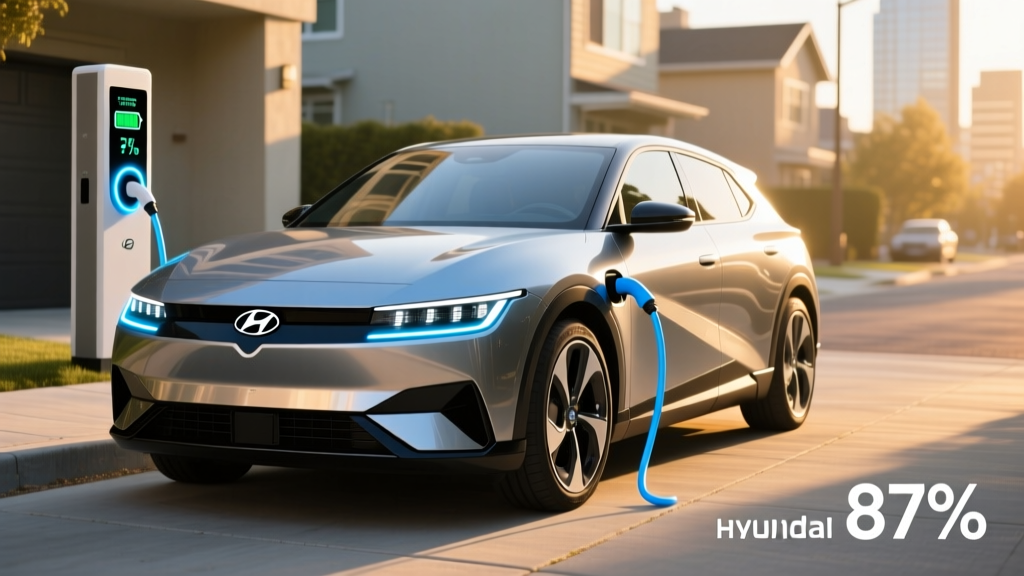
The Hyundai Ioniq 5 remains one of the most compelling electric crossovers on the market, but understanding its true cost goes well beyond the sticker price. Between shifting federal tax credit rules, varying trim-level pricing, and real-world efficiency that affects your daily charging bill, the 2026 Ioniq 5 demands a detailed financial look before you sign any paperwork. This guide breaks down every dollar — from MSRP to long-term ownership — so you know exactly what you're paying for.
2026 Ioniq 5 Pricing by Trim: What You'll Actually Pay
Hyundai has kept the Ioniq 5 lineup relatively stable for 2026, with four core trims spanning from the entry-level Standard Range to the high-performance Ioniq 5 N. Here's the MSRP breakdown before any incentives or destination charges:
| Trim | Drivetrain | MSRP (2026) | Est. Tax Credit | Net Cost |
|---|---|---|---|---|
| SE Standard Range | RWD | $42,600 | $7,500* | ~$35,100 |
| SE | RWD / AWD | $46,250 / $50,250 | $7,500* | ~$38,750 / $42,750 |
| SEL | RWD / AWD | $49,100 / $53,100 | $7,500* | ~$41,600 / $45,600 |
| Limited | AWD | $58,200 | $7,500* | ~$50,700 |
| N (Performance) | AWD | $67,500 | $0** | ~$67,500 |
*Federal §30D credit eligibility depends on buyer income, battery sourcing, and MSRP caps. See the tax credit section below for full details. **The Ioniq 5 N exceeds the $80,000 SUV MSRP cap for §30D but its classification and pricing put it in a gray area — consult a tax professional.
Destination charges add approximately $1,395 across all trims. Dealer markups vary by market, though Hyundai's direct-to-consumer agency model in many states has helped keep prices closer to MSRP than some competitors.
Federal Tax Credit Eligibility: Does the Ioniq 5 Qualify?
The federal EV tax credit under IRS §30D can reduce your effective cost by up to $7,500, but qualification is not automatic. Here's what determines eligibility for the 2026 Ioniq 5:
- MSRP Cap: The vehicle must have an MSRP at or below $80,000 for SUVs (the Ioniq 5 is classified as a light truck/SUV by the IRS). All non-N trims clear this threshold.
- Buyer Income Limits: Modified adjusted gross income (MAGI) must not exceed $150,000 for single filers, $225,000 for heads of household, or $300,000 for joint filers.
- Battery Component & Critical Mineral Sourcing: A percentage of battery components must be manufactured or assembled in North America, and critical minerals must be sourced from the U.S. or free-trade-agreement countries. Hyundai has shifted significant battery sourcing to its Georgia plant, improving eligibility, but the exact credit amount can be $3,750 or $7,500 depending on whether one or both requirements are met.
- Point-of-Sale Transfer: As of 2024, buyers can transfer the credit to the dealer at purchase, receiving the discount upfront rather than waiting to claim it on their tax return. This effectively reduces your drive-off price.
Real-World Range vs. EPA Estimates
The EPA publishes laboratory-derived range estimates, but real-world results depend heavily on driving style, terrain, temperature, and tire choice. Here's what to expect from the 2026 Ioniq 5 lineup:
SE RWD (Long Range): EPA 303 mi → Expect ~260-280 mi highway, ~240-260 mi in freezing weather
SE AWD: EPA 290 mi → Expect ~245-265 mi highway, ~220-240 mi in freezing weather
Standard Range RWD: EPA 240 mi → Expect ~200-220 mi highway, ~180-200 mi in freezing weather
Limited AWD: EPA 276 mi → Expect ~235-255 mi highway, ~210-230 mi in freezing weather
Cold weather (below 32°F) typically reduces range by 15-30% due to battery heating demands and cabin climate load. Highway driving at 75+ mph reduces efficiency by roughly 10-15% compared to EPA combined figures.
| Trim | Battery (usable kWh) | Chemistry | EPA Range | MPGe (combined) | kWh/100 mi |
|---|---|---|---|---|---|
| SE Standard Range | 58 kWh | NMC | 240 mi | 110 MPGe | 30 |
| SE RWD | 77.4 kWh | NMC | 303 mi | 114 MPGe | 29 |
| SE AWD | 77.4 kWh | NMC | 290 mi | 110 MPGe | 30 |
| Limited AWD | 77.4 kWh | NMC | 276 mi | 106 MPGe | 32 |
The Ioniq 5 uses nickel-manganese-cobalt (NMC) chemistry across all trims, which offers higher energy density than LFP but requires more careful thermal management. The 77.4 kWh long-range pack provides the best balance of range and efficiency, while the 58 kWh standard-range pack prioritizes a lower entry price. According to fueleconomy.gov, the RWD Long Range model achieves 114 MPGe combined — competitive with the Tesla Model Y and Ford Mustang Mach-E in this segment.
Charging Speed: DC Fast Charging and Home Level 2
Charging speed is where the Ioniq 5's 800-volt architecture genuinely shines. Most competing EVs use 400-volt systems that cap charging rates well below the Ioniq 5's capability.
| Charging Level | Power | Speed / Time | Connector |
|---|---|---|---|
| Level 1 (120V household) | ~1.4 kW | ~3-4 mi/hr | NACS (2025+) |
| Level 2 (240V home/public) | 10.9 kW | ~28-32 mi/hr | NACS (2025+) |
| DC Fast Charge (peak) | 240 kW (Long Range) / 175 kW (Std Range) | 10-80% in ~18 min (Long Range) | NACS (2025+) |
Charging curve reality check: The Ioniq 5 peaks at 240 kW on a capable 350 kW DC fast charger, but that peak only holds roughly between 10-55% state of charge. Above 60%, the rate tapers to ~150 kW, and above 80%, it drops to ~60-80 kW. This means an 80-100% top-off can add another 15-20 minutes. For road trips, plan stops around the 10-80% window to minimize charging time.
Starting with the 2025 model year, Hyundai switched the Ioniq 5 to the NACS (Tesla-style) charging port natively, eliminating the need for an adapter at Tesla Superchargers. This is a significant convenience upgrade over the previous CCS1 port, as Tesla's Supercharger network remains the most reliable public charging infrastructure in the U.S.
At home on a Level 2 charger (240V, 48A circuit), the Ioniq 5's 10.9 kW onboard charger replenishes the 77.4 kWh battery from empty to full in roughly 7.5 hours — easily achievable overnight. A full Level 2 home installation typically costs $800-$2,000 including a 48A hardwired charger and electrician labor, assuming your electrical panel has sufficient capacity.
Performance and Drivetrain
| Trim | Horsepower | Torque (lb-ft) | 0-60 mph | Drivetrain |
|---|---|---|---|---|
| SE Standard Range | 168 hp | 258 | 7.4 sec | RWD |
| SE / SEL RWD | 225 hp | 258 | 7.0 sec | RWD |
| SE / SEL / Limited AWD | 320 hp | 446 | 4.5 sec | Dual-Motor AWD |
| N (Performance) | 641 hp (N GBS) | 568 | 3.3 sec | Dual-Motor AWD |
The dual-motor AWD models deliver genuinely quick acceleration at 4.5 seconds to 60 mph, competitive with a BMW X3 M40i. The RWD versions are adequate for daily driving but feel noticeably less urgent during highway merging. The Ioniq 5 N is a track-focused outlier with its 641 hp "N Grin Boost" mode, but it sacrifices range (EPA ~221 mi) and costs substantially more.
Regenerative braking is adjustable through four levels (0-3) via steering wheel paddles, with Level 3 enabling near one-pedal driving in city traffic. The i-Pedal mode brings the car to a complete stop without touching the brake pedal.
Interior Space, Cargo, and Daily Livability
Built on Hyundai's dedicated E-GMP platform, the Ioniq 5 takes advantage of its flat floor and long 118.1-inch wheelbase to deliver interior volume that punches above its class:
- Front legroom: 41.7 inches
- Rear legroom: 39.4 inches (class-leading for a compact crossover)
- Cargo volume (rear seats up): 27.2 cu ft
- Cargo volume (rear seats folded): 59.3 cu ft
- Front trunk (frunk): 0.85 cu ft (AWD) / 2.0 cu ft (RWD) — small, fits a charging cable bag
- Towing capacity: 2,300 lbs (AWD), 1,650 lbs (RWD) — sufficient for a small trailer or bike rack
The rear seat is where the Ioniq 5 really separates from the Tesla Model Y in comfort. The sliding and reclining rear bench gives passengers more adjustability than most competitors, and the completely flat floor makes the middle seat usable for adults on shorter trips.
Notable tech features: Dual 12.3-inch displays (instrument cluster + infotainment), Hyundai Digital Key 2 (phone-as-key via NFC/UWB), augmented-reality head-up display (Limited trim), vehicle-to-load (V2L) power output at 3.6 kW (can power a laptop, TV, or campsite appliances), and over-the-air software updates.
Drawbacks: The Ioniq 5 lacks a rear wiper (a common complaint in rainy climates), the frunk is disappointingly small on AWD models, and the infotainment system, while functional, isn't as responsive or visually polished as Tesla's interface. Physical climate controls were reintroduced for 2025+ models after buyer backlash against the all-touch approach.
Warranty Coverage
Hyundai backs the Ioniq 5 with one of the strongest warranty packages in the EV segment:
- Battery warranty: 10 years / 100,000 miles (capacity retention above 70%)
- Powertrain warranty: 10 years / 100,000 miles
- New vehicle limited warranty: 5 years / 60,000 miles
- Complimentary maintenance: 3 years / 36,000 miles
- Roadside assistance: 5 years / unlimited miles
The 10-year battery warranty exceeds the federal minimum requirement of 8 years/100,000 miles and matches Kia's coverage. The 70% capacity retention threshold is standard for the industry. Based on current degradation data from early Ioniq 5 owners, most vehicles retain 90%+ battery capacity after 50,000 miles — well within warranty limits.
How the Ioniq 5 Cost Compares to Key Rivals
Context matters. Here's how the Ioniq 5 SE AWD stacks up against its most direct competitors on price and key specs after the estimated federal tax credit:
| Vehicle | Trim Compared | MSRP | Est. After Credit | EPA Range | DC Peak kW | 10-80% Time |
|---|---|---|---|---|---|---|
| Hyundai Ioniq 5 | SE AWD | $50,250 | ~$42,750 | 290 mi | 240 kW | ~18 min |
| Tesla Model Y | Long Range AWD | $48,990 | ~$41,490 | 320 mi | 250 kW | ~20 min |
| Ford Mustang Mach-E | Premium AWD ER | $51,875 | ~$44,375 | 290 mi | 150 kW | ~36 min |
| VW ID.4 | AWD Pro S | $49,545 | ~$42,045 | 275 mi | 175 kW | ~28 min |
The Ioniq 5's 800V charging architecture gives it a clear advantage over the Mach-E and ID.4 in DC fast-charging speed. The Model Y edges it on range and has a marginally lower MSRP, but the Ioniq 5 counters with a more comfortable rear seat, V2L capability, and a longer powertrain warranty. Charging speed matters enormously for road-trip-heavy owners — the Ioniq 5's ~18-minute 10-80% window saves 10-18 minutes per stop compared to the Mach-E or ID.4.
Choose the Model Y if: Maximum range, Supercharger network access (though the Ioniq 5 now has native NACS), and software ecosystem are your top priorities.
Choose the Mach-E if: You prefer a sportier driving feel and Ford dealer proximity for service, and you don't road-trip often enough for charging speed to matter.
Pros and Cons at a Glance
- Class-leading 240 kW DC fast charging (800V architecture)
- Spacious rear seat with slide/recline
- Native NACS port — no adapter for Superchargers
- V2L capability (3.6 kW output)
- 10-year/100,000-mi battery and powertrain warranty
- Comfortable ride quality and low cabin noise
- Federal tax credit eligible on most trims
- No rear wiper
- Small frunk, especially on AWD models
- EPA range trails Model Y Long Range by ~30 miles
- Infotainment not as fluid as Tesla's interface
- Standard Range trim feels underpowered
- Limited trim pushes close to $60K before options
- No front trunk storage for AWD charging cables
Frequently Asked Questions
What is the real-world range of the Hyundai Ioniq 5?
In mixed driving at moderate temperatures, expect the Long Range RWD to deliver 260-280 miles and the AWD version to deliver 245-265 miles. Highway driving at 75+ mph reduces these figures by roughly 10-15%, and sub-freezing temperatures can knock off an additional 15-30%. Plan for ~220-240 miles of usable range in worst-case winter highway conditions with the AWD Long Range model.
How fast does the Ioniq 5 charge at home and on the road?
At home on a Level 2 (240V, 48A) charger, the Ioniq 5 charges at 10.9 kW, adding roughly 28-32 miles of range per hour — a full charge takes about 7.5 hours for the 77.4 kWh battery. On a 350 kW DC fast charger, the Long Range model peaks at 240 kW and charges from 10-80% in approximately 18 minutes. The Standard Range model peaks at 175 kW and takes about 22 minutes for the same 10-80% window.
How much does the Ioniq 5 cost after federal tax credits?
If you qualify for the full $7,500 §30D credit, the Ioniq 5 SE Standard Range drops to roughly $35,100, the SE RWD to ~$38,750, and the Limited AWD to ~$50,700. Eligibility depends on your income, the vehicle's battery sourcing compliance, and MSRP caps. Use the IRS portal to verify VIN eligibility and consult a tax professional for your specific situation.
Does the 2026 Ioniq 5 qualify for the federal EV tax credit?
Most non-N trims of the 2026 Ioniq 5 are expected to qualify for the full $7,500 credit, provided the buyer meets income limits ($150K single / $300K joint) and the vehicle's battery sourcing meets current-year critical mineral and component requirements. Hyundai's Georgia battery plant improves North American sourcing compliance. Always verify on irs.gov before purchasing, as requirements tighten annually.
Is the Ioniq 5 worth buying over the Tesla Model Y?
It depends on your priorities. The Ioniq 5 offers faster DC charging, a more comfortable and adjustable rear seat, V2L power output, and a longer warranty. The Model Y counters with longer EPA range (320 vs. 290 miles), a more advanced software ecosystem, and the established Supercharger network — though the Ioniq 5's native NACS port now grants it Supercharger access too. For road-trip-heavy buyers who value charging speed, the Ioniq 5 is arguably the stronger pick. For range-maximizers and tech enthusiasts, the Model Y retains an edge.
What are the biggest Ioniq 5 ownership costs beyond the purchase price?
Insurance averages $1,800-$2,400 annually depending on trim and location — EVs generally carry higher premiums due to repair costs. Home electricity for charging averages $0.13-$0.17/kWh nationally, translating to roughly $500-$700/year for 12,000 miles of driving (compared to $1,500-$2,000 in gasoline for a comparable ICE crossover). Tire replacement runs $800-$1,200 for a set of four EV-rated tires every 30,000-40,000 miles. Hyundai's complimentary maintenance covers the first 3 years.