Quick Verdict: Should You Buy a 2013 Toyota RAV4 EV SUV in 2026?
The 2013 Toyota RAV4 EV SUV is a niche used-EV play in 2026. Its 103-mile EPA range, 41.8 kWh battery, and CHAdeMO DC fast charging make it viable only as a budget commuter for drivers with home Level 2 charging and short daily routes. Expect to pay $6,000–$10,000 on the used market, but budget $3,000–$6,000 for a potential battery replacement if the pack has degraded significantly. It's a Tesla-powertrain curiosity, not a daily-driver for most.
What the 2013 Toyota RAV4 EV SUV Actually Is
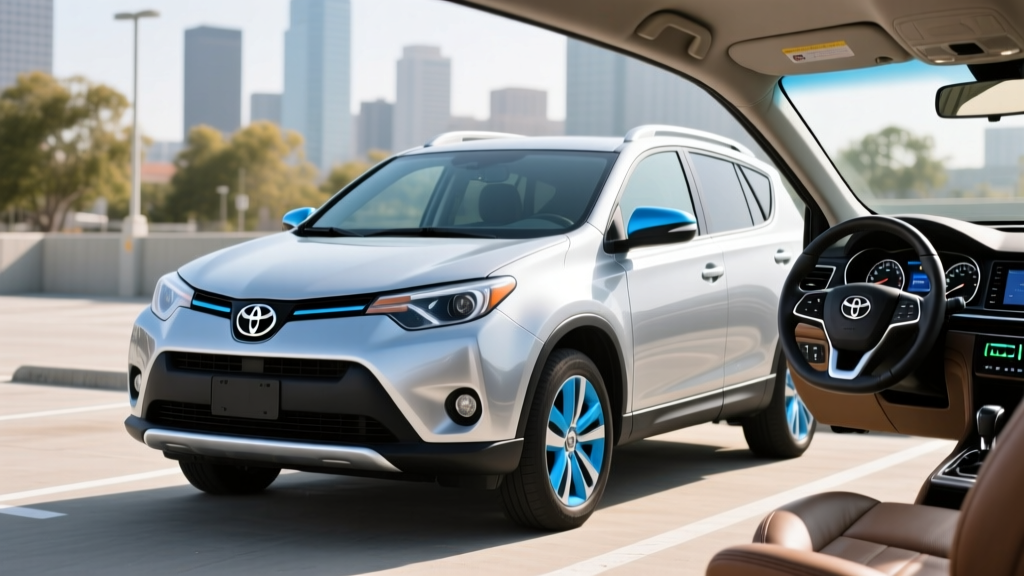
Toyota partnered with Tesla Motors to electrify the third-generation RAV4 for the 2012–2014 model years. The 2013 model is the volume year. Under the hood sits a Tesla-sourced AC induction motor and a 41.8 kWh lithium-ion battery pack (NMC chemistry). Only about 2,600 units were sold across all three years, making parts and service a real concern in 2026.
| Spec | Value |
|---|---|
| EPA Range | 103 miles |
| Battery Capacity (usable) | 41.8 kWh (NMC) |
| Motor Output | 154 hp / 273 lb-ft torque |
| 0–60 mph | ~8.6 seconds |
| Top Speed | 85 mph (Normal mode) / 100 mph (Sport) |
| DC Fast Charge (CHAdeMO) | Up to 50 kW, 0–80% in ~45 min |
| Level 2 Charge (240V / 40A) | ~6 hours (0–100%) |
| EPA Efficiency | 76 MPGe combined |
| Original MSRP | $49,800 (before incentives) |
| Used Price Range (2026) | $6,000–$10,000 |
| Battery Warranty (original) | 8 years / 100,000 miles (expired) |
Real-World Range: What 103 EPA Miles Actually Means
EPA Sticker: 103 miles
Real-World Expectation: 70–90 miles in mixed driving; as low as 55–65 miles in freezing weather or sustained highway speeds above 70 mph.
The RAV4 EV's 76 MPGe combined rating (source: EPA fueleconomy.gov) reflects a vehicle optimized for city speeds. At highway velocities, the tall, boxy SUV body creates substantial drag, and the older NMC cells lose efficiency faster than modern packs. Add battery degradation — expect 15–25% capacity loss on a 13-year-old pack unless it was replaced — and your usable range shrinks further.
Cold-weather impact is severe. Without a modern heat pump (the RAV4 EV uses resistive cabin heating), winter range loss can hit 35–40%. If you live in a climate with sub-freezing winters, this vehicle's practical range may drop below 60 miles on a charge.
Charging: CHAdeMO's Declining Network
The 2013 RAV4 EV uses the CHAdeMO DC fast-charging standard, capped at 50 kW. In 2013, CHAdeMO competed with CCS; by 2026, CHAdeMO infrastructure in the U.S. has contracted significantly as Electrify America, Tesla, and most automakers standardized on NACS and CCS1.
| Level | Power | Miles Added per Hour | Notes |
|---|---|---|---|
| Level 1 (120V) | ~1.4 kW | ~3–4 mi/hr | Emergency/trickle only |
| Level 2 (240V, 40A) | ~9.6 kW | ~22 mi/hr | Full charge in ~6 hours |
| DC Fast (CHAdeMO) | 50 kW peak | ~110 mi/hr (peak) | 0–80% in ~45 min; CHAdeMO stations declining |
Home charging is mandatory for practical ownership. A Level 2 home installation typically costs $800–$2,500 depending on your panel capacity and run length. Without home charging, the RAV4 EV's limited range and shrinking CHAdeMO network make it a frustrating daily driver.
Cost Breakdown: Used Purchase + Ownership Economics
| Cost Category | 2013 RAV4 EV | 2013 RAV4 Gas (LE AWD) |
|---|---|---|
| Purchase Price (2026 used) | $6,000–$10,000 | $9,000–$13,000 |
| Annual Fuel / Electricity | $350–$550 (at $0.14/kWh) | $1,600–$2,100 (at $3.40/gal, 26 MPG comb.) |
| Annual Maintenance | $200–$400 | $600–$1,000 |
| Insurance (avg annual) | $900–$1,200 | $1,000–$1,300 |
| Battery Replacement Reserve | $3,000–$6,000 (one-time risk) | N/A |
| 5-Year Total (excl. purchase) | $7,250–$10,750 + battery risk | $16,000–$22,000 |
The fuel savings are real — roughly $1,200–$1,600 per year at average mileage (12,000 mi/yr). But the looming battery replacement cost can erase years of savings. Before buying, demand a State of Health (SoH) readout from a qualified EV technician. If SoH is below 75%, negotiate the price down by at least the replacement cost or walk away.
Used EV Tax Credit (§25E)
Under current IRS rules (irs.gov §25E), you may qualify for up to $4,000 (30% of sale price, capped) on a used EV purchased from a dealer. The vehicle must sell for $25,000 or less, and buyer income caps apply ($75K single / $150K married filing jointly). At $6,000–$10,000, the RAV4 EV easily clears the price cap, potentially netting $1,800–$3,000 back.
2013 RAV4 EV vs. Modern Used EVs and Hybrids
| Vehicle | EPA Range / MPG | Used Price (2026) | Charging / Fueling |
|---|---|---|---|
| 2013 Toyota RAV4 EV | 103 mi | $6,000–$10,000 | CHAdeMO 50 kW / L2 |
| 2018 Chevrolet Bolt EV | 238 mi | $10,000–$14,000 | CCS 55 kW / L2 |
| 2017 Nissan Leaf (30 kWh) | 107 mi | $7,000–$10,000 | CHAdeMO 50 kW / L2 |
| 2018 Toyota RAV4 Hybrid | 32 MPG combined | $16,000–$20,000 | Gas only — no charging needed |
| 2020 Hyundai Kona Electric | 258 mi | $14,000–$18,000 | CCS 75 kW / L2 |
The RAV4 EV's 103-mile range was competitive in 2013. In 2026, a used Bolt EV offers more than double the range for a modest price premium, with a more viable CCS charging connector. The RAV4 Hybrid eliminates charging entirely and still delivers strong fuel economy — a more practical choice for buyers without reliable home charging access.
Common Misconceptions About the 2013 RAV4 EV
| Myth | Fact |
|---|---|
| "It's a Tesla underneath, so parts are easy." | The powertrain is Tesla-derived but proprietary to this application. Tesla does not service the RAV4 EV. Parts availability is limited and relies on salvage or specialty suppliers. |
| "The battery will last forever." | NMC cells from 2013 are 13 years old. Degradation of 15–25% is typical. Calendar aging continues regardless of mileage. |
| "I can fast-charge anywhere." | CHAdeMO stations are declining in the U.S. as networks prioritize CCS and NACS. Check PlugShare for CHAdeMO availability in your area before committing. |
| "It qualifies for the $7,500 federal tax credit." | The §30D new-vehicle credit no longer applies. Only the §25E used-EV credit (up to $4,000) is available, subject to income and dealer-sale requirements. |
| "103 miles is enough for anyone." | Real-world range of 70–90 miles (less in winter) means this works only for short, predictable commutes with daily home charging. |
Decision Framework: Is This the Right EV for You?
Buy the 2013 RAV4 EV if:
- Your daily round-trip commute is under 50 miles
- You have confirmed Level 2 home charging (or can install it)
- You live in a mild climate (rarely below 32°F)
- You can verify battery SoH above 80% before purchase
- You want an SUV form factor at the lowest possible EV entry price
- You accept the CHAdeMO network risk and parts scarcity
Skip the 2013 RAV4 EV if:
- You regularly drive more than 70 miles in a day
- You lack home charging access and rely on public infrastructure
- You live in a cold-winter climate
- Battery SoH is unknown or below 75%
- You want a vehicle with strong dealer support and parts availability
- You need DC fast charging for road trips (CHAdeMO + 50 kW = impractical for travel)
Consider these alternatives instead: A used 2018+ Bolt EV (238 mi range, CCS), a 2017+ RAV4 Hybrid (no charging hassle, 32 MPG), or if budget allows, a 2020+ Kona Electric (258 mi, CCS) for a far more usable daily EV.
Frequently Asked Questions
Can Toyota dealers service the 2013 RAV4 EV?
Most Toyota dealers lack the high-voltage training and diagnostic tools for this specific Tesla-sourced powertrain. You'll likely need an independent EV specialist or a mobile high-voltage technician. Confirm service availability in your area before purchasing.
What does a battery replacement cost?
Replacement packs are not readily available new from Toyota. Refurbished or salvage packs typically cost $3,000–$6,000 including labor from a specialist. Availability is inconsistent. This is the single largest financial risk of ownership.
Is the 2013 RAV4 EV safe?
The RAV4 EV was not crash-tested by NHTSA or IIHS in its electric variant. It shares the third-generation RAV4 platform, which earned a Top Safety Pick from IIHS for the gas model. The added battery weight (roughly 850 lbs) changes crash dynamics, but no EV-specific safety data was published. Proceed with that uncertainty in mind (source: IIHS).
How does regenerative braking work on this model?
The RAV4 EV offers two modes: Normal (mild regen, coast-friendly) and Sport (stronger regen, closer to one-pedal driving but not full stop-hold). The friction brakes are conventional and will still see wear, though less than a gas RAV4.
What should a first-time EV buyer know before purchasing this car?
First, confirm you can charge at home — Level 1 (120V) adds only ~3 miles per hour, which is insufficient for daily use. Budget for a Level 2 installation ($800–$2,500). Second, always verify battery State of Health before purchase; it's the equivalent of checking a gas car's engine compression. Third, understand that the §25E used-EV credit requires purchase from a licensed dealer — private-party sales don't qualify. Finally, accept that this is a 13-year-old, low-volume EV with limited support infrastructure; it's a budget commuter, not a primary family vehicle.