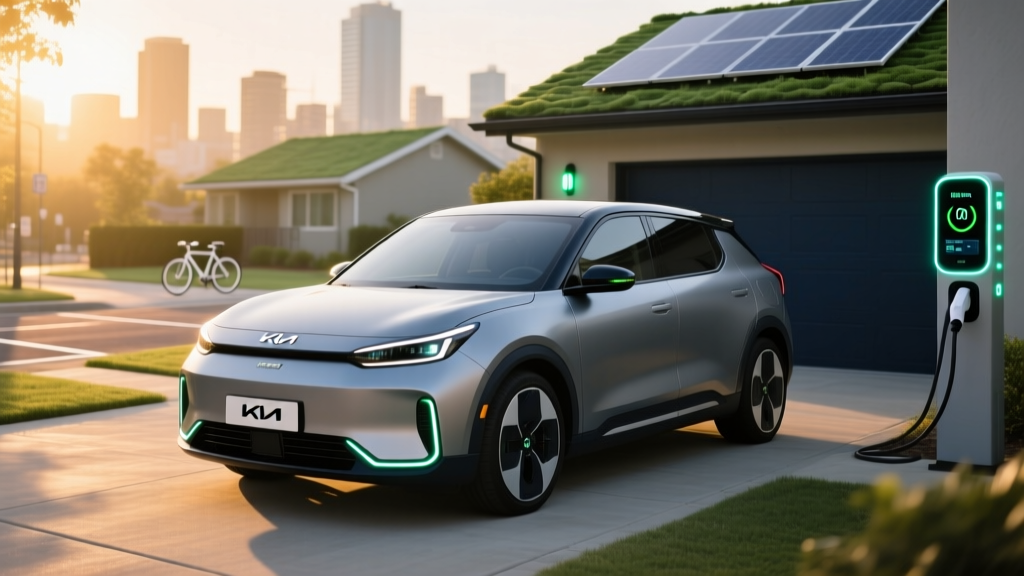
Quick Verdict: Is the 2026 Kia Niro EV Worth It?
The 2026 Kia Niro EV delivers an EPA-estimated 239 miles of range from its 64.8 kWh battery, charges from 10–80% in roughly 45 minutes on a DC fast charger, and starts around $39,600 before incentives. It's a practical, efficiency-focused compact crossover for buyers who want a no-drama daily driver with low running costs — not a performance EV. If you have Level 2 home charging and a commute under 100 miles round-trip, the Niro EV is one of the most cost-effective ways to go electric in 2026. If you frequently road-trip or live in a charging desert, the Niro Hybrid or a longer-range alternative may serve you better.
Range, Battery, and Real-World Efficiency
The 2026 Kia Niro EV uses a 64.8 kWh usable lithium-ion battery pack (NMC chemistry) powering a front-mounted permanent-magnet synchronous motor rated at 201 horsepower and 188 lb-ft of torque. The EPA rates it at 239 miles of combined range across Wind and Wave trims.
Real-World Range Expectations
EPA sticker: 239 miles
Real-world highway (70 mph, mild weather): ~200–215 miles
Cold weather (below 32°F, highway): ~165–185 miles
City/regenerative driving (moderate temps): 240–255 miles
The Niro EV's efficiency shines in stop-and-go traffic where regenerative braking recaptures energy. Highway driving at sustained speeds and cold temperatures (which increase cabin-heating load and battery resistance) will reduce range noticeably. Kia's heat pump, standard on the Niro EV, helps mitigate cold-weather loss compared to EVs without one.
Efficiency is rated at approximately 113 MPGe combined (roughly 29–30 kWh/100 miles) per fueleconomy.gov. That puts the Niro EV among the more efficient compact electric crossovers, trailing the Tesla Model Y but ahead of heavier competitors like the Ford Mustang Mach-E and Volkswagen ID.4.
| Spec | Value |
|---|---|
| EPA Range | 239 miles |
| Battery (usable) | 64.8 kWh, NMC |
| Motor Output | 201 hp / 188 lb-ft |
| 0–60 mph | ~7.8 seconds |
| EPA Efficiency | 113 MPGe (29 kWh/100 mi) |
| Max DC Fast Charge | ~80 kW peak |
| 10–80% DC Charge | ~45 minutes |
| Level 2 (240V) Charge | 11 kW onboard; ~6.5 hrs (10–100%) |
| Charge Port | CCS1 (NACS adapter available) |
| Cargo Volume | 18.8 cu ft (rear up) / 53.0 cu ft (rear folded) |
| Base MSRP (Wind) | $39,600 |
| Battery/Powertrain Warranty | 10 years / 100,000 miles |
Charging Speed and Infrastructure Reality
The Niro EV's DC fast-charging capability peaks at approximately 80 kW — a deliberate engineering choice favoring battery longevity over maximum charge speed. This means the Niro EV won't match the 150–250 kW peak rates of rivals like the Hyundai Ioniq 5 or Tesla Model Y. On a 150+ kW Electrify America or EVgo station, expect the Niro to sustain roughly 60–75 kW through the 10–60% window before tapering significantly above 80% state of charge.
| Level | Power | Miles Added per Hour | Best For |
|---|---|---|---|
| Level 1 (120V outlet) | ~1.4 kW | ~4–5 miles | Overnight top-up, emergencies |
| Level 2 (240V home/public) | Up to 11 kW | ~35–38 miles | Daily home charging |
| DC Fast Charge | ~80 kW peak | ~150 miles in 30 min | Road trips, quick stops |
For daily driving, Level 2 home charging is where the Niro EV makes the most sense. A full overnight charge on a 240V/48A Level 2 station (such as a ChargePoint Home Flex or Wallbox Pulsar Plus) replenishes the battery in roughly 6.5 hours — more than sufficient for any daily commute under 100 miles.
For road trips, plan charging stops around the 180-mile mark to keep state of charge above 10% and avoid the steep taper above 80%. The CCS1 port is compatible with Electrify America, EVgo, and ChargePoint DC stations. Kia now offers a NACS adapter, granting access to Tesla Superchargers (V2 and V3 stalls), which expands the fast-charging network considerably for 2026.
Cost Breakdown: Niro EV vs. Gas Niro vs. Niro Hybrid
The purchase decision for the Niro EV only makes sense when you look at total cost of ownership (TCO), not just the sticker price. Here's how the three Niro variants stack up over 5 years and 60,000 miles of driving.
| Cost Category | Niro EV (Wind) | Niro Hybrid (EX) | Gas Niro (LX) |
|---|---|---|---|
| Base MSRP | $39,600 | $28,590 | $26,990 |
| Est. Federal Tax Credit (§30D) | $0–$7,500* | $0 | $0 |
| Effective Purchase Price | $32,100–$39,600 | $28,590 | $26,990 |
| Fuel/Energy (60k mi) | $3,200–$4,800 | $5,800–$6,500 | $7,200–$8,400 |
| Maintenance (60k mi) | $600–$900 | $2,200–$2,800 | $2,500–$3,200 |
| Insurance (5-yr avg) | $7,500–$9,000 | $6,200–$7,500 | $6,000–$7,200 |
| Est. 5-Year Depreciation | $14,000–$17,000 | $11,000–$13,000 | $12,000–$14,000 |
| Total 5-Year Cost | $57,400–$71,300 | $53,790–$58,390 | $54,690–$59,790 |
*Federal §30D tax credit eligibility depends on battery critical-mineral sourcing, buyer income caps ($150k single / $300k joint), and MSRP caps ($55,000 for SUVs). The Niro EV's eligibility varies by model year and production batch. Verify current status at irs.gov or via the dealer's point-of-sale verification tool.
Key takeaway: If the Niro EV qualifies for the full $7,500 credit (applied at point of sale), its 5-year TCO drops to the $57,000–$64,000 range — competitive with or lower than the gas Niro. Without the credit, the hybrid variant remains the cheaper option by roughly $3,000–$5,000 over five years. The EV wins on maintenance (no oil changes, fewer brake replacements due to regen) and fuel cost, but loses on depreciation and insurance premiums, which run 10–20% higher for EVs.
Home Charging Installation: The Hidden Upfront Cost
If you don't already have a 240V outlet in your garage or driveway, budget $500–$2,500 for a professional Level 2 charger installation. Homes with a 200A electrical panel and short conduit runs from panel to garage typically cost $500–$1,200. Older homes with 100A panels may require a $1,500–$3,000 panel upgrade. Always get a quote from a licensed electrician before committing to the vehicle.
EV vs. Gas vs. Hybrid: Which Niro Fits Your Life?
The three Niro powertrains serve distinctly different buyer profiles. Here's a data-driven framework to help you choose.
Niro Powertrain Decision Framework
Choose the Niro EV if:
- You have reliable Level 2 home charging (garage, driveway, or workplace)
- Your daily round-trip commute is under 100 miles
- You take road trips fewer than 4–5 times per year
- You qualify for the §30D federal credit or a state EV rebate
- You want minimal maintenance and zero tailpipe emissions
Choose the Niro Hybrid if:
- You lack home charging access (apartment, street parking)
- You frequently drive 300+ miles between stops
- You live in a region with limited DC fast-charging infrastructure
- You want a lower purchase price without charging logistics
- Your priority is fuel economy (49–53 MPG) without lifestyle change
Choose the Niro PHEV if:You want 33 miles of electric-only commuting plus gas flexibility
Common Misconceptions About the Niro EV
| Myth | Fact |
|---|---|
| "239 miles isn't enough range." | The average American drives 37 miles/day (FHWA data). 239 miles covers nearly a week of commuting. For road trips, a 30-minute DC stop adds ~150 miles. |
| "The battery will need replacing in 5 years." | Kia warrants the battery for 10 years/100,000 miles against capacity loss below 70%. Real-world Niro EV data shows ~5–8% degradation at 60,000 miles. Full replacement (rare) costs $8,000–$12,000 out of warranty. |
| "Charging takes too long." | Home Level 2 charging happens while you sleep — zero active time. DC fast charging adds ~150 miles in 30 minutes, comparable to a meal stop on a road trip. |
| "EVs don't work in cold climates." | Cold reduces range 15–25% (to ~170–190 miles in the Niro EV). Preconditioning the battery while plugged in and using the heat pump mitigates this. EVs start instantly in any temperature — no cold-crank issues. |
| "It qualifies for the full $7,500 tax credit." | Eligibility depends on battery sourcing, buyer income, and MSRP caps. The credit can be $0, $3,750, or $7,500 depending on the production batch. Always verify before purchasing. |
Interior, Tech, and Daily Livability
The 2026 Niro EV's cabin is functional rather than luxurious. The Wind trim includes a 10.25-inch digital cluster and 10.25-inch infotainment touchscreen with wireless Apple CarPlay and Android Auto. The Wave trim adds heated and ventilated front seats, a heated steering wheel, and a Harman Kardon premium audio system.
Cargo space is competitive for the segment: 18.8 cubic feet behind the rear seats and 53.0 cubic feet with the 60/40 split rear seat folded. There is no front trunk (frunk) — the space is occupied by power electronics. Rear seat room accommodates two adults comfortably; a third middle passenger will find it tight.
Driver assistance includes Kia's Highway Driving Assist (HDA) with lane-centering and adaptive cruise control, blind-spot monitoring, rear cross-traffic alert, and forward collision avoidance. This is an SAE Level 2 driver-assist system — it requires continuous driver attention and hands-on-wheel supervision. It is not autonomous or self-driving.
ADAS Limitation Notice
Kia Highway Driving Assist is a Level 2 driver-assistance system. You must keep your hands on the steering wheel and eyes on the road at all times. It does not handle construction zones, unmapped roads, or severe weather autonomously. You are the driver and remain legally responsible for the vehicle.
What First-Time EV Buyers Should Know
If the Niro EV is your first electric vehicle, here are the ownership realities that brochures don't emphasize:
- Home charging is non-negotiable for convenience. Relying solely on public DC fast charging is expensive ($0.30–$0.50/kWh vs. $0.12–$0.18/kWh at home) and time-consuming. If you can't install Level 2 at home, the Niro Hybrid is a better fit.
- Plan trips around charging, not fuel stops. Use apps like PlugShare or A Better Routeplanner to map DC stations along your route. Arrive with 15–20% SoC and charge to 80% — charging from 80–100% is painfully slow due to the charge-curve taper.
- Tires wear faster on EVs. The Niro EV's instant torque and heavier curb weight (~3,800 lbs) accelerate tire wear. Budget for replacement every 30,000–40,000 miles instead of the 50,000+ miles typical on gas cars.
- Insurance costs more. EV insurance premiums run 10–20% higher due to repair complexity and battery replacement cost. Get quotes before purchasing.
- Preconditioning saves range and time. Use the Kia Access app to warm the cabin and battery while plugged in before departure. This preserves range and enables faster DC charging by bringing the battery to optimal temperature.
Frequently Asked Questions
Does the 2026 Kia Niro EV qualify for the $7,500 federal tax credit?
It depends. Under IRS §30D rules, eligibility requires the vehicle's battery to meet critical-mineral and battery-component sourcing thresholds, the buyer's AGI to fall below $150,000 (single) or $300,000 (joint), and the MSRP to be at or below $55,000 for SUVs. The Niro EV's eligibility varies by production batch. Check irs.gov or ask the dealer for the current VIN-level credit determination before signing.
How long does it take to charge the Niro EV at home?
On a 240V Level 2 charger rated at 11 kW, a full 10–100% charge takes approximately 6.5 hours. Most owners plug in overnight and wake up to a full battery every morning. On a standard 120V outlet (Level 1), expect roughly 4–5 miles of range per hour of charging — only practical for emergency top-ups.
What's the real-world range in winter?
In sustained temperatures below 32°F with highway driving, expect 165–185 miles from a full charge — a 22–30% reduction from the 239-mile EPA figure. Using seat heaters instead of cranking cabin heat, preconditioning while plugged in, and driving at moderate speeds can recover 10–15 miles of that loss.
How does the Niro EV compare to the Hyundai Kona Electric?
The Kona Electric offers slightly more range (EPA 261 miles) and faster DC charging (~100 kW peak) from a similar-size battery. The Niro EV counters with more rear-seat legroom, slightly more cargo volume, and Kia's 10-year/100,000-mile powertrain warranty. Both are strong choices; the Kona edges ahead on range and charge speed, the Niro on space and warranty.
Is the Niro EV good for road trips?
It's adequate but not ideal. The ~80 kW peak DC charge rate means 30–45 minute stops every 180–200 miles. For 2–3 road trips per year, this is manageable with planning. For frequent long-distance driving, a vehicle with 150+ kW charging (Ioniq 5, Tesla Model Y) or the Niro Hybrid is more practical.
What happens if the battery degrades significantly?
Kia's battery warranty covers capacity loss below 70% of original for 10 years or 100,000 miles. Real-world data from 2023–2025 Niro EVs shows typical degradation of 5–8% at 60,000 miles — well within warranty tolerance. Out-of-warranty replacement, while rare, costs approximately $8,000–$12,000 including labor.