Who Is Rivian Made By? The Company Behind the Electric Trucks
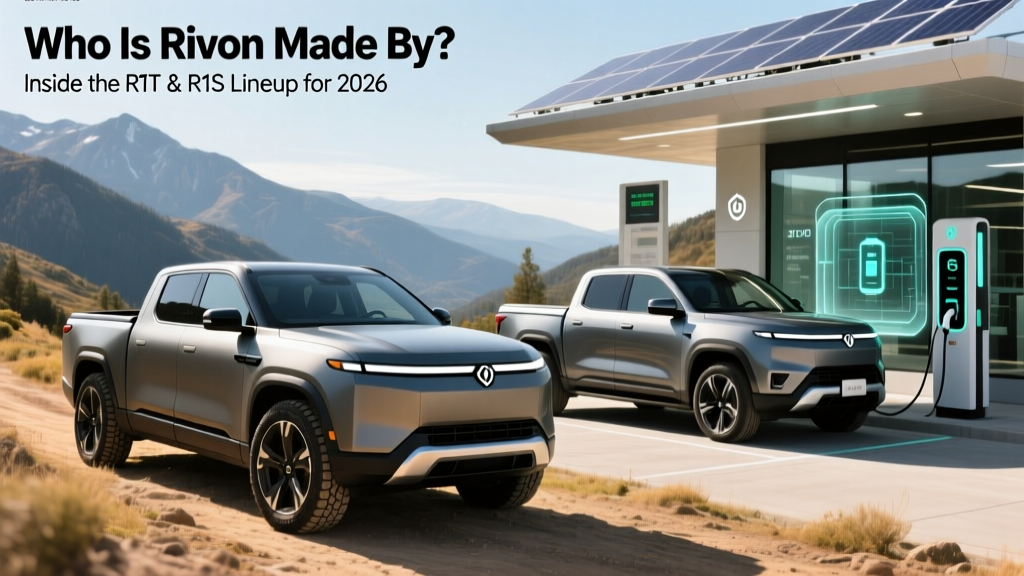
Rivian is made by Rivian Automotive, LLC, an American electric-vehicle manufacturer founded in 2009 by RJ Scaringe — a mechanical engineer who earned his PhD from MIT. Originally launched under the name Mainstream Motors before rebranding to Avera Motors and finally Rivian in 2011, the company is headquartered in Irvine, California, and builds all of its consumer vehicles at a massive former-Mitsubishi assembly plant in Normal, Illinois. Rivian is a publicly traded company (NASDAQ: RIVN) and operates independently — it is not a subsidiary of any legacy automaker, though Amazon holds a significant minority stake following early investment rounds.
Unlike startups that badge-engineer existing platforms, Rivian developed its own proprietary skateboard architecture — a chassis that integrates the battery pack, drive units, suspension, and thermal management into a single structural unit. This platform underpins both the R1T (a midsize electric pickup) and the R1S (a three-row electric SUV), which share roughly 90% of their componentry. For 2026, Rivian has expanded production capacity at the Normal plant and begun construction on a second facility in Stanton, Georgia, expected to produce its upcoming R2 crossover.
2026 Rivian R1T & R1S: The Quick Verdict
The R1T and R1S remain the most capable off-road EVs you can buy, with genuine body-on-frame truck utility wrapped around a tech-forward, car-like driving experience. The 2026 model year brings the second-generation "Gen 2" powertrain refinements — updated motor controllers, improved thermal management, and a revised LFP battery option for the Standard pack. If you need a three-row family hauler that can also tow 7,700 pounds and handle Moab-grade trails, the R1S is unmatched. If you want a pickup bed with a clever Gear Tunnel and camp-kitchen option, the R1T stands alone. The main trade-off: pricing starts well above $70,000, and federal tax credit eligibility is limited by MSRP caps and battery-sourcing rules.
| Spec | R1T (Dual-Motor) | R1S (Dual-Motor) | R1T (Tri-Motor) |
|---|---|---|---|
| EPA Range | 352 mi (Max pack) | 341 mi (Max pack) | 420 mi (Max pack est.) |
| Battery (usable) | 106 kWh (Standard) / 141 kWh (Max) | 106 kWh (Standard) / 141 kWh (Max) | 141 kWh (Max) |
| Chemistry | LFP (Std) / NMC (Max) | LFP (Std) / NMC (Max) | NMC |
| 0–60 mph | 4.5 sec | 4.6 sec | 2.9 sec (Tri) |
| Horsepower | 533 hp | 533 hp | 850 hp |
| Towing Capacity | 11,000 lb | 7,700 lb | 11,000 lb |
| Base MSRP | $69,900 | $74,900 | $99,900 |
Range & Efficiency: EPA vs. Real-World Numbers
Rivian publishes multiple range figures depending on pack size and motor configuration. According to fueleconomy.gov, the 2026 R1T Dual-Motor with the Max Pack (141 kWh NMC) earns an EPA-estimated 352 miles, while the R1S Dual-Motor Max Pack comes in at 341 miles. Efficiency for the Dual-Motor R1T is rated at approximately 73 MPGe combined, or about 48 kWh per 100 miles — a reflection of the truck's 7,100-pound curb weight and boxy aerodynamic profile.
EPA 352 miles (R1T Dual-Motor Max) is the lab number. In real-world highway driving at 70–75 mph, expect ~280–310 miles on a full charge. In cold weather (below 32°F), range drops an additional 15–25%, putting winter highway range closer to 230–260 miles. City driving with regenerative braking recovers more energy, so mixed-use commuters may see results closer to the EPA sticker. The Standard Pack (106 kWh LFP) drops EPA range to approximately 270 miles for the R1T — plan for ~210 miles highway in temperate conditions.
Rivian's LFP (lithium iron phosphate) Standard Pack offers a notable ownership advantage: LFP chemistry tolerates regular 100% charging without the degradation concerns of NMC cells. This means Standard Pack owners can charge to full daily and still extract maximum cycle life — a practical benefit for commuters with predictable routes.
Charging Speed: DC Fast Charge & Home Level 2
Charging speed is where Rivian's Gen 2 architecture shows meaningful improvement. The R1T and R1S support a peak DC fast-charge rate of 220 kW on the Max Pack (NMC) and approximately 190 kW on the Standard Pack (LFP). In practice, the Max Pack can charge from 10% to 80% in roughly 30 minutes at a compatible 350 kW station, though the charge curve tapers significantly above 80% — adding the final 20% can take another 25–30 minutes.
| Charging Level | Power (kW) | Speed (mi/hr added) | Notes |
|---|---|---|---|
| Level 1 (120V household) | ~1.4 kW | ~3–4 mi/hr | Emergency / trickle only |
| Level 2 (240V / 48A Wall Connector) | 11.5 kW | ~25 mi/hr | Full overnight charge in ~10–13 hrs |
| DC Fast Charge (Max Pack) | Peak 220 kW | ~140 mi in 20 min | 10–80% in ~30 min; tapers above 80% |
| DC Fast Charge (Standard Pack) | Peak 190 kW | ~120 mi in 20 min | 10–80% in ~28 min |
For home charging, Rivian sells its own Wall Connector ($550) that delivers up to 11.5 kW (48 amps) on a NACS connector. This adds approximately 25 miles of range per hour of charging — enough to fully replenish the Standard Pack overnight and bring the Max Pack from 20% to full in about 12 hours. Rivian vehicles now ship with the NACS (North American Charging Standard) port natively, granting direct access to Tesla's Supercharger network without an adapter — a significant road-trip advantage.
Performance, Drivetrain & Off-Road Capability
The Dual-Motor R1T and R1S use independent front and rear permanent-magnet motors producing a combined 533 horsepower and 610 lb-ft of torque. That's enough for a 0–60 mph sprint in approximately 4.5 seconds — genuinely quick for a vehicle this heavy. The Tri-Motor configuration adds a rear-axle dual-motor setup, pushing output to 850 hp and dropping 0–60 to a supercar-rivaling 2.9 seconds.
Every Rivian comes with standard all-wheel drive, an adaptive air suspension that can raise ride height by up to 6.4 inches for off-road use, and a quad-motor torque-vectoring system (on Tri/Quad variants) that can independently modulate torque to each wheel. The R1T's wading depth is rated at 36 inches, and approach/departure angles rival dedicated off-roaders like the Jeep Wrangler Rubicon. The air suspension also enables a kneel function for easier cargo loading and a camping mode that self-levels the vehicle on uneven terrain.
Interior Space, Cargo & Practicality
The R1S offers three rows of seating for up to seven passengers. Second-row legroom is a generous 38.5 inches, though the third row is best suited for children or short trips (31.5 inches of legroom). Cargo volume behind the third row is 10.4 cu ft, expanding to 46.7 cu ft with the third row folded and 91.6 cu ft with both rear rows down.
The R1T has a 4.5-foot bed (shorter than a Tacoma) but compensates with the Gear Tunnel — a 11.7 cu ft lockable, weatherproof pass-through compartment behind the rear seats that's ideal for skis, camping gear, or groceries. The available Camp Kitchen slides out of the Gear Tunnel with a two-burner induction stove, sink, and utensil set. The R1T also includes a front trunk (frunk) with 11.1 cu ft of lockable storage. Towing capacity maxes out at 11,000 pounds for the R1T — though expect range to drop by 40–50% when towing near max weight.
Pricing, Trims & Federal Tax Credit Eligibility
Rivian's pricing places it firmly in the premium segment. The 2026 R1T Dual-Motor Standard Pack starts at $69,900 (before destination), while the R1S Dual-Motor Standard begins at $74,900. The Max Pack adds roughly $10,000, and Tri-Motor configurations push into the $99,000–$105,000 range. Fully loaded Adventure or Ascend Edition models can approach $115,000.
| Model / Trim | Base MSRP | §30D Credit Eligible? | Est. After-Credit Price |
|---|---|---|---|
| R1T Dual-Motor Standard | $69,900 | Partial (depends on sourcing) | ~$62,400–$69,900 |
| R1S Dual-Motor Standard | $74,900 | Partial (depends on sourcing) | ~$67,400–$74,900 |
| R1T Dual-Motor Max Pack | $79,900 | Partial (depends on sourcing) | ~$72,400–$79,900 |
| R1T Tri-Motor Max | $99,900 | Partial (depends on sourcing) | ~$92,400–$99,900 |
- MSRP Cap: Trucks and SUVs must have an MSRP at or below $80,000 to qualify. This eliminates most Max Pack and all Tri-Motor configurations.
- Income Cap: Buyer AGI must not exceed $150,000 (single), $225,000 (head of household), or $300,000 (joint).
- Battery Sourcing: The full $7,500 requires meeting both critical-minerals and battery-component sourcing thresholds set by the IRS. Rivian has worked to increase North American sourcing, but the partial ($3,750) vs. full ($7,500) credit depends on the specific build date and supply chain. Check the latest eligibility at IRS.gov.
- Point-of-Sale Transfer: Qualified buyers can transfer the credit to the dealer at purchase, reducing the out-of-pocket price directly.
Consult a tax professional before relying on credit eligibility — rules change and individual circumstances vary.
Tech, Driver Assistance & Software
Rivian runs its own vertically integrated software stack on a 15.6-inch center touchscreen and a 12.3-inch digital instrument cluster. The system supports over-the-air (OTA) updates, and Rivian has steadily improved navigation, route planning with automatic charging stops, and phone-as-key functionality. The infotainment system does not support Apple CarPlay or Android Auto — a deliberate choice that frustrates some buyers, though Rivian's native navigation and media apps cover most needs.
The Rivian Driver+ suite is a Level 2 SAE driver-assistance system combining adaptive cruise control, lane-centering steering, and automatic lane changes on divided highways. It works on most highways but requires the driver to maintain hands-on-wheel attention (a capacitive steering wheel monitors contact). This is not a self-driving system — it is a hands-on assist comparable to Ford BlueCruise or GM Super Cruise, though Rivian does not yet support true hands-off operation. Automatic emergency braking, blind-spot monitoring, and a 360-degree camera system are standard across all trims.
Rivian Driver+ is SAE Level 2. The driver must remain fully engaged, monitor the road, and be prepared to take over instantly. It does not handle construction zones, unmapped roads, or severe weather autonomously. Hands-off driving is not supported.
Warranty Coverage
Rivian backs both the R1T and R1S with a 5-year / 60,000-mile bumper-to-bumper limited warranty and an 8-year / 175,000-mile battery and drive-unit warranty. The battery warranty guarantees that the pack will retain at least 70% of its original capacity over the coverage period — a competitive threshold. Rivian also includes 24/7 roadside assistance for 5 years / 60,000 miles and provides OTA software updates at no additional cost.
Pros & Cons: The Honest Take
- Class-leading off-road capability with air suspension and 36" wading
- Standard AWD and genuine truck utility (11,000-lb tow on R1T)
- NACS port = direct Tesla Supercharger access
- LFP Standard Pack allows daily 100% charging without degradation worry
- Innovative Gear Tunnel and Camp Kitchen (R1T)
- 8-yr / 175,000-mi battery warranty
- Premium pricing — most trims exceed $80K tax-credit MSRP cap
- No Apple CarPlay or Android Auto
- Efficiency is low (~48 kWh/100mi) — costly to charge on expensive public DC
- Real-world highway range well below EPA sticker, especially when towing
- Third-row space in R1S is tight for adults
- Service center network still expanding in rural areas
Who Should Buy a Rivian — And Who Shouldn't
Buy the R1T if: You need a daily-drivable pickup with genuine off-road chops, you tow a boat or camper (under 7,000 lb for reasonable range), you want the Gear Tunnel for outdoor gear, and you have access to home Level 2 charging. The R1T has no direct EV rival — the closest competitor is the Ford F-150 Lightning, which is larger, less off-road-capable, and starts at a lower price.
Buy the R1S if: You need three rows for family duty but refuse to drive a minivan, you want air-suspension comfort on road trips, and you'll use the off-road capability at least occasionally. The R1S competes with the Tesla Model X (more range, falcon doors, less rugged) and the Kia EV9 (far cheaper, less premium, no off-road pretension).
Look elsewhere if: Your budget is under $60,000, you need maximum efficiency and range per dollar (consider a Hyundai Ioniq 5 or Tesla Model Y), or you rely on Apple CarPlay for daily navigation.
Frequently Asked Questions
Who is Rivian made by and where are Rivians built?
Rivian vehicles are designed and manufactured by Rivian Automotive, LLC, an independent American EV company founded by RJ Scaringe in 2009. All R1T and R1S production takes place at Rivian's factory in Normal, Illinois. The company is publicly traded (NASDAQ: RIVN) and is not owned by any legacy automaker, though Amazon holds a significant investment stake.
What is the real-world range of the Rivian R1T?
The EPA rates the R1T Dual-Motor Max Pack at 352 miles. Real-world highway driving at 70–75 mph yields approximately 280–310 miles in mild weather, and 230–260 miles in sub-freezing temperatures. The Standard Pack (106 kWh LFP) drops to roughly 210–240 miles highway. Towing near the 11,000-lb max can cut range by 40–50%.
How fast does the Rivian charge at home and on the road?
At home on a Level 2 Wall Connector (11.5 kW / 48A), the R1T adds about 25 miles per hour — a full Standard Pack charge takes ~10 hours, Max Pack ~13 hours. On DC fast chargers, the Max Pack peaks at 220 kW and charges 10–80% in roughly 30 minutes. The Standard Pack peaks at 190 kW with a similar 10–80% time of ~28 minutes.
Does the Rivian R1T qualify for the $7,500 federal EV tax credit?
Partially. The R1T Dual-Motor Standard ($69,900 MSRP) falls under the $80,000 truck MSRP cap and may qualify for up to $7,500 under IRS §30D, depending on the buyer's income (≤$150K single / ≤$300K joint) and whether the battery meets critical-minerals and component-sourcing thresholds. Max Pack and Tri-Motor trims exceed the MSRP cap and are ineligible. Always verify current eligibility at IRS.gov and consult a tax professional.
Is the Rivian worth buying over the Ford F-150 Lightning or Tesla Model X?
It depends on your priorities. The R1T offers superior off-road capability and a more innovative bed/tunnel design than the F-150 Lightning, but the Lightning is larger, starts at a lower price, and offers more rear-seat space. The R1S provides better off-road chops and a more truck-like build than the Model X, but the Tesla offers longer range, access to its (now shared) Supercharger network, and a lower starting price for base trims. If adventure capability and build quality matter most, Rivian wins. If range-per-dollar or third-row practicality is paramount, shop the alternatives.