Quick Verdict: The Original Mass-Market EV in 2026
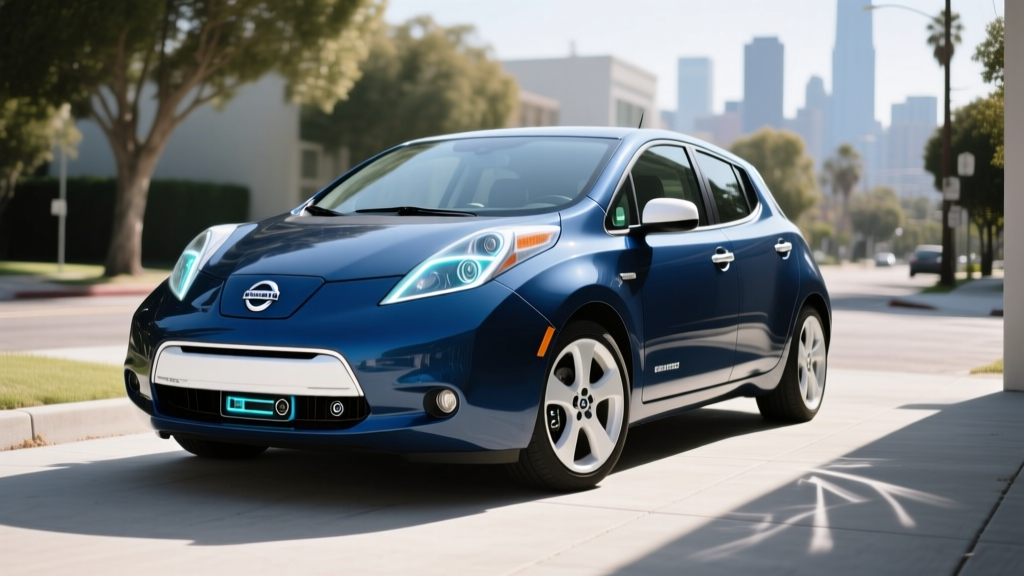
The 2013 Nissan Leaf electric was the vehicle that proved battery-electric transportation could work at scale. Over a decade later, it remains one of the most common used EVs on the road — and one of the most affordable ways to get into electric driving. But buying a first-generation Leaf in 2026 requires clear eyes about battery degradation, limited range, and a charging standard that's being phased out.
If you're considering a used 2013 Leaf as a city commuter or second car, this guide covers every spec, real-world ownership reality, and cost factor you need to make an informed decision.
2013 Nissan Leaf Specifications
| Specification | 2013 Nissan Leaf |
|---|---|
| EPA Range | 75 miles (S trim), 84 miles (SV/SL with 6.6 kW OBC) |
| Battery Capacity | 24 kWh total / ~21.6 kWh usable |
| Battery Chemistry | NMC (Nickel Manganese Cobalt) — laminated pouch cells |
| Motor Output | 80 kW (107 hp), 187 lb-ft torque |
| Drivetrain | Front-wheel drive (single motor) |
| 0–60 mph | ~11.5 seconds |
| Top Speed | ~90 mph (electronically limited) |
| EPA Efficiency | 115 MPGe combined (29 kWh/100 mi) |
| DC Fast Charge (Peak) | ~50 kW (CHAdeMO) |
| Level 2 Charge Rate | 3.3 kW (S) or 6.6 kW (SV/SL) |
| Cargo Volume | 24.0 cu ft (rear seats up), 30.0 cu ft (rear folded) |
| Passenger Volume | 94.0 cu ft |
| Curb Weight | ~3,340 lbs |
| Battery Warranty (Original) | 8 years / 100,000 miles (capacity guarantee: 5 bars lost) |
| Original MSRP (2013) | $28,800 (S) – $35,200 (SL) before incentives |
Range: EPA Numbers vs. Real-World Reality
The 2013 Leaf's 24 kWh battery was competitive when new, but the real concern for used buyers is degradation. Nissan's air-cooled battery management system (unlike the liquid-cooled systems in modern EVs) makes these packs especially vulnerable to capacity loss in hot climates. A 2013 Leaf in Arizona or Texas may have lost 30–40% of its original capacity by 2026, leaving you with an effective range of 45–55 miles on a full charge.
How to check before buying: The Leaf's dashboard displays battery health bars (out of 12). A used 2013 model showing 8–9 bars is typical. You can also use the LeafSpy OBD2 app to read exact State of Health (SoH) percentage — anything above 70% is considered acceptable for a city commuter role. According to fueleconomy.gov, the 2013 Leaf achieves 115 MPGe combined, making it highly efficient even with a degraded pack.
Charging: CHAdeMO, Speeds, and the Connector Problem
Charging the 2013 Nissan Leaf electric requires understanding three things: the CHAdeMO connector, the onboard charger options, and what those mean for your daily routine.
| Charging Level | Connector | Max Rate | Speed (miles/hr) | 0–100% Time |
|---|---|---|---|---|
| Level 1 (120V) | J1772 | 1.4 kW | ~4–5 mi/hr | ~18–22 hours |
| Level 2 (240V) — S trim | J1772 | 3.3 kW | ~12–14 mi/hr | ~7–8 hours |
| Level 2 (240V) — SV/SL | J1772 | 6.6 kW | ~22–26 mi/hr | ~3.5–4 hours |
| DC Fast Charge | CHAdeMO | ~50 kW | ~100+ mi/hr (to 80%) | ~30 min (0–80%) |
The CHAdeMO challenge in 2026: The 2013 Leaf uses the CHAdeMO DC fast-charging standard, which has been almost entirely displaced by CCS and Tesla's NACS connector in North America. Electrify America, EVgo, and most newer networks have removed CHAdeMO connectors from new installations. Before buying, map the CHAdeMO-compatible chargers near your home and commute using apps like PlugShare — you may find your options severely limited compared to CCS or NACS vehicles.
Home charging reality: If you're buying an SV or SL trim with the 6.6 kW onboard charger, a standard 240V Level 2 home station (like a ChargePoint Home Flex or Emporia Level 2) will fully replenish the 24 kWh battery overnight in about 4 hours. The base S trim's 3.3 kW charger doubles that time. For daily commuting under 50 miles, even Level 1 (standard 120V outlet) can work if you charge for 12+ hours overnight — adding roughly 40–50 miles.
DC fast-charge curve note: The Leaf peaks at roughly 50 kW only when the battery is below 50% state of charge and at optimal temperature. Above 80% SoC, charging slows dramatically to protect the passively-cooled cells. Nissan also implemented a "Rapidgate" thermal protection that further throttles consecutive fast charges — expect the second DC session of the day to peak closer to 20–30 kW.
Performance and Driving Experience
The 2013 Leaf's 80 kW (107 hp) AC synchronous motor delivers 187 lb-ft of torque to the front wheels. That instant torque makes the Leaf feel peppier than the 11.5-second 0–60 time suggests — around-town acceleration from 0–40 mph is genuinely quick and smooth, which is where this car spends most of its life.
The single-speed reduction gear means no shifting, no vibration, and near-silent operation. Regenerative braking is adjustable via the "B" mode on the shift lever (stronger regen) and the Eco mode button (which also limits throttle response and climate power). The Leaf doesn't offer true one-pedal driving to a complete stop like later EVs — you'll still need the friction brakes at very low speeds.
Handling is competent but comfort-oriented. The 3,340-lb curb weight and low center of gravity (battery pack under the floor) give it planted cornering for an economy car, but the narrow 215/50R17 tires prioritize efficiency over grip. The ride quality is surprisingly compliant, and the cabin is quiet at city speeds — wind and tire noise become noticeable above 65 mph.
Interior, Tech, and Cargo
The 2013 Leaf seats five, though the rear bench is best for two adults. Front legroom is 40.9 inches; rear legroom is 33.3 inches — adequate for average-height passengers but tight for taller riders. Cargo space is 24.0 cubic feet behind the rear seats and 30.0 cubic feet with them folded, enough for a week's groceries or two carry-on suitcases.
Tech highlights for 2013:
- 7-inch touchscreen with navigation (SV/SL trims)
- Bluetooth audio and phone connectivity
- Rearview camera (standard on SV/SL)
- CarWings telematics with remote climate preconditioning via smartphone app
- Energy flow display and driving range estimator
- Heated seats and heated steering wheel (SL trim) — critical for preserving range in winter
What's missing by 2026 standards: No Apple CarPlay or Android Auto, no adaptive cruise control, no lane-keeping assist, no DC fast-charge preconditioning, and the infotainment interface feels dated. The CarWings app has been sunset for first-generation Leafs, so remote climate control may no longer function.
Pricing, Tax Credits, and Total Cost of Ownership
As a used vehicle, the 2013 Nissan Leaf electric no longer qualifies for the new-vehicle federal tax credit under IRS §30D. However, it may qualify for the Used Clean Vehicle Credit (§25E), which provides up to $4,000 or 30% of the sale price (whichever is less) for qualifying used EVs.
| Factor | Details |
|---|---|
| Typical Used Price (2026) | $5,000 – $9,000 depending on mileage and battery health |
| Used EV Tax Credit (§25E) | Up to $4,000 (30% of sale price) — buyer income caps apply ($75K single / $150K joint) |
| Effective Price After Credit | $3,000 – $6,500 |
| Annual Electricity Cost (12K mi/yr) | ~$520 at $0.15/kWh national average |
| Annual Fuel Cost (Gas Equivalent) | ~$1,500 at 30 MPG, $3.50/gal |
| Annual Fuel Savings | ~$980/year |
| Insurance (Annual Avg) | $900 – $1,300 |
§25E credit requirements: The vehicle must be purchased from a licensed dealer (not private party), have a sale price under $25,000, and the buyer must fall under modified adjusted gross income limits ($75,000 single / $112,500 head of household / $150,000 joint). The credit is non-refundable and can be transferred to the dealer as a point-of-sale discount. Confirm current eligibility with a tax professional before purchasing.
The battery replacement question: A refurbished 24 kWh Leaf battery costs $5,000–$7,000 installed in 2026. Given that many used 2013 Leafs sell for $5,000–$9,000, a battery replacement can approach or exceed the vehicle's value. This is the single biggest financial risk — buy one with strong battery health (verified via LeafSpy) or budget for a potential pack swap.
Pros and Cons
Pros
- Extremely low purchase price — one of the cheapest EVs available used
- Very low running costs (electricity + minimal maintenance)
- Smooth, quiet, torque-rich city driving experience
- Heated seats/steering wheel on SL trim preserve winter range
- Strong reliability record for motor and power electronics
- Eligible for used EV tax credit (up to $4,000)
Cons
- Severe battery degradation in hot climates (air-cooled pack)
- CHAdeMO DC fast-charging standard being phased out
- 75-mile EPA range is impractical for anything beyond local commuting
- No modern driver-assist features (no AEB, no lane-keeping)
- Battery replacement cost can exceed vehicle value
- Outdated infotainment with no smartphone integration
- Original battery warranty expired for most examples
Who Should Buy the 2013 Nissan Leaf Electric?
The 2013 Leaf makes sense for a narrow but real set of buyers:
- City commuters with round-trip drives under 40 miles and home charging access
- Second-car households needing a cheap, efficient runabout for errands
- EV-curious buyers who want to try electric driving with minimal financial risk
- Climate-conscious drivers in mild-temperature regions (Pacific Northwest, Northern California, Northeast) where battery degradation is slower
Who should skip it: Anyone needing highway range, road-trip capability, DC fast-charging access on modern networks, modern safety tech, or who lives in a hot climate without garage parking. If your budget stretches to $12,000–$15,000, a 2016+ Leaf (30 kWh battery) or a used Chevrolet Bolt EV (238-mile range, CCS charging) offers dramatically more practicality.
Frequently Asked Questions
What is the real-world range of a used 2013 Nissan Leaf?
Expect 55–70 miles in moderate conditions with a healthy battery. In freezing weather with heat on, that drops to 40–50 miles. Degraded batteries (below 75% SoH) may deliver only 45–55 miles even in ideal conditions. Always verify State of Health with LeafSpy before purchasing.
How fast does the 2013 Leaf charge at home and on DC fast chargers?
At home on a 240V Level 2 station, the SV/SL trims charge at 6.6 kW, adding a full battery in about 4 hours. The base S trim charges at 3.3 kW, taking roughly 8 hours. DC fast charging via CHAdeMO peaks at ~50 kW, reaching 80% in about 30 minutes under ideal conditions — but CHAdeMO chargers are increasingly rare.
Does the 2013 Nissan Leaf qualify for any tax credit in 2026?
Not the new-vehicle §30D credit. It may qualify for the Used Clean Vehicle Credit (§25E) — up to $4,000 or 30% of the sale price — if purchased from a dealer for under $25,000, and the buyer meets income limits ($75K single / $150K joint). Consult a tax professional and verify dealer eligibility before purchase.
Is the 2013 Leaf worth buying vs. a newer used EV?
At $5,000–$9,000, it's the cheapest entry to EV ownership. But if you can spend $12,000+, a 2017+ Leaf (40 kWh, 151-mile range) or a used Chevy Bolt (238 miles, CCS) eliminates most of the range and charging-standard concerns. The 2013 Leaf is a calculated compromise — excellent value if your commute fits, risky if you need flexibility.
How long will the 2013 Leaf battery last?
Nissan's NMC pouch cells in the 2013 Leaf typically retain 65–80% of original capacity after 10–12 years, depending on climate and charging habits. Hot climates and frequent DC fast charging accelerate degradation. Budget $5,000–$7,000 for a potential battery replacement if capacity falls below your daily needs.
Can I charge a 2013 Leaf at Tesla Superchargers?
No. The 2013 Leaf uses CHAdeMO for DC fast charging and J1772 for Level 2. Tesla Superchargers (NACS) are not compatible, even with adapters, as the Leaf does not support the NACS protocol. Some older CHAdeMO-to-Tesla adapters existed but were unreliable and are largely discontinued.