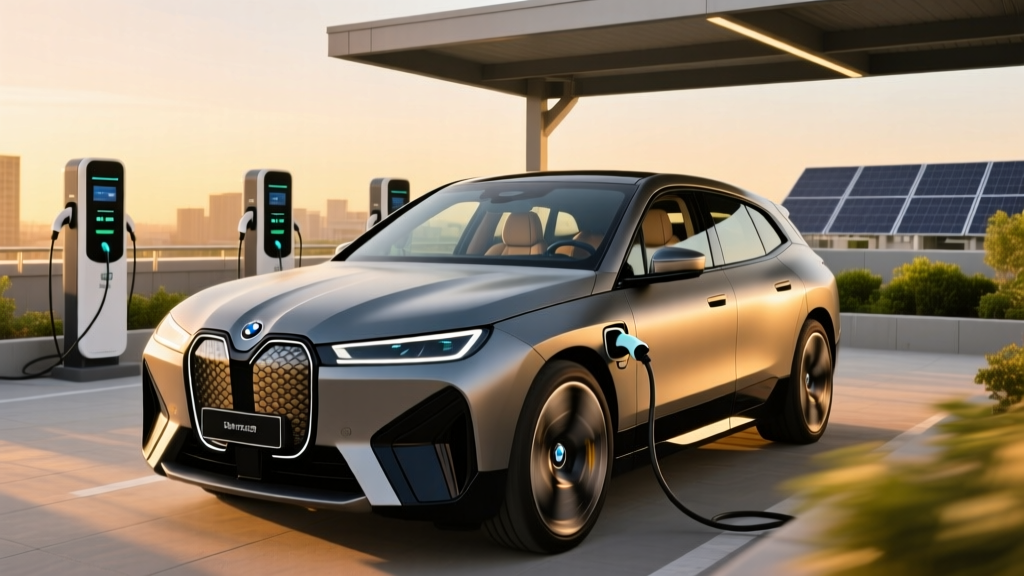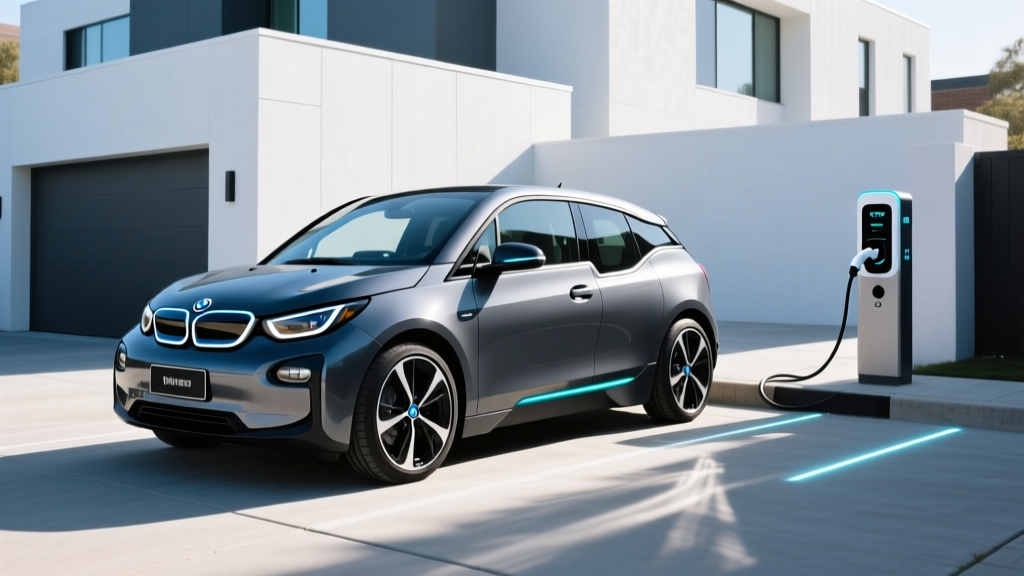
The original BMW i3 was a carbon-fiber city car that bowed out in 2021. For 2026, BMW has resurrected the i3 nameplate on an entirely new platform: a compact electric sedan built on the Neue Klasse architecture, positioned below the i4 and i5 in BMW's EV lineup. If you're researching a BMW i3 lease, you're likely weighing this entry-level luxury EV against the Tesla Model 3, Hyundai Ioniq 6, and the forthcoming next-gen Chevrolet Bolt. This review covers every number that matters — from real-world range and DC fast-charging curves to lease economics and federal tax credit eligibility under current IRS §30D rules.
2026 BMW i3: Quick Specs at a Glance
| Specification | i3 eDrive35 | i3 eDrive40 |
|---|---|---|
| EPA Estimated Range | 265 miles | 310 miles |
| Battery (usable / gross) | 65 kWh / 70 kWh | 80 kWh / 85 kWh |
| Battery Chemistry | NMC (Nickel Manganese Cobalt) | NMC |
| Drivetrain | RWD (single motor) | RWD (single motor) |
| Horsepower | 282 hp | 335 hp |
| 0–60 mph | 5.8 seconds | 5.1 seconds |
| Max DC Fast Charge | 150 kW | 175 kW |
| 10–80% DC Charge Time | ~28 minutes | ~25 minutes |
| Level 2 Home Charge Rate | 11 kW (~37 mi/hr) | 11 kW (~37 mi/hr) |
| MPGe (combined) | 125 MPGe | 118 MPGe |
| Efficiency (kWh/100 mi) | 27 kWh/100 mi | 29 kWh/100 mi |
| Base MSRP (incl. destination) | $47,595 | $53,095 |
| Battery/Powertrain Warranty | 8 years / 100,000 miles | |
Real-World Range: What the EPA Sticker Doesn't Tell You
i3 eDrive35: EPA 265 miles — Expect ~230–245 miles in mixed highway driving (70+ mph), and approximately 190–210 miles in sustained sub-30°F winter conditions.
i3 eDrive40: EPA 310 miles — Expect ~270–285 miles highway, and roughly 225–250 miles in cold weather.
The eDrive40's standard heat pump helps mitigate winter range loss compared to competitors without one, but any EV will lose 15–30% of range in freezing temperatures due to battery chemistry and cabin heating demands.
The Neue Klasse platform's sixth-generation eDrive powertrain is more energy-dense than the outgoing i4 system, but physics still applies. On a 75°F day at 65 mph on flat terrain, the eDrive40 can stretch past 290 miles. Push to 80 mph or climb sustained grades, and that number compresses toward 250. For daily commuting under 60 miles round-trip, either trim provides ample buffer. Road-trippers should plan DC fast-charging stops at roughly 200-mile intervals to stay in the battery's optimal 20–80% charge window.
According to fueleconomy.gov, the eDrive35 achieves 125 MPGe combined, while the eDrive40's additional weight and larger battery drop it slightly to 118 MPGe. Both figures translate to roughly 3.5–4.0 miles per kWh in mixed driving — competitive with the Tesla Model 3 Long Range but trailing the Hyundai Ioniq 6's class-leading 140 MPGe.
Charging Speed: DC Fast Charge, Level 2, and the Curve Reality
Charging speed is where the Neue Klasse architecture shows measurable improvement over BMW's prior CLAR-based EVs. Both i3 trims support CCS1 DC fast charging (with NACS adapter availability for Tesla Supercharger access), but the peak kW numbers require context.
| Charging Level | Power | Speed | Use Case |
|---|---|---|---|
| Level 1 (120V) | ~1.4 kW | ~4 mi/hr | Emergency / overnight trickle |
| Level 2 (240V, 48A) | 11 kW | ~37 mi/hr | Home daily charging; 0–100% in ~7.5 hrs (eDrive40) |
| DC Fast (eDrive35) | Peak 150 kW | 10–80% in ~28 min | Road-trip charging; taper begins ~65% SoC |
| DC Fast (eDrive40) | Peak 175 kW | 10–80% in ~25 min | Road-trip charging; taper begins ~70% SoC |
Understanding the charge curve: The advertised peak kW (150 or 175) is only sustained between roughly 10–50% State of Charge (SoC). Above 65–70%, the battery management system tapers power to protect cell longevity. A typical 10–80% session averages 100–120 kW on the eDrive40, not the full 175 kW peak. This is normal for NMC chemistry and applies to virtually every EV on the market.
For home charging, BMW includes an 11 kW onboard charger. On a 48-amp Level 2 circuit (requiring a 60-amp breaker), you'll add roughly 37 miles of range per hour. A full overnight charge from 20% takes about 6 hours for the eDrive35 and 7.5 hours for the eDrive40. Most lessees will install a BMW Wallbox or a third-party unit like the ChargePoint Home Flex or Emporia Level 2 — budget $500–$800 for equipment and $800–$2,500 for professional installation depending on your electrical panel's capacity.
Lease Pricing, Monthly Payments, and the Tax Credit Advantage
One of the strongest arguments for a BMW i3 lease in 2026 is the lease loophole in the federal EV tax credit structure. Under the IRS's commercial clean vehicle credit (§45W), leasing companies (the lessor) can claim the $7,500 credit and pass it through as a capitalized-cost reduction — even if the vehicle's battery sourcing or your personal income would disqualify you under the retail §30D purchase credit. BMW Financial Services has historically passed this savings through on qualifying EV leases.
| Cost Factor | i3 eDrive35 | i3 eDrive40 |
|---|---|---|
| Base MSRP (incl. $1,195 destination) | $47,595 | $53,095 |
| As-Tested (Premium Pkg + ADAS) | ~$54,800 | ~$61,200 |
| Estimated Lease Cap-Cost Reduction (§45W passthrough) | –$7,500 | –$7,500 |
| Effective Cap Cost | ~$40,095 | ~$45,595 |
| Est. Monthly Lease (36 mo / 10K mi, $3K down) | ~$520–$580/mo | ~$610–$680/mo |
| Money Factor (est.) | ~0.00210 | ~0.00210 |
If you buy instead of lease: The retail §30D credit has strict requirements. Per IRS guidelines, you must meet adjusted gross income caps ($150K single / $300K joint), the vehicle MSRP must not exceed $55,000 for sedans, and the battery must satisfy critical-mineral and battery-component sourcing thresholds that tighten annually. The eDrive35 at $47,595 clears the MSRP cap; the eDrive40 at $53,095 does not qualify for the purchase credit as a sedan — another reason leasing the eDrive40 is strategically smarter. Always confirm eligibility with a tax professional before relying on the credit.
Performance, Ride Quality, and Daily Driving Impressions
The i3 eDrive40's 335 hp and 5.1-second 0–60 mph time place it squarely between the Tesla Model 3 Long Range (5.0 sec, 346 hp) and the Hyundai Ioniq 6 Limited (5.1 sec, 320 hp). The single-motor RWD layout delivers BMW's traditional rear-biased handling balance, with a near-50/50 weight distribution aided by the battery pack's low floor mounting.
Ride quality benefits from the Neue Klasse platform's updated adaptive dampers (optional on eDrive35, standard on eDrive40). The steering is precise without being twitchy, and the regenerative braking offers three modes — low, high, and adaptive — but not true one-pedal driving to a full stop. BMW's decision to omit full one-pedal mode remains a point of contention among EV enthusiasts accustomed to Nissan Leaf-style regen.
The cabin is a meaningful step up from the i4. BMW's iDrive 9 infotainment runs on a 14.9-inch curved display with a 12.3-inch digital cluster, wireless Apple CarPlay/Android Auto, and BMW's latest voice assistant. The center console eliminates most physical buttons in favor of haptic-touch surfaces — a choice that looks modern but can frustrate glove-wearing drivers. Standard driver assists include lane-keeping, adaptive cruise with stop-and-go, and parking assistant. BMW's Highway Assistant (hands-on, eyes-on Level 2) is available in the Premium package.
Interior Space, Cargo, and Practicality
As a compact sedan, the i3 competes on interior volume with the Tesla Model 3 and Mercedes EQB. BMW publishes the following dimensions:
- Front legroom: 41.5 inches
- Rear legroom: 35.2 inches (tighter than Model 3's 35.3 in; noticeably snug for tall rear passengers)
- Cargo (trunk): 15.1 cu ft
- Cargo (rear seats folded): 43.2 cu ft
- Frunk: Not available — the Neue Klasse RWD platform uses the front space for power electronics
The absence of a frunk is a practical drawback versus the Tesla Model 3 (4.1 cu ft frunk) and Hyundai Ioniq 6 (1.6 cu ft frunk). The trunk itself is well-shaped with a low liftover height, but the 15.1 cu ft figure trails the Model 3's 23 cu ft. For a two-person household or a commuter who rarely hauls cargo, the space is adequate. Families needing stroller room or road-trippers with heavy luggage will find it limiting.
Pros, Cons, and the Verdict on Leasing
- Premium build quality and materials exceed Tesla Model 3
- Lease loophole unlocks $7,500 credit regardless of income/sourcing
- Standard heat pump on both trims (cold-weather efficiency)
- 11 kW Level 2 onboard charger (faster than many rivals at 7.2–9.6 kW)
- BMW's driving dynamics and steering feel remain class-leading
- iDrive 9 is responsive and feature-rich
- No frunk; cargo space trails key competitors
- Rear legroom is tight for the segment
- DC fast-charge peak (175 kW) trails Hyundai/Kia's 800V architecture (~240 kW)
- No full one-pedal driving mode
- eDrive40 exceeds $55K MSRP cap — purchase credit unavailable (lease only)
- Haptic-touch controls can be distracting while driving
How the BMW i3 Stacks Up Against Competitors
| Metric | BMW i3 eDrive40 | Tesla Model 3 LR | Hyundai Ioniq 6 Ltd |
|---|---|---|---|
| EPA Range | 310 mi | 341 mi | 305 mi |
| Base MSRP | $53,095 | $47,740 | $52,600 |
| Peak DC Charge | 175 kW | 250 kW | 240 kW (800V) |
| 10–80% Time | ~25 min | ~18 min | ~18 min |
| MPGe (combined) | 118 | 132 | 140 |
| Cargo Volume | 15.1 cu ft | 23 cu ft + frunk | 11.2 cu ft + frunk |
| Warranty | 4/50k vehicle; 8/100k battery | 4/50k vehicle; 8/120k battery | 5/60k vehicle; 10/100k battery |
The bottom line: The i3's advantage is in luxury execution — materials, ride refinement, brand cachet, and dealer experience. Where it loses ground is in charging speed (both Tesla and Hyundai's 800V platforms charge significantly faster), efficiency (the Ioniq 6 squeezes more miles per kWh), and cargo practicality. If your priority is premium feel and you lease to capture the tax credit, the i3 is compelling. If you road-trip frequently or need maximum range and charging speed, the Model 3 Long Range or Ioniq 6 are more pragmatic choices.
Frequently Asked Questions
Does the 2026 BMW i3 qualify for the federal EV tax credit if I buy it?
The eDrive35 (MSRP $47,595) falls under the $55,000 sedan cap and may qualify for up to $7,500 under §30D — but only if your income is under the AGI limits ($150K single / $300K joint) and the battery meets the current-year critical-mineral and component sourcing requirements. The eDrive40 ($53,095) still clears the cap, but battery sourcing compliance must be verified at point of sale. Check the latest eligibility list at fueleconomy.gov before purchasing.
Is it better to lease or buy the BMW i3?
For most buyers, leasing is the stronger financial play in 2026. The commercial clean vehicle credit (§45W) allows BMW Financial Services to claim $7,500 and apply it as a cap-cost reduction — bypassing the income limits, MSRP caps, and battery sourcing requirements of the retail §30D credit. You also avoid long-term battery degradation risk and can upgrade to the next-gen model in 36 months. The trade-off: you build no equity and face mileage penalties (typically $0.25/mile over the limit).
What is the real-world highway range of the BMW i3 eDrive40?
Expect approximately 270–285 miles at sustained 70–75 mph highway speeds in moderate temperatures (60–80°F). In winter conditions below 30°F, plan for 225–250 miles. The EPA's 310-mile estimate reflects a mix of city and highway driving; pure highway use at higher speeds consumes more energy per mile.
How fast does the BMW i3 charge at home?
With an 11 kW onboard charger and a 48-amp Level 2 home station (240V), the i3 adds roughly 37 miles of range per hour. A full charge from near-empty takes about 6 hours (eDrive35) or 7.5 hours (eDrive40). Most owners charge overnight from 20–80% in approximately 4–5 hours.
Can I use Tesla Superchargers with the BMW i3?
Yes. The 2026 i3 is equipped with a CCS1 port, and BMW provides a NACS adapter (or you can purchase one) to access Tesla's Supercharger network. BMW's navigation system integrates Supercharger routing and preconditioning. Charging speeds at Superchargers will be limited to the i3's peak of 175 kW (eDrive40), so you won't see the 250 kW that Tesla vehicles can pull.
What's included in the BMW i3 battery warranty?
BMW covers the high-voltage battery for 8 years or 100,000 miles, whichever comes first, against defects and capacity loss below 70% of original capacity. This is standard for the luxury EV segment. Hyundai/Kia's 10-year/100,000-mile coverage is the class leader. If you're leasing for 36 months, battery degradation will not be your concern.
Who is the BMW i3 best suited for?
The i3 is ideal for luxury-oriented commuters who drive under 80 miles daily, value premium interior quality and brand prestige, and have access to home Level 2 charging. It's less suited for large families (tight rear seat, modest cargo), frequent long-distance road trippers (175 kW peak charging is slower than rivals), or budget-focused buyers (the Tesla Model 3 offers more range and faster charging for less money).