Quick Verdict: The iX M60 Is BMW's Electric Flagship — At a Price
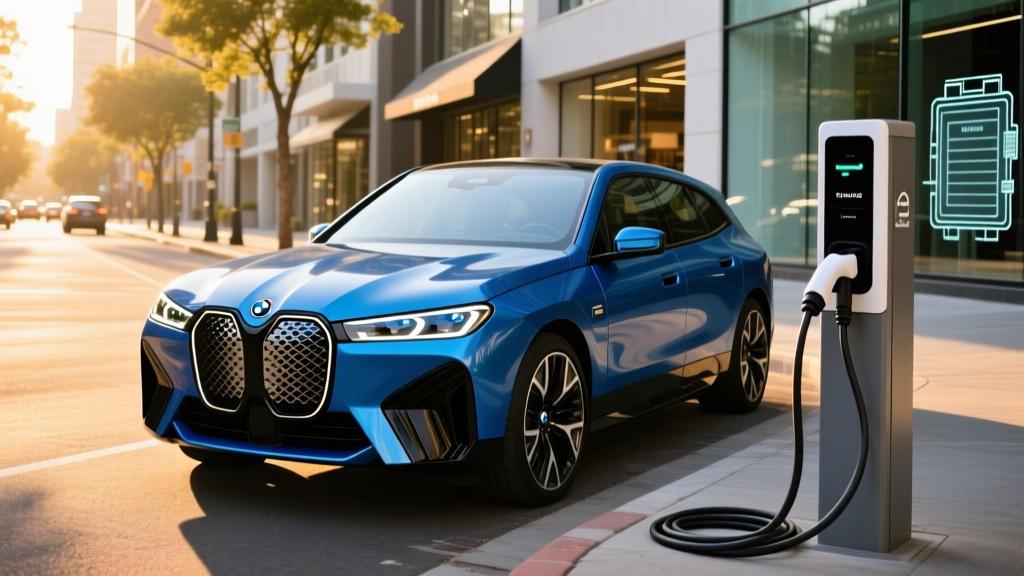
The 2025 BMW iX M60 occupies a rare lane in the luxury EV market: a midsize electric SUV that pairs genuine M-division performance tuning with over 320 miles of EPA-rated range. With 610 horsepower, a 105.2 kWh (usable) NMC battery, and a peak DC fast-charge rate of 195 kW, it's engineered for buyers who refuse to choose between a 3.6-second 0-60 sprint and the ability to road-trip without constant charging stops. The trade-off is a base MSRP of $111,500 — well above the IRS §30D federal tax credit MSRP cap for SUVs ($80,000), which means this particular trim does not qualify for the $7,500 new-vehicle credit.
If you're cross-shopping the Mercedes EQE SUV, Audi e-tron GT-adjacent crossovers, or the Tesla Model X Plaid, the iX M60 demands a serious look — but also a clear-eyed assessment of what you're paying for and what you're giving up.
Range, Efficiency, and the Real-World Reality Check
The EPA rates the 2025 BMW iX M60 at 324 miles of combined range on its 105.2 kWh usable battery pack (111.5 kWh gross). That figure comes from the xDrive50 variant's architecture detuned for the M60's more aggressive power delivery, and it's competitive within the luxury EV SUV segment.
EPA Combined: 324 miles
Highway (70-75 mph sustained): Expect ~260–280 miles. The iX M60's dual-motor AWD and 5,600+ lb curb weight work against it at sustained speed.
City / stop-and-go: ~310–330 miles, thanks to aggressive regenerative braking recapturing energy.
Cold weather (below 32°F): Plan for 220–260 miles depending on cabin heating use. The iX uses a heat pump (standard), which mitigates losses compared to resistive heaters, but NMC chemistry still suffers in deep cold.
Efficiency: 87 MPGe combined / 35 kWh per 100 miles (per fueleconomy.gov)
The 35 kWh/100mi efficiency figure is unremarkable for a vehicle of this mass and power output. For context, the lighter iX xDrive50 achieves 86 MPGe with 324 miles of range on the same battery, while the Tesla Model X Long Range returns 102 MPGe with 348 miles. If maximum range-per-dollar is your priority, the iX M60 isn't the segment winner — but it was never designed to be.
Battery Chemistry, Degradation, and Warranty Coverage
BMW equips the iX M60 with a 111.5 kWh gross / 105.2 kWh usable lithium-ion battery pack using NMC (nickel manganese cobalt) chemistry. NMC offers higher energy density than LFP (lithium iron phosphate), which is why BMW selected it for a vehicle targeting both 324-mile range and 610 hp output. The trade-off: NMC cells degrade slightly faster over thousands of cycles and are more sensitive to sustained high-state-of-charge storage.
BMW's battery warranty covers 8 years or 100,000 miles (whichever comes first) against capacity loss below 70% of original capacity — the industry-standard threshold. The broader powertrain warranty is 4 years / 50,000 miles, and the limited vehicle warranty matches at 4 years / 50,000 miles. BMW also includes 3 years / 36,000 miles of complimentary scheduled maintenance.
Charging Speed: DC Fast, Level 2, and the Curve Reality
The iX M60 supports a peak DC fast-charge rate of 195 kW via its CCS1 connector. BMW advertises a 10–80% charge time of approximately 35 minutes under ideal conditions (preconditioned battery, 350 kW-capable charger, moderate ambient temperature).
| Charging Level | Power / Voltage | Miles of Range Added per Hour | Time to Full / 10–80% |
|---|---|---|---|
| Level 1 (120V household) | ~1.4 kW | ~3–4 mi/hr | ~75+ hours (0–100%) |
| Level 2 (240V home / public) | 11 kW (onboard charger max) | ~28–32 mi/hr | ~11 hours (0–100%) |
| DC Fast Charge (CCS1) | 195 kW peak | ~550+ mi/hr (at peak) | ~35 min (10–80%) |
The charge-curve reality: Like all modern EVs, the iX M60 does not sustain 195 kW throughout the session. Peak rate occurs roughly between 10–30% SoC, then tapers progressively. From 80–100%, charging slows dramatically to protect cell health — expect that final 20% to take an additional 25–30 minutes. On road trips, plan your stops around the 10–80% window for maximum efficiency.
At home on a 48-amp Level 2 circuit (hardwired, 11.5 kW delivery), you'll add roughly 30 miles of range per hour — enough to fully replenish overnight from any daily driving. The iX's 11 kW onboard charger is a strong point; many competitors still use 7.2–9.6 kW onboard chargers that slow Level 2 replenishment.
Performance: 610 HP and the M-Division Difference
| Specification | 2025 BMW iX M60 |
|---|---|
| Horsepower | 610 hp |
| Torque | 811 lb-ft |
| 0–60 mph | 3.6 seconds |
| Drivetrain | Dual-motor AWD (xDrive) |
| Top Speed | 155 mph (electronically limited) |
| Curb Weight | ~5,660 lbs |
| Towing Capacity | 3,500 lbs (braked) |
| EPA Range | 324 miles |
| Battery (usable / gross) | 105.2 kWh / 111.5 kWh (NMC) |
| Efficiency | 87 MPGe / 35 kWh per 100 mi |
| Peak DC Charge Rate | 195 kW (CCS1) |
| 10–80% DC Charge | ~35 minutes |
| Level 2 Onboard Charger | 11 kW |
| Cargo (behind 2nd row / max) | 35.5 cu ft / 77.9 cu ft |
| Rear Legroom | 38.5 inches |
| Battery Warranty | 8 years / 100,000 miles (≥70% capacity) |
| Vehicle Warranty | 4 years / 50,000 miles |
| Base MSRP | $111,500 |
The M60 badge means this isn't simply a detuned xDrive50 with more power. BMW's M division retuned the adaptive suspension (double-wishbone front, multi-link rear with air springs), added M Sport brakes with blue calipers, and calibrated the torque-vectoring AWD system for rear-biased power delivery under hard acceleration. The result is a 5,660-lb SUV that rotates through corners with a composure that defies its mass.
Launch control engages the full 811 lb-ft instantly — the 3.6-second 0-60 time is repeatable, not a one-run peak. The dual-motor setup provides true torque vectoring rather than brake-based simulation, which matters for confident all-weather traction.
Interior, Tech, and Driver Assistance
The iX cabin is one of BMW's most ambitious interior designs. A curved display panel merges a 14.9-inch infotainment touchscreen with a 12.3-inch digital instrument cluster, both running BMW iDrive 8.5. The hexagonal steering wheel is a love-it-or-leave-it design choice. Materials include standard SensaTec synthetic leather, with available full Merino leather and open-pore wood or aluminum trim.
Standout tech features:
- BMW Digital Key Plus (UWB-based phone-as-key, no fob needed)
- Augmented-reality navigation overlay on the instrument cluster
- Harman Kardon 18-speaker surround sound (standard); Bowers & Wilkins Diamond 36-speaker system (optional)
- Panoramic electrochromic glass roof with adjustable opacity
- Wireless Apple CarPlay and Android Auto with wireless charging pad
- Over-the-air (OTA) software updates for powertrain, ADAS, and infotainment
Driver assistance (SAE Level 2 — driver must remain engaged): The standard Driving Assistant Professional package includes adaptive cruise control with stop-and-go, lane-keeping assist, automated lane change on highways (with turn-signal confirmation), and Parking Assistant Plus with surround-view cameras and Reversing Assistant. This is not a self-driving system — it's a sophisticated Level 2 driver-assist suite that requires active supervision at all times.
Notable drawbacks:
- No front trunk (frunk) — the space is occupied by HVAC and power electronics
- Touch-sensitive climate controls on the center console lack tactile feedback
- iDrive 8.5's menu structure buries some vehicle settings deep in submenus
- No third-row seating option (competitors like the Model X and Rivian R1S offer one)
- Run-flat tires (standard) produce firmer ride quality; replacement cost is higher
Pricing, Tax Credit Eligibility, and Total Cost
| Item | Amount |
|---|---|
| Base MSRP (iX M60) | $111,500 |
| Destination charge | $995 |
| Typical as-tested (with options) | $118,000–$126,000 |
| Federal §30D tax credit | $0 — exceeds $80,000 SUV MSRP cap |
| Estimated out-of-pocket (before state incentives) | $112,495+ |
The 2025 BMW iX M60 does not qualify for the IRS §30D new clean vehicle tax credit. Under current rules detailed on irs.gov, SUVs must have an MSRP at or below $80,000 to be eligible. The iX M60's $111,500 starting price disqualifies it regardless of battery sourcing or buyer income.
5-Year Ownership Cost Estimate: Based on 15,000 miles/year, $0.14/kWh home electricity, and premium insurance rates for a $112K EV, expect roughly $18,000–$22,000 in energy, insurance, and maintenance costs over five years — roughly $8,000–$12,000 less than a comparable BMW X5 M60i on fuel, but with significantly higher upfront cost and faster depreciation typical of six-figure EVs.
How It Stacks Up Against Key Competitors
| Attribute | BMW iX M60 | Mercedes EQE 500 SUV | Tesla Model X Plaid |
|---|---|---|---|
| Base MSRP | $111,500 | $99,550 | $94,990 |
| EPA Range | 324 mi | 303 mi | 326 mi |
| 0–60 mph | 3.6 sec | 4.5 sec | 2.5 sec |
| HP | 610 | 402 | 1,020 |
| Peak DC Charge | 195 kW | 170 kW | 250 kW |
| Cargo (behind 2nd row) | 35.5 cu ft | 14.0 cu ft | 37.0 cu ft |
| Federal Tax Credit | No | No | No |
The iX M60 sits between the EQE 500 SUV (more comfort-oriented, less range) and the Model X Plaid (far more power, more Supercharger access, but polarizing build-quality reputation). The iX's advantage is balance: it's genuinely quick without the Plaid's absurdity, offers more cargo space than the EQE, and delivers interior material quality that neither Tesla nor the EQE matches at this price point.
Choose the iX M60 if: You want a luxury-performance EV SUV with 300+ mile range, premium interior materials, and BMW driving dynamics — and you don't need a third row or a tax credit.
Choose the Model X Plaid if: Raw acceleration is paramount, you need Supercharger network access for road trips, or you want optional third-row seating.
Choose the EQE 500 SUV if: You prioritize ride comfort and cabin quietness over sportiness, and want to spend $10K–$15K less.
Who the iX M60 Suits Best
Ideal buyer profile: A two-adult household (or family with young children) with home Level 2 charging access, an annual driving mix of 12,000–18,000 miles, and a preference for European driving dynamics in an electric package. The iX M60 excels as a daily commuter that can also handle weekend road trips with one or two 30-minute DC fast-charge stops.
Less ideal for: Buyers who need a third row, those who require the absolute lowest cost-per-mile of range, anyone counting on the federal tax credit to make the math work, or drivers in areas with limited CCS1 DC fast-charging infrastructure (the iX does not natively access Tesla Superchargers without adapters, and adapter compatibility varies).
Pros and Cons at a Glance
- 324-mile EPA range is competitive in the luxury EV SUV segment
- 610 hp / 3.6-sec 0-60 with genuine M-division chassis tuning
- 11 kW onboard Level 2 charger (faster home charging than most rivals)
- Premium interior with excellent material quality and quietness
- Standard heat pump for better cold-weather efficiency
- 35.5 cu ft cargo space (usable and well-shaped)
- Strong regenerative braking with adjustable levels
- $111,500+ base price — no federal tax credit eligibility
- No frunk (front trunk) for additional storage
- No third-row seating option
- 195 kW peak DC charge is slower than Tesla's 250 kW or Hyundai's 350 kW platforms
- Touch-sensitive HVAC controls frustrate while driving
- Run-flat tires increase replacement cost and firm up ride quality
- Depreciation on six-figure EVs remains steeper than ICE equivalents
Frequently Asked Questions
What is the real-world range of the 2025 BMW iX M60?
The EPA rates it at 324 miles combined. In real-world highway driving at 70-75 mph, expect 260–280 miles. In cold weather (below freezing), plan for 220–260 miles. City driving with regen braking can yield 310–330 miles.
How fast does the iX M60 charge at home and on the road?
At home on a 240V Level 2 charger, the 11 kW onboard charger adds roughly 30 miles of range per hour (full charge in ~11 hours). On a DC fast charger, it peaks at 195 kW and charges from 10–80% in approximately 35 minutes, though the rate tapers significantly above 80%.
Does the 2025 BMW iX M60 qualify for the federal EV tax credit?
No. The IRS §30D credit caps SUV MSRP at $80,000. The iX M60 starts at $111,500 and is ineligible regardless of buyer income or battery sourcing. State-level incentives may still apply — check your state's energy office or DSIRE database.
Is the iX M60 worth buying over a Tesla Model X or Mercedes EQE SUV?
It depends on priorities. The iX M60 offers the best interior quality and driving dynamics of the three. The Model X Plaid is faster and has Supercharger access. The EQE 500 SUV is more comfort-focused and less expensive. None qualify for the federal credit. Test-drive all three — the iX wins on feel, the Model X on performance-per-dollar.
What is the battery warranty on the iX M60?
BMW covers the high-voltage battery for 8 years or 100,000 miles against capacity loss below 70% of original. The vehicle and powertrain warranty is 4 years / 50,000 miles, with 3 years of complimentary maintenance included.
Can the iX M60 use Tesla Superchargers?
Not natively — the iX M60 uses a CCS1 connector. Some third-party CCS-to-NACS adapters exist, but BMW has not officially endorsed any adapter for Supercharger use. BMW has announced future models will adopt the NACS standard, but the current iX remains CCS1. For road-trip planning, rely on Electrify America, EVgo, and other CCS1 networks.
How much does it cost to charge the iX M60 at home?
A full 0–100% charge (105.2 kWh usable) at the US average residential rate of ~$0.16/kWh costs roughly $16.80 — equivalent to about 324 miles of driving. That's approximately $0.052 per mile on home electricity, compared to $0.14–$0.18 per mile for a comparable gas-powered BMW X5 at $3.80/gallon.
Sources: EPA fuel economy data via fueleconomy.gov, BMW USA official specifications, IRS §30D guidelines via irs.gov. All specifications reflect the 2025 model year as published. Pricing and incentive rules are subject to change — verify current figures before purchase.