The Car That Started the EV Revolution — Now a Used Bargain
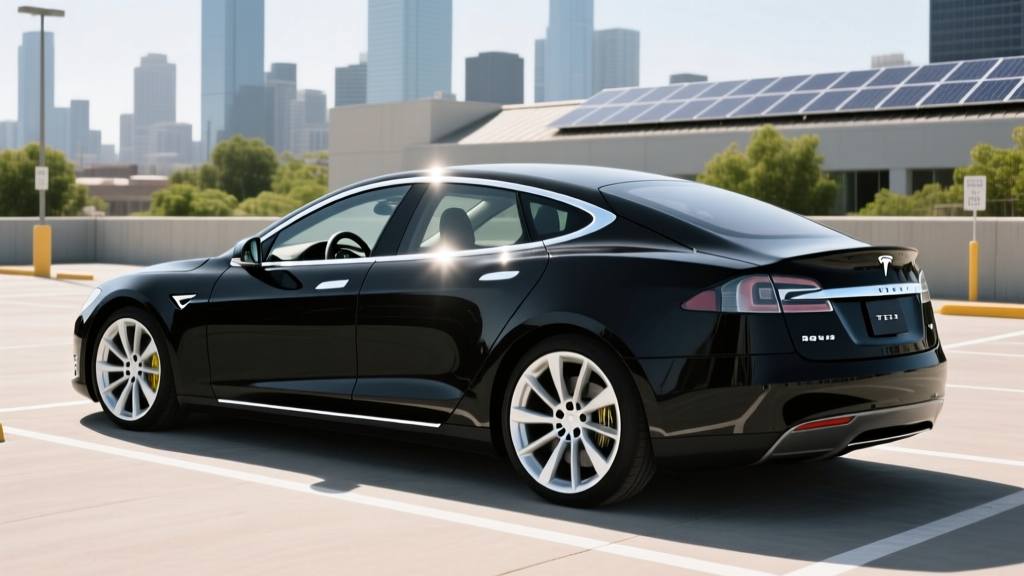
When Tesla delivered the first 2012 Tesla Model S sedan to customers in June of that year, it wasn't just launching a car — it was proving that a battery-electric vehicle could compete with luxury sedans on performance, technology, and range. More than a decade later, the 2012 Model S remains a landmark vehicle, and on the used market in 2026, it's attracting a new wave of budget-conscious EV buyers wondering whether a 13-year-old electric sedan is a brilliant deal or a battery-risk gamble.
This review covers the original 2012 Model S — specifically the 85 kWh and 60 kWh variants Tesla sold that first model year. We'll walk through real-world range expectations after more than a decade of battery degradation, charging speeds on today's Supercharger network, what ownership actually costs, and whether this pioneering sedan still makes sense against modern alternatives.
| Spec | Model S 85 | Model S 60 |
|---|---|---|
| EPA Range (Original) | 265 miles | 208 miles |
| Battery Capacity (Usable) | ~85 kWh (NMC) | ~60 kWh (NMC) |
| Drivetrain | RWD (single motor) | RWD (single motor) |
| Horsepower | 362 hp | 302 hp |
| 0-60 mph | 5.4 seconds | 5.9 seconds |
| MPGe (Combined) | 89 MPGe | 95 MPGe |
| Energy Consumption | 38 kWh/100 mi | 35 kWh/100 mi |
| DC Fast Charge (Peak) | ~120 kW (V2 Supercharger) | ~100 kW |
| Level 2 Charge Rate | ~20 kW (twin chargers) | ~10 kW (single charger) |
| Original Base MSRP | $79,900 | $59,900 |
| 2026 Used Price Range | $12,000–$20,000 | $9,000–$15,000 |
Real-World Range After 13+ Years of Battery Degradation
The original EPA-estimated range for the 2012 Model S 85 was 265 miles — a figure that stunned the automotive world at the time. The 60 kWh variant was rated at 208 miles. But those numbers reflected brand-new batteries in 2012. If you're shopping for one today, degradation is the central question.
EPA Range (New): 265 miles (85 kWh) / 208 miles (60 kWh)
Real-World Range in 2026 (Estimated): 175–220 miles (85 kWh) / 130–170 miles (60 kWh)
Why the drop? NMC lithium-ion batteries in early Model S packs typically show 15–30% capacity loss after 12–14 years and 100,000–180,000 miles. Cold weather can knock off an additional 20–30% temporarily. Highway driving at 75+ mph further reduces range versus the EPA combined cycle.
According to crowdsourced data aggregated by fueleconomy.gov and Tesla owner forums, early 85 kWh packs tend to lose roughly 10–15% capacity in the first 50,000 miles, then degrade more slowly. A 2012 Model S 85 with 140,000 miles and its original battery pack might realistically deliver 185–210 miles on a full charge in mild weather, dropping to 140–165 miles in freezing temperatures with highway driving.
Some 2012 Model S vehicles have had their battery packs replaced under warranty or through Tesla's paid replacement program. A replacement pack restores range closer to original specs, so always ask for a battery health report (available through Tesla's service center or the car's energy screen) before purchasing.
Charging Speeds: Supercharger V2 and Home Level 2
The 2012 Model S was designed for Tesla's original Supercharger network, which initially delivered up to 90 kW and was later upgraded to V2 stations capable of up to 150 kW. However, the 2012 Model S's battery management system and thermal constraints limit its actual peak charge rate.
| Charging Level | Power / Rate | Estimated Time or Range Added |
|---|---|---|
| Level 1 (120V outlet) | ~1.4 kW | ~3–4 miles per hour |
| Level 2 (240V, single charger) | ~10 kW | ~28–30 miles per hour |
| Level 2 (240V, twin chargers) | ~20 kW | ~55–58 miles per hour |
| DC Fast Charge (Tesla V2 Supercharger) | Peak ~100–120 kW | 10–80% in ~45–55 minutes |
| DC Fast Charge (CHAdeMO adapter) | ~50 kW | 10–80% in ~80–90 minutes |
On a V2 Supercharger, the 85 kWh pack charges at its fastest between 10–50% state of charge (SoC), where it can pull close to 120 kW. Above 50%, the charge curve tapers significantly — a characteristic of early NMC packs without the advanced thermal preconditioning found in modern EVs. Expect a 10–80% session to take roughly 45–55 minutes, which is considerably slower than today's 250 kW-capable vehicles that hit 10–80% in 15–20 minutes.
One important connector note: the 2012 Model S uses Tesla's proprietary connector, which predated the North American Charging Standard (NACS). It cannot natively plug into CCS1 or CHAdeMO stations without an adapter. Tesla sold a CHAdeMO adapter for the Model S, but it limits charging to roughly 50 kW. On the plus side, the entire Tesla Supercharger network — now expanded to over 6,000 U.S. stations — remains fully accessible.
For home charging, the twin-charger option (available on the 85 kWh model) allows up to ~20 kW on a hardwired 100-amp Level 2 circuit, adding roughly 55 miles of range per hour. Most 2012 Model S vehicles shipped with a single onboard charger (~10 kW), adding about 28–30 miles per hour on a standard 240V/50A home charger. A full overnight charge is easily achievable with either setup.
Performance and Driving Dynamics
Even by 2026 standards, the 2012 Model S 85 delivers a compelling driving experience. The rear-mounted AC induction motor produces 362 horsepower and 325 lb-ft of torque, propelling the sedan from 0–60 mph in 5.4 seconds. That's still quicker than most mid-2020s family sedans, and the instant electric torque makes it feel even faster in city driving.
The 60 kWh variant, with 302 hp, hits 60 mph in 5.9 seconds — respectable, but noticeably a step behind the 85. Both models are rear-wheel drive only; Tesla didn't introduce dual-motor all-wheel drive until late 2014.
Ride quality is a highlight. The Model S was engineered on a dedicated EV platform with the battery pack mounted low in the floor, giving it an exceptionally low center of gravity. The air suspension (optional on early models) provides a plush, adaptive ride, though units with high mileage may need costly air strut replacements — budget $1,500–$3,000 per corner if they've failed.
The 17-inch touchscreen was revolutionary in 2012 and remains functional today, though it's noticeably slower and lower-resolution than the screens in current EVs. Early Model S vehicles received basic Autopilot hardware (Hardware 1) starting in late 2014, so a 2012 model year vehicle will not have Autopilot unless it was retrofitted — a rare and expensive upgrade. Expect basic cruise control and no advanced driver-assist features.
Driver Assistance Note: The 2012 Model S predates Tesla's Autopilot hardware. It ships with standard cruise control and basic stability/traction control. No Level 2 driver-assist features (lane-keeping, adaptive cruise) are available on this model year. You are driving a fully manual vehicle.
Interior, Cargo, and Practicality
The 2012 Model S was designed as a full-size luxury sedan, and its dimensions reflect that ambition:
- Passenger volume: ~97 cubic feet
- Front legroom: 42.7 inches
- Rear legroom: 35.4 inches
- Cargo (rear trunk): 26.3 cubic feet
- Front trunk (frunk): 5.3 cubic feet
- Total cargo with rear seats folded: ~58.1 cubic feet
Those numbers remain genuinely practical. The rear trunk is deep and wide, the frunk adds useful grocery-bag space, and the hatchback-style liftgate (rare for a sedan) makes loading bulky items easy. An optional rear-facing third-row seat was available for the 2012 model year, technically making it a 7-seater, though that third row was best suited for small children only.
Interior materials are a weak point by modern luxury standards. Early Model S interiors used synthetic leather and plastics that drew criticism even in 2012. Seat bolsters on high-mileage examples often show significant wear, and the minimalist dashboard — while clean — lacks the material richness of a contemporary BMW 5 Series or Mercedes E-Class.
Pricing, Tax Credits, and Total Cost of Ownership
When new, the 2012 Model S 85 carried a base MSRP of $79,900, with the 60 kWh model starting at $59,900. Fully loaded 85 kWh examples with the Performance Plus package, air suspension, and the Tech Package topped $100,000.
In the 2026 used market, prices have dropped dramatically:
| Variant | Mileage Range | Typical Used Price |
|---|---|---|
| Model S 85 (good battery health) | 80,000–120,000 mi | $15,000–$20,000 |
| Model S 85 (degraded battery) | 120,000–180,000 mi | $10,000–$15,000 |
| Model S 60 | 90,000–150,000 mi | $9,000–$14,000 |
| Battery replacement (if needed) | — | $12,000–$18,000 |
Federal Tax Credit Eligibility
The 2012 Model S does not qualify for the new-vehicle §30D federal tax credit — it's long out of production, and Tesla's credit phase-out for new vehicles triggered years ago. However, buyers may be eligible for the used clean vehicle credit under IRS §25E, which provides up to $4,000 (30% of the sale price, capped at $4,000) on used EVs priced at $25,000 or less from a licensed dealer.
Used EV Tax Credit (§25E) Requirements:
- Sale price must be $25,000 or less (most 2012 Model S examples qualify)
- Buyer AGI must not exceed $75,000 (single), $112,500 (head of household), or $150,000 (joint)
- Vehicle must be purchased from a licensed dealer (private-party sales excluded)
- Vehicle must be at least 2 model years old (2012 easily qualifies)
- Credit is 30% of sale price, max $4,000 — a $13,000 Model S yields a $3,900 credit
- Can be applied at point of sale if dealer is registered with IRS Energy Credits Online
Source: IRS.gov — Used Clean Vehicle Credit. Eligibility rules are subject to change; consult a tax professional.
Warranty Status
The original 2012 Model S came with a 4-year/50,000-mile basic warranty and an 8-year/unlimited-mile battery and drive unit warranty. In 2026, both warranties have expired for virtually every 2012 Model S. The 8-year battery warranty window closed in 2020 for all 2012 vehicles.
This is the single biggest financial risk of buying a 2012 Model S. If the battery pack fails or degrades below a usable threshold, Tesla's out-of-warranty replacement currently costs between $12,000 and $18,000 depending on pack availability and labor. Third-party EV battery repair shops have emerged that can replace individual modules for $3,000–$7,000, but this is a specialized service and availability varies by region.
Biggest Pros and Cons
Pros
- Remarkably low used pricing — a full-size luxury EV sedan for under $20K
- Still strong acceleration (5.4s 0–60) and excellent ride quality
- Massive cargo space with hatchback trunk + frunk (58.1 cu ft total)
- Full access to Tesla's Supercharger network (6,000+ U.S. stations)
- Over-the-air software updates still supported (basic features)
- Qualifies for up to $4,000 used EV tax credit (§25E)
Cons
- Significant battery degradation — expect 175–220 real-world miles (85 kWh)
- All original warranties expired; battery replacement costs $12K–$18K
- No Autopilot or modern driver-assist features
- Slow DC fast charging by 2026 standards (~45–55 min for 10–80%)
- Air suspension failures common at high mileage ($1,500–$3,000 per corner)
- Interior materials and infotainment feel dated
- No CCS or NACS compatibility without adapters; CHAdeMO adapter limited to ~50 kW
Who Should Buy a 2012 Tesla Model S?
Buy the 2012 Model S if:
- You need a spacious, quick luxury sedan on a tight budget ($10K–$18K)
- Your daily commute is under 80 miles round-trip (well within degraded range)
- You have access to home Level 2 charging and rarely need long-distance DC fast charging
- You're mechanically inclined or have a trusted EV-savvy independent shop
- You value Supercharger network access for occasional road trips
Skip the 2012 Model S if:
- You need reliable 250+ mile range for frequent road trips
- You want modern driver-assist features (adaptive cruise, lane-keeping)
- You can't absorb a potential $12K–$18K battery replacement risk
- You need fast DC charging for daily use (the 45–55 min 10–80% time is slow by modern standards)
- You prioritize warranty coverage — consider a 2022+ Model 3 or Model Y instead
For buyers with $15,000–$25,000 to spend, the 2012 Model S competes with used examples of the 2018–2019 Chevrolet Bolt EV (238-mile EPA range, much newer, but smaller), the 2017–2019 Nissan Leaf Plus (226-mile range, CHAdeMO charging), and early used Tesla Model 3 Standard Range examples (which start around $18,000–$22,000 in 2026). The Model S wins on space, performance, and luxury feel, but loses on battery risk, tech freshness, and charging speed.
Frequently Asked Questions
What is the real-world range of a 2012 Tesla Model S in 2026?
Expect 175–220 miles from the 85 kWh variant and 130–170 miles from the 60 kWh variant, depending on battery health, temperature, and driving style. Cold weather and sustained highway speeds above 70 mph will push range toward the lower end of those estimates. Always check the vehicle's energy screen for a rated-range figure and compare it to the original 265-mile EPA number to gauge remaining capacity.
How fast does the 2012 Model S charge at home and on DC fast chargers?
At home on a 240V Level 2 charger, the single-charger model adds about 28–30 miles per hour (~10 kW), while the twin-charger option adds roughly 55–58 miles per hour (~20 kW). On a Tesla V2 Supercharger, expect a 10–80% charge in about 45–55 minutes, peaking around 100–120 kW before tapering. This is roughly half the speed of modern 250 kW-capable EVs.
Does a 2012 Tesla Model S qualify for any federal tax credit?
Not the new-vehicle §30D credit. However, it may qualify for the used clean vehicle credit (§25E) — up to $4,000 or 30% of the sale price (whichever is less) — if purchased from a licensed dealer for $25,000 or less and the buyer meets IRS income limits ($75K single / $150K joint). Verify current rules at IRS.gov.
Is it worth buying a 2012 Model S versus a newer used EV?
It depends on your priorities. The 2012 Model S offers unmatched space, performance, and luxury for the price — nothing else under $20,000 gives you a 362-hp, 265-mile (original) luxury sedan with Supercharger access. But the expired battery warranty is a serious financial risk, and the charging speed, interior, and lack of driver assists show the car's age. If you can budget for a potential battery repair and mostly drive locally, it's a compelling bargain. If you need reliability and modern features, a used Model 3 or Chevy Bolt is a safer bet.
What are the most common problems with the 2012 Model S?
The most reported issues include: battery pack degradation (15–30% capacity loss over 12+ years), air suspension strut failures ($1,500–$3,000 per corner), drive unit (motor) replacements on high-mileage examples, 17-inch touchscreen delamination or failure ($2,000+ replacement), door handle mechanism failures, and MCU1 (media control unit) sluggishness. Tesla's service network can address all of these, but out-of-warranty costs add up quickly.
Can I charge a 2012 Model S at non-Tesla charging stations?
Only with adapters. The 2012 Model S uses Tesla's proprietary connector. A Tesla-to-J1772 adapter (commonly available for ~$200) lets you use any public Level 2 J1772 station. For DC fast charging outside the Supercharger network, Tesla sold a CHAdeMO adapter (~$450 new, now discontinued but available used), limited to about 50 kW. There is no CCS1 adapter available for the 2012 Model S. Your most reliable fast-charging option remains the Tesla Supercharger network.