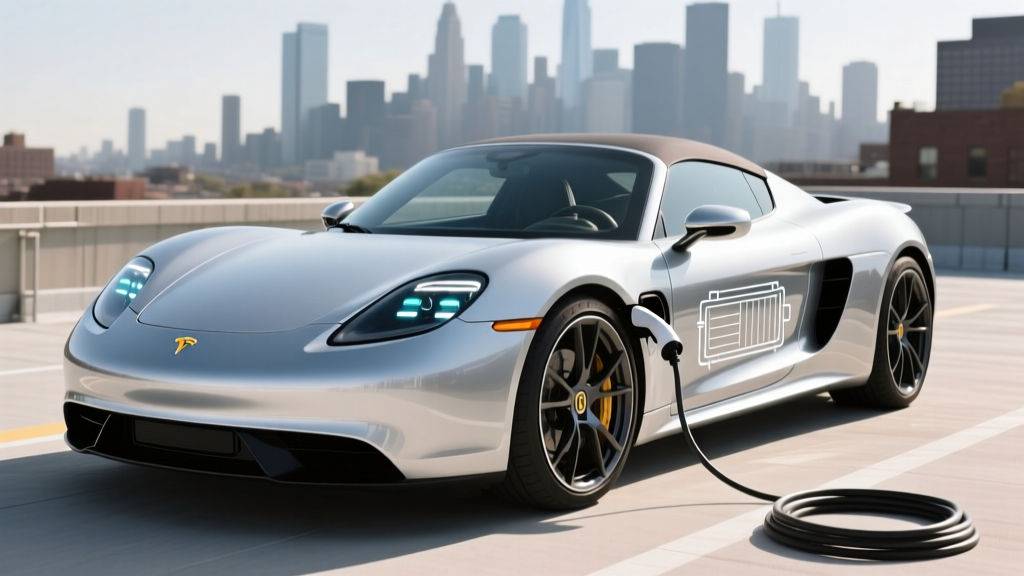
Before the Model S rewrote the luxury sedan playbook and the Model 3 brought EVs to the masses, there was the 2010 Tesla Roadster — the car that proved lithium-ion batteries could deliver genuine sports-car performance. Tesla built roughly 2,450 Roadsters between 2008 and 2012, and the 2010 model year (often called the Roadster 2.0 or 2.5) remains a milestone in electric-vehicle history. This is not a new-car review; the original Roadster left production over a decade ago. But with used examples changing hands and a new generation of EV enthusiasts curious about Tesla's origin story, we're putting the 2010 Roadster under the microscope with the same data-driven rigor we apply to modern EVs.
2010 Tesla Roadster Specifications at a Glance
| Specification | 2010 Tesla Roadster 2.5 |
|---|---|
| EPA Range | 244 miles (ideal); ~220 mi adjusted |
| Battery Capacity | 53 kWh (usable ~50 kWh), NMC lithium-ion |
| Motor / Drivetrain | Single-speed, rear-wheel drive (RWD) |
| Horsepower | 288 hp (215 kW) |
| Torque | 295 lb-ft |
| 0–60 mph | 3.7 seconds |
| Top Speed | 125 mph (electronically limited) |
| Efficiency | 120 MPGe combined (28 kWh/100 mi) |
| Curb Weight | 2,690 lbs |
| Cargo Volume | ~3.5 cu ft (rear trunk) |
| Original MSRP | $109,000 (base); ~$129,000 (Sport) |
| Production Run | 2008–2012 (~2,450 units) |
Range and Efficiency: What the 2010 Roadster Actually Delivers
The 53 kWh battery pack uses NMC (nickel-manganese-cobalt) cells — specifically, 6,831 individual 18650-format cells arranged in 11 modules. This is the same cell format Tesla later used in the Model S and Model 3 (before switching to 2170 and 4680 cells). NMC chemistry offers high energy density but is more susceptible to calendar degradation than the LFP (lithium iron phosphate) chemistry found in some modern Teslas.
Efficiency was remarkably good for its era: roughly 28 kWh per 100 miles, or 120 MPGe combined per fueleconomy.gov. That's comparable to many modern EVs, a testament to the Roadster's lightweight Lotus Elise-derived chassis and low drag coefficient.
Charging: DC Fast-Charge and Home Level 2 Speeds
| Charging Method | Power (kW) | Time / Rate |
|---|---|---|
| Level 1 (120V outlet) | ~1.4 kW | ~3 mi/hr; full charge in ~36 hours |
| Level 2 — Standard (240V, 30A) | ~7.2 kW | ~21 mi/hr; full charge in ~8 hours |
| Level 2 — High Power Wall Connector (240V, 70A) | ~16.8 kW | ~48 mi/hr; full charge in ~3.5 hours |
| DC Fast Charge (CHAdeMO adapter) | ~40–50 kW peak | 10–80% in ~55–65 minutes |
The 2010 Roadster predates the CCS and NACS connector standards. It uses a proprietary Tesla connector for AC charging, and Tesla later offered a CHAdeMO DC fast-charge adapter (a $1,500 accessory, now rare on the used market). With the adapter, peak DC charging reaches roughly 40–50 kW — modest by today's 250+ kW standards but respectable for 2010.
The original High Power Wall Connector (HPWC) was a standout: at 70 amps / 16.8 kW, it could refill the Roadster's battery in about 3.5 hours. Most owners installed a standard 30-amp Level 2 circuit, which delivers a practical overnight charge. If you're buying a used Roadster today, confirm which charging equipment is included — the CHAdeMO adapter and HPWC are valuable accessories.
Performance and Driving Dynamics
The 2010 Roadster Sport (and the 2.5 update) produces 288 horsepower and 295 lb-ft of torque from a single AC induction motor driving the rear wheels through a single-speed gearbox. The 0–60 mph time of 3.7 seconds was supercar territory in 2010 and still holds up today. The standard (non-Sport) Roadster 2.5 does the sprint in about 3.9 seconds.
Driving dynamics are pure sports car — the Roadster is based on the Lotus Elise chassis, and it shows. Steering is direct and unassisted (a deliberate choice for feel), the car weighs just 2,690 lbs, and the low center of gravity from the floor-mounted battery pack gives it sharp cornering. The tradeoff: the ride is firm, cabin noise is high, and there's no driver-assistance technology beyond ABS and traction control. This is a SAE Level 0 vehicle — no Autopilot, no adaptive cruise, no lane-keeping. You are the driver-assist system.
Interior, Cargo, and Daily Practicality
Practicality was never the Roadster's mission. The cabin is a two-seat cockpit with minimal storage, and ingress/egress requires genuine athleticism thanks to the high door sills inherited from the Elise. Key dimensions:
- Seating: 2 passengers, fixed sport seats
- Cargo (rear trunk): ~3.5 cu ft — fits a soft duffel bag, not much more
- Frunk: None — the front houses the power electronics and 12V battery
- Headroom: ~37.4 inches (tight for drivers over 6'2")
- Legroom: ~42.5 inches
- Infotainment: Basic 3.5-inch display for vehicle settings; no navigation, no Bluetooth audio streaming, no modern connectivity
The infotainment is rudimentary even by 2010 standards. There is no over-the-air update capability, no app connectivity, and no Supercharger network access (the Supercharger network launched in 2012 with the Model S). This is a car you drive, not a car you interface with.
Warranty, Battery Longevity, and Replacement Costs
Tesla's original warranty on the 2010 Roadster was 3 years / 36,000 miles for the vehicle and 5 years / 100,000 miles for the battery and drive unit. Every factory warranty has long since expired.
Battery degradation is the central concern for any used EV, and the Roadster's NMC pack is now 14+ years old. Tesla offered a Battery Replacement Program around 2015–2016, allowing original owners to swap in a refurbished pack for approximately $29,000. Some owners reported 10–15% capacity loss after 80,000–100,000 miles, though results varied widely based on charging habits and climate. Vehicles stored or regularly charged to 100% and left sitting in hot climates show higher degradation.
If a battery replacement is needed today, expect to pay $25,000–$40,000 through Tesla or a specialist shop, depending on pack availability. Some independent EV shops can perform module-level repairs for less, but parts are scarce given the low production volume.
Pricing and Used Market Value
| Condition | Approximate Price Range (2025–2026) |
|---|---|
| Original MSRP (2010) | $109,000 (base) – $129,000 (Sport) |
| Used — Fair / High Miles | $80,000 – $110,000 |
| Used — Good / Moderate Miles | $120,000 – $160,000 |
| Collector / Low Miles / Signature | $170,000 – $250,000+ |
The 2010 Roadster has transitioned from a depreciating used EV to a collector's item. Low-mileage examples and Roadster Sport models command premium prices well above original MSRP. Elon Musk's personal Roadster (launched into space in 2018) added to the car's cultural cachet.
Pros, Cons, and Who Should Buy the 2010 Roadster
- Historic significance — the EV that proved electric performance
- 3.7-second 0–60 mph still thrills
- Lightweight Lotus chassis = exceptional handling
- Collector value trending upward
- 220+ mile range was groundbreaking for 2010
- No DC fast-charging without rare CHAdeMO adapter
- No Supercharger network access
- Battery replacement costs $25K–$40K if needed
- Zero driver-assistance tech (SAE Level 0)
- Minimal cargo, tight cabin, difficult entry/exit
- No over-the-air updates or modern infotainment
Who it suits: The 2010 Roadster is best for collectors, Tesla historians, and sports-car enthusiasts who want a weekend driver with provenance. It is not a practical daily commuter, family vehicle, or road-trip car. If you need a usable modern Tesla, the Model 3 or Model Y delivers more range, faster charging, full Autopilot capability, and Supercharger access at a fraction of the Roadster's used price.
Frequently Asked Questions
What is the real-world range of the 2010 Tesla Roadster?
Expect 170–195 miles on the highway in mild weather, dropping to 130–150 miles in cold conditions. The original 244-mile "ideal" rating was optimistic by modern EPA standards.
How fast does the 2010 Roadster charge?
With the optional High Power Wall Connector (16.8 kW), a full charge takes about 3.5 hours. On a standard 30A Level 2 (7.2 kW), expect roughly 8 hours. DC fast charging via the rare CHAdeMO adapter peaks around 40–50 kW, taking about 55–65 minutes from 10–80%.
Does the 2010 Tesla Roadster qualify for any federal tax credit?
No. The used-EV credit under IRS §30D requires a sale price of $25,000 or less. At $80,000+, the Roadster does not qualify. It is also no longer in production, so the new-vehicle credit is irrelevant. Consult a tax professional for your specific situation.
Can I use Tesla Superchargers with a 2010 Roadster?
No. The Supercharger network was introduced in 2012 for the Model S and was never made compatible with the original Roadster. You are limited to Level 2 AC charging and the CHAdeMO DC adapter (if equipped).
Is the 2010 Roadster worth buying over a modern EV?
As a collectible and weekend sports car, yes — it has historical significance and appreciating value. As a daily driver or primary EV, no. A modern Model 3 Long Range offers 341 EPA miles, 250 kW Supercharging, Autopilot, and full connectivity for under $45,000 new (before credits).
What should I check before buying a used 2010 Roadster?
Prioritize: (1) Battery State of Health — request a Tesla service report showing current capacity vs. original. (2) Whether the CHAdeMO adapter and HPWC are included. (3) Service history for the PEM (Power Electronics Module), which can fail and is expensive to replace. (4) Suspension and chassis condition, given the Lotus Elise underpinnings and age.