There Was No 2001 Ford F-150 Lightning Electric Truck
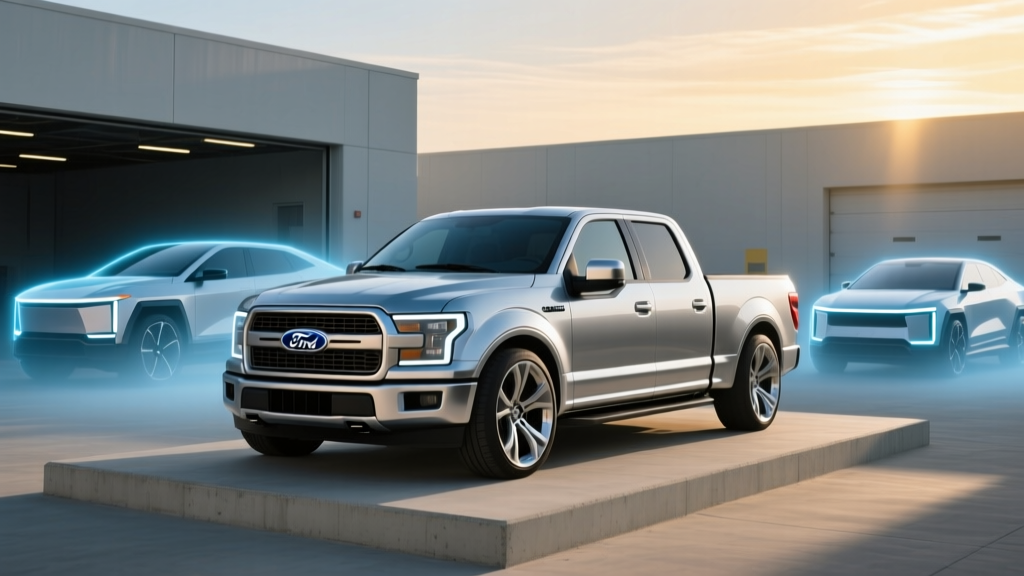
If you've been searching for a 2001 Ford F-150 Lightning with an electric powertrain, here's the straightforward answer: Ford never built one. The nameplate "Lightning" on an F-150 has meant two very different things across two very different eras, and the confusion between them is understandable given how Ford has marketed the modern EV.
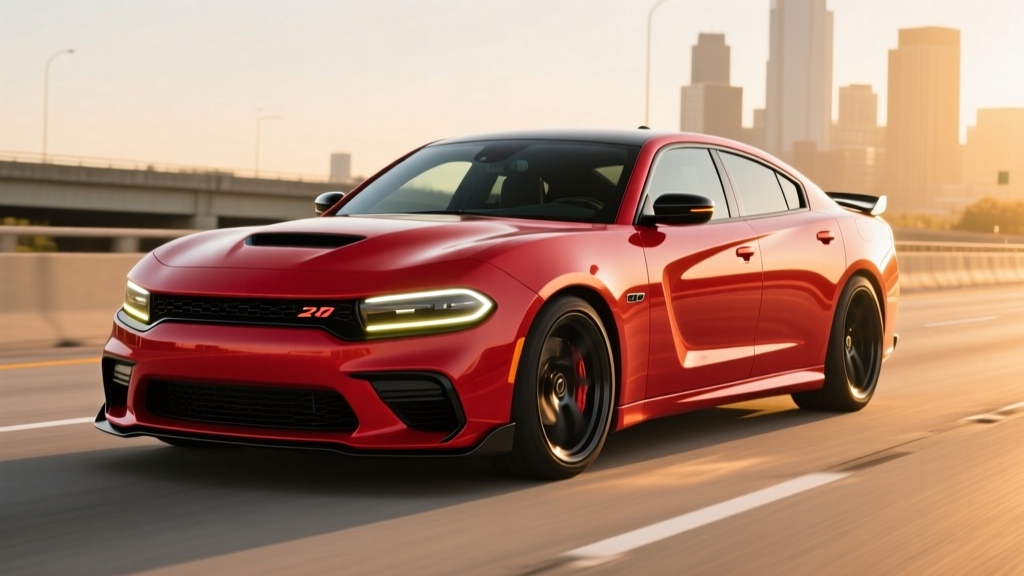
The original Ford F-150 SVT Lightning was a gasoline-powered performance truck produced in two generations: 1993–1995 and 1999–2004. The 2001 model year fell squarely in the second generation, equipped with a supercharged 5.4-liter Triton V8 producing 380 horsepower and 450 lb-ft of torque. It was rear-wheel drive, mated to a 4-speed automatic transmission, and rated by the EPA at roughly 12 mpg city / 17 mpg highway. It was a muscle truck, not an efficiency play — and it had zero electrification.
The Ford F-150 Lightning as a battery-electric vehicle (BEV) didn't arrive until the 2022 model year, more than two decades after the 2001 model you may be searching for. Ford revived the Lightning name for its electric full-size pickup, and by the 2026 model year it has matured into one of the most capable electric trucks on the market.
Below, we break down exactly what the 2001 gas Lightning was, why the name matters today, and give you the full spec-sheet treatment on the current-generation F-150 Lightning EV — the truck that actually carries the electric torch.
The Original SVT Lightning (1999–2004): Gas-Powered Muscle
The second-generation SVT Lightning (which includes the 2001 model year) was developed by Ford's Special Vehicle Team. Here's what defined it:
| Spec | Value |
|---|---|
| Engine | 5.4L Supercharged Triton V8 |
| Horsepower | 380 hp @ 4,750 rpm |
| Torque | 450 lb-ft @ 3,250 rpm |
| Drivetrain | Rear-wheel drive |
| Transmission | 4-speed automatic |
| 0–60 mph | ~5.8 seconds |
| EPA Fuel Economy | 12 city / 17 hwy / 14 combined mpg |
| Curb Weight | ~4,710 lbs |
| Bed Length | 6.5 ft (Styleside) |
| Original MSRP (2001) | ~$31,420 |
It was quick for a truck of its era, but by modern standards its fuel economy is punishing and its technology is archaic. No hybrid assist, no regenerative braking, no lithium-ion pack — just a supercharged V8 and a solid rear axle.
The 2026 Ford F-150 Lightning EV: Full Specs and Review
Fast-forward to the current model year. The 2026 Ford F-150 Lightning is a body-on-frame, full-size battery-electric pickup built on a modified version of Ford's F-150 platform with an independent rear suspension — a first for the F-150 line. Here is the complete spec breakdown:
| Category | Standard Range | Extended Range |
|---|---|---|
| Battery Chemistry | NMC (Nickel Manganese Cobalt) | NMC |
| Usable Battery Capacity | 98 kWh | 131 kWh |
| EPA Range | 230 miles | 320 miles |
| Drivetrain | Dual-motor AWD | Dual-motor AWD |
| Horsepower | 452 hp | 580 hp |
| Torque | 775 lb-ft | 775 lb-ft |
| 0–60 mph | ~5.0 sec | ~3.8 sec |
| Max DC Fast Charge | 150 kW | 150 kW |
| 10–80% DC Fast Charge | ~36 min | ~41 min |
| Level 2 Home Charge Rate | 11.3 kW (30 mi/hr) | 19.2 kW (51 mi/hr, 80A charger) |
| MPGe (Combined) | 68 MPGe | 70 MPGe |
| Efficiency | 49 kWh/100 mi | 48 kWh/100 mi |
| Max Towing | 7,700 lbs | 10,000 lbs (w/ Max Trailer Tow) |
| Max Payload | 2,235 lbs | 1,800 lbs |
| Base MSRP (Pro trim) | $54,995 | $69,995 (Lariat) |
| Battery Warranty | 8 years / 100,000 miles (≥70% capacity retention) | |
Real-World Range: What the EPA Sticker Doesn't Tell You
Extended Range (131 kWh): EPA 320 miles — expect ~260–280 miles in mixed highway driving at 70 mph, dropping to ~210–230 miles in sustained cold weather (below 32°F) or when towing a 5,000+ lb trailer.
Standard Range (98 kWh): EPA 230 miles — expect ~185–200 miles highway, and as low as ~150 miles towing in winter conditions.
Source: fueleconomy.gov — F-150 Lightning listings.
The F-150 Lightning's large frontal area and 6,000+ lb curb weight work against highway efficiency. Unlike a sedan-shaped EV, aerodynamic drag dominates above 65 mph, and the Lightning's boxy profile means efficiency drops noticeably compared to its combined-cycle EPA rating. If your commute is primarily stop-and-go city driving, you'll actually see numbers closer to or even slightly above the EPA estimate thanks to regenerative braking recapturing energy. Highway road trips and towing are where range contracts most aggressively.
Cold weather compounds this. The NMC battery pack loses roughly 15–25% of effective capacity in sub-freezing temperatures, and cabin heating draws heavily from the pack. Ford's available heat pump (standard on higher trims) mitigates this somewhat, but physics is physics — plan for shorter real-world range in winter.
Charging Speed and Infrastructure
| Charging Level | Power / Rate | Miles Added per Hour | Notes |
|---|---|---|---|
| Level 1 (120V household) | ~1.4 kW | ~3 mi/hr | Emergency/trickle only; full charge takes days |
| Level 2 (240V, 32A mobile) | 7.7 kW | ~20 mi/hr | Included mobile charger; ~11–15 hr full charge |
| Level 2 (240V, 48A wall unit) | 11.3 kW | ~30 mi/hr | Ford Charge Station Pro; ~8–10 hr full charge |
| Level 2 (240V, 80A wall unit) | 19.2 kW | ~51 mi/hr | Extended Range only; requires 100A circuit, ~5–6 hr full charge |
| DC Fast Charge | Peak 150 kW | ~180 mi in 30 min (ideal) | 10–80% in ~36–41 min; tapers sharply above 80% |
The Lightning's 150 kW peak DC fast-charge rate is its most significant competitive weakness. While rivals like the Rivian R1T and Hyundai Ioniq 5 can pull 200–350 kW on compatible chargers, the Lightning's charge curve peaks briefly and tapers early. On a 350 kW Electrify America or Tesla Supercharger (via NACS adapter), you'll see ~150 kW for the first few minutes before it ramps down to 100 kW and eventually 50 kW as the pack warms and fills. A 10–80% session on the Extended Range pack takes roughly 41 minutes — adequate for road trips with a planned meal stop, but noticeably slower than the class leaders.
At home, the Lightning shines if you invest in proper Level 2 infrastructure. The 80-amp Ford Charge Station Pro (available on Extended Range models with the onboard dual chargers) can add 51 miles of range per hour — meaning a full overnight charge is realistic even after a heavy driving day. Installation of an 80A charger typically requires a 100-amp dedicated circuit, which may necessitate a panel upgrade in older homes. Budget $1,200–$2,500 for the charger unit and $800–$3,000 for professional electrical installation depending on your panel capacity and run length.
Tax Credit, Pricing, and What You'll Actually Pay
The 2026 F-150 Lightning's eligibility for the federal §30D EV tax credit is nuanced and trim-dependent. Under current IRS rules, the credit is up to $7,500, but it's split into two $3,750 halves tied to battery-component sourcing and critical-mineral sourcing requirements. Buyers must also meet income caps ($150,000 single / $300,000 married filing jointly for new vehicles) and the truck's MSRP must not exceed $80,000 for trucks (which all Lightning trims satisfy).
| Trim | Battery | Base MSRP | Est. §30D Credit | Effective Price |
|---|---|---|---|---|
| Pro | Standard Range | $54,995 | $3,750–$7,500* | $47,495–$51,245 |
| XLT | Standard Range | $59,995 | $3,750–$7,500* | $52,495–$56,245 |
| Lariat | Extended Range | $69,995 | $3,750–$7,500* | $62,495–$66,245 |
| Platinum | Extended Range | $84,995 | $0 (MSRP cap)** | $84,995 |
*Credit amount depends on battery-component and critical-mineral sourcing compliance per IRS §30D guidelines. Eligible credit may be $0, $3,750, or $7,500 depending on the specific build and model year sourcing. The credit can now be transferred to the dealer at point of sale as an instant discount.
**The Platinum trim's MSRP exceeds the $80,000 truck cap in many configurations, disqualifying it from §30D. Verify with your dealer and a tax professional before purchasing.
Many buyers in 2026 qualify for only the $3,750 half-credit because certain battery cells still rely on supply chains that haven't fully met the critical-minerals threshold. Always verify your specific VIN's eligibility through the dealer and cross-reference with the IRS clean vehicle report before assuming the full $7,500.
Who Should Buy the F-150 Lightning — And Who Shouldn't
- You need a full-size truck bed and real towing capability (up to 10,000 lbs) with zero tailpipe emissions.
- You can charge at home with Level 2 and your daily driving is under 200 miles.
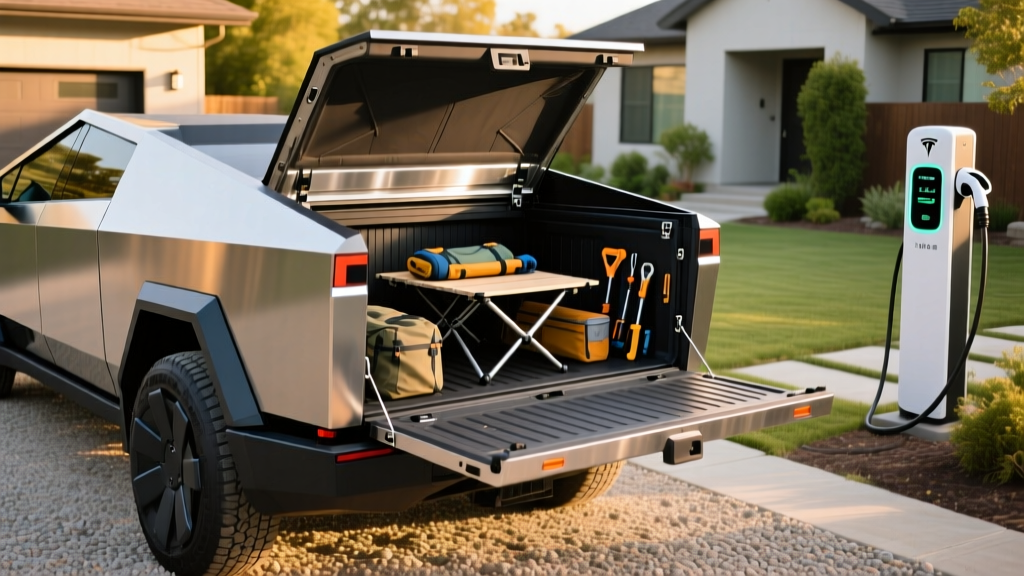
- You value the Mega Power Frunk (400 lbs capacity, 14.1 cu ft) and Pro Power Onboard for job-site or camping use.
- You want a comfortable daily driver that happens to be a truck — the independent rear suspension rides far better than any leaf-sprung competitor.
- You frequently tow long distances in cold weather — range drops to 100–150 miles with a heavy trailer in winter.
- Fast DC charging speed is your priority — the 150 kW peak is a generation behind rivals.
- You want a compact or midsize truck footprint — the Lightning is 232+ inches long and doesn't fit every garage.
The Lightning's best use case is the suburban or rural homeowner who uses a truck for a mix of commuting, hauling, and weekend projects. Its Pro Power Onboard system (up to 9.6 kW of exportable power through bed and cab outlets) makes it a genuine mobile generator — a feature the gas SVT Lightning of 2001 couldn't dream of. The frunk replaces the engine bay with lockable, drainable, weather-sealed storage that doubles as a cooler or tool chest.
For pure road-trippers who cover 400+ miles daily, the Rivian R1T (with its larger battery and faster charging) or even a diesel truck still makes more logistical sense until DC charging infrastructure catches up in rural corridors.
Pros and Cons at a Glance
- Massive 775 lb-ft of torque from standstill — effortless towing launch
- Pro Power Onboard turns the truck into a 9.6 kW generator
- 14.1 cu ft Mega Power Frunk with 400 lb capacity
- Independent rear suspension for best-in-class ride quality
- Extended Range achieves a genuine 260+ real-world highway miles
- BlueCruise hands-free driving on 130,000+ miles of divided highway (SAE Level 2 — driver must remain attentive)
- Eligible for partial or full §30D credit on most trims
- 150 kW peak DC charging is slow vs. 200–350 kW rivals
- Towing range drops severely — plan for 50% range loss with a heavy trailer
- Platinum trim exceeds $80K MSRP cap, losing tax credit eligibility
- Standard Range pack's 230-mile EPA is tight for road trips
- Heavy curb weight (6,000–6,800 lbs) increases tire wear
- Large footprint won't fit in compact garages or tight urban parking
Frequently Asked Questions
Was there ever an electric Ford F-150 in 2001?
No. The 2001 Ford F-150 SVT Lightning was a supercharged V8 gasoline truck. Ford's first electric F-150, the Lightning BEV, launched for the 2022 model year — 21 years later.
What is the real-world range of the 2026 F-150 Lightning?
The Extended Range model (131 kWh, EPA 320 miles) delivers roughly 260–280 miles in real-world highway driving and 210–230 miles in freezing temperatures. The Standard Range (98 kWh, EPA 230 miles) delivers about 185–200 miles highway. Towing a 5,000+ lb trailer cuts range roughly in half.
How fast does the F-150 Lightning charge at home and on the road?
At home on a 48A Level 2 charger, it adds ~30 miles per hour (11.3 kW). With the available 80A charger on Extended Range models, it adds ~51 miles per hour (19.2 kW). On DC fast chargers, it peaks at 150 kW, taking approximately 36–41 minutes for a 10–80% session.
Does the F-150 Lightning qualify for the $7,500 federal tax credit?
Most trims qualify for $3,750 or $7,500 depending on battery-component and critical-mineral sourcing per IRS §30D rules. The buyer must also meet income caps ($150K single / $300K joint). The Platinum trim often exceeds the $80,000 MSRP cap for trucks and may be ineligible. Always verify with your dealer and tax professional.
Is the F-150 Lightning worth buying over the Rivian R1T or Chevy Silverado EV?
The Lightning wins on value (lower base price), ride comfort (independent rear suspension), and job-site utility (Pro Power Onboard, frunk). The Rivian R1T charges faster, offers a quad-motor option, and is more off-road capable but starts at a higher price and is smaller. The Chevy Silverado EV offers up to 400+ miles of EPA range and faster charging but is heavier, more expensive at equivalent trims, and has a smaller dealer service network for EVs. Your choice depends on whether you prioritize price (Lightning), charging speed (Rivian/Silverado), or maximum range (Silverado).
What's the battery warranty on the F-150 Lightning?
Ford covers the high-voltage battery for 8 years or 100,000 miles, whichever comes first, guaranteeing at least 70% capacity retention over that period. The electric powertrain components carry the same 8-year/100,000-mile warranty.