The Quick Answer: Does a $20,000 Electric Truck Exist?
As of 2026, no new full-size electric pickup sells for $20,000. The most affordable new electric truck on the U.S. market is the Ford Maverick EV (announced for late 2025, with deliveries ramping into 2026), starting near $27,995 before any incentives. The Chevrolet Silverado EV base Work Truck starts around $39,900, while the Rivian R1T begins near $69,900. The only realistic path to a $20,000 electric truck is through the used EV market, where early Ford F-150 Lightning Pro trims and Chevrolet Silverado EV WT models are depreciating into the low-$20K range, potentially dropping further with the $4,000 used EV tax credit (IRS §25E).
The Current Electric Truck Landscape Under $40,000
Buyers searching for a "20000 electric truck" are typically looking for a work-capable, affordable electric pickup. The market has expanded, but true affordability remains elusive at the new-vehicle level. Here is where things stand for the 2026 model year:
| Model | Base MSRP | EPA Range | Battery (kWh) | Peak DC Charge (kW) | 10–80% Time | Towing |
|---|---|---|---|---|---|---|
| Ford Maverick EV (2026) | $27,995 | ~250 mi (est.) | ~70 kWh (NMC) | 150 kW | ~28 min | 2,000 lbs |
| Chevy Silverado EV 4WT (2026) | $39,900 | 260 mi | 100 kWh (NMC) | 200 kW | ~25 min | 8,000 lbs |
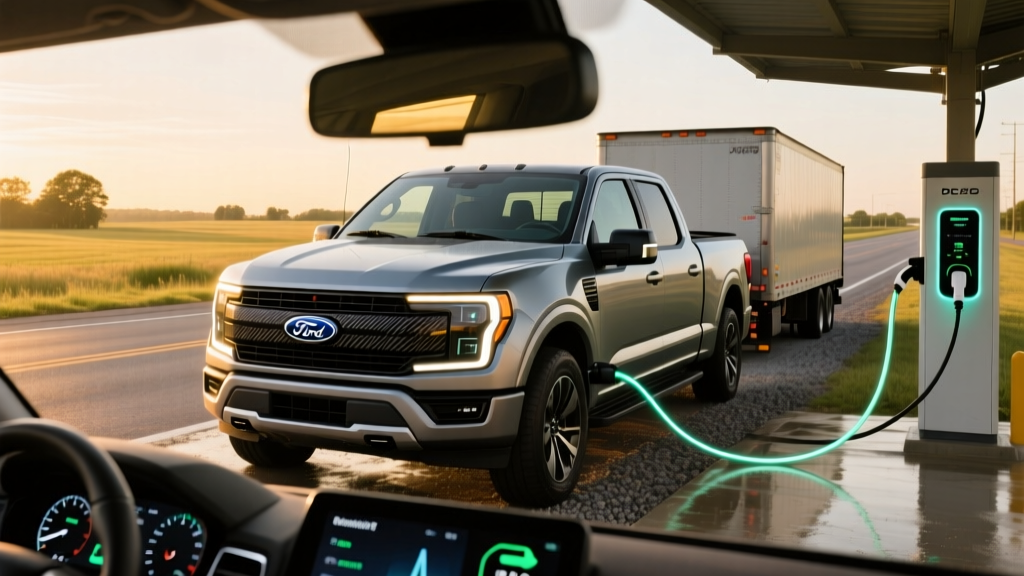
| Ford F-150 Lightning Pro (2025) | $54,995 | 240 mi (Std Range) | 98 kWh (NMC) | 150 kW | ~30 min | 7,700 lbs |
| Rivian R1T Dual (2026) | $69,900 | 270 mi | 106 kWh (NMC) | 220 kW | ~22 min | 11,000 lbs |
The Maverick EV is the closest any automaker has come to the $20,000 electric truck threshold, but it is a compact unibody pickup — not the body-on-frame workhorse many buyers envision. For traditional truck capability (towing over 7,000 lbs, full-size bed), you are looking at $40,000 minimum new.
The Used Market: Your Real Path to a $20,000 Electric Truck
Electric trucks have experienced steeper-than-average depreciation, making the used market the most viable route to a $20,000 price point. Based on current resale data:
- 2022–2023 Ford F-150 Lightning Pro (Standard Range): Originally $54,995 MSRP, now appearing at auction and dealer lots between $22,000–$28,000 depending on mileage and condition. The 98 kWh battery delivers an EPA 240 miles, and the 7,700-lb tow rating remains competitive.
- 2024 Chevrolet Silverado EV 4WT: Fleets are cycling out early units, with some landing in the $25,000–$30,000 range. The Ultium-platform 100 kWh battery and 260-mile EPA range hold up well for daily work use.
- 2022 GMC Hummer EV (high-mileage): Rare, but some examples with 50,000+ miles are approaching $30,000 — though the Hummer's massive weight (9,000+ lbs) means tire and suspension costs are higher.
If you qualify for the IRS §25E used clean vehicle credit, you can subtract up to $4,000 (30% of sale price, capped at $4,000) from your tax liability — or take it as a point-of-sale reduction. That can bring a $24,000 used Lightning Pro down to an effective $20,000.
§25E Used EV Credit Eligibility Checklist
- Vehicle price cap: Sale price must be $25,000 or less
- Buyer income cap: AGI ≤ $75,000 (single) / $112,500 (head of household) / $150,000 (joint)
- Vehicle age: Must be at least 2 model years old
- Dealer requirement: Must be purchased from a licensed dealer (private sales excluded)
- Battery capacity: Minimum 7 kWh
- One-time use: You can only claim this credit once every 3 years
EV Truck vs Gas Truck: Real Cost of Ownership Over 5 Years
Numbers matter more than ideology. Below is a 5-year / 75,000-mile ownership comparison between a used 2023 Ford F-150 Lightning Pro (acquired at ~$24,000 after credit) and a comparable 2023 Ford F-150 XL gas model (acquired used at ~$28,000):
| Cost Category | F-150 Lightning (Used EV) | F-150 XL (Used Gas) |
|---|---|---|
| Purchase Price (after credits) | $24,000 | $28,000 |
| Fuel / Electricity (75K mi) | $3,400 (home L2, $0.14/kWh avg) | $9,375 (20 MPG avg, $3.50/gal) |
| Maintenance (5 yr) | $1,200 (tires, cabin filter, fluid top-offs) | $3,800 (oil changes, brakes, transmission fluid) |
| Insurance (5 yr avg) | $10,500 ($2,100/yr) | $8,500 ($1,700/yr) |
| Depreciation (est. 5 yr) | $8,000 | $10,000 |
| Total 5-Year Cost | $47,100 | $59,675 |
The electric truck saves roughly $12,575 over five years — but only if you charge primarily at home on a Level 2 setup at residential electricity rates. Relying exclusively on public DC fast charging at $0.35–$0.50/kWh erases most of the fuel savings, pushing your 5-year electricity cost closer to $7,500.
Real-World Ownership Considerations Before You Buy
The sticker price is only the beginning. Here are the practical factors that determine whether a budget electric truck actually works in your life:
Home Charging Access
A Level 2 home charger (240V, 40–48 amp) is nearly essential for truck owners. Expect to add 25–35 miles of range per hour of charging, meaning a full overnight session replenishes 200+ miles. Installation costs range from $800–$2,500 depending on panel capacity and run length. If your home has a 100-amp electrical panel, you may need a $2,000–$4,000 panel upgrade to support a 48-amp EVSE alongside existing loads. Consult a licensed electrician for a site assessment before purchasing.
Cold-Weather Range Loss
Electric trucks with NMC chemistry (which is every current model) lose 20–35% of EPA range in sustained sub-freezing temperatures. A Lightning rated at 240 EPA miles may deliver only 160–190 miles in January in Minnesota. If you live in a cold climate and regularly drive 100+ miles round-trip, a Standard Range truck may not suffice without mid-day charging.
Towing Range Penalty
This is the factor most first-time EV truck buyers underestimate. Towing a 5,000-lb trailer at highway speeds can cut range by 40–55%. The F-150 Lightning's 240-mile EPA range drops to roughly 110–140 miles while towing — and charging infrastructure at trailheads and campgrounds remains sparse. If you tow frequently over long distances, a diesel or gas truck still holds a practical advantage.
Insurance Costs
EV trucks carry higher insurance premiums — typically 15–30% more than their gas counterparts — due to higher repair costs, battery replacement risk, and specialized labor requirements. Get quotes from your insurer before committing to a purchase.
Common Misconceptions About Budget Electric Trucks
| Myth | Fact |
|---|---|
| "I can get a brand-new electric truck for $20,000" | The cheapest new electric truck (Maverick EV) starts at ~$27,995. The $20K mark is only achievable via used market + tax credit. |
| "EV trucks can't tow anything" | The Lightning tows 7,700 lbs, the Silverado EV tows 8,000 lbs. They can tow — but range drops dramatically while doing so. |
| "The battery will need replacing in 5 years" | Ford, GM, and Rivian warranty their batteries for 8 years / 100,000 miles at ≥70% capacity retention. Data from fueleconomy.gov and fleet operators shows typical degradation of 8–12% over 100K miles. |
| "Charging takes too long for work use" | A Level 2 home charger fully replenishes overnight. DC fast charging adds 150–200 miles in 25–30 minutes — adequate for lunch breaks on the road. |
| "I'll never save money going electric" | With home charging, the per-mile energy cost is $0.04–$0.06 vs $0.15–$0.20 for gas. Savings compound over years, especially for high-mileage drivers. |
Decision Framework: Should You Buy a $20,000 Electric Truck?
Buy a Used Electric Truck If:
- You have access to Level 2 home charging (garage or driveway with 240V outlet)
- Your daily driving is under 150 miles round-trip
- You rarely tow heavy loads over long distances
- You qualify for the §25E used EV credit (income under $75K single / $150K joint)
- You live in a moderate climate or can accept winter range reduction
- You want lower maintenance costs and instant torque for job-site use
Stick With a Gas or Hybrid Truck If:
- You regularly tow 5,000+ lbs on highway trips over 100 miles
- You lack reliable home or workplace charging access
- You live in a rural area with sparse DC fast-charging infrastructure
- You need maximum range flexibility without route planning
- Your budget cannot absorb higher insurance premiums
- You drive in extreme cold (below 0°F) for extended periods regularly
Consider a PHEV Truck If:
- You want electric commuting but gas-powered towing range
- The Ford F-150 PowerBoost Hybrid (not plug-in, but 24 MPG combined) or the upcoming Silverado PHEV (announced, not yet on sale) may offer a bridge solution
- You drive 30–40 miles daily but need 500+ mile range for weekend towing
What a First-Time EV Truck Buyer Should Know
If this is your first electric vehicle purchase, these practical realities will save you money and frustration:
- Understand kW vs kWh: kW (kilowatts) measures power — how fast you charge. kWh (kilowatt-hours) measures energy — how big the battery is. A 98 kWh battery charged at 150 kW (peak) does not fill in 39 minutes; the charge curve tapers significantly above 80% State of Charge.
- Get a pre-purchase battery health report: For used EVs, request the State of Health (SoH) reading from the dealer or use an OBD-II scanner app like Car Scanner or EV Health. Avoid trucks showing more than 15% degradation unless priced accordingly.
- Install your Level 2 charger before the truck arrives: Lead times for electricians can be 2–6 weeks in busy markets. Get a quote early and schedule installation to coincide with your purchase.
- Use preconditioning: Most EV trucks allow you to warm the battery before DC fast charging via the mobile app. This can improve charge speed by 20–40% in cold weather.
- Check the tax credit rules twice: Both §30D (new) and §25E (used) credits have battery sourcing and critical mineral requirements that change annually. Verify current-year rules at IRS.gov before assuming eligibility.
- Budget for a home electrical assessment: A $200–$300 electrician visit can tell you whether your panel supports a 48-amp EVSE or if you need an upgrade — preventing a nasty surprise after purchase.
Frequently Asked Questions
Will there be a new electric truck for $20,000 by 2027?
Unlikely at the full-size level. The Ford Maverick EV at ~$28,000 is the current price floor for a new electric truck. Compact and mid-size EV trucks from Chinese manufacturers (BYD, Changan) sell for under $20,000 in other markets, but none are currently sold or homologated for the U.S. Tariff structures and safety regulations make sub-$20K new EV trucks improbable in the near term for American buyers.
Is a used Ford F-150 Lightning reliable at high mileage?
Early data is encouraging. Fleet operators report fewer powertrain-related service events compared to gas F-150s, though suspension components (control arms, bushings) wear faster due to the Lightning's 6,000+ lb curb weight. The NMC battery pack is warrantied to 100,000 miles at 70% capacity. At 80,000 miles, expect roughly 10–12% range loss from new.
How much does it cost to charge an electric truck at home per month?
At the U.S. average residential rate of $0.14/kWh and 1,000 miles/month of driving, a Lightning (consuming ~2.0 kWh/mile) costs approximately $280/month in electricity. The same distance in a gas F-150 at 20 MPG and $3.50/gallon costs $175/month — but this doesn't account for the gas truck's oil changes, brake wear, and higher maintenance costs, which shift the total cost advantage to the EV over time.
Can I use a standard 120V outlet to charge an electric truck?
Yes, but slowly. Level 1 charging (120V, 12 amps) delivers roughly 1.4 kW, adding about 3–4 miles of range per hour. For a 98 kWh Lightning battery, a full charge from empty takes approximately 70 hours. This is viable only if you drive fewer than 30 miles daily and can plug in every night. For any meaningful use, a 240V Level 2 installation is strongly recommended.
What happens if the battery fails out of warranty?
Out-of-warranty battery replacement for a full-size electric truck currently costs $15,000–$25,000 depending on the model and pack size. However, catastrophic battery failure is rare; most degradation is gradual. Individual module replacement (rather than the full pack) is becoming available through independent EV shops for $5,000–$10,000. Third-party battery refurbishment services are expanding as the first-generation Lightning fleet ages.