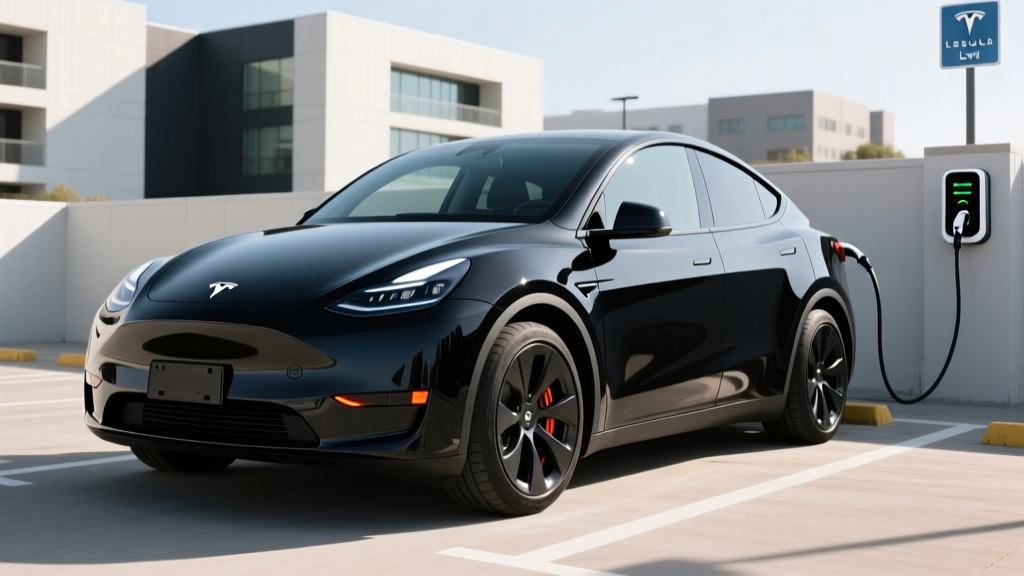
If you're shopping the Tesla Model Y and searching for its gross vehicle weight rating (GVWR), you're likely planning to tow, haul cargo, or simply want to understand how this electric crossover handles load limits. The Model Y's weight specs matter more than most EV buyers realize — they affect range, tire wear, regenerative braking behavior, and whether your bike rack or small trailer is even legal to pull. This 2026 review covers every weight figure you need alongside the full ownership picture: range, charging speed, pricing, tax credits, and how the Model Y stacks up against rivals.
Tesla Model Y Gross Vehicle Weight & Payload Specs
Let's address the target question directly. The 2026 Tesla Model Y Long Range AWD carries a curb weight of approximately 4,398 lbs and a Gross Vehicle Weight Rating (GVWR) of 5,247 lbs. That gives you a usable payload capacity of roughly 849 lbs — the combined weight of passengers, cargo, and accessories you can safely add.
| Specification | Long Range AWD | Performance (if available) |
|---|---|---|
| Curb Weight | ~4,398 lbs | ~4,450 lbs (est.) |
| Gross Vehicle Weight Rating (GVWR) | 5,247 lbs | 5,247 lbs |
| Max Payload Capacity | ~849 lbs | ~797 lbs (est.) |
| Max Towing Capacity | 3,500 lbs (w/ tow package) | 3,500 lbs |
| Gross Combined Weight Rating (GCWR) | ~8,747 lbs | ~8,747 lbs |
For context, the Tesla Model Y Owner's Manual specifies that towing requires the factory tow package — aftermarket hitches may void warranty coverage and bypass Tesla's integrated trailer sway control. The 3,500-lb tow rating covers a small utility trailer, a pair of jet skis, or a lightweight teardrop camper, but not a full-size travel trailer.
Range, Battery & Efficiency: Real Numbers for 2026
The 2026 Model Y Long Range AWD achieves an EPA-estimated 320 miles of range from its 78.1 kWh usable lithium-ion battery pack. Tesla uses a mix of NMC (nickel manganese cobalt) chemistry in Long Range and Performance trims, prioritizing energy density for maximum range. The base Rear-Wheel-Drive trim, when available, has historically used LFP (lithium iron phosphate) chemistry — heavier per kWh but more durable over thousands of cycles and tolerant of regular 100% charging.
EPA Sticker: 320 miles
Highway (70-75 mph, moderate temps): ~270-290 miles
City/suburban with regen: ~300-320 miles
Cold weather (below 32°F, highway): ~220-250 miles
Towing (small trailer, ~2,000 lbs): ~180-210 miles
The Model Y's heat pump helps preserve cabin efficiency in cold weather, but battery chemistry still loses 20-30% capacity in deep freezes. Preconditioning via the Tesla app before departure recovers some of that loss.
| Metric | Long Range AWD |
|---|---|
| EPA Range | 320 miles |
| Battery Usable Capacity | 78.1 kWh |
| Battery Chemistry | NMC (Long Range) |
| MPGe (Combined) | 111 MPGe |
| Energy Consumption | 28 kWh/100 mi |
| Drivetrain | Dual-Motor AWD |
| 0-60 mph | 4.8 seconds |
| Horsepower | ~384 hp (combined) |
Efficiency is where Tesla's engineering shows. At 28 kWh per 100 miles (per EPA data), the Model Y remains one of the most efficient electric crossovers sold, translating to lower charging costs and less frequent stops on road trips.
Charging Speed: DC Fast, Level 2 & Real Charge Curves
The 2026 Model Y supports a peak DC fast-charge rate of 250 kW on V3 Superchargers (CCS-adapter compatible or native NACS on newer builds). In practice, the charge curve peaks near 250 kW between 10-30% state of charge, then tapers progressively. Expect a 10-80% charge in approximately 22-25 minutes under optimal thermal conditions.
| Charging Level | Power (kW) | Miles of Range Added per Hour | Notes |
|---|---|---|---|
| Level 1 (120V household) | ~1.4 kW | ~4-5 mi/hr | Emergency/trickle only |
| Level 2 (240V, 32A Mobile Connector) | 7.7 kW | ~28 mi/hr | Standard home outlet |
| Level 2 (240V, 48A Wall Connector) | 11.5 kW | ~44 mi/hr | Recommended home setup |
| DC Fast (V3 Supercharger) | Up to 250 kW | ~1,000+ mi/hr (peak) | 10-80% in ~22 min |
| DC Fast (V4 Supercharger) | Up to 250 kW | ~1,000+ mi/hr (peak) | CCS & NACS compatible |
Charge curve reality: Peak kW numbers are misleading on their own. The Model Y sustains above 200 kW only until roughly 40% SoC, then drops to ~150 kW by 60%, and ~90 kW by 75%. Charging from 80-100% on DC fast charge is painfully slow — Tesla's navigation system will route you through Superchargers to minimize total trip time, which usually means charging to 80% and moving on.
For home charging, the Tesla Wall Connector at 48 amps (11.5 kW) replenishes the full battery in about 7 hours — ideal for overnight top-ups. If your home electrical panel only supports a 40-amp circuit, you'll get 32 amps (7.7 kW), which still adds roughly 28 miles of range per hour and covers most daily driving needs.
Pricing, Trims & Federal Tax Credit Eligibility
The 2026 Tesla Model Y lineup starts at $44,990 for the Long Range AWD (base MSRP before destination). A fully loaded Long Range with Full Self-Driving (Supervised), red paint, and 20-inch wheels can push past $56,000.
| Trim | Base MSRP | Federal §30D Credit | Effective Price |
|---|---|---|---|
| Long Range AWD | $44,990 | Up to $7,500* | ~$37,490* |
| Long Range AWD (loaded) | $52,000-$56,000 | Up to $7,500* | ~$44,500-$48,500* |
*Critical tax credit caveats: The IRS §30D clean vehicle credit has strict eligibility requirements that change frequently:
- MSRP cap: SUVs/crossovers must be at or below $80,000 — the Model Y qualifies.
- Buyer income cap: Modified AGI must not exceed $150,000 (single), $225,000 (head of household), or $300,000 (joint). Higher earners are ineligible.
- Battery sourcing: Critical minerals and battery components must meet escalating domestic-content thresholds that tighten annually. Tesla's supply chain has generally met requirements, but always verify the specific VIN at fueleconomy.gov before purchasing.
- Point-of-sale transfer: As of 2024, buyers can transfer the credit to the dealer for an immediate price reduction rather than waiting to claim it on their tax return.
Always confirm eligibility with a tax professional and check the latest IRS guidance — battery sourcing rules in particular shift with trade policy and manufacturer supply chain changes.
Interior, Cargo & Practical Daily Use
The Model Y's cabin is minimalist by design — a single 15.4-inch touchscreen handles navigation, climate, media, and vehicle settings. There is no instrument cluster; speed and range information appear in the upper-left corner of the main display. Love it or hate it, the approach frees up dash space and reduces part count.
Cargo volume: 30.2 cubic feet behind the second row, expanding to 72.1 cubic feet with the rear seats folded. The front trunk (frunk) adds 4.1 cubic feet — useful for charging cables, a gym bag, or groceries you want separated from the main cargo area.
Passenger space: Front headroom is generous at 41.0 inches; rear legroom measures 36.5 inches — adequate for adults on longer trips, though the slightly elevated floor (due to the battery pack beneath) creates a knees-up seating position that taller passengers notice after an hour. The optional third row (when available) is strictly for small children and eliminates most rear cargo space.
Standout tech features:
- Tesla Supercharger network access — the most reliable DC fast-charging network in North America
- Over-the-air (OTA) software updates that add features and refine performance post-purchase
- Sentry Mode dashcam recording when parked
- Dog Mode climate control for pets left in the vehicle
- Camp Mode for overnight climate control during car camping
Autopilot, FSD & Driver Assistance
The standard Autopilot package includes Traffic-Aware Cruise Control and Autosteer (lane centering) — competent for highway commuting. The Full Self-Driving (Supervised) upgrade ($8,000 one-time or $99/month subscription as of early 2026) adds automatic lane changes, Navigate on Autopilot for highway interchanges, traffic light and stop sign recognition, and Autopark. FSD (Supervised) has improved significantly but still requires constant driver oversight, particularly in construction zones, unmapped areas, and complex urban intersections.
Warranty & Long-Term Battery Outlook
Tesla provides a 4-year/50,000-mile basic vehicle warranty and an 8-year/120,000-mile battery and drive unit warranty for the Model Y Long Range. The battery warranty guarantees retention of at least 70% of original capacity over the coverage period — if degradation exceeds 30%, Tesla will repair or replace the pack.
Real-world data from high-mileage Tesla owners suggests NMC packs in the Model Y typically lose 8-12% capacity over the first 100,000 miles, with degradation slowing significantly after the initial break-in period. LFP packs (in RWD trims) show even slower degradation and can be charged to 100% daily without the longevity concerns that apply to NMC chemistry. Tesla recommends charging NMC packs to 80% for daily use and only using 100% for trips requiring maximum range.
Model Y vs. Key Competitors: Is It Worth Buying?
- You want access to the Supercharger network (still the gold standard for road-trip charging reliability)
- You value OTA updates and tech-forward features
- Efficiency (kWh/100mi) is a top priority for lowering charging costs
- You prefer a minimalist cabin with a single-screen interface
- You want a more traditional interior layout with physical controls
- Ride comfort and noise isolation matter more than sporty handling
- You need more rear-seat legroom (Ioniq 5 excels here)
- You prefer dealer-based service over Tesla's mobile-ranger-and-service-center model
The Model Y remains the default choice in the electric compact crossover segment for good reason: unmatched charging infrastructure, best-in-class efficiency, strong resale value, and continuous software improvement. Its main weaknesses — firm ride quality, minimalist interior that not everyone loves, and service center wait times in some metro areas — are well-documented. If those trade-offs work for you, it's hard to beat.
- 320-mile EPA range with 28 kWh/100mi efficiency
- 250 kW DC fast charging, 10-80% in ~22 min
- Supercharger network — best public charging reliability
- Strong OTA update cadence adds features over time
- 3,500-lb towing (with factory package)
- 72.1 cu ft max cargo volume
- Firm ride quality on rough pavement
- Minimalist interior lacks physical climate/media controls
- Rear-seat legroom is average for the class
- FSD (Supervised) requires constant attention despite the name
- Service center availability varies by region
- 849-lb payload limits full-capacity passenger + cargo hauling
Frequently Asked Questions
What is the gross vehicle weight of the Tesla Model Y?
The 2026 Tesla Model Y Long Range AWD has a GVWR of 5,247 lbs and a curb weight of approximately 4,398 lbs, yielding about 849 lbs of payload capacity for passengers and cargo combined.
What is the real-world range of the 2026 Tesla Model Y?
While the EPA rates the Long Range AWD at 320 miles, expect roughly 270-290 miles on highway road trips at 70-75 mph, and 220-250 miles in freezing weather. Towing a trailer can cut range to 180-210 miles depending on weight and aerodynamics.
How fast does the Model Y charge at home and on DC fast chargers?
On a Tesla Wall Connector (48A, 11.5 kW), the Model Y gains about 44 miles of range per hour, fully charging overnight in ~7 hours. On a V3 Supercharger at 250 kW peak, 10-80% takes approximately 22-25 minutes, though the charge curve tapers significantly above 60% SoC.
Does the 2026 Tesla Model Y qualify for the $7,500 federal tax credit?
The Model Y generally qualifies under IRS §30D, but eligibility depends on your modified adjusted gross income (under $150K single / $300K joint), battery sourcing compliance for the specific VIN, and the vehicle's MSRP being under the $80,000 SUV cap. Always verify at fueleconomy.gov and consult a tax professional.
Can I tow with the Tesla Model Y?
Yes, with the factory tow package the Model Y is rated for up to 3,500 lbs. This covers small utility trailers, bike racks, and lightweight campers. Expect range to drop 35-45% when towing near the maximum rating. Aftermarket hitches may void portions of your warranty.
Is the Model Y worth buying over the Hyundai Ioniq 5 or Ford Mach-E?
The Model Y wins on efficiency, Supercharger network access, and software features. The Ioniq 5 offers a more spacious rear seat, faster 800V charging architecture (10-80% in ~18 min), and a more comfortable ride. The Mach-E provides a more traditional driving feel and Ford dealer service. Test-drive all three before deciding.
Sources: fueleconomy.gov (EPA range/efficiency data), Tesla Model Y specifications, IRS §30D clean vehicle credit rules.