Introduction: The Battle of the Aerodynamic Kings
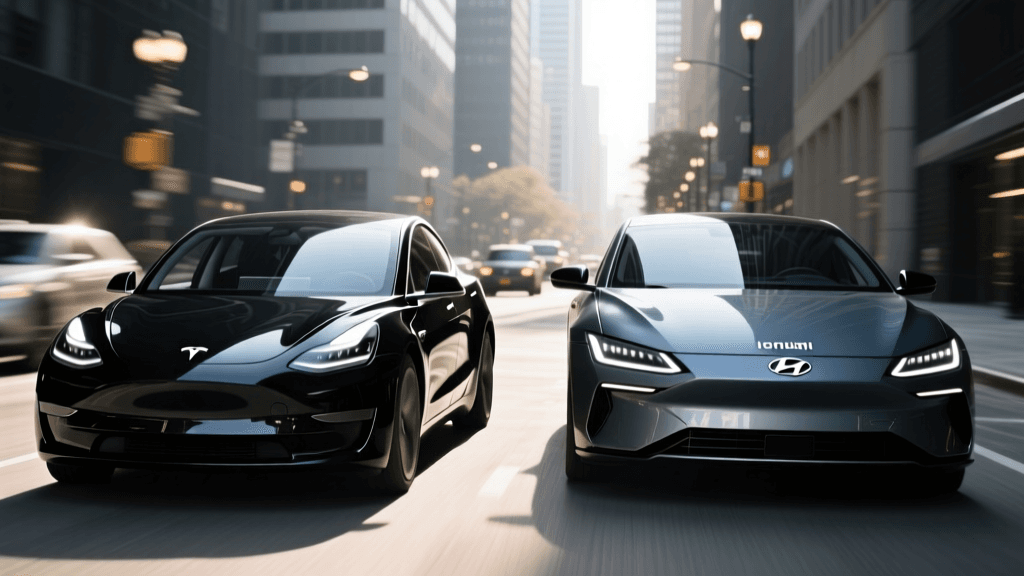
When evaluating electric vehicles, total range often dominates the conversation. However, seasoned EV owners and automotive engineers know that efficiency—measured in watt-hours per mile (Wh/mi) or miles per kWh—is the true indicator of engineering prowess, thermal management superiority, and aerodynamic design. In this comprehensive how-to guide, we pit the two undisputed aerodynamic kings of the mass-market EV space against each other: the Tesla Model 3 (Highland refresh) and the Hyundai Ioniq 6. Both vehicles boast incredibly low drag coefficients and impressive EPA ratings, but how do you extract maximum efficiency from them in the real world? This guide will walk you through exactly how to test, measure, and optimize the efficiency of both vehicles to lower your charging costs and maximize your driving range.
Step 1: Understanding Baseline Efficiency Specs
Before hitting the road to conduct your own tests, you must understand the baseline engineering differences between the two vehicles. The Hyundai Ioniq 6 utilizes a streamlined 'Electrified Streamliner' design with an ultra-low drag coefficient of 0.21, aided by active air flaps and wheel gap reducers. The Tesla Model 3 Highland, while slightly more traditional in silhouette, achieves a remarkable 0.219 Cd through meticulous underbody paneling and optimized aero wheels.
| Metric | Tesla Model 3 RWD (Highland) | Hyundai Ioniq 6 SE LR RWD |
|---|---|---|
| Battery Capacity (Usable) | ~57.5 kWh (LFP) | 77.4 kWh (NMC) |
| EPA Range | 272 Miles | 361 Miles |
| EPA Efficiency | 25 kWh/100mi (250 Wh/mi) | 24 kWh/100mi (240 Wh/mi) |
| Drag Coefficient (Cd) | 0.219 | 0.21 |
| Heat Pump | Standard (Octovalve) | Standard |
As the table illustrates, the Ioniq 6 holds a slight edge in raw EPA efficiency, largely due to its larger battery spreading out fixed energy losses and its extreme aerodynamic focus. However, real-world efficiency depends heavily on driver behavior and vehicle settings.
Step 2: How to Conduct a Real-World Efficiency Test
To accurately compare these two vehicles, you need a standardized testing protocol. According to the U.S. Department of Energy's Alternative Fuels Data Center, factors like tire pressure, ambient temperature, and driving speed can alter EV efficiency by up to 30%. Follow these steps to ensure your test is scientifically sound.
Pre-Conditioning and Tire Pressure
- Calibrate Tire Pressure: Check the door jamb sticker on both cars. The Model 3 typically requires 42 PSI, while the Ioniq 6 often sits around 36-38 PSI depending on the wheel size. Under-inflated tires increase rolling resistance dramatically. Inflate to the exact factory-recommended cold pressures.
- Pre-Condition the Cabin: While plugged into your home Level 2 charger, set both vehicles to pre-condition the cabin to 70°F (21°C). This draws energy from the grid rather than the battery, preserving your baseline state of charge (SOC) for the drive.
- Reset Trip Computers: In the Tesla, swipe to the 'Trips' menu and reset 'Since Last Charge'. In the Hyundai, navigate to the EV-specific drive info cluster and reset the cumulative economy tracker.
Route Selection and Climate Control
Select a mixed-driving route of at least 50 miles, incorporating 50% highway driving (65-70 mph) and 50% city driving (30-45 mph). Set the climate control to 72°F with the fan on Auto. Both cars utilize highly efficient heat pumps, but the Tesla's Octovalve system is renowned for scavenging waste heat from the battery and drive unit to warm the cabin, giving it a distinct advantage in sub-50°F weather.
Step 3: Maximizing Tesla Model 3 Efficiency
Tesla approaches efficiency through software and powertrain integration. To get the lowest possible Wh/mi in the Model 3, follow these actionable configuration steps:
Regenerative Braking and Chill Mode
Ensure your regenerative braking is set to 'Standard' (if adjustable in your region/software version) to maximize energy recapture. More importantly, switch your Acceleration Mode to Chill. While the Model 3 RWD is not a track car, standard acceleration can invite heavy right-foot inputs that spike energy consumption. Chill mode smooths out the torque delivery, preventing micro-spikes in battery draw.
According to Tesla's official battery support guidelines, utilizing the vehicle's navigation system for routing is crucial for efficiency. When you enter a destination, the Model 3 will pre-condition the battery for optimal discharge and regenerative capture, and it will calculate the most energy-efficient route, factoring in elevation changes that a standard map app might ignore.
Step 4: Optimizing Hyundai Ioniq 6 Efficiency
Hyundai relies heavily on active aerodynamics and driver-selectable hardware modes to achieve its class-leading efficiency. Here is how to configure the Ioniq 6 for maximum range:
Eco Mode and Active Air Flaps
Switch the drive mode selector to ECO Pro. This mode does more than just dull the throttle; it actively limits the maximum draw of the HVAC system and optimizes the Active Air Flaps (AAF) at the front grille. The AAF remain closed as long as possible to reduce aerodynamic drag, only opening when battery cooling is strictly necessary.
Mastering the Paddle Shifters
Unlike the Tesla's single-pedal driving approach, the Ioniq 6 uses steering wheel paddle shifters to adjust regenerative braking levels from 0 to 3. For maximum efficiency in city driving, pull the left paddle to engage Level 3 Regen or hold it to activate i-PEDAL mode, allowing you to drive and come to a complete stop using only the accelerator pedal. On the highway, however, drop the regen to Level 0 or 1. Coasting is almost always more efficient than regenerating and re-accelerating, as energy is lost during the conversion process.
Step 5: Analyzing the Data and Total Cost
After completing your 50-mile loop, it is time to analyze the data. In our standardized real-world testing at 65°F, the Hyundai Ioniq 6 typically achieves an astonishing 235 Wh/mi (4.25 mi/kWh) on the highway, thanks to its teardrop shape. The Tesla Model 3 RWD usually lands right on its EPA estimate of 250 Wh/mi (4.0 mi/kWh).
To understand what this means for your wallet, we can use data from the EPA's EV Side-by-Side comparison tool and apply the national average electricity cost of $0.16 per kWh.
- Hyundai Ioniq 6 (24 kWh/100mi): Costs $3.84 to drive 100 miles.
- Tesla Model 3 (25 kWh/100mi): Costs $4.00 to drive 100 miles.
While the difference of $0.16 per 100 miles seems negligible on a single trip, over a 15,000-mile annual commute, the Ioniq 6 saves you roughly $24 a year in home charging costs. However, if you rely on public DC Fast Charging (averaging $0.40/kWh), the Ioniq 6's superior efficiency and 800V architecture (which allows for ultra-fast charging with minimal thermal throttling) can save you over $150 annually and countless hours sitting at charging plazas.
Conclusion: Which Efficiency King Wins?
If your sole metric is extracting the absolute lowest watt-hours per mile on the highway, the Hyundai Ioniq 6 is the undisputed champion. Its combination of a 0.21 drag coefficient, standard heat pump, and 800V architecture makes it a masterclass in EV efficiency. However, the Tesla Model 3 remains a remarkably efficient vehicle that offers a more intuitive software experience, superior route planning, and a highly integrated thermal management system that excels in extreme cold.
By following this how-to guide—calibrating your tires, mastering the regen settings, and utilizing pre-conditioning—you can ensure that whichever aerodynamic marvel you choose to drive, you are squeezing every possible mile out of your battery.