The Luxury EV Paradigm Shift: Efficiency Meets Artificial Intelligence
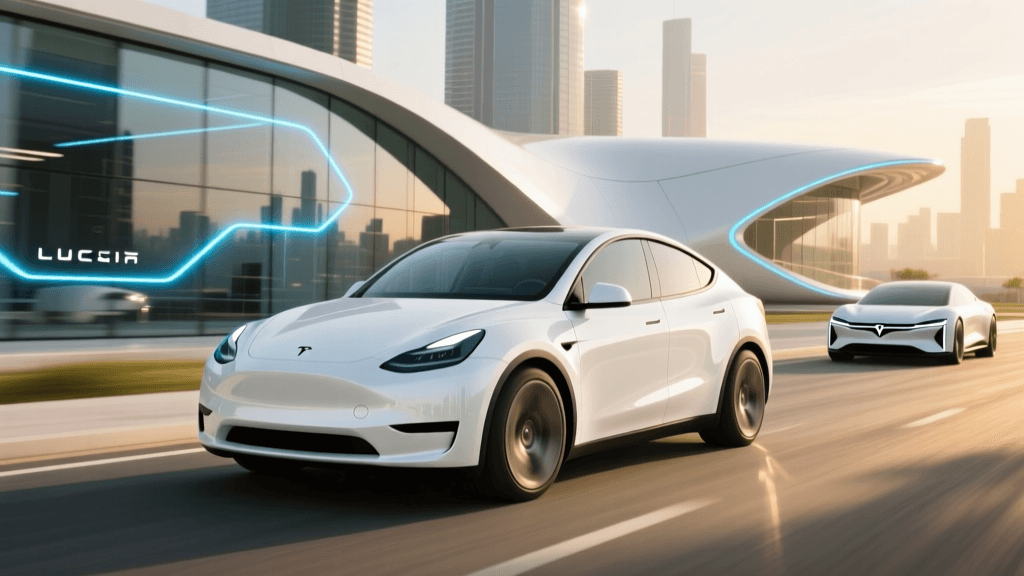
The luxury electric vehicle segment is undergoing a massive transformation. What began as a niche market defined by early-adopter tech has evolved into a battleground of automotive engineering, software supremacy, and sustainable luxury. At the forefront of this revolution are two flagship sedans: the Lucid Air and the Tesla Model S. While the Model S pioneered the long-range luxury EV category and forced the legacy auto industry to adapt, the Lucid Air entered the market to redefine what is physically possible with electric powertrain efficiency and interior packaging.
As we look toward the future of smart driving and electrification, comparing these two vehicles requires more than just looking at 0-60 mph times. We must evaluate their underlying architectures, their approach to autonomous driving, and how their respective ecosystems will adapt to the industry's rapid shift toward solid-state batteries, ultra-high-voltage charging, and AI-defined mobility. Here is our deep-dive comparison of the Lucid Air and Tesla Model S through the lens of future industry trends.
Powertrain Architecture: The 900V Revolution vs. Tri-Motor Brute Force
When discussing the future of EV powertrains, voltage architecture is the critical differentiator. The Lucid Air utilizes a 900V+ electrical architecture, which is rapidly becoming the gold standard for next-generation electric vehicles. This ultra-high-voltage system allows for thinner, lighter wiring harnesses, reduced thermal loss, and dramatically faster charging speeds. According to the U.S. Department of Energy's fueleconomy.gov, the Lucid Air Grand Touring achieves an unprecedented EPA-estimated range of 516 miles, a testament to its miniaturized 'Wonderbox' drive units that deliver over 1,050 horsepower while weighing significantly less than traditional EV motors.
Conversely, the Tesla Model S relies on a highly optimized, albeit older, 400V-class architecture. Tesla compensates for this with brute force and thermal management mastery. The Model S Plaid's tri-motor setup features carbon-sleeved rotors capable of sustaining 1,020 horsepower at top speeds without overheating. However, as the industry moves toward 800V and 1000V standards to enable 350kW+ public charging, Lucid's foundational hardware gives it a distinct future-proofing advantage in energy efficiency and thermal headroom.
Autonomous Driving: Sensor Fusion vs. Pure Vision AI
The most fiercely debated future trend in smart driving is the sensor suite required for true autonomy. Tesla has famously bet the company on a 'pure vision' approach, removing radar and ultrasonic sensors in favor of cameras and advanced neural networks (FSD V12). Tesla's strategy relies on massive data collection from its millions of vehicles on the road to train its Dojo supercomputers, aiming to solve real-world edge cases through sheer computational scale.
Lucid, on the other hand, has embraced a comprehensive sensor fusion approach with its DreamDrive Pro system. The Air is equipped with 32 sensors, including high-resolution LiDAR, radar, and cameras. According to the framework established by the SAE International's J3016 standard for driving automation levels, LiDAR provides a redundant, high-fidelity 3D map of the vehicle's surroundings that cameras alone cannot reliably replicate in severe weather or blinding glare. From an industry outlook perspective, while Tesla's AI vision model is groundbreaking, regulatory bodies and luxury consumers demanding uncompromising safety redundancy are increasingly favoring LiDAR-equipped sensor fusion for Level 3 and Level 4 autonomous capabilities.
The Cabin as a 'Third Space': Minimalist Tech vs. Opulent Lounge
Future luxury vehicles are being designed not just for transportation, but as a 'third space' between home and the office. The Tesla Model S interior is a masterclass in minimalist, screen-centric design. The 17-inch cinematic display and yoke steering wheel emphasize a futuristic, almost sterile environment where the software is the primary interface. While this appeals to tech enthusiasts, traditional luxury buyers often find it lacking in tactile feedback and material opulence.
The Lucid Air approaches the cabin with a 'post-luxury' philosophy, blending high-end sustainable materials with expansive physical space. Thanks to the compact nature of its drive units, the Air offers a class-leading interior volume, featuring a massive glass canopy roof that creates an airy, open-concept lounge. The curved 34-inch Glass Cockpit display floats above the dashboard, maintaining sightlines and integrating physical toggle switches for climate and volume controls. As autonomous features become more prevalent, the industry predicts buyers will prioritize cabin comfort, natural light, and tactile luxury—areas where the Lucid Air currently outshines the Model S.
Charging Ecosystems and NACS Standardization
The adoption of the North American Charging Standard (NACS) has fundamentally altered the charging landscape. Tesla's Supercharger network remains the most reliable and expansive fast-charging ecosystem globally. Model S owners enjoy seamless, native plug-and-charge access to this network, which is a massive advantage for frequent road-trippers.
Lucid has partnered with Electrify America and is rapidly expanding its own network, but the Air is also adopting NACS adapters for future Supercharger access. Furthermore, because of its 900V architecture, the Lucid Air can accept peak charging rates of over 300 kW at compatible V2G (Vehicle-to-Grid) and ultra-fast chargers, adding up to 300 miles of range in just 17 minutes. As the Alternative Fuels Data Center notes, the expansion of ultra-fast public charging infrastructure will heavily favor vehicles capable of accepting higher peak kW rates, giving Lucid a distinct edge in long-distance travel efficiency as the grid modernizes.
Head-to-Head Data Table: Future-Proofing Metrics
| Feature / Metric | Lucid Air Grand Touring | Tesla Model S Long Range | Future Outlook Advantage |
|---|---|---|---|
| Voltage Architecture | 900V+ | ~400V | Lucid (Faster charging, lighter wiring) |
| EPA Estimated Range | 516 Miles | 402 Miles | Lucid (Unmatched efficiency) |
| Autonomy Hardware | LiDAR + Radar + Cameras | Cameras Only (Vision) | Lucid (Regulatory safety redundancy) |
| Peak DC Fast Charging | 300+ kW | 250 kW | Lucid (Better utilization of next-gen chargers) |
| Charging Network | EA + NACS Adapter | Native Supercharger | Tesla (Current seamless ecosystem) |
| Software Updates (OTA) | Frequent, Feature-Rich | Industry-Leading, AI-Focused | Tesla (Deep neural net integration) |
Total Cost of Ownership and Battery Degradation
Looking at the total cost of ownership (TCO) through a future lens requires analyzing battery chemistry and degradation curves. Both vehicles utilize advanced Nickel-Manganese-Cobalt (NMC) lithium-ion chemistries optimized for high energy density. However, Lucid's superior thermal management and lower average amperage draw (due to its efficiency) theoretically subject the battery pack to less severe thermal stress over a 10-year lifecycle. Tesla's vast historical data on battery degradation provides buyers with a known quantity, whereas Lucid's long-term reliability is still building its real-world track record.
Depreciation is another critical factor. Tesla's frequent price cuts and rapid iteration cycles have historically caused steep depreciation for early Model S buyers. Lucid, operating more like a traditional luxury boutique brand, may offer more stable residual values for its flagship models, appealing to lease structures and long-term equity retention.
The Verdict: Which Luxury EV Wins the Future?
The choice between the Lucid Air and the Tesla Model S ultimately depends on what you believe the future of luxury mobility will prioritize.
- Choose the Tesla Model S if: You view the automobile primarily as a software-defined AI node. If you prioritize access to the world's best charging network, crave the bleeding-edge of neural-net autonomous development, and prefer a minimalist, tech-heavy interface, the Model S remains an engineering marvel.
- Choose the Lucid Air if: You believe the future of luxury lies in uncompromising efficiency, physical space, and sensory refinement. The Air's 900V architecture, LiDAR-equipped sensor suite, and 500+ mile range make it the most future-proofed luxury sedan on the market today, perfectly positioned for the next decade of ultra-fast charging and regulated autonomous driving.
As the EV industry matures, the Lucid Air represents the pinnacle of traditional luxury adapting to electric physics, while the Tesla Model S represents a tech company's vision of a car. Both will shape the industry, but for the buyer seeking a true luxury 'third space' that doesn't compromise on next-generation electrical architecture, the Lucid Air claims the edge in future readiness.