The e-TNGA Platform: A Tale of Two Twins
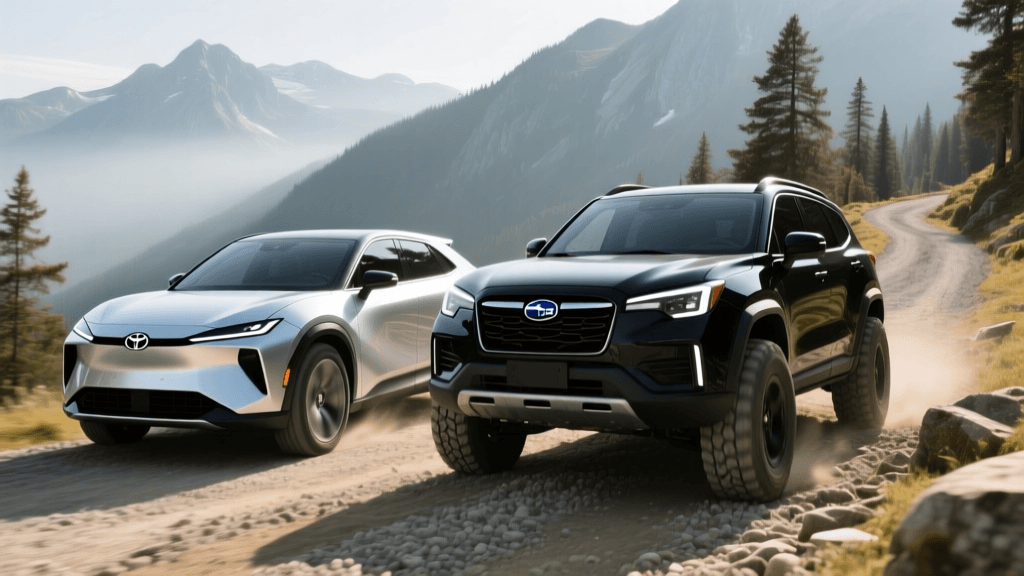
When Toyota and Subaru joined forces to develop a dedicated electric vehicle architecture, the result was the highly modular e-TNGA platform. This collaborative engineering effort birthed two nearly identical compact electric SUVs: the Toyota bZ4X and the Subaru Solterra. While they share the same underlying bones, battery pack, and interior cabin structure, distinct brand philosophies have led to crucial differences in tuning, standard equipment, and exterior styling.
For buyers cross-shopping these corporate cousins, the decision goes far beyond the badge on the grille. Do you prioritize the lowest possible entry price and maximum range, or do you need standard all-wheel drive and rugged outdoor utility? In this head-to-head showdown, we break down the performance, charging speeds, interior space, and total cost of ownership to help you decide which twin-platform EV SUV deserves a spot in your driveway.
Exterior Design and Dimensions
While the side profiles and rooflines of the bZ4X and Solterra are virtually indistinguishable, the front and rear fascias tell two different design stories. Toyota has opted for its signature "hammerhead" front end, giving the bZ4X a sleek, aerodynamic, and somewhat futuristic appearance. The body cladding is present but relatively subdued, aiming for a more crossover-oriented, urban aesthetic.
Subaru, on the other hand, leans heavily into its rugged, outdoorsy heritage. The Solterra features a prominent hexagonal grille, more aggressive wheel arch cladding, and a chunkier rear bumper. More importantly, the Solterra comes standard with robust roof rails on almost all trims—a massive advantage for buyers who plan to mount cargo boxes, kayaks, or bike racks. The Subaru also boasts a slightly higher ground clearance at 8.3 inches compared to the Toyota's 8.1 inches, giving it a marginal but noticeable advantage when navigating rutted dirt roads or deep snow.
Performance, Drivetrain, and Off-Road Capability
The most significant mechanical divergence between the two twins lies in their drivetrain configurations. Toyota offers the bZ4X in both Front-Wheel Drive (FWD) and All-Wheel Drive (AWD) layouts. The FWD model produces 201 horsepower, while the AWD variant bumps that up to 214 horsepower. Subaru, staying true to its brand identity, offers the Solterra exclusively with AWD across all trim levels, producing 214 horsepower and 248 lb-ft of torque.
Subaru's AWD system is not just a copy-paste of Toyota's. The Solterra is equipped with Subaru's renowned X-MODE, which includes specific settings for Snow/Dirt and Deep Snow/Mud, alongside Hill Descent Control. This software tuning gives the Subaru a distinct edge in low-traction scenarios, making it a genuinely capable light off-roader. Furthermore, automotive journalists have noted that Subaru's suspension tuning is slightly softer and more compliant over rough pavement, whereas Toyota has tuned the bZ4X to feel a bit firmer and more car-like on paved corners.
Battery, Range, and the Charging Reality
Both vehicles share the same 72.8 kWh lithium-ion battery pack (with roughly 71.4 kWh of usable capacity). Because the Toyota bZ4X offers a FWD option, it achieves the highest EPA-estimated range of the duo: up to 252 miles on the XLE FWD trim. However, if you opt for the AWD bZ4X or the AWD-only Solterra, the range drops to between 222 and 228 miles, depending on wheel size and trim level.
When it comes to DC fast charging, both vehicles have faced criticism for their relatively conservative charging curves. The AWD models for both brands can peak at around 150 kW, while the Toyota FWD model is capped at 100 kW. In real-world testing, charging from 10% to 80% takes roughly 30 to 40 minutes on a 350 kW charger. While not class-leading compared to the Hyundai Ioniq 5 or Kia EV6, it is adequate for most road trips. Both automakers have also rolled out over-the-air software updates to improve battery preconditioning, ensuring faster charging speeds in colder weather.
Interior Space, Comfort, and Technology
Step inside either vehicle, and the shared DNA is obvious. Both feature a unique "wing" dashboard design that integrates a high-mounted digital instrument cluster, allowing drivers to view their speed and range without taking their eyes far off the road. A 12.3-inch touchscreen infotainment system sits front and center, housing wireless Apple CarPlay and Android Auto.
One of the most praised interior features in both SUVs is the retention of physical knobs and buttons for the climate control system and drive modes—a refreshing change from the touchscreen-only menus found in competitors like the Tesla Model Y. Rear-seat passengers are treated to excellent comfort, with 37.6 inches of legroom and a flat floor. Cargo space is identical in both vehicles, offering 27.7 cubic feet behind the second row, which is competitive for the segment, though neither offers a front trunk (frunk).
Head-to-Head Specifications Table
| Feature | Toyota bZ4X | Subaru Solterra |
|---|---|---|
| Base MSRP (Approx.) | $43,070 (XLE FWD) | $44,995 (Premium AWD) |
| Drivetrain Options | FWD or AWD | AWD Only |
| Max EPA Range | 252 miles (FWD) | 228 miles (AWD) |
| Peak DC Fast Charging | 150 kW (AWD) / 100 kW (FWD) | 150 kW |
| Ground Clearance | 8.1 inches | 8.3 inches |
| Cargo Volume (Rear) | 27.7 cu-ft | 27.7 cu-ft |
| Standard Roof Rails | No (Dealer Accessory) | Yes (Most Trims) |
| Off-Road Software | Standard AWD Modes | X-MODE w/ Hill Descent |
| Battery Warranty | 8 Years / 100,000 Miles | 8 Years / 100,000 Miles |
Pricing, Warranties, and Total Cost of Ownership
The Toyota bZ4X holds a distinct advantage in entry-level pricing. By offering a FWD base model, Toyota provides a lower barrier to entry for buyers in warmer climates who do not need all-wheel drive. However, when comparing AWD to AWD, the pricing gap narrows significantly. Subaru tends to pack more standard features into its base trims, including heated front seats, a heated steering wheel, and the aforementioned roof rails, which can make the Solterra a better value proposition depending on your must-have accessories.
Both vehicles are eligible for the $7,500 federal EV tax credit, which can now be applied at the point of sale as a rebate, drastically reducing the out-of-pocket cost. Regarding depreciation, both brands historically hold their value well, though early EV market fluctuations mean long-term residual values are still stabilizing. Maintenance costs are nearly identical, limited mostly to tire rotations, cabin air filter replacements, and wiper fluid, making the total cost of ownership highly competitive against gas-powered compact SUVs.
The Final Verdict: Which Twin Should You Choose?
Choosing between the Toyota bZ4X and the Subaru Solterra ultimately comes down to your lifestyle and geographical needs. If you live in a region with mild winters, prioritize maximum driving range, and want the lowest possible starting price, the Toyota bZ4X FWD is the undisputed winner. It offers a sleeker design and excellent urban efficiency.
However, if you live in an area with harsh weather, frequently travel to the mountains, or need the utility of roof rails for outdoor gear, the Subaru Solterra is the superior choice. Its standard AWD, X-MODE off-road software, extra ground clearance, and rugged exterior cladding make it a true spiritual successor to the gas-powered Subaru Outback, adapted for the electric age. Both are comfortable, tech-forward, and practical, but Subaru's commitment to all-weather capability gives it a slight edge in overall versatility.