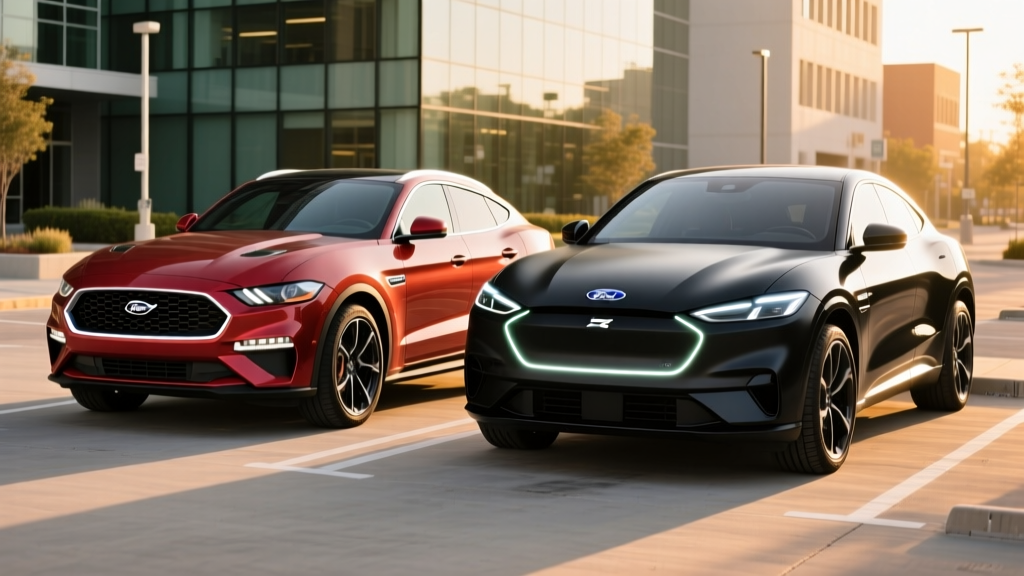
There is no vehicle officially named the "Mustang SUV" that runs on gasoline. The Ford Mustang Mach-E is the only SUV wearing the Mustang badge, and it is fully electric. If you're searching for a Mustang SUV non electric, you likely want a Ford crossover or SUV with Mustang-inspired styling or performance that doesn't require plugging in. Your closest matches in the 2026 Ford lineup are the Ford Bronco Sport, the redesigned Ford Edge, and the Ford Escape Hybrid — none of which carry the Mustang name but all of which offer familiar Ford SUV practicality without a charging cord.
Quick Answer
The Mustang badge only appears on the all-electric Mach-E and the two-door sports car. For a non-electric Ford SUV in 2026, look at the Bronco Sport (28 MPG combined, ~$31,000), the Ford Edge (24 MPG combined, ~$40,000), or the Escape Hybrid (40 MPG combined, ~$35,000). If you want Mustang performance in an SUV and can charge at home, the Mach-E delivers 250–320 miles of EPA range starting around $42,995.
Why the "Mustang SUV Non Electric" Search Leads to a Crossroads
Ford's decision to extend the Mustang nameplate to an electric SUV in 2021 caught many enthusiasts off guard. The traditional Mustang remains a two-door coupe and convertible powered by a turbocharged 2.3L EcoBoost (315 hp) or a 5.0L Coyote V8 (480 hp in the GT). Neither is an SUV. The Mach-E is the SUV, and it has zero tailpipe emissions.
This leaves buyers who associate "Mustang" with Ford performance and "SUV" with utility in an awkward position. The good news: Ford's 2026 SUV lineup has several strong non-electric options. The better news: understanding the actual cost difference between these gas/hybrid SUVs and the Mach-E can save you thousands over five years — or confirm that gas is still the smarter call for your situation.
2026 Ford SUV Lineup: Gas, Hybrid, and Electric Compared
Here's how the most relevant Ford SUVs stack up against each other and the Mustang Mach-E for the 2026 model year.
| Spec | Bronco Sport (Gas) | Escape Hybrid | Ford Edge (Gas) | Mustang Mach-E (EV) |
|---|---|---|---|---|
| Powertrain | 1.5L Turbo 3-cyl | 2.5L Hybrid | 2.0L Turbo 4-cyl | Dual Motor BEV |
| Horsepower | 181 hp | 210 hp (combined) | 250 hp | 365 hp (ERWD AWD) |
| 0–60 mph | ~8.6 sec | ~7.8 sec | ~6.9 sec | ~5.1 sec |
| EPA Fuel Economy / MPGe | 26 city / 30 hwy / 28 combined | 42 city / 38 hwy / 40 combined | 21 city / 28 hwy / 24 combined | 111 MPGe combined (ERWD AWD) |
| EPA Range | ~420 mi (14.2-gal tank) | ~540 mi (13.5-gal tank) | ~420 mi (17.5-gal tank) | 320 mi (ERWD AWD, est.) |
| Cargo Volume | 32.4 cu ft (rear up) | 34.4 cu ft (rear up) | 39.2 cu ft (rear up) | 29.7 cu ft (rear up) + 4.7 cu ft frunk |
| Starting MSRP | ~$31,000 | ~$35,000 | ~$40,000 | ~$42,995 |
| Federal Tax Credit (§30D) | None | None | None | Up to $7,500 (eligibility varies) |
Sources: fueleconomy.gov, Ford Motor Company 2026 spec sheets. Mach-E range is EPA-estimated for the Extended Range RWD/AWD configurations; real-world highway range typically drops to 260–280 miles. Tax credit eligibility per IRS §30D rules depends on MSRP caps, buyer income, battery sourcing, and point-of-sale transfer availability.
Real Cost of Ownership: Gas Ford SUV vs. Mustang Mach-E
Sticker price tells only part of the story. The Mach-E costs more upfront but can dramatically undercut gas SUVs on fuel and maintenance — if you can charge at home. Let's run a 5-year, 60,000-mile comparison.
| Cost Category (5 yr / 60k mi) | Bronco Sport (Gas) | Escape Hybrid | Mustang Mach-E (ERWD) |
|---|---|---|---|
| Purchase Price (base MSRP) | $31,000 | $35,000 | $42,995 |
| Fed. Tax Credit | $0 | $0 | Up to $7,500* |
| Effective Purchase | $31,000 | $35,000 | $35,495 |
| Fuel / Energy Cost | $7,714 (28 MPG, $3.60/gal) | $5,400 (40 MPG, $3.60/gal) | $3,086 (home L2, $0.14/kWh) |
| Maintenance (est.) | $3,200 | $2,800 | $1,400 |
| Insurance (avg. annual × 5) | $7,500 | $7,200 | $9,000 |
| 5-Year Total | $49,414 | $50,400 | $48,981 |
*Tax credit availability depends on current-year IRS rules including income caps ($150k single / $300k joint), MSRP cap ($55,000 for SUVs), critical-mineral and battery-component sourcing requirements. Confirm eligibility at irs.gov or with a tax professional. Fuel costs based on national averages as of early 2026; electricity based on U.S. residential average. Insurance premiums for EVs average 15–20% higher than comparable gas vehicles.
The Mach-E edges ahead on total cost over five years when you qualify for the full credit and charge primarily at home. Without the credit, or if you rely on public DC fast charging (averaging $0.35–$0.48/kWh nationally), the Escape Hybrid becomes the most economical choice by a wide margin.
When a Gas or Hybrid Ford SUV Is the Smarter Buy
The Mach-E is a compelling vehicle, but it isn't the right answer for every buyer. Here's a practical decision framework based on real ownership variables:
Which Ford SUV Fits Your Life?
- Choose the Escape Hybrid if: You drive 15,000+ miles/year, lack home charging access, want the lowest fuel cost without plugging in, or live in an apartment without a dedicated parking spot with outlet access. At 40 MPG combined, it costs just $0.09/mile in fuel.
- Choose the Bronco Sport if: You need rugged styling and light off-road capability (available 4×4 with terrain modes), your budget is under $35,000, and you drive under 12,000 miles/year where fuel savings from an EV don't offset the higher purchase price.
- Choose the Ford Edge if: You prioritize interior space (39.2 cu ft cargo), need a comfortable two-row family hauler, tow occasionally (up to 3,500 lbs with the Class II package), and prefer a proven turbocharged powertrain with no charging logistics.
- Choose the Mustang Mach-E if: You have reliable home Level 2 charging (a 240V outlet or hardwired charger), want 365 hp and a 5.1-second 0–60, qualify for the §30D tax credit, and your typical daily drive is under 200 miles. The Mach-E's 320-mile EPA range handles most commutes and road trips with planning.
Real-World EV Limitations That Gas SUVs Don't Have
EV ownership is genuinely excellent for many drivers, but the downsides are concrete and measurable — not theoretical. Here's what first-time EV buyers need to know:
| Common Belief | Reality (With Data) |
|---|---|
| "The Mach-E gets 320 miles of range." | EPA-estimated 320 miles (ERWD). Expect 260–280 miles at sustained 70+ mph highway speeds. In freezing temperatures (below 20°F), range drops 20–30%, meaning as low as ~225 miles on a full charge. (fueleconomy.gov) |
| "Charging is fast and easy." | The Mach-E peaks at ~150 kW on DC fast charging, adding 10–80% in roughly 45 minutes. That's usable for road trips but slower than competitors like the Hyundai Ioniq 5 (240 kW, ~18 min). Charging speed also tapers significantly above 80% SoC. Level 2 home charging (11.5 kW onboard) adds ~30 miles per hour of charging — a full overnight charge from 10% takes about 8 hours. |
| "I'll save money on maintenance." | True: no oil changes, no spark plugs, fewer brake replacements (regenerative braking saves pads). EV maintenance averages 30–50% less than gas vehicles. But tire wear can be 20–30% faster due to instant torque and higher curb weight (the Mach-E weighs ~4,800 lbs). |
| "EV insurance is the same as gas cars." | EV insurance premiums run 15–20% higher on average due to higher repair costs, specialized parts, and battery replacement risk. Budget $150–$200/month for the Mach-E vs. $120–$150/month for the Bronco Sport. |
| "The battery will need replacing." | Ford warranties the Mach-E battery for 8 years / 100,000 miles with a 70% capacity retention threshold. Industry data shows most NMC batteries retain 85–90% capacity at 100,000 miles. Full replacement, if needed out of warranty, runs $12,000–$18,000 — but this is rare within the first decade. |
Home Charging: The Make-or-Break Factor
Whether a non-electric SUV or the Mach-E is the better choice often comes down to one question: Can you charge at home?
If you own a home with a garage or driveway, installing a Level 2 (240V) charger typically costs $500–$1,500 for the hardware and $800–$2,500 for electrician labor, depending on panel capacity and run distance. Total: $1,300–$4,000. If your electrical panel needs an upgrade from 100A to 200A, add $1,500–$3,000.
Home charging at $0.14/kWh (national residential average) costs roughly $5.00 to add 100 miles of range to the Mach-E. Compare that to $12.86 for the Bronco Sport (28 MPG at $3.60/gal) or $9.00 for the Escape Hybrid (40 MPG). The per-mile energy savings are real, but they only materialize if you're charging at home.
If you live in an apartment, rely on street parking, or lack access to any charging within a reasonable distance, the Mach-E's advantages erode quickly. Public DC fast charging at $0.35–$0.48/kWh brings per-mile costs close to — or above — the Escape Hybrid's fuel cost. In that scenario, a hybrid is the pragmatic winner.
Frequently Asked Questions
Is there a gas-powered Mustang SUV?
No. The Mustang nameplate in Ford's SUV lineup belongs exclusively to the all-electric Mach-E. The traditional Mustang is a two-door sports car (coupe/convertible) with turbo-4 or V8 gas engines. If you want a Ford SUV without a plug, the Bronco Sport, Edge, and Escape are your options.
How does the Mustang Mach-E's performance compare to gas Ford SUVs?
The Mach-E with Extended Range AWD produces 365 hp and hits 0–60 mph in about 5.1 seconds — faster than any gas Ford SUV in the lineup. The GT trim pushes 563 hp and a 3.5-second 0–60. The Bronco Sport (181 hp, ~8.6 sec) and Edge (250 hp, ~6.9 sec) can't match the Mach-E's instant electric torque delivery.
Does the Mustang Mach-E qualify for the $7,500 federal tax credit?
It may, but eligibility is not guaranteed. Under current IRS §30D rules, the vehicle must meet MSRP caps ($55,000 for SUVs), buyer income limits ($150k single / $300k joint AGI), and battery critical-mineral and component sourcing thresholds that change annually. The credit can be transferred to the dealer at point of sale for an immediate price reduction. Always verify current eligibility before purchasing.
What's the cheapest non-electric Ford SUV in 2026?
The Ford Bronco Sport starts around $31,000, making it the most affordable non-electric Ford SUV. The Escape Hybrid starts near $35,000 but delivers 40 MPG combined, which can offset the higher sticker price within 2–3 years of average driving through fuel savings alone.
Should I wait for Ford's next-gen gas SUVs or buy now?
Ford continues to invest in both electrification and its ICE lineup. The 2026 Edge received updates, and the Bronco Sport remains competitive in the compact SUV segment. If your current vehicle is aging and your needs are clear, waiting rarely yields dramatic savings — model-year price increases typically outpace any new-feature gains. Buy based on your current driving pattern and charging access, not speculation about future releases.
The Bottom Line: Your Ford SUV Decision in 2026
The "Mustang SUV non electric" search reveals a real buyer need: Ford performance and SUV utility without electric-vehicle complexity. That need is well-served by the Escape Hybrid (efficiency champion at 40 MPG), the Bronco Sport (adventure-oriented value pick), and the Edge (spacious family hauler). None wear the Mustang badge, but each delivers honest, practical transportation with no charging logistics.
If you can charge at home and qualify for the federal tax credit, the Mach-E's total cost of ownership becomes competitive within 3–4 years, and its performance advantage is substantial. But if home charging isn't an option, if you regularly drive 300+ miles in a day through charging-sparse regions, or if you live in extreme cold climates where range loss is a weekly reality, a gas or hybrid Ford SUV remains the lower-friction, lower-risk choice. The data supports both paths — the right one depends on your garage, your commute, and your budget.