Quick Answer: Which VW SUV EV Should You Buy?
If you're shopping for a VW SUV EV in 2026, you have two main options: the ID.4 (compact crossover, EPA range up to 275 miles, starting around $39,735) and the ID.5 (coupe-styled variant, EPA range up to 263 miles, starting around $42,735). Both share VW's MEB platform with 77 kWh usable NMC batteries and peak DC fast charging at 175 kW. For most buyers, the ID.4 Pro S offers the best value — practical cargo space, strong range, and eligibility for up to $7,500 in federal tax credits (subject to IRS §30D income and sourcing requirements). If you prioritize style and don't need maximum rear headroom, the ID.5 GTX delivers sportier dynamics at a premium.
The 2026 VW Electric SUV Lineup: ID.4 and ID.5 at a Glance
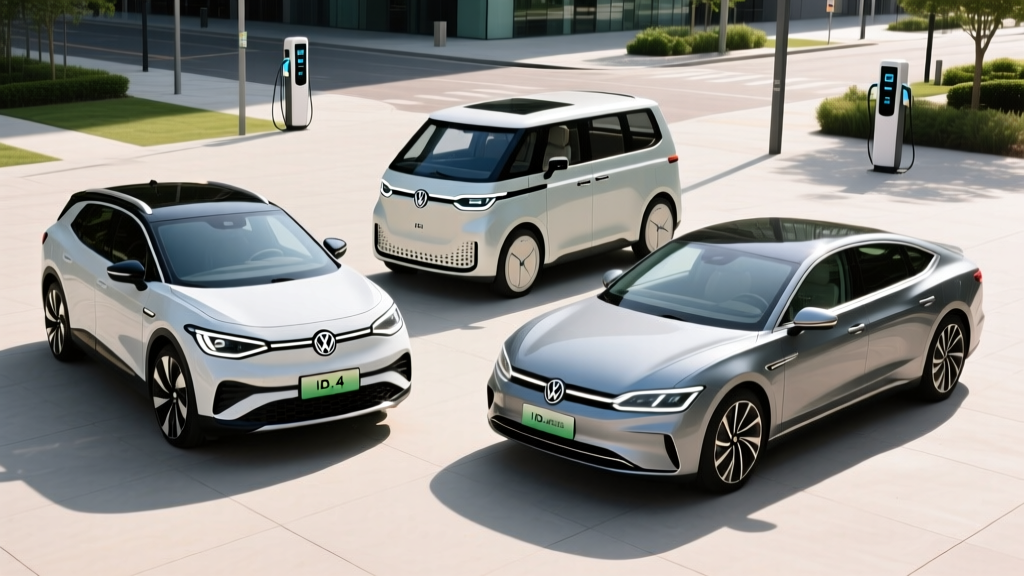
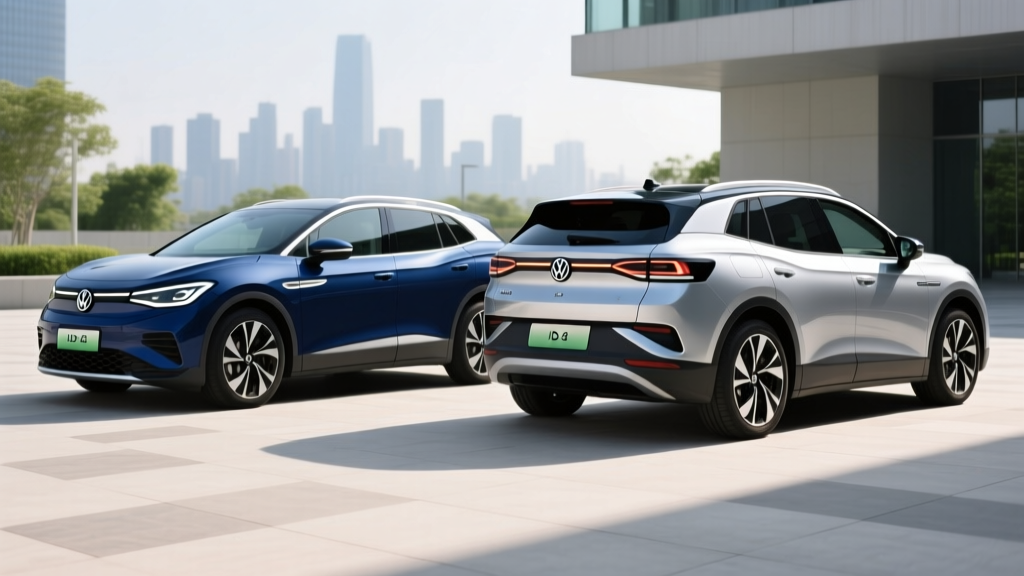
Volkswagen's electric SUV strategy in the US centers on two MEB-platform vehicles built at the Chattanooga, Tennessee plant. The ID.4 launched first and remains the volume seller, while the ID.5 arrived as a sportier, coupe-roof alternative. Both are genuine five-seat SUVs with competitive range, though they face stiff competition from the Hyundai Ioniq 5, Tesla Model Y, and Ford Mustang Mach-E.
Here's how the core specs stack up across the current lineup:
| Spec | ID.4 Pro (RWD) | ID.4 Pro S AWD | ID.5 Pro S AWD | ID.5 GTX |
|---|---|---|---|---|
| Base MSRP | $39,735 | $47,735 | $49,735 | $52,235 |
| EPA Range | 275 mi | 254 mi | 263 mi | 252 mi |
| Battery (usable) | 77 kWh NMC | 77 kWh NMC | 77 kWh NMC | 77 kWh NMC |
| Horsepower | 282 hp | 335 hp | 335 hp | 335 hp |
| 0-60 mph | 7.3 sec | 5.4 sec | 5.4 sec | 5.2 sec |
| Peak DC Charge | 175 kW | 175 kW | 175 kW | 175 kW |
| 10-80% DC Time | ~28 min | ~28 min | ~28 min | ~28 min |
| Level 2 Rate | 11 kW | 11 kW | 11 kW | 11 kW |
| MPGe (combined) | 104 MPGe | 95 MPGe | 98 MPGe | 93 MPGe |
| Cargo (rear seats up) | 30.3 cu ft | 30.3 cu ft | 26.7 cu ft | 26.7 cu ft |
| Drivetrain | RWD | AWD | AWD | AWD |
| Battery Warranty | 8 yr / 100k mi | 8 yr / 100k mi | 8 yr / 100k mi | 8 yr / 100k mi |
Sources: fueleconomy.gov, VW ID.4 specs, VW ID.5 specs
Real-World Range: What the EPA Sticker Doesn't Tell You
EPA vs. Reality for the ID.4 Pro (RWD, 275 mi EPA):
- Mixed suburban/highway (65-70 mph, mild weather): Expect ~250-265 miles
- Sustained highway (75+ mph): ~220-240 miles — aerodynamic drag hits SUVs harder
- Cold weather (below 32°F): ~180-210 miles — NMC chemistry loses 20-30% in deep cold without preconditioning
- Mountain driving with regen: Can approach EPA or slightly exceed on net-downhill routes
The ID.4's 77 kWh usable battery (82 kWh gross, with a 5 kWh buffer to protect longevity) uses nickel-manganese-cobalt (NMC) chemistry. NMC delivers strong energy density but is more temperature-sensitive than LFP (lithium iron phosphate). In real-world testing, VW's thermal management system performs adequately but doesn't match Tesla's heat-pump efficiency in extreme cold.
For the AWD models, subtract roughly 20-25 miles from the EPA figure in mixed driving. The dual-motor setup adds weight and rolling resistance. If your commute is under 50 miles round-trip and you have home charging, any trim covers daily needs easily. Road trippers should plan stops assuming 200-220 miles of usable range between charges to maintain a comfort buffer.
Charging Speeds and Infrastructure: NACS Transition and What It Means
VW's MEB platform charges at a peak rate of 175 kW on DC fast chargers. That's competitive but not class-leading — the Hyundai Ioniq 5 peaks at 240 kW, and the Tesla Model Y at roughly 250 kW. The key metric isn't peak kW but the charge curve: VW sustains roughly 150-165 kW from 10% to about 55% SoC, then tapers progressively. A 10-80% charge takes approximately 28 minutes at a 350 kW Electrify America station.
| Level | Power (kW) | Miles Added per Hour | Use Case |
|---|---|---|---|
| Level 1 (120V household) | ~1.4 kW | ~4-5 mi/hr | Emergency / overnight trickle |
| Level 2 (240V home) | 11 kW (max) | ~33-36 mi/hr | Daily home charging — full charge in ~7.5 hours |
| DC Fast Charge | 175 kW peak | ~200+ mi in 28 min (10-80%) | Road trips, public stations |
Connector note: 2026 VW EVs still ship with the CCS1 connector in North America. VW has committed to adopting NACS (Tesla's connector) in future models, but current ID.4 and ID.5 owners will need a CCS-to-NACS adapter to access Tesla Superchargers. VW includes a complimentary adapter for new buyers, and Electrify America's network (partially owned by VW) remains a reliable CCS-native option with over 1,000 US stations.
For home Level 2 charging, budget $800-$1,500 for a quality EVSE (like the ChargePoint Home Flex or Emporia Level 2) and $500-$2,000 for electrician installation, depending on whether your panel needs a 240V/50A circuit added. Total home charging setup typically runs $1,300-$3,500. A full 77 kWh charge at the national average of $0.16/kWh costs about $12.30 — roughly equivalent to 3.5 gallons of gas.
VW SUV EV vs. Gas SUV: The Real Cost Comparison
Let's compare the ID.4 Pro S AWD ($47,735) against a comparably equipped gas compact SUV — the 2026 VW Tiguan SE R-Line (~$36,500 MSRP, 25 MPG combined). This is the cross-shopping dilemma many VW loyalists face.
| Cost Factor (5 years / 75,000 mi) | ID.4 Pro S AWD | Tiguan SE R-Line (Gas) |
|---|---|---|
| Purchase Price | $47,735 | $36,500 |
| Federal Tax Credit (§30D) | Up to -$7,500* | $0 |
| Effective Purchase | ~$40,235 | $36,500 |
| Fuel / Electricity (75k mi) | ~$3,200 (home charging) | ~$9,000 (3,000 gal @ $3.00) |
| Maintenance (5 yr) | ~$1,200 (no oil, fewer brakes) | ~$3,800 (oil, filters, brakes) |
| Insurance (avg annual) | ~$2,100/yr ($10,500 total) | ~$1,700/yr ($8,500 total) |
| 5-Year Total Cost | ~$55,135 | ~$57,800 |
*Federal EV tax credit eligibility under IRS §30D depends on buyer income caps ($150k single / $300k joint), vehicle MSRP caps ($80k for SUVs), and battery critical-mineral sourcing requirements that change annually. The ID.4 is US-built (Chattanooga, TN), which helps with domestic assembly rules, but verify current-year sourcing compliance at irs.gov. Point-of-sale transfer is available through registered dealers.
The ID.4 closes the price gap substantially when the tax credit applies, and fuel savings widen the advantage over time. However, EV insurance premiums run 15-25% higher on average, and depreciation on EVs has been steeper than gas counterparts in recent years. If you don't qualify for the full credit (income phase-out or sourcing disqualification), the Tiguan wins on pure cost for the first five years.
Tax Credit Eligibility: What You Actually Need to Know
IRS §30D Requirements for the VW ID.4 / ID.5 (2026)
- Buyer income cap: AGI ≤ $150,000 (single) / $225,000 (head of household) / $300,000 (joint)
- Vehicle MSRP cap: ≤ $80,000 for SUVs (all ID.4/ID.5 trims qualify)
- Final assembly: Must be in North America — ID.4/ID.5 built in Chattanooga, TN ✓
- Critical minerals requirement: Percentage threshold increases annually; verify current-year compliance with dealer
- Battery component sourcing: Must meet escalating domestic-content thresholds
- Point-of-sale transfer: You can transfer the credit to the dealer for an immediate price reduction at purchase
The credit is not guaranteed at the full $7,500. Sourcing rules tighten each year, and some model-year batches may qualify for only $3,750 (meeting one of two requirements) or potentially $0 if sourcing falls short. Always confirm the exact credit amount with your dealer and cross-reference the IRS clean vehicle credit portal before signing paperwork.
Common Misconceptions About VW's Electric SUVs
| Myth | Fact |
|---|---|
| "The ID.4 battery will need replacing in 5 years" | VW warrants the battery for 8 years/100,000 miles at 70% capacity retention. Real-world NMC degradation averages 10-15% over 150,000 miles based on fleet data. |
| "You can't road trip in an EV" | With 175 kW DC charging and Electrify America's 1,000+ station network, a 500-mile trip takes ~1 hour of total charging time (2 stops, ~28 min each). |
| "EVs cost more to insure" | True on average — 15-25% higher premiums due to repair costs. But savings vary by state, insurer, and driving record. Get quotes before buying. |
| "AWD is always better" | The RWD ID.4 Pro delivers the best range (275 mi) and lowest price. AWD adds traction but costs $8,000 more and loses ~20 miles of range. Only essential if you regularly drive in snow or on unpaved roads. |
| "Home charging requires a panel upgrade" | Most homes with a 200A panel can support an 11 kW Level 2 charger on a 50A circuit. A panel upgrade ($2,000-$5,000) is only needed for older 100A panels or homes already near capacity. Have a licensed electrician assess your setup. |
Who Should Buy a VW SUV EV — and Who Shouldn't
Choose the VW ID.4 if:
- You want a mainstream-brand EV with a dealer network for service
- Your daily driving is under 150 miles and you can install Level 2 home charging
- You qualify for the federal tax credit (check income and sourcing rules)
- You value cargo practicality (30.3 cu ft) over coupe styling
- You prefer VW's understated interior design and driving dynamics
Choose the VW ID.5 if:
- You want sportier styling and don't need maximum rear headroom or cargo space
- You're willing to pay $2,000-$5,000 more for design differentiation
- GTX trim appeals to you for the slightly quicker 0-60 (5.2 sec)
Look elsewhere if:
- You need 300+ miles of range — consider the Tesla Model Y Long Range (320 mi EPA) or Hyundai Ioniq 5 (305 mi)
- You frequently tow — the ID.4 maxes out at 2,700 lbs; the Ford Mach-E and Rivian R1S tow more
- You lack home charging access and your area has sparse public DC infrastructure — a PHEV like the Toyota RAV4 Prime may be more practical
- You need three rows — the ID.4/ID.5 are strictly five-seat SUVs
Ownership Practicalities: Software, Service, and Long-Term Outlook
VW's ID. software (version 4.0 in 2026 models) has improved significantly over the early 3.x releases that drew criticism for laggy infotainment and capacitive touch sliders. The 12.9-inch center screen is responsive, and wireless Apple CarPlay/Android Auto works reliably. However, VW's ADAS suite (Travel Assist) remains a basic SAE Level 2 system — it provides adaptive cruise and lane centering, but requires constant driver supervision. It does not approach Tesla's FSD or GM's Super Cruise in highway capability.
Service is handled through VW's dealer network. EV maintenance is minimal: cabin air filter replacement (~$80), brake fluid check every 2 years, tire rotation every 10,000 miles. Regenerative braking significantly extends pad life — expect brake service only after 80,000+ miles. VW offers 2 years of complimentary Electrify America charging (30-minute sessions) with new ID.4/ID.5 purchases, which helps offset early road-trip costs.
Battery replacement, if ever needed outside warranty, runs approximately $15,000-$20,000 for the 77 kWh pack — a worst-case scenario that the 8-year/100,000-mile warranty is designed to prevent. Third-party battery refurbishment options are emerging but not yet widespread for MEB-platform vehicles.
Frequently Asked Questions
Is the VW ID.4 eligible for the full $7,500 federal tax credit?
The ID.4 is assembled in Chattanooga, TN, meeting the North American final assembly requirement. However, the full $7,500 credit depends on meeting both critical-mineral and battery-component sourcing thresholds, which tighten annually. As of early 2026, the ID.4 has generally qualified for the full credit, but verify with your dealer and the IRS clean vehicle credit page before purchasing. Income caps ($150k single / $300k joint) also apply.
How does the VW ID.4 compare to the Tesla Model Y?
The Model Y Long Range offers more EPA range (320 mi vs. 275 mi), faster DC charging (~250 kW peak vs. 175 kW), access to the Supercharger network natively, and more cargo space. The ID.4 counters with a lower starting price (after tax credit), a more traditional dealership service experience, a quieter interior, and a less polarizing design. If Supercharger access and maximum range are priorities, the Model Y wins. If you prefer a mainstream brand with competitive pricing, the ID.4 is strong.
Can I charge a VW ID.4 at Tesla Superchargers?
Current ID.4 and ID.5 models use the CCS1 connector. VW provides a CCS-to-NACS adapter for new buyers, enabling access to Tesla Superchargers that have been opened to non-Tesla vehicles. Charging speed is limited to the ID.4's 175 kW peak regardless of the station's capability. The adapter works reliably but adds a step to the charging process.
What happens to the battery in cold weather?
NMC batteries lose 20-30% of usable range in temperatures below 32°F, especially on short trips where the cabin heater runs constantly. The ID.4 includes a heat pump (standard on most trims), which improves cold-weather efficiency compared to resistive heating. Preconditioning the battery while plugged in — using the VW app to warm the car before departure — recovers significant range. Expect ~180-210 real-world miles from a full charge in sustained sub-freezing conditions.
Is the ID.4 good for road trips?
Yes, with planning. A 175 kW peak charge rate means 10-80% in about 28 minutes at a capable DC station. Combined with Electrify America's network (complimentary for 2 years), most interstate routes are well-covered. Plan stops every 180-200 miles for comfort and to maintain a range buffer. The ID.4 is comfortable at highway speeds with supportive seats and low cabin noise. The main limitation is that 175 kW is slower than competitors like the Ioniq 5 or Model Y, adding 5-10 minutes per stop on long trips.
Should I get the RWD or AWD version?
The RWD ID.4 Pro delivers the best range (275 mi EPA) and the lowest price ($39,735). AWD adds a front motor for 335 hp total, a 5.4-second 0-60 time, and better traction in rain and snow — but costs $8,000 more and sacrifices about 20 miles of range. If you live in a mild climate and don't regularly drive on snow or loose surfaces, the RWD is the smarter buy. AWD is worth it for mountain driving, northern winters, or if you simply want the extra acceleration.