Introduction: The EV Crossover Heavyweights
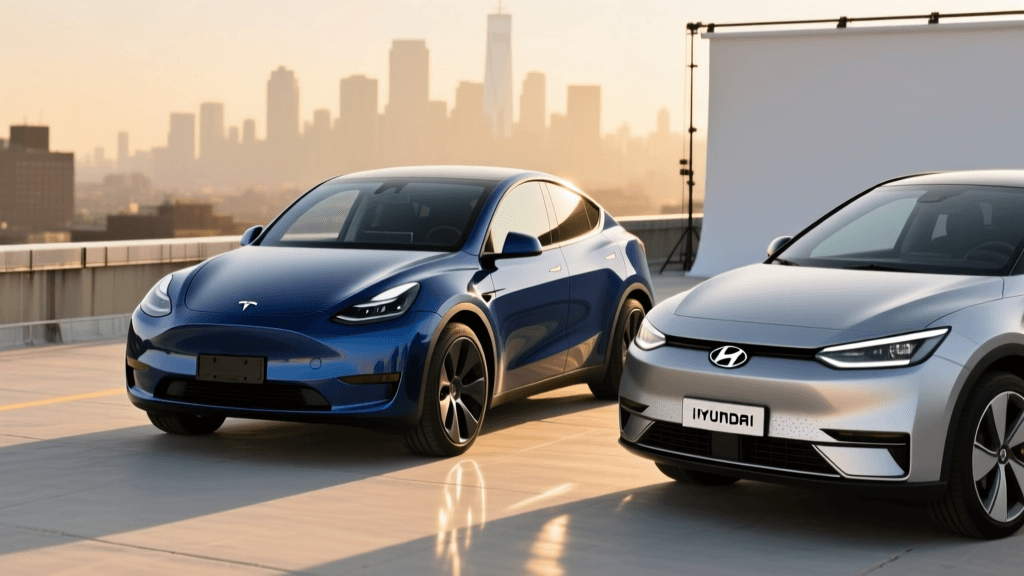
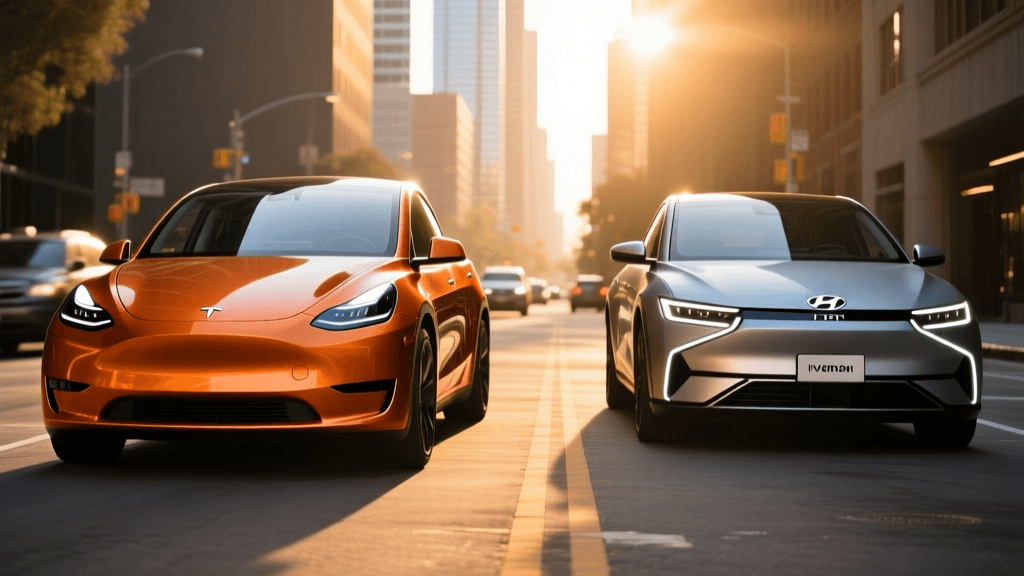
Choosing between the Tesla Model Y and the Hyundai Ioniq 5 is the most common dilemma for modern EV shoppers. Both vehicles dominate the electric crossover segment, offering compelling blends of performance, technology, and practicality. However, they approach the EV experience from fundamentally different philosophies. Tesla relies on its unmatched Supercharger network and software integration, while Hyundai leverages its advanced 800-volt E-GMP architecture for ultra-fast charging and retro-futuristic interior versatility.
This comprehensive how-to guide will walk you through the exact steps to evaluate these two industry leaders. By comparing range, charging infrastructure, interior utility, and total cost of ownership, you will learn how to make a data-driven decision tailored to your specific lifestyle and budget.
Step 1: Evaluate Your Real-World Range Needs
The first step in choosing your EV is calculating your actual range requirements based on your weekly driving habits. The U.S. Department of Energy's Alternative Fuels Data Center recommends factoring in climate, highway speeds, and payload, as EPA estimates can vary in real-world conditions.
Tesla Model Y Range
The Tesla Model Y Long Range AWD features a 75 kWh (usable) battery pack and achieves an EPA-estimated 330 miles of range. Tesla's highly efficient heat pump and aerodynamic profile allow it to extract maximum distance from every kilowatt-hour. If your weekly commute exceeds 250 miles and you prefer a larger buffer for unexpected detours, the Model Y provides a distinct advantage.
Hyundai Ioniq 5 Range
The Hyundai Ioniq 5 Long Range AWD utilizes a slightly larger 77.4 kWh battery but achieves an EPA-estimated 290 miles (the RWD version pushes up to 303 miles). The Ioniq 5's boxier, retro design creates slightly more aerodynamic drag at highway speeds compared to the teardrop-shaped Model Y. However, for 95% of daily drivers who travel less than 40 miles a day, the Ioniq 5's range is more than sufficient, especially when paired with its superior charging speeds.
Step 2: Compare Charging Speeds and Network Access
Range is only half the road-trip equation; how quickly you can replenish that range is equally critical. Here is how to evaluate the charging ecosystems of both vehicles.
Tesla's Supercharger Advantage
Tesla's proprietary Supercharger network remains the gold standard for reliability and geographic coverage. The Model Y Long Range peaks at 250 kW on a V3 Supercharger, allowing a 10% to 80% charge in roughly 25 to 30 minutes. The plug-and-play convenience—where the car communicates with the stall automatically without requiring an app or credit card swipe—is a massive friction-reducer for frequent road trippers.
Hyundai's 800-Volt Architecture
Hyundai counters with its groundbreaking 800-volt E-GMP platform. When connected to a 350 kW DC fast charger, the Ioniq 5 can accept up to 238 kW, but its charging curve is remarkably flat. This means the Ioniq 5 can charge from 10% to 80% in just 18 minutes under optimal conditions, significantly outpacing the Model Y's 400-volt architecture. Furthermore, Hyundai has committed to adopting the North American Charging Standard (NACS) for future models, and current Ioniq 5 owners will soon have access to Tesla's Supercharger network via approved adapters, effectively neutralizing Tesla's exclusive network advantage.
Step 3: Analyze Interior Space and Practicality
To determine which crossover fits your physical cargo needs, you must look beyond the spec sheet and evaluate how the interior space is configured.
- Passenger Comfort: The Ioniq 5 boasts a massive 118.1-inch wheelbase, translating to exceptional rear legroom (41.7 inches) and a completely flat floor. Its sliding center console and reclining rear seats make it superior for camping or lounging.
- Cargo Capacity: The Model Y wins on pure volume. It offers 30 cubic feet behind the rear seats and 76 cubic feet with the seats folded, compared to the Ioniq 5's 27 and 59 cubic feet, respectively.
- Front Trunk (Frunk): The Model Y provides a usable 4.1-cubic-foot frunk, perfect for storing charging cables or a small gym bag. The Ioniq 5's frunk is a shallow 2.0-cubic-foot compartment, largely acting as a secondary glovebox.
Actionable Advice: If you regularly haul large items like bicycles, furniture, or multiple large suitcases, the Model Y's traditional SUV roofline and larger cargo area make it the better tool. If you prioritize passenger comfort, rear-seat legroom, and a lounge-like cabin, the Ioniq 5 is the clear winner.
Step 4: Calculate Total Cost of Ownership and Value
Evaluating value requires looking past the sticker price and calculating the Total Cost of Ownership (TCO), including tax incentives, depreciation, and maintenance.
Federal Tax Credits
As of 2024, both vehicles qualify for the $7,500 Federal Clean Vehicle Credit, provided you meet the income and MSRP caps outlined by the Internal Revenue Service. Tesla achieves this through its Fremont and Austin factories, while Hyundai qualifies thanks to its newly operational Metaplant in Savannah, Georgia. This parity in tax incentives means the value comparison comes down to trim pricing and standard equipment.
Pricing and Standard Features
The Ioniq 5 generally offers a lower entry price and includes more standard luxury features, such as ventilated front seats, a premium Bose audio system, and vehicle-to-load (V2L) capability, which allows you to power external electronics directly from the car's battery. The Model Y requires you to pay extra for premium paint colors and relies on a minimalist interior where almost all controls, including the glovebox and windshield wipers, are buried in the central touchscreen.
Actionable Advice: Use the U.S. Department of Energy's Vehicle Cost Calculator to input your local electricity rates and annual mileage. You will find that while both vehicles offer massive fuel savings over gas-powered equivalents, the Ioniq 5 often presents a higher value proposition in the mid-tier trims due to its generous standard equipment list.
Head-to-Head Spec Table
| Feature | Tesla Model Y (Long Range AWD) | Hyundai Ioniq 5 (Long Range AWD) |
|---|---|---|
| EPA Estimated Range | 330 miles | 290 miles |
| Battery Capacity (Usable) | ~75 kWh | 77.4 kWh |
| Peak DC Fast Charging | 250 kW (400V Architecture) | 238 kW (800V Architecture) |
| 10-80% Charge Time (Optimal) | ~27 minutes | ~18 minutes |
| Cargo Volume (Rear Seats Up) | 30.2 cu ft | 27.2 cu ft |
| Rear Legroom | 41.6 inches | 41.7 inches |
| V2L (Vehicle-to-Load) | No | Yes (Standard) |
| Federal Tax Credit Eligibility | Yes ($7,500) | Yes ($7,500) |
Final Verdict: How to Make Your Choice
The decision between the Tesla Model Y and the Hyundai Ioniq 5 ultimately hinges on your specific priorities as a driver.
Choose the Tesla Model Y if:
- You frequently take long road trips and want the absolute lowest-stress charging experience via the Supercharger network.
- Maximum cargo capacity and a larger frunk are non-negotiable for your family's lifestyle.
- You prefer a minimalist interior, industry-leading software, and over-the-air updates that continuously improve the vehicle.
Choose the Hyundai Ioniq 5 if:
- You prioritize ultra-fast 18-minute DC charging sessions and cutting-edge 800V battery architecture.
- You want a more spacious, lounge-like cabin with physical buttons, a sliding console, and superior rear-seat comfort.
- Value is a primary concern, and you want luxury features like V2L capability and ventilated seats included without upgrading to top-tier trims.
By following this step-by-step evaluation of your range needs, charging habits, and spatial requirements, you can confidently select the electric crossover that will serve you best for the next decade of driving.