Introduction: Bespoke EV vs. Adapted ICE Architecture
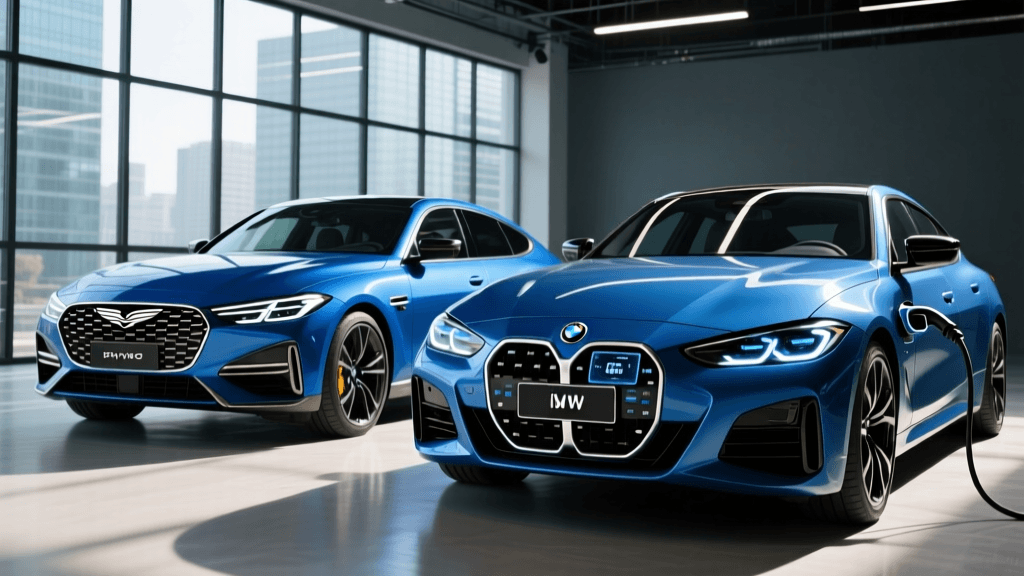
When shopping for a luxury compact electric vehicle, the underlying architecture dictates much of the technological experience. The Genesis GV60 and the BMW i4 represent two fundamentally different philosophies in modern EV engineering. The GV60 is built on the Hyundai Motor Group’s dedicated Electric-Global Modular Platform (E-GMP), designed from the ground up for battery-electric propulsion. In contrast, the BMW i4 utilizes the brand’s flexible CLAR architecture, which was engineered to accommodate internal combustion engines, plug-in hybrids, and battery-electric powertrains on the same assembly line.
This architectural divergence creates a fascinating technology deep dive. While the GV60 leverages its bespoke skateboard chassis to maximize interior packaging and introduce ultra-fast charging capabilities, the i4 relies on BMW’s decades of software refinement to deliver a seamless, driver-focused digital ecosystem. For tech-savvy buyers, choosing between these two luxury compact EVs requires looking past the badge and examining the silicon, sensors, and voltage systems underneath. According to Car and Driver's comprehensive testing of the GV60, the E-GMP platform provides a distinct advantage in charging speed and cabin innovation, while the i4 remains a benchmark for software integration.
Powertrain and Charging Architecture: 800V vs 400V
The most significant technological differentiator between these two vehicles is their electrical architecture. The Genesis GV60 utilizes an 800-volt electrical system. This high-voltage setup allows for thinner, lighter wiring harnesses and, more importantly, drastically faster DC fast-charging speeds. When connected to a 350-kW charger, the GV60 can replenish its battery from 10% to 80% in approximately 18 minutes. Furthermore, the E-GMP platform natively supports Vehicle-to-Load (V2L) technology, allowing the GV60 to act as a mobile power bank, outputting up to 3.6 kW of power to run camping equipment, power tools, or even home appliances during an outage via an interior or exterior adapter.
Conversely, the BMW i4 operates on a traditional 400-volt architecture. While BMW’s thermal management system and battery preconditioning are highly sophisticated, the physical limitations of 400V mean the i4 peaks at around 200 kW on a DC fast charger. A 10% to 80% charge takes roughly 31 minutes under optimal conditions. The i4 also lacks native V2L capabilities, meaning it cannot easily power external devices. For buyers who frequently embark on long road trips and prioritize minimal charging downtime, the GV60’s 800V architecture is a decisive technological victory.
Digital Cockpit and Infotainment: Crystal Sphere vs. iDrive 8
Stepping inside the cabin reveals two distinct approaches to digital luxury. The Genesis GV60 features a minimalist, lounge-like environment dominated by the 'Crystal Sphere' shifter. When the vehicle is off, this illuminated glass orb rotates to reveal a flat, decorative surface. When the car is started, it rotates again to reveal the rotary gear selector. Flanking the driver is a dual-screen setup featuring two 12.3-inch displays merged into a single curved glass panel. The infotainment system supports wireless Apple CarPlay and Android Auto, and the UI is highly customizable, though it can feel slightly menu-heavy compared to its German rival.
The BMW i4, as noted in Car and Driver's review of the BMW i4, utilizes the massive BMW Curved Display, which combines a 12.3-inch digital instrument cluster with a 14.9-inch central touchscreen. This hardware runs BMW’s iDrive 8 (and the newer 8.5 in recent model years). iDrive is widely considered one of the most intuitive and responsive infotainment systems on the market, featuring the 'QuickSelect' menu structure that reduces the number of taps needed to adjust climate or media settings. Furthermore, the i4 retains a physical iDrive rotary controller on the center console, a massive technological boon for ergonomics and usability while driving, an area where the touchscreen-reliant GV60 falls slightly behind.
Biometrics, Access, and Connectivity
Genesis has pushed the boundaries of vehicle access with the GV60’s 'Face Connect' technology. Using a near-infrared camera mounted on the B-pillar, the GV60 can recognize the driver’s face, unlock the doors, and automatically adjust the seat, steering wheel, and mirror presets before the driver even touches the handle. It also supports Digital Key via NFC and Bluetooth Low Energy (BLE), allowing users to lock, unlock, and start the car using their smartphone or smartwatch.
BMW counters with 'Digital Key Plus', which utilizes Ultra-Wideband (UWB) technology. UWB is vastly superior to standard Bluetooth for digital keys because it prevents relay attacks (a common security vulnerability) and offers precise spatial awareness. The i4 knows exactly which door you are approaching and unlocks seamlessly without requiring the user to take their phone out of their pocket. While Genesis offers flashy biometric scanning, BMW’s UWB implementation is a more robust, secure, and frictionless daily-use technology.
Advanced Driver Assistance Systems (ADAS)
Both vehicles offer top-tier ADAS suites, but their execution varies. The GV60 employs Highway Driving Assist 2 (HDA2), which combines adaptive cruise control with lane centering. HDA2 is incredibly smooth and features machine learning that mimics the driver's habits. It also includes Remote Smart Parking Assist (RSPA), allowing the car to park itself in tight spaces while the driver stands outside using the key fob.
BMW’s Driving Assistant Professional package includes Active Cruise Control with Stop & Go and the Steering and Lane Control Assistant. BMW’s system is renowned for its natural braking and acceleration profiles, feeling less robotic than many competitors. Furthermore, the i4’s surround-view cameras and augmented reality navigation overlays are rendered with higher graphical fidelity on the iDrive screen, making complex intersections easier to navigate. Safety evaluations by the Insurance Institute for Highway Safety (IIHS) consistently highlight the effectiveness of Genesis's sensor suite, but BMW's integration of those alerts into the driver's line of sight via the head-up display remains a benchmark for the industry.
Audio and Sensory Technology
Luxury is as much about what you hear as what you see. The Genesis GV60 offers an available Bang & Olufsen 3D premium audio system with 17 speakers. More impressively, it features Active Noise Control-Road (ANC-R). This technology uses accelerometers on the suspension to detect road vibrations and emits an inverse sound wave through the speakers to cancel out low-frequency road noise, resulting in an exceptionally quiet cabin.
The BMW i4 offers an available Harman Kardon surround sound system with up to 17 speakers and a digital amplifier. While it lacks the active road-noise cancellation of the Genesis, BMW utilizes its IconicSounds Electric feature, developed in collaboration with film composer Hans Zimmer. This system generates dynamic, synthetic engine notes that respond to throttle input and regenerative braking, providing an emotional, auditory connection to the powertrain that the silent GV60 lacks.
Spec-by-Spec Technology Comparison
| Technology Feature | Genesis GV60 | BMW i4 |
|---|---|---|
| Platform Architecture | E-GMP (Dedicated EV Skateboard) | CLAR (Flexible ICE/EV) |
| Electrical System | 800-Volt | 400-Volt |
| Peak DC Fast Charging | ~250 kW (10-80% in 18 mins) | ~200 kW (10-80% in 31 mins) |
| Vehicle-to-Load (V2L) | Yes (Up to 3.6 kW) | No |
| Infotainment OS | Genesis Infotainment System | BMW iDrive 8 / 8.5 |
| Digital Key Tech | NFC / BLE + Face Connect Biometrics | Ultra-Wideband (UWB) Digital Key Plus |
| Active Noise Cancellation | Yes (ANC-Road) | No (Uses IconicSounds EV audio) |
Verdict: Which Tech Suite Wins?
The technological victor depends entirely on your definition of automotive innovation. If you view technology through the lens of hardware capability and EV-specific utility, the Genesis GV60 is the clear winner. Its 800V architecture, V2L capabilities, and bespoke EV packaging represent the cutting edge of electric vehicle engineering. It is the superior choice for tech enthusiasts who want fast charging and futuristic party tricks like the Crystal Sphere and Face Connect.
However, if you define technology by software refinement, ergonomic integration, and daily usability, the BMW i4 takes the crown. The iDrive 8 system, combined with the physical rotary controller, UWB Digital Key Plus, and masterful ADAS tuning, proves that BMW’s software engineers have perfected the digital driving experience. The i4 is the ideal choice for buyers who want a luxury EV that seamlessly integrates into their digital life without a steep learning curve.