Introduction: The Electric Work Truck Paradigm
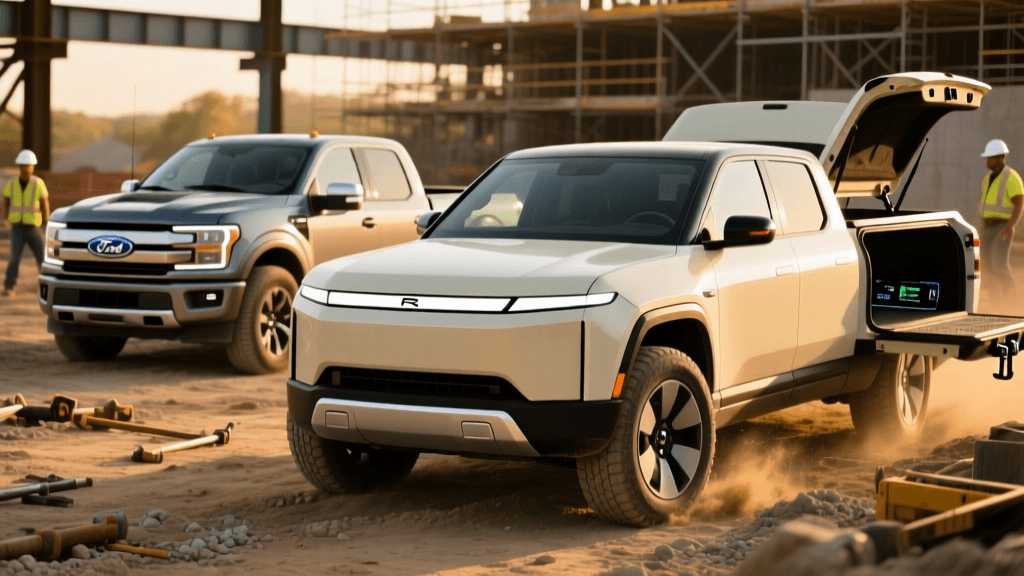
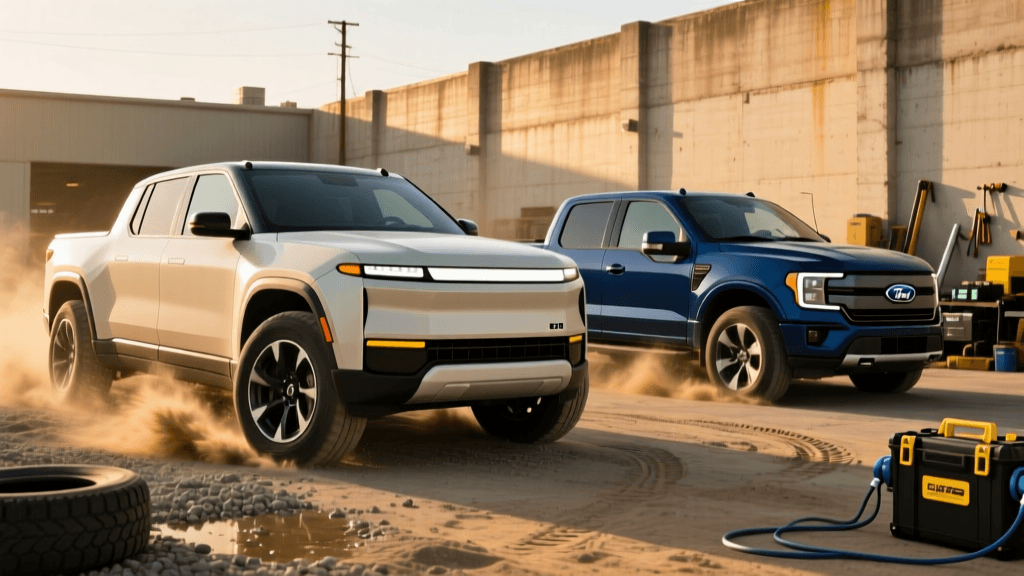
The transition from internal combustion engine (ICE) trucks to electric vehicles (EVs) in commercial fleets is no longer a futuristic concept; it is a data-driven reality. For contractors, fleet managers, and independent tradespeople, the decision between the Ford F-150 Lightning and the Rivian R1T hinges on hard metrics: payload capacity, bed geometry, power export capabilities, and total cost of ownership (TCO). While both vehicles offer staggering torque and instant acceleration, their approaches to 'work' are fundamentally different. The F-150 Lightning is engineered as a direct, no-compromise replacement for the traditional commercial work truck, whereas the Rivian R1T blends lifestyle adventure with light-duty commercial utility. In this head-to-head comparison, we strip away the marketing hype and analyze the raw data to determine which EV pickup truly earns its keep on the jobsite.
Hard Data: Towing, Payload, and Bed Geometry
When evaluating a work truck, the bed and the hitch are the most critical components. A truck that cannot carry standard building materials or tow a heavy equipment trailer is fundamentally compromised for commercial use. Below is the core specification data comparing the top-tier work configurations of both vehicles.
| Metric | Ford F-150 Lightning (Ext. Range) | Rivian R1T (Dual-Motor Max Pack) |
|---|---|---|
| Max Towing Capacity | 10,000 lbs | 11,000 lbs |
| Max Payload Capacity | 2,000 lbs | 1,760 lbs |
| Bed Length | 67.1 inches (5.5 ft) | 54.0 inches (4.5 ft) |
| Bed Width (Between Wheelhouses) | 50.6 inches | 51.0 inches |
| Lockable Weatherproof Storage | Mega Power Frunk (14.1 cu ft) | Gear Tunnel (11.7 cu ft) + Frunk (11.0 cu ft) |
| Max Power Export | 9.6 kW (Pro Power Onboard) | 11 kW (Camp Kitchen/Outlets) |
Ford F-150 Lightning: The Traditional Workhorse Metric
According to Ford's official F-150 Lightning specifications, the 5.5-foot bed is a critical advantage for traditional trades. It is long enough to accommodate standard 4x8-foot sheets of drywall or plywood with the tailgate down or utilizing a bed extender. The 2,000-pound payload capacity in the Extended Range model ensures that heavy loads of gravel, tools, or materials will not max out the truck's gross vehicle weight rating (GVWR) prematurely. Furthermore, the 50.6-inch width between the wheelhouses allows for standard pallets to be loaded, albeit tightly, maintaining compatibility with existing commercial supply chains.
Rivian R1T: The Adventure-Work Hybrid
The Rivian R1T boasts a superior maximum towing capacity of 11,000 pounds, making it technically more capable of pulling heavy dual-axle equipment trailers. However, as detailed in Rivian's R1T commercial and adventure specifications, the 4.5-foot bed is a significant limitation for traditional construction. You cannot lay a standard sheet of plywood flat in the bed. Instead, the R1T relies on its patented Gear Tunnel—a massive 11.7 cubic-foot lockable, weatherproof pass-through behind the cabin. For electricians, plumbers, or HVAC technicians who need secure, separated storage for expensive diagnostic tools and copper piping, the Gear Tunnel is a brilliant innovation. But for carpenters and landscapers, the short bed is a dealbreaker.
Jobsite Power Export: Pro Power Onboard vs. Rivian Zones
One of the most compelling reasons to adopt an electric work truck is the ability to use the battery pack as a mobile generator, eliminating the need for loud, fuel-dependent portable generators.
- Ford Pro Power Onboard (9.6 kW): Ford offers up to 9.6 kW of exportable power. This system features multiple 120V outlets in the bed and cabin, plus a 240V outlet capable of running heavy-duty equipment like MIG welders, air compressors, and table saws simultaneously. The system is integrated with the truck's telematics, allowing fleet managers to monitor power usage and set limits to ensure the truck retains enough charge to return to the depot.
- Rivian Power Export (11 kW total): Rivian offers a slightly higher total system capacity, but it is distributed differently. The R1T features 110V outlets in the bed, Gear Tunnel, and cabin. While excellent for charging laptops, running lights, or powering the optional Camp Kitchen, it lacks the dedicated, heavy-duty 240V bed integration that Ford offers specifically for industrial tooling. Rivian's system leans heavily toward the 'lifestyle' and 'camping' use case rather than the 'heavy construction' use case.
Range Degradation Under Load: The Towing Reality
Any data-driven EV analysis must address the physics of towing. Moving 10,000 pounds of steel and wood requires immense energy, and EV range degradation is severe compared to unladen driving. Independent testing consistently shows that both the F-150 Lightning and the R1T lose approximately 40% to 50% of their EPA-estimated range when towing at or near their maximum capacities.
If you are towing a 7,000-pound excavator on a trailer, expect the F-150 Lightning Extended Range (320 miles EPA) to drop to roughly 160-180 miles of real-world range. The Rivian R1T Max Pack (352 miles EPA) will similarly drop to around 180-200 miles. For fleet managers, this data point is crucial: electric work trucks are currently best suited for regional towing and local jobsites where the truck returns to a depot charger nightly. Long-haul, cross-country towing remains the domain of diesel until public DC fast-charging infrastructure for truck-trailer combinations evolves.
Charging Infrastructure and Fleet Downtime
Downtime is the enemy of profitability. When comparing charging architectures, both vehicles have made significant strides, but fleet deployment requires careful planning. The U.S. Department of Energy's Alternative Fuels Data Center emphasizes that depot charging is the most cost-effective method for commercial EV fleets. Both Ford and Rivian support Level 2 AC charging (up to 19.2 kW for Ford and 11.5 kW for Rivian), meaning a fully depleted battery can be replenished overnight at the fleet yard.
For mid-day top-ups on the road, the F-150 Lightning's transition to the North American Charging Standard (NACS) in newer models, combined with access to Tesla Superchargers via adapters, provides a distinct advantage in rural or highway-adjacent jobsites where CCS chargers are sparse. Rivian has also secured access to the Tesla Supercharger network, but the physical footprint of the Supercharger stalls often makes it difficult to pull in with a truck and a trailer attached, requiring fleet drivers to detach trailers before charging—a significant loss of billable time.
Total Cost of Ownership (TCO) for Fleets
The initial purchase price of an EV truck is higher than its ICE counterpart, but the data overwhelmingly supports a lower TCO over a 5-year or 100,000-mile commercial lifecycle. Consider the following operational savings:
- Fuel vs. Electricity: At a national average of $4.00 per gallon of premium fuel (required for high-torque ICE trucks) and a commercial electricity rate of $0.14 per kWh, the per-mile energy cost drops from roughly $0.35/mile (ICE) to $0.07/mile (EV).
- Maintenance: Electric drivetrains eliminate oil changes, transmission fluid flushes, spark plugs, and exhaust system repairs. Regenerative braking drastically extends the life of friction brake pads, often pushing replacement intervals past 100,000 miles.
- Idling Costs: Traditional work trucks idle for hours to run PTO (Power Take-Off) systems or climate control. The Lightning and R1T can run climate control and power tools for days on a single charge with zero localized emissions and minimal battery degradation compared to ICE idling wear.
The Final Verdict: Which Data Profile Wins?
The choice between the Ford F-150 Lightning and the Rivian R1T is not about which truck is universally 'better,' but which data profile aligns with your specific commercial workflow.
Choose the Ford F-150 Lightning if: Your business involves traditional construction, landscaping, or contracting. The 5.5-foot bed, 2,000-pound payload, and 9.6 kW Pro Power Onboard with 240V bed outlets make it a seamless, drop-in replacement for your existing gas-powered fleet. It handles standard building materials and heavy job-site tools without compromise.
Choose the Rivian R1T if: You operate a specialized, tech-forward fleet, such as solar panel installation, high-end landscaping design, or IT/telecom field services. The Gear Tunnel provides unparalleled secure storage for sensitive equipment, the 11,000-pound towing capacity is excellent for niche trailers, and the premium cabin serves as a comfortable mobile office. However, be prepared to adapt your workflow around the shorter 4.5-foot bed.