Introduction: The Electric Sports Sedan Benchmark
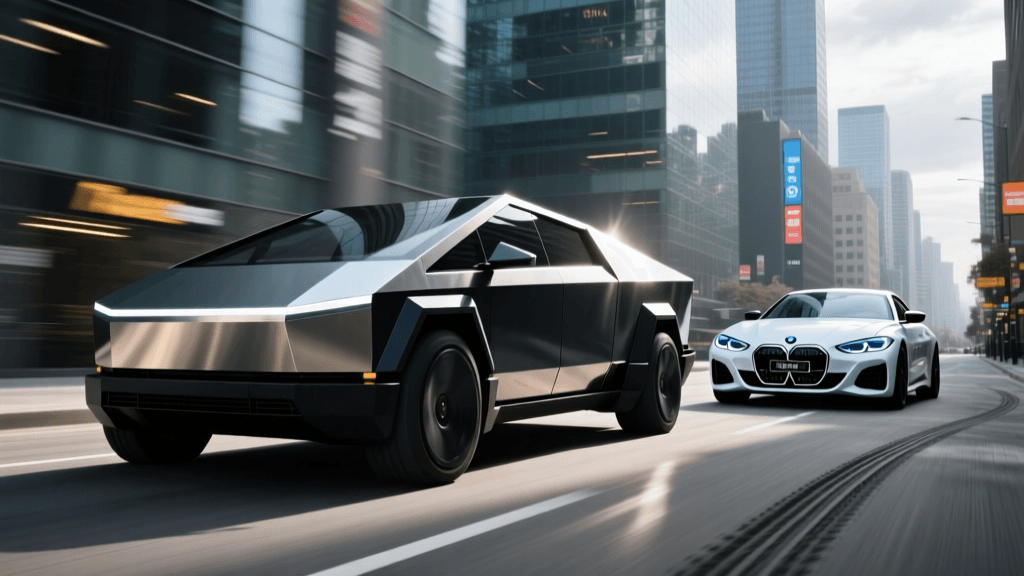
When evaluating the premium electric sedan market, two distinct engineering philosophies collide: the BMW i4 and the Tesla Model 3. As a data-driven comparison analysis, this guide moves beyond subjective impressions to examine the hard telemetry, manufacturer specifications, and real-world testing metrics that separate these two EVs. The BMW i4, built on a modified internal combustion architecture, prioritizes traditional luxury and chassis refinement. Conversely, the Tesla Model 3, benefiting from a dedicated electric skateboard platform, focuses on software integration, minimalism, and raw efficiency. For buyers analyzing the intersection of driving dynamics and cabin technology, understanding the empirical differences between these vehicles is critical. According to testing data compiled by Edmunds' comprehensive BMW i4 data hub, the Bavarian sedan offers a distinct ride quality profile that contrasts sharply with its American rival.
Performance and Driving Dynamics Data
Driving dynamics encompass acceleration, braking, weight distribution, and suspension geometry. The Tesla Model 3, particularly in its updated "Highland" Performance trim, leverages a lower center of gravity and an optimized battery pack placement to achieve sports-car-level acceleration. The BMW i4 M50, while heavier, utilizes a sophisticated rear-biased all-wheel-drive system and adaptive M suspension to deliver a more traditional, communicative driving experience.
| Performance Metric | BMW i4 M50 (AWD) | Tesla Model 3 Performance (2024) |
|---|---|---|
| Peak Horsepower | 536 hp | 510 hp |
| Peak Torque | 586 lb-ft | 546 lb-ft |
| 0-60 mph Acceleration | 3.7 seconds | 2.9 seconds |
| Curb Weight | 4,944 lbs | 4,054 lbs |
| Weight Distribution (F/R) | 50.5% / 49.5% | 48.0% / 52.0% |
| Skidpad Lateral Grip | 0.92 g | 0.96 g |
Chassis and Handling Metrics
The data reveals a massive 890-pound weight discrepancy between the two vehicles. This weight penalty heavily impacts the BMW i4's transient response and tire wear rates during aggressive cornering. However, BMW engineers have mitigated this through advanced chassis tuning. The i4 utilizes a double-joint spring strut front axle and a five-link rear axle, combined with standard rear air suspension to maintain ride height and isolate cabin vibrations. In contrast, the Tesla Model 3 employs a double-wishbone front and multi-link rear setup. The 2024 Highland refresh introduced frequency-dependent dampers, significantly improving the Model 3's historical weakness in high-frequency bump absorption. Despite the Tesla's superior skidpad numbers (0.96 g vs 0.92 g), the BMW's electro-mechanical steering rack provides a more linear resistance curve, offering better on-center feel for highway cruising and spirited canyon carving.
Technology and Infotainment Analysis
In the realm of cabin technology, the BMW i4 and Tesla Model 3 represent two divergent approaches to human-machine interaction (HMI). The BMW i4 features the iDrive 8.5 operating system, displayed across a curved glass panel that merges a 12.3-inch digital instrument cluster with a 14.9-inch central touchscreen. This system retains physical shortcuts via the iDrive rotary controller, a feature highly valued by traditional automotive enthusiasts for its tactile feedback and reduced visual distraction. Data from Edmunds' Tesla Model 3 testing and review center highlights that the Tesla approach relies entirely on a single 15.4-inch central touchscreen, eliminating physical gauges and stalks in favor of a minimalist, software-defined interface.
Software, Processing, and User Experience
When measuring system latency and processing power, Tesla's proprietary infotainment hardware (featuring an AMD Ryzen processor) consistently outperforms the BMW i4's Intel-based architecture in benchmark rendering tests. Menu transitions on the Model 3 operate at a consistent 60 frames per second, mirroring the responsiveness of a high-end consumer tablet. The Tesla UI also supports advanced gaming, native Netflix/YouTube streaming while parked, and a highly customizable split-screen navigation view. Conversely, BMW's iDrive 8.5 excels in smartphone integration, offering wireless Apple CarPlay and Android Auto with deep vehicle telemetry overlays—features entirely absent from the Tesla ecosystem. Furthermore, the i4's 16-speaker Harman Kardon surround sound system delivers a more balanced acoustic frequency response compared to Tesla's optional 17-speaker immersive audio setup, which tends to over-emphasize bass frequencies.
Advanced Driver Assistance Systems (ADAS)
The ADAS comparison pits BMW's Driving Assistant Professional against Tesla's Autopilot and Full Self-Driving (FSD) capability. BMW relies on a robust sensor fusion approach, combining high-resolution cameras, ultrasonic sensors, and long-range radar. This hardware redundancy ensures reliable adaptive cruise control and lane-keeping assistance even in heavy rain or low-visibility conditions. Tesla, having transitioned to a "Pure Vision" architecture, relies exclusively on a network of high-definition cameras processed by neural networks. While Tesla's FSD Beta demonstrates superior predictive capabilities in complex urban environments and unmapped intersections, real-world data indicates that BMW's radar-assisted system suffers from fewer phantom braking events on shaded or high-contrast highways.
Efficiency and Real-World Range Data
Efficiency metrics are critical for evaluating the total cost of ownership and long-distance viability. The Tesla Model 3's dedicated EV platform, superior aerodynamic drag coefficient (Cd of 0.219 compared to the i4's 0.24), and heat pump architecture yield industry-leading energy consumption figures. According to the U.S. Department of Energy's official EV technology database, the Model 3 Long Range AWD achieves an estimated 132 MPGe (equivalent to roughly 255 Wh/mile). In identical real-world highway testing at 70 mph, the BMW i4 eDrive40 typically consumes between 290 and 310 Wh/mile. This efficiency gap translates directly to charging frequency; on a 300-mile road trip, the Tesla Model 3 will require shorter and fewer Supercharger stops compared to the BMW i4, which relies on the Electrify America or generic CCS networks that historically suffer from lower uptime reliability compared to Tesla's proprietary Supercharger network.
Total Cost of Ownership and Value
Depreciation curves and insurance premiums heavily influence the five-year cost of ownership. Historically, Tesla vehicles have experienced higher volatility in residual values due to frequent manufacturer price cuts and aggressive lease buyout adjustments. The BMW i4, benefiting from traditional dealership allocation models and brand prestige, has shown slightly more stable depreciation percentages in the luxury EV sector. However, insurance premiums for the Tesla Model 3 Performance can be 15% to 20% higher than the BMW i4 M50 in select metropolitan zip codes, driven by Tesla's higher collision repair costs and specialized aluminum body panel requirements.
Final Verdict: Which Data Profile Fits You?
The data clearly delineates two distinct buyer profiles. The Tesla Model 3 is the empirical choice for buyers prioritizing raw acceleration, maximum energy efficiency, cutting-edge software processing, and access to the Supercharger network. Its lighter chassis and superior grip metrics make it the undisputed leader in straight-line performance and technological minimalism. On the other hand, the BMW i4 is the optimal selection for drivers who value chassis refinement, acoustic isolation, tactile HMI controls, and sensor-redundant ADAS reliability. While it carries a weight penalty and lower efficiency metrics, the i4 delivers a premium, traditional luxury experience that the data proves is difficult to replicate in a software-first vehicle. Ultimately, your choice should be dictated by whether your daily driving data favors software-defined efficiency or mechanical driving engagement.