The New Era of Electric Performance
For the past decade, the electric vehicle industry has been locked in a straight-line arms race. Shattering the 0-60 mph barrier became the primary marketing metric, with manufacturers leveraging the instant torque of electric motors to humiliate legacy internal combustion hypercars. However, as we look toward the future of automotive engineering, the definition of an elite performance EV is rapidly evolving. Straight-line acceleration is no longer enough; the true benchmarks of tomorrow are cornering dynamics, thermal sustainability, and intelligent handling. At AutoEdgeView, we are tracking this shift closely. The next generation of electric sports cars and hyper-sedans are integrating predictive AI suspensions, advanced torque vectoring, and lightweight axial-flux motors to conquer the apex, not just the drag strip.
In this comprehensive ranking, we evaluate the best performance electric vehicles on the market today based on a rigorous blend of acceleration, handling prowess, and future-proof technology. Whether you are a track-day enthusiast or a luxury buyer seeking the ultimate grand tourer, this guide will help you navigate the cutting edge of EV performance.
How We Rank Performance EVs: Acceleration Meets Handling
Ranking a true performance EV requires looking beyond the manufacturer's press-release numbers. Our scoring methodology is built on four critical pillars:
- Acceleration & Power Delivery: We measure 0-60 mph times, quarter-mile trap speeds, and, crucially, roll-on acceleration (50-90 mph) to evaluate real-world passing power.
- Handling & Chassis Dynamics: Skidpad grip (measured in g-forces), steering feel, and weight distribution. Heavy battery packs require sophisticated chassis tuning to hide their mass through corners.
- Thermal Management: The ability to sustain peak power without thermal throttling. A true performance EV must be capable of multiple hard track laps without the battery management system (BMS) cutting power.
- Future-Readiness: The integration of next-generation tech like active aerodynamics, over-the-air (OTA) dynamic tuning, and advanced inverter cooling systems.
The Top Tier: Best Performance EVs Ranked
1. Rimac Nevera: The Hypercar Benchmark
The Rimac Nevera remains the undisputed king of electric hypercars. Producing a mind-bending 1,914 horsepower from its four independent motors, the Nevera achieves a 0-60 mph time of just 1.85 seconds. But its true genius lies in its handling. Rimac's proprietary All-Wheel Torque Vectoring 2.0 system monitors wheel slip and adjusts power distribution 100 times per second. The result is a car that feels telepathic in the corners, actively pulling itself through the apex. Looking ahead, the Nevera's telemetry data is paving the way for predictive AI driving assistants that learn individual track layouts and driver habits to optimize battery discharge and regen braking zones automatically.
2. Lucid Air Sapphire: The Sedan King
The Lucid Air Sapphire has fundamentally disrupted the four-door sedan segment. With 1,234 horsepower and a tri-motor setup, it hits 60 mph in under 2 seconds. What sets the Sapphire apart from its competitors is its bespoke chassis tuning. Lucid engineers widened the track, stiffened the anti-roll bars, and implemented a highly advanced torque-vectoring rear differential. This allows the heavy luxury sedan to rotate through tight corners with the agility of a mid-engine sports car. Furthermore, Lucid's miniaturized motor technology hints at the industry's future direction: smaller, lighter powertrains that free up space for advanced aerodynamic channels and larger crumple zones.
3. Porsche Taycan Turbo GT: The Track Weapon
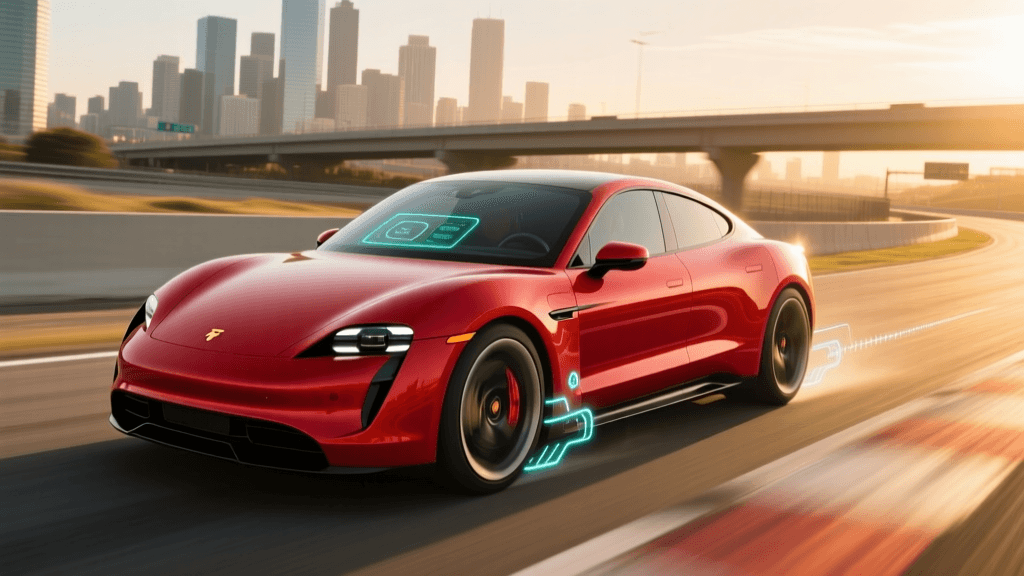
When it comes to sustained track performance, Porsche remains the gold standard. The Porsche Taycan Turbo GT is engineered specifically for the rigors of the Nürburgring and Laguna Seca. While its 0-60 mph time of 2.1 seconds is spectacular, its handling is where it earns its badge. Porsche utilizes an 800-volt architecture that allows for blistering fast charging and superior thermal management, meaning the Taycan can deliver consistent lap times without overheating. The active aerodynamics and rear-axle steering make it incredibly stable at high speeds, setting a benchmark that legacy automakers and EV startups alike are scrambling to beat.
4. Tesla Model S Plaid: The Value Speedster
The Tesla Model S Plaid democratized hypercar acceleration, offering a 1,020-horsepower tri-motor setup at a fraction of the cost of its European rivals. Its carbon-sleeved rotors allow the motors to spin past 20,000 RPM without expanding and scraping the housing, a brilliant piece of engineering that ensures top-end power delivery. While its handling and suspension tuning lag slightly behind Porsche and Lucid in sheer mechanical grip, Tesla's continuous OTA updates and upcoming hardware revisions promise to integrate more aggressive track modes and active damping algorithms in the near future.
Performance EV Comparison Chart
| Vehicle | 0-60 mph | Top Speed | Key Handling Tech | Starting Price (Est.) |
|---|---|---|---|---|
| Rimac Nevera | 1.85s | 258 mph | AWD Torque Vectoring 2.0 | $2,200,000 |
| Lucid Air Sapphire | 1.89s | 205 mph | Active Rear Torque Vectoring | $249,000 |
| Porsche Taycan Turbo GT | 2.10s | 190 mph | Active Aero, Rear-Axle Steer | $230,000 |
| Tesla Model S Plaid | 1.99s | 200 mph | Carbon-Sleeved Tri-Motor | $89,990 |
Future Trends Shaping EV Performance
As we look toward the next five to ten years, the automotive industry is investing billions into technologies that will radically alter how performance EVs accelerate and handle. According to ongoing research tracked by the U.S. Department of Energy's Electric Vehicle Research initiatives, battery chemistry and motor topology are the next great frontiers.
Solid-State Batteries and Weight Reduction
The biggest enemy of EV handling is weight. Current lithium-ion battery packs are incredibly dense and heavy, requiring massive brakes and stiff suspensions to manage the inertia. The industry's holy grail is the solid-state battery. By replacing the liquid electrolyte with a solid material, manufacturers can achieve higher energy density, faster ion transfer (meaning massive instantaneous discharge for acceleration), and significantly lighter packs. When solid-state tech reaches mass production later this decade, expect performance EVs to shed 500 to 800 pounds, resulting in sharper turn-in, less tire wear, and vastly improved braking distances.
Axial-Flux Motors
Traditional radial-flux motors are cylindrical and relatively heavy. The future belongs to axial-flux motors, which are shaped like pancakes. Companies like Mercedes-Benz (through its acquisition of YASA) are pioneering this tech. Axial-flux motors offer a dramatically higher power-to-weight ratio and can be integrated directly into the wheel hubs or axle housings. This allows engineers to push the wheels further to the corners of the car, lowering the polar moment of inertia and making the vehicle pivot around its center of gravity much more eagerly.
AI-Driven Predictive Suspensions
Handling is no longer just about mechanical springs and dampers. The next generation of EVs will use LiDAR, stereo cameras, and GPS mapping to read the road surface and track curbs ahead. AI-driven active suspensions will adjust individual corner damping rates in milliseconds before the tire even strikes a bump or loads up in a corner, keeping the chassis perfectly flat and maximizing the tire's contact patch at all times.
Actionable Advice: Buying and Track-Prepping a Performance EV
If you are in the market for a high-performance EV, or plan to take your current EV to a track day, understanding the unique characteristics of electric powertrains is essential. Here is our actionable advice for maximizing your investment.
1. Prioritize Continuous Power Over Peak Power
Many manufacturers advertise massive "peak" horsepower numbers that can only be sustained for a few seconds before the battery overheats. When researching vehicles, look for the "continuous" power rating. A car with 800 continuous horsepower will significantly outperform a car with 1,200 peak horsepower on a road course, as it will not suffer from thermal throttling on the back straightaways.
2. Invest in EV-Specific Tire Technology
Standard high-performance tires will melt under the weight and instant torque of an EV. You must equip your vehicle with EV-specific performance tires, such as the Michelin Pilot Sport S 5 EV or the Pirelli P Zero Trofeo RS EV. These compounds are engineered with reinforced sidewalls to handle the extra mass and specialized rubber compounds that resist the tearing effect of instant electric torque.
3. Master Battery Pre-Conditioning
Never take an EV onto a track with a cold battery. A cold battery cannot discharge energy fast enough to provide peak acceleration, and it cannot accept the massive influx of energy from regenerative braking, which will lead to brake fade as the mechanical brakes are forced to do all the work. Always use the vehicle's built-in "Track Prep" or navigation routing to the track, which will automatically heat the battery to its optimal operating window (usually between 104°F and 122°F) before you arrive at the paddock.
4. Manage Your Regenerative Braking Zones
On a track, relying entirely on one-pedal driving or max regen is a recipe for disaster. Heavy regen at high speeds can upset the chassis balance and cause snap oversteer. For track driving, dial the regenerative braking back to its lowest setting and rely on the mechanical friction brakes, utilizing threshold braking techniques to maintain chassis stability deep into the braking zones.
Conclusion
The era of the electric vehicle as a mere straight-line novelty is officially over. The best performance EVs on the market today, from the Rimac Nevera to the Porsche Taycan Turbo GT, prove that electric architectures can deliver world-class handling, telepathic torque vectoring, and sustained track capability. As solid-state batteries and axial-flux motors enter the mainstream over the next decade, the line between heavy luxury cruisers and lightweight track weapons will blur entirely. By focusing on thermal management, chassis dynamics, and future-proof technology, buyers can invest in performance EVs that will continue to thrill and dominate the apex for years to come.