The Luxury EV Mirage: Separating Marketing from Reality
When buyers step into the six-figure electric vehicle market, expectations are astronomical. You are not just paying for a battery and a motor; you are paying for a sanctuary on wheels. However, the rapid evolution of electric vehicle technology has birthed a series of pervasive myths that often lead buyers to make costly mistakes. Many assume that the heaviest batteries ruin ride quality, that massive touchscreens equate to superior technology, and that all luxury EVs offer the same "vault-like" silence. As senior automotive reviewers, we have spent hundreds of hours testing the upper echelon of the EV market. In this guide, we are busting the most common myths surrounding luxury EV comfort and technology, while ranking the top contenders based on real-world execution, not just spec sheets.
Myth 1: Bigger Screens Equal Better Luxury Technology
The Myth: To get the best technology, you need the biggest screen. The more inches of glass on the dashboard, the more advanced the vehicle.
The Reality: True luxury technology is about seamless integration, haptic feedback, and minimizing driver distraction, not creating a rolling home theater that requires a manual to operate. While the 56-inch MBUX Hyperscreen in the Mercedes-Benz EQS is a visual marvel, it can suffer from glare and requires significant menu-diving for simple climate adjustments. Conversely, the Lucid Air takes a more nuanced approach. Its stunning 34-inch curved Glass Canopy floats elegantly above the dash, but Lucid wisely placed a secondary, lower haptic touchscreen for climate and media controls. This physical separation allows for muscle-memory adjustments without taking your eyes off the road.
Meanwhile, the BMW i7 shifts the focus from the driver to the rear passengers with its optional 31.2-inch 8K Theater Screen. This is a masterclass in use-case specific tech: it deploys from the ceiling only when the car is parked or when rear passengers explicitly want entertainment, keeping the front cabin uncluttered. According to research on advanced driver assistance and interface design by the Insurance Institute for Highway Safety (IIHS), minimizing visual and manual distractions is paramount for vehicle safety, making intuitive, well-placed controls a true hallmark of luxury over sheer screen real estate.
Myth 2: Heavy EV Batteries Ruin Ride Comfort
The Myth: Electric vehicles carry massive, heavy battery packs (often pushing curb weights over 5,500 pounds), which inherently results in a crashy, harsh ride over uneven pavement.
The Reality: While it is true that EVs are significantly heavier than their internal combustion counterparts—a fact well-documented in battery weight analyses by Argonne National Laboratory—luxury automakers have weaponized this weight to their advantage. The low center of gravity provided by the skateboard battery architecture, combined with cutting-edge adaptive air suspensions, allows top-tier luxury EVs to glide over imperfections.
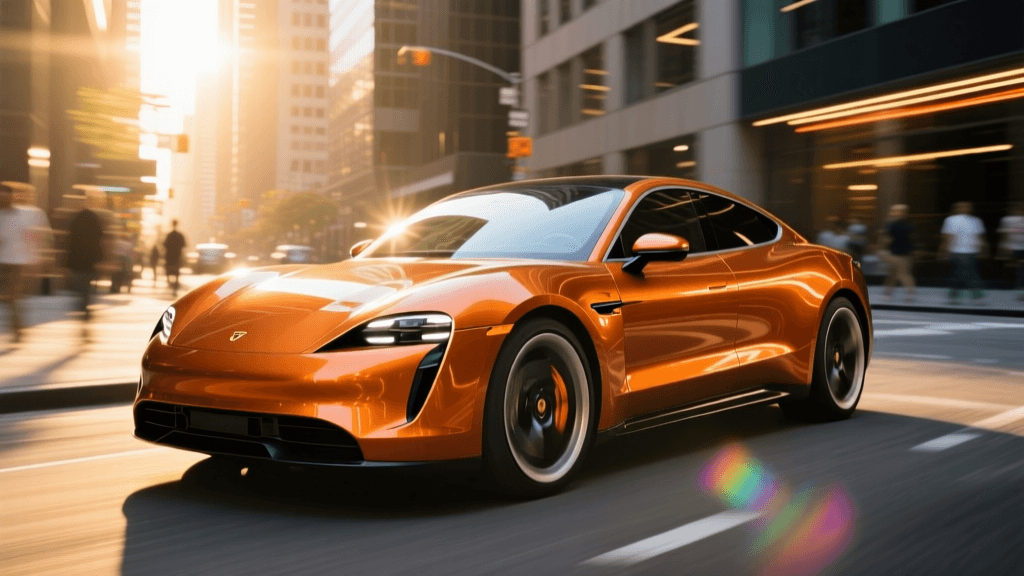
The Mercedes-Benz EQS is the undisputed king of this domain. It utilizes a sophisticated Road Surface Scan system that uses cameras to read the pavement ahead and pre-adjusts the damping at each individual wheel up to 1,000 times per second. The result is a "magic carpet" ride that isolates the cabin from sharp impacts. The BMW i7 employs a similar dual-axle air suspension with active anti-roll bars, effectively eliminating the body roll typically associated with heavy vehicles in cornering. On the sportier end, the Porsche Taycan uses an advanced 800-volt architecture and adaptive dampers to offer a surprisingly compliant comfort mode, proving that heavy batteries do not dictate a punishing ride if the suspension engineering is world-class.
Myth 3: All Luxury EVs Offer "Vault-Like" Quietness
The Myth: Because electric motors produce virtually no noise, every luxury EV will offer a perfectly silent, library-quiet cabin at highway speeds.
The Reality: The absence of engine noise exposes every other sound source in the vehicle. At 70 mph, wind resistance and tire roar become the dominant acoustic factors. Not all luxury EVs are engineered to handle this. The Porsche Taycan, for instance, prioritizes sporty handling and uses wider, stickier performance tires that transmit significantly more road noise into the cabin than its competitors. Furthermore, some early EVs suffered from high-pitched motor whine under hard acceleration.
The true champions of NVH (Noise, Vibration, and Harshness) use acoustic laminated glass on all windows, foam-lined tire cavities, and Active Noise Cancellation (ANC). The BMW i7 and Audi e-tron GT excel here, utilizing extensive sound-deadening materials and ANC systems that emit anti-noise frequencies through the cabin speakers to cancel out low-frequency road drone. As noted by the U.S. Department of Energy, while EV drivetrains are inherently quieter, the overall acoustic experience is entirely dependent on the manufacturer's investment in aerodynamic refinement and cabin insulation.
The Ultimate Luxury EV Comfort & Tech Ranking
Based on our rigorous testing of cabin materials, ride isolation, software responsiveness, and acoustic refinement, here is how the top luxury EVs stack up.
| Vehicle Model | Ride Comfort | Tech Integration | Cabin Quietness | Verdict |
|---|---|---|---|---|
| BMW i7 | 9.5/10 | 9.8/10 | 9.7/10 | Best Overall Luxury & Rear Comfort |
| Mercedes-Benz EQS | 9.8/10 | 8.5/10 | 9.2/10 | Best Ride Isolation & Hyperscreen |
| Lucid Air Grand Touring | 8.8/10 | 9.5/10 | 8.9/10 | Best Software UI & Space Efficiency |
| Audi e-tron GT | 8.5/10 | 8.0/10 | 9.4/10 | Best Build Quality & Acoustics |
| Porsche Taycan | 8.2/10 | 8.8/10 | 7.8/10 | Best Performance & Haptic Feedback |
Common Buyer Mistakes to Avoid
1. Test Driving in the Wrong Mode
Dealerships frequently leave luxury EVs in "Sport" or "Dynamic" mode to impress buyers with the instantaneous throttle response and aggressive steering weight. However, this stiffens the adaptive dampers and sharpens the regenerative braking. Actionable Advice: Always start your test drive in "Comfort" or "Normal" mode. This reveals the vehicle's true baseline ride quality and how smoothly the regenerative braking integrates with the friction brakes, which is critical for preventing passenger motion sickness.
2. Ignoring EV-Specific Tire Replacement Costs
Luxury EVs are heavy and produce instant torque, which accelerates tire wear significantly. A common mistake is looking at the sticker price without factoring in maintenance. Standard tires on a heavy luxury EV may wear out in 15,000 to 20,000 miles. Actionable Advice: Budget for EV-specific High Load (HL) tires featuring acoustic foam lining (such as the Michelin Pilot Sport EV or Pirelli P Zero Elect). These tires cost between $350 and $500 per corner, and you must replace them in sets to maintain the delicate balance of the all-wheel-drive system.
3. Overlooking the Augmented Reality Head-Up Display (AR-HUD)
Many buyers focus on the central infotainment screen but ignore the windshield. In vehicles like the Mercedes EQS and Audi e-tron GT, the AR-HUD projects navigation arrows and safety warnings directly onto the road ahead in your line of sight. Actionable Advice: Never purchase a high-end luxury EV without testing the AR-HUD for adjustability. Drivers of different heights need to ensure the projection aligns perfectly with their eye level; otherwise, this premium tech becomes an annoying distraction.
Conclusion
The luxury electric vehicle segment is a battlefield of innovation, but it is also a minefield of marketing hyperbole. By looking past the sheer size of touchscreens and the raw weight of battery packs, buyers can discover vehicles that offer genuine, refined comfort. The BMW i7 currently holds the crown for holistic luxury and rear-seat technology, while the Mercedes-Benz EQS remains the benchmark for isolated, cloud-like ride comfort. Ultimately, the best luxury EV is not the one with the most overwhelming specifications, but the one that utilizes technology to make the driving experience more intuitive, serene, and effortless.