The Technology Behind EV Warranty Confidence
When evaluating the total cost of ownership for an electric vehicle, the battery pack is the single most expensive and technologically complex component. Unlike internal combustion engines, which suffer from mechanical friction and fluid degradation, EV batteries experience electrochemical aging. The confidence an Original Equipment Manufacturer (OEM) has in its battery chemistry, thermal management architecture, and Battery Management System (BMS) is directly reflected in its warranty coverage. According to the U.S. Department of Energy's Alternative Fuels Data Center, federal mandates require EV batteries to be covered for a minimum of 8 years or 100,000 miles, but leading automakers are leveraging advanced cell chemistries and liquid cooling technologies to extend this coverage significantly.
To understand why some automakers offer 10-year or 175,000-mile warranties while others stick to the federal minimum, we must perform a technology deep dive into the primary drivers of battery degradation: Solid Electrolyte Interphase (SEI) layer growth, lithium plating, and thermal runaway mitigation. Modern EVs utilize sophisticated BMS algorithms that employ 'voltage buffers'—locking away the top and bottom 3-5% of the battery's gross capacity to prevent overcharging and deep discharging, which are the primary catalysts for accelerated cell degradation.
Battery Chemistry: NMC vs. LFP
The warranty an OEM provides is heavily dictated by the underlying cell chemistry. Nickel Manganese Cobalt (NMC) batteries offer superior energy density, making them ideal for long-range vehicles, but they are more susceptible to calendar aging when held at high States of Charge (SoC). Conversely, Lithium Iron Phosphate (LFP) batteries, while heavier and less energy-dense, possess a vastly superior cycle life and can withstand daily charging to 100% without severe degradation. Automakers utilizing LFP chemistry or advanced NMC thermal regulation can confidently offer longer, more comprehensive warranty packages.
Thermal Management: The Hidden Warranty Protector
Heat is the enemy of lithium-ion longevity. Vehicles equipped with active liquid cooling systems that feature dedicated chiller circuits tied to the HVAC compressor can maintain optimal cell temperatures (between 20°C and 35°C) even during 350kW DC fast charging. This prevents lithium plating—a phenomenon where lithium ions accumulate on the anode surface instead of intercalating, leading to permanent capacity loss and internal short circuits. OEMs that invest heavily in end-to-end thermal management are the same ones offering the industry's longest warranty coverage.
Ranking the Best EVs by Longest Warranty Coverage
Below, we rank the top EVs that offer the most comprehensive, longest-lasting battery and powertrain warranties, analyzing the technology that allows these manufacturers to back their vehicles with such confidence.
| Rank / Model | Battery Warranty | Degradation Threshold | Thermal Architecture |
|---|---|---|---|
| 1. Hyundai Ioniq 5 / Kia EV6 | 10 Years / 100,000 Miles | 70% Capacity Retention | Active Liquid Cooling + Heat Pump |
| 2. Rivian R1T / R1S | 8 Years / 175,000 Miles | 70% Capacity Retention | End-to-End Liquid Cooling |
| 3. Genesis Electrified GV70 | 10 Years / 100,000 Miles | 70% Capacity Retention | Active Liquid Cooling + Preconditioning |
| 4. Tesla Model 3 / Y (LFP) | 8 Years / 120,000 Miles | 70% Capacity Retention | Octovalve Thermal Management |
| 5. Ford F-150 Lightning | 8 Years / 100,000 Miles | 70% Capacity Retention | Heavy-Duty Liquid Cooling |
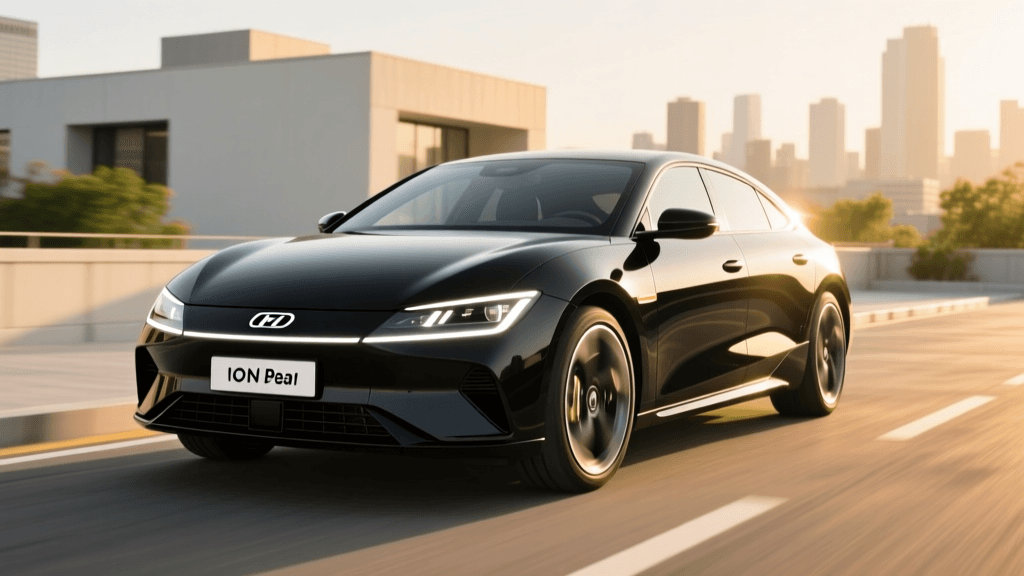
1. Hyundai Ioniq 5 & Kia EV6 (The 10-Year Champions)
Hyundai and Kia currently hold the crown for the longest standard EV battery warranty in the United States at 10 years or 100,000 miles. This immense confidence stems from their Electric-Global Modular Platform (E-GMP). The E-GMP architecture utilizes an 800-volt electrical system, which allows for ultra-fast charging at lower amperages compared to 400-volt systems. Lower amperage translates to significantly less resistive heat generation within the battery cells during DC fast charging. Furthermore, Hyundai's integrated heat pump system scavenges waste heat from the power electronics to warm the battery pack in cold weather, preventing the BMS from restricting regenerative braking and reducing cold-weather lithium plating risks. As detailed in Hyundai's official warranty documentation, this 10-year coverage is a direct reflection of their rigorous internal validation testing on the E-GMP battery enclosures.
2. Rivian R1T & R1S (The High-Mileage Adventure Guarantee)
While Rivian's time limit matches the federal standard at 8 years, its mileage coverage is an industry-leading 175,000 miles for the battery pack. This specific metric is crucial for the 'Technology Deep Dive' perspective: Rivian is betting on the structural integrity and thermal endurance of its battery packs under heavy-load, high-mileage scenarios like towing and off-roading. The Rivian pack features a highly robust liquid cooling plate system that ensures uniform temperature distribution across thousands of cylindrical cells. By mitigating thermal gradients (where some cells run hotter than others), the BMS can balance the pack more efficiently, drastically reducing localized cell aging and justifying the massive 175,000-mile guarantee.
3. Genesis Electrified GV70 (Luxury Peace of Mind)
Sharing the E-GMP architecture with its Hyundai and Kia siblings, Genesis offers the same stellar 10-year/100,000-mile powertrain and battery warranty. However, the Genesis implementation includes advanced battery preconditioning algorithms tied directly to the vehicle's navigation system. When the GV70 detects a DC fast charger on your route, it automatically begins heating or cooling the battery to the exact optimal temperature for electron acceptance. This eliminates the thermal shock of high-current charging, preserving the long-term health of the NMC cells and protecting the OEM's 10-year liability.
4. Tesla Model 3 & Model Y (Standard Range LFP Variants)
Tesla's Standard Range rear-wheel-drive models utilize Lithium Iron Phosphate (LFP) battery cells supplied by CATL. While the warranty is 8 years or 120,000 miles (slightly higher mileage than the base federal requirement), the technological advantage here is the chemistry itself. LFP batteries do not suffer from the same oxygen-release thermal runaway risks as NMC cells and exhibit a vastly superior cycle life. The Environmental Protection Agency (EPA) notes that modern EV batteries are designed to last the lifetime of the vehicle, and Tesla's LFP packs are a prime example, routinely demonstrating less than 10% degradation even after 100,000 miles of heavy use, making the 70% retention threshold highly unlikely to be breached.
How to Maximize Your EV Battery Warranty (Actionable Tech Advice)
An EV battery warranty is not a blank check; it covers defects and abnormal degradation, but it can be voided or denied if the OEM's telemetry data shows chronic user abuse. To ensure your battery remains within the optimal electrochemical parameters and your warranty remains valid, follow these technical guidelines:
1. Respect the Chemistry's SoC Limits
If your vehicle has an NMC battery (most long-range EVs), set your daily charge limit to 80%. Charging to 100% increases the voltage stress on the cathode, accelerating SEI layer growth and consuming active lithium inventory. Only charge to 100% immediately before a long road trip. If you have an LFP battery (Tesla RWD, some Ford models), the BMS requires you to charge to 100% at least once a week to allow the system to accurately calibrate the cell voltage curves.
2. Always Precondition for DC Fast Charging
Never initiate a high-speed DC charge on a cold battery. If the battery is below 15°C (59°F) and you force 150kW+ into the pack, the lithium ions cannot intercalate into the graphite anode fast enough. They plate onto the surface, causing permanent, irreversible capacity loss. Always use the vehicle's native navigation to route to the charger, which triggers the thermal management system to precondition the pack.
3. Do Not Ignore Coolant Service Intervals
While EVs do not require oil changes, the battery thermal management system relies on dielectric coolant. Over time, this coolant can degrade or become contaminated, reducing its thermal conductivity. If a battery fails due to overheating and the OEM's diagnostic logs show a lack of scheduled coolant maintenance, your warranty claim could be denied. Adhere strictly to the manufacturer's fluid service intervals.
4. Avoid 'Deep Sleep' at Extreme SoC
Leaving an EV parked at an airport or in storage for weeks at 100% SoC or below 10% SoC causes severe calendar aging. The 12V accessory battery will also slowly drain, potentially bricking the vehicle's BMS and requiring a jump-start that can corrupt low-voltage modules. For long-term storage, leave the vehicle plugged in with the charge limit set to 50%, allowing the BMS to maintain optimal cell voltage and thermal stability.
Conclusion
The length of an EV's warranty is the ultimate proxy for its underlying engineering quality. Automakers like Hyundai, Kia, and Rivian are not simply offering generous financial terms; they are leveraging 800-volt architectures, advanced LFP chemistries, and predictive thermal management systems to physically prevent the degradation that leads to warranty claims. By understanding the electrochemical realities of your specific battery pack and utilizing the vehicle's BMS features correctly, you can ensure your EV outlasts its already impressive warranty coverage.