The Crossover Convergence: Why Range and Versatility Define the EV Future
The automotive industry is undergoing a seismic shift, and at the epicenter of this revolution is the electric crossover. Blending the ride height and cargo utility of an SUV with the aerodynamic efficiency and footprint of a sedan, electric crossovers have rapidly become the default choice for modern EV buyers. As we look toward the horizon of next-generation battery chemistries and ultra-fast charging networks, evaluating these vehicles requires more than just looking at today's specifications. It demands a forward-looking perspective on how well a vehicle will adapt to the infrastructure of tomorrow.
According to the International Energy Agency's 2024 Global EV Outlook, electric car sales are projected to maintain strong double-digit growth, with SUVs and crossovers accounting for the lion's share of new model launches. Automakers are heavily incentivized to perfect the crossover formula because it satisfies consumer demands for interior volume without the severe range penalties associated with massive, heavy full-size electric trucks.
How We Rank: Versatility Meets Future-Proofing
To rank the best electric crossovers, we evaluate three core pillars:
- Real-World Range Efficiency: Not just maximum battery size, but miles per kWh and aerodynamic drag.
- Cargo and Passenger Versatility: Frunk availability, rear-seat folding mechanisms, and overall cubic footage.
- Future-Proof Architecture: The presence of 800-volt electrical systems, over-the-air (OTA) update capabilities, and thermal management systems designed for repetitive DC fast charging.
Furthermore, we analyze the software-defined vehicle (SDV) capabilities of each platform. In the future, an EV's versatility will be heavily dictated by its ability to receive over-the-air (OTA) updates that unlock new battery management algorithms, improve route planning, and integrate seamlessly with smart home ecosystems and bi-directional charging grids.
Top Electric Crossovers Ranked for Range and Versatility
1. Hyundai Ioniq 5 & Kia EV6 (The 800V Pioneers)
Sharing the Hyundai Motor Group's Electric-Global Modular Platform (E-GMP), the Ioniq 5 and Kia EV6 remain the undisputed champions of future-proofing in the mainstream market. While their maximum EPA ranges hover around 310 miles, their true versatility lies in their 800-volt electrical architecture. This allows them to accept peak charging rates of up to 240 kW, meaning a 10% to 80% charge takes roughly 18 minutes on a 350 kW dispenser. Furthermore, the Vehicle-to-Load (V2L) capability transforms these crossovers into mobile power banks, outputting up to 3.6 kW of power to run home appliances during outages or power campsite gear. With generous rear legroom and flat floors, their passenger versatility is unmatched in the segment.
2. Tesla Model Y (The Benchmark for Efficiency and Space)
The Tesla Model Y continues to dominate global sales charts for a reason. Its versatility is highlighted by an industry-leading 76 cubic feet of maximum cargo space when the rear seats are folded, coupled with an additional front trunk (frunk) for extra storage. The Long Range AWD variant achieves an impressive 310 miles of EPA range, but Tesla's thermal management and heat pump systems make it exceptionally efficient in cold weather, preserving range when competitors falter. Looking ahead, the anticipated 'Juniper' refresh is expected to introduce the 800V architecture found in the Cybertruck, which will secure the Model Y's position at the top of the efficiency hierarchy for years to come.
3. Ford Mustang Mach-E (The Driver's Versatile Crossover)
Ford has continuously refined the Mustang Mach-E, turning it into a compelling alternative to the Tesla establishment. The Extended Range AWD model pushes the EPA estimated range to 320 miles. Where the Mach-E shines in versatility is its unique 'Mega Power Frunk,' which features a drain plug, allowing owners to use it as an ice cooler for tailgating or outdoor excursions. The interior utilizes easy-to-clean synthetic materials, and the BlueCruise hands-free driving system reduces fatigue on long road trips. Ford's recent push toward NACS (North American Charging Standard) adapters ensures Mach-E owners will have seamless access to the Supercharger network, vastly improving long-distance travel viability.
4. Porsche Macan EV (The Luxury Performance Standard)
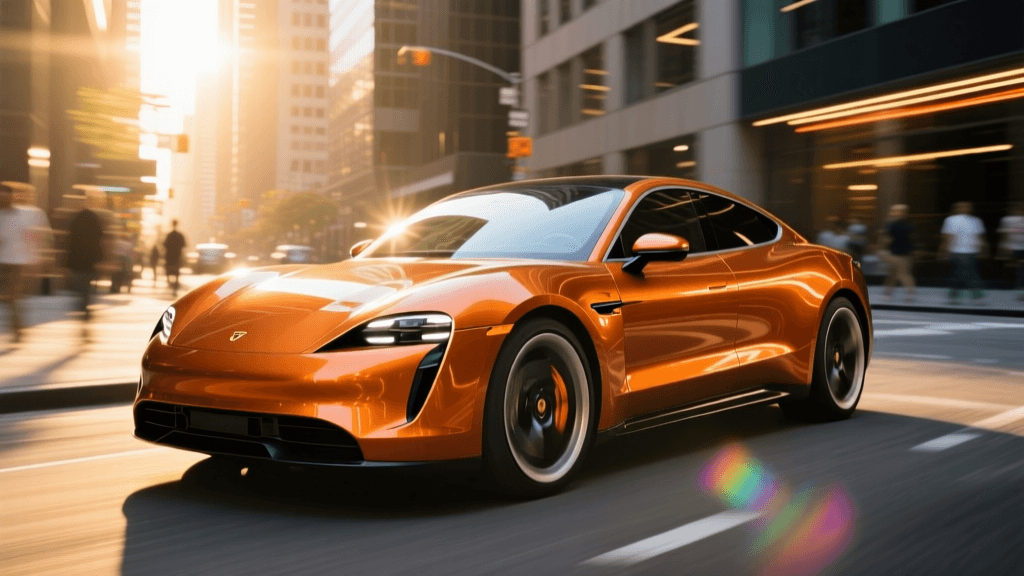
Representing the premium future of the crossover segment, the all-new electric Porsche Macan is built on the Premium Platform Electric (PPE), co-developed with Audi. This 800V architecture supports charging up to 270 kW. While its starting price places it in the luxury tier, its versatility is defined by adaptive air suspension that can raise the vehicle for rough terrain or lower it for highway aerodynamic efficiency. The interior features a massive curved digital display and an augmented reality head-up display, pointing toward a future where the crossover cabin serves as a connected mobile lounge. While the price of entry is steep, the Macan EV sets the dynamic benchmark that mainstream automakers will chase for the next decade.
Data Comparison: Range, Cargo, and Charging Speeds
| Model | Max EPA Range | Max Cargo Volume | Peak DC Charge Rate | Architecture |
|---|---|---|---|---|
| Hyundai Ioniq 5 | 310 miles | 59.3 cu ft | 240 kW | 800V E-GMP |
| Tesla Model Y LR | 310 miles | 76.0 cu ft | 250 kW | 400V (Current) |
| Ford Mach-E ER | 320 miles | 59.7 cu ft | 150 kW | 400V GE2 |
| Porsche Macan EV | 308 miles (est) | 45.8 cu ft | 270 kW | 800V PPE |
Future Outlook: Solid-State Batteries and Next-Gen Platforms
The electric crossover landscape of today is merely a stepping stone. According to research highlighted by the U.S. Department of Energy's Alternative Fuels Data Center, the next major leap in EV versatility will come from solid-state batteries. By replacing the liquid electrolyte with a solid material, these batteries promise significantly higher energy density, faster charging times, and enhanced safety profiles.
When solid-state technology reaches commercial viability in mainstream crossovers—expected in the late 2020s by industry leaders like Toyota and Nissan—we anticipate seeing vehicles with the footprint of a Hyundai Ioniq 5 but the range of a full-size luxury SUV, easily surpassing 500 miles on a single charge. Until then, the 800-volt architectures currently deployed by Hyundai, Kia, and Porsche represent the most 'future-proof' technology available, ensuring that today's buyers will not be left behind as public charging infrastructure rapidly upgrades to higher-output dispensers.
Actionable Buyer Advice: Buy Now or Wait?
If you are in the market for an electric crossover today, here is how to navigate the current landscape with an eye on the future:
- Prioritize 800V Architectures if you Road Trip: If your lifestyle involves frequent highway travel, the Hyundai Ioniq 5 or Kia EV6 are mandatory considerations. The ability to charge from 10% to 80% in under 20 minutes fundamentally changes the road trip experience, minimizing downtime at charging plazas.
- Lease to Hedge Against Tech Depreciation: Because the transition to NACS charging ports and next-generation battery chemistries is currently underway, leasing an electric crossover for 36 months is a highly strategic move. It allows you to enjoy current tax incentives (via lease pass-throughs) while retaining the flexibility to upgrade when 500-mile solid-state crossovers hit the market.
- Evaluate Your Home Charging Setup: The versatility of an EV crossover is severely bottlenecked if you rely solely on public charging. As the EPA's Green Vehicle Guide suggests, maximizing your home charging capabilities with a Level 2 (240V) setup ensures your vehicle is always topped off, preserving the battery's long-term health and eliminating range anxiety for daily commuting.
- Consider Bi-Directional Charging Needs: If you live in an area prone to grid instability or extreme weather, prioritizing a crossover with Vehicle-to-Home (V2H) or Vehicle-to-Load (V2L) capabilities is a smart future-proofing move. The Hyundai Ioniq 5's V2L system can power essential home appliances for days during a blackout, turning your vehicle into a critical piece of home resilience infrastructure.
The electric crossover segment is evolving at a breakneck pace. By focusing on models that offer a blend of immediate cargo utility and forward-looking charging architectures, buyers can secure a vehicle that remains relevant, versatile, and highly capable well into the next decade of electric mobility.