The Technology Behind EV Battery Warranties
When investing in an electric vehicle, the battery is the single most expensive and technologically complex component. Unlike internal combustion engines, which suffer from mechanical wear and tear, lithium-ion EV batteries experience electrochemical degradation over time. The length and terms of an EV's battery warranty are not just marketing tools; they are direct reflections of the automaker's confidence in their Battery Management System (BMS), cell chemistry, and thermal management architecture.
According to the U.S. Department of Energy's Alternative Fuels Data Center, modern EV batteries are designed to outlast the vehicles themselves, but their lifespan is heavily dictated by how well they are protected from thermal extremes and deep cycling. Automakers that offer the longest, most comprehensive warranties are typically those that have engineered superior liquid cooling loops, advanced heat pumps, and sophisticated software that restricts charging rates when cells are too cold or too hot.
In this technology deep dive, we rank the best EVs with the longest warranty coverage, analyzing the specific engineering feats that allow these manufacturers to offer such robust guarantees.
How Thermal Management Dictates Warranty Length
The primary enemy of lithium-ion longevity is heat, which accelerates the growth of the Solid Electrolyte Interphase (SEI) layer on the anode, permanently trapping lithium ions and reducing capacity. Conversely, extreme cold can cause lithium plating during fast charging, leading to internal short circuits. Research from the National Renewable Energy Laboratory (NREL) highlights that maintaining battery cells within a narrow optimal temperature window (typically 25°C to 35°C) is the most critical factor in minimizing capacity fade.
Automakers offering 10-year or high-mileage warranties utilize advanced liquid cooling plates integrated directly into the battery module, phase-change materials, and integrated heat pumps that scavenge waste heat from the powertrain to warm the battery. Let's look at the EVs that lead the industry in warranty coverage and the tech that backs them up.
Ranked: Best EVs with the Longest Warranty Coverage
1. Hyundai Ioniq 5 & Kia EV6 (E-GMP Platform)
Warranty Coverage: 10 Years / 100,000 Miles (Powertrain & Battery)
Hyundai Motor Group's Electric-Global Modular Platform (E-GMP) sets the industry standard for warranty length in the mainstream market. The 10-year/100,000-mile powertrain and battery warranty is unmatched by most competitors. The secret to this confidence lies in the E-GMP's highly integrated thermal management system. The Ioniq 5 and EV6 utilize a multi-directional liquid cooling system and an advanced heat pump that captures waste heat from the PE (Power Electronics) system and the drive motors to precondition the battery. This ensures that even in freezing climates, the battery is brought to optimal temperatures before DC fast charging begins, preventing the micro-fractures in the cathode that lead to premature degradation.
2. Rivian R1T & R1S
Warranty Coverage: 8 Years / 175,000 Miles (Battery)
While Rivian's time limit is the industry-standard eight years, its mileage cap of 175,000 miles is the highest in the entire EV market. This extraordinary mileage guarantee is aimed directly at adventure-seekers and heavy-duty users. Rivian's battery pack is encased in a ruggedized, structural aluminum enclosure that doubles as a thermal sink. The R1T and R1S feature a sophisticated liquid cooling system designed to handle the immense thermal loads generated by quad-motor torque vectoring and off-road crawling. By over-engineering the pack's structural integrity and thermal dissipation, Rivian confidently guarantees the battery will retain at least 70% of its original capacity up to 175,000 miles.
3. Tesla Model 3 & Model Y (Long Range)
Warranty Coverage: 8 Years / 120,000 Miles (Long Range Battery)
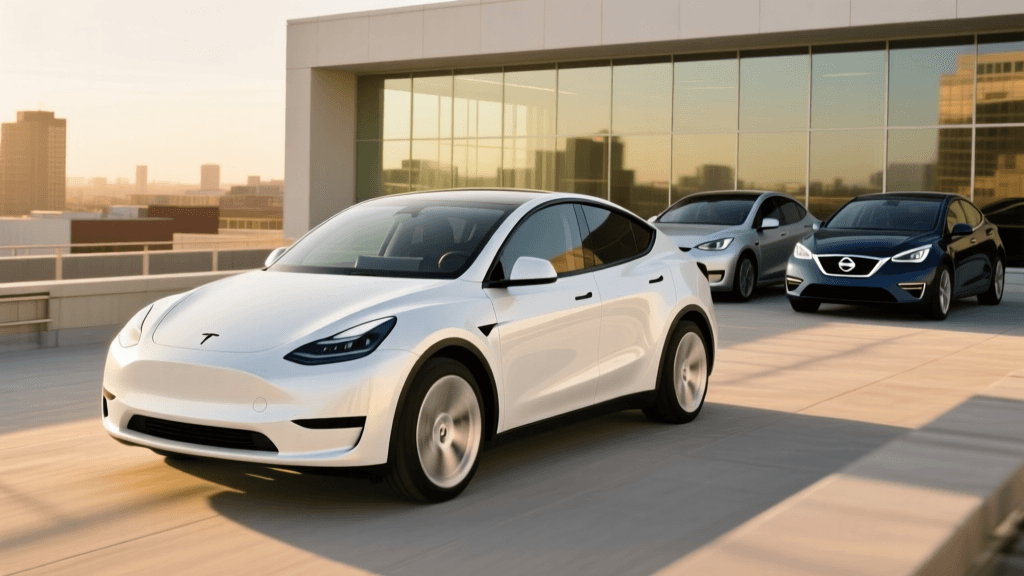
Tesla's warranty terms for the Long Range models (8 years/120,000 miles) are backed by the most extensive real-world degradation data in the industry. Tesla's engineering advantage is the 'Octovalve' thermal management system, a manifold that intricately routes coolant between the battery, the cabin, and the drive unit heat pumps. This allows the vehicle to predictively heat or cool the battery based on navigation routing to Superchargers. Furthermore, Tesla's BMS operates at the individual cell level, actively balancing voltage across thousands of 2170 or 4680 cells to prevent localized over-stressing, which is a primary cause of pack failure.
4. Genesis Electrified GV70
Warranty Coverage: 10 Years / 100,000 Miles (Powertrain & Battery)
Sharing the E-GMP underpinnings with Hyundai and Kia, the luxury-focused Genesis Electrified GV70 offers the same stellar 10-year/100,000-mile warranty. However, Genesis adds an extra layer of software sophistication. The GV70 features luxury-grade battery preconditioning that integrates with the vehicle's climate control and route-planning algorithms. By ensuring the battery is never subjected to high-amperage DC charging while cold, the BMS preserves the long-term health of the nickel-cobalt-aluminum (NCA) chemistry, justifying the decade-long coverage.
Comprehensive Warranty & Tech Comparison Table
| Vehicle Model | Battery Warranty (Time / Mileage) | Capacity Retention Guarantee | Core Thermal Management Tech |
|---|---|---|---|
| Hyundai Ioniq 5 / Kia EV6 | 10 Years / 100,000 Miles | Minimum 70% | Integrated Heat Pump, Liquid Cooling Plates |
| Rivian R1T / R1S | 8 Years / 175,000 Miles | Minimum 70% | Structural Aluminum Thermal Sink, Heavy-Duty Liquid Loop |
| Tesla Model 3 / Y (Long Range) | 8 Years / 120,000 Miles | Minimum 70% | Octovalve Manifold, Predictive Supercharger Preconditioning |
| Genesis Electrified GV70 | 10 Years / 100,000 Miles | Minimum 70% | Route-Integrated Preconditioning, Multi-Way Heat Pump |
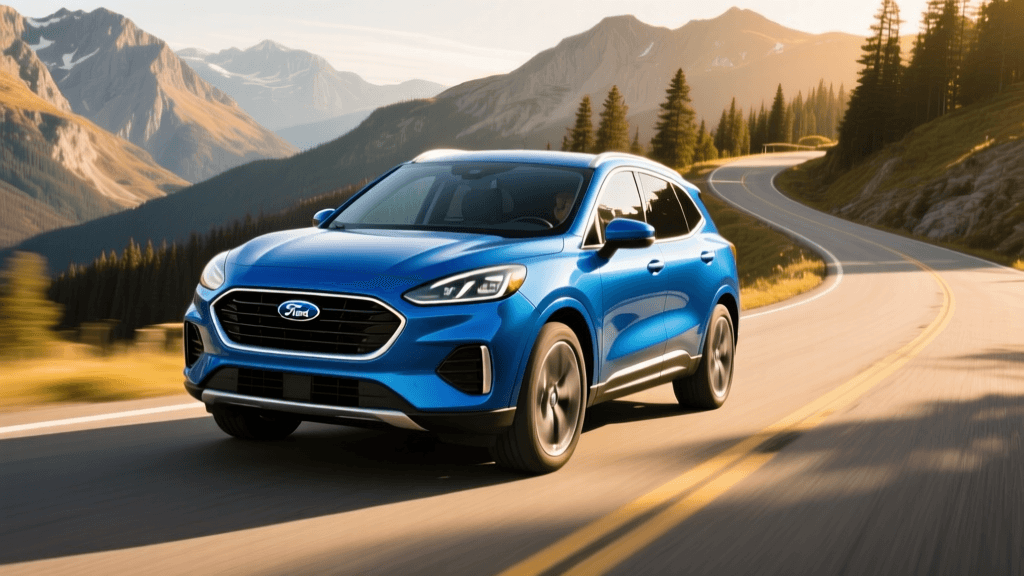
| Ford Mustang Mach-E (Ext. Range) | 8 Years / 100,000 Miles | Minimum 70% | Active Liquid Cooling/Heating, BMS Cell Balancing |
Actionable Advice: Maximizing Your EV Battery Lifespan
Even with a 10-year or 175,000-mile warranty, preserving your battery's health ensures you maintain maximum range and resale value. The Environmental Protection Agency (EPA) notes that modern EV batteries are built to last, but user habits still play a role. Follow these technical best practices:
- Utilize Preconditioning: Always use your EV's navigation system to route to DC fast chargers. This signals the BMS to precondition the battery, optimizing the cell temperature for rapid ion transfer and preventing lithium plating.
- Follow the 20-80% Rule for Daily Driving: For NMC (Nickel Manganese Cobalt) and NCA batteries, keeping the state of charge between 20% and 80% reduces stress on the cathode structure. (Note: LFP batteries, like those in standard-range Teslas, can and should be charged to 100% regularly for cell balancing).
- Minimize High-Amperage DC Fast Charging: While modern thermal systems mitigate heat buildup, relying exclusively on Level 3 DC fast charging accelerates SEI layer growth. Prioritize Level 2 home charging whenever possible.
- Avoid Deep Discharges: Letting the vehicle sit at 0% state of charge for extended periods can cause copper dissolution in the anode current collector, leading to permanent cell damage.
Final Verdict
The length of an EV battery warranty is a window into an automaker's engineering prowess. Hyundai and Kia lead the pack with their 10-year guarantees, made possible by the E-GMP platform's exceptional thermal scavenging capabilities. Meanwhile, Rivian's massive 175,000-mile cap proves that robust structural and thermal over-engineering can protect batteries through the most grueling physical conditions. Tesla continues to leverage its Octovalve system and unparalleled fleet data to offer highly reliable 120,000-mile coverage.
Ultimately, when shopping for an EV, look beyond the initial range and price. The underlying battery management technology and the warranty that backs it are the true indicators of a vehicle's long-term viability and total cost of ownership.