The Used EV Market: Why Battery Health is King
Buying a used electric vehicle is one of the smartest financial moves you can make in today's automotive landscape. You bypass the steep initial depreciation curve while still gaining access to instant torque, zero tailpipe emissions, and minimal routine maintenance. However, the used EV market carries one massive, unique variable that internal combustion engine buyers rarely worry about: battery degradation. The high-voltage battery pack is the single most expensive component in any electric car, and its State of Health (SoH) dictates the vehicle's remaining range, performance, and resale value.
According to the Alternative Fuels Data Center, modern EV batteries are designed to outlast the life of the vehicle, but real-world conditions, charging habits, and thermal management systems cause varying rates of degradation. A used EV with a degraded battery isn't just inconvenient; it can represent a ticking time bomb of financial liability, as out-of-warranty battery replacements can cost anywhere from $5,000 to over $15,000. Therefore, ranking used EVs requires looking past the badge and diving deep into battery chemistry, cooling systems, and historical degradation data.
Head-to-Head Showdown: Contenders and Methodology
To determine the best used electric cars ranked by battery health and value, we are putting three of the most popular used EVs on the market into a head-to-head showdown. We evaluated these vehicles based on their thermal management architecture, real-world battery degradation curves, and overall value proposition in the current used market.
Our three contenders are:
- Tesla Model 3 (2018–2021): The premium benchmark with advanced liquid cooling.
- Chevrolet Bolt EV (2017–2022): The budget-friendly range king with a unique recall history.
- Nissan Leaf (2018–2022): The affordable pioneer relying on passive air cooling.
We rely on extensive fleet data and industry research, including comprehensive degradation studies from Recurrent Auto, to provide an objective, data-driven ranking.
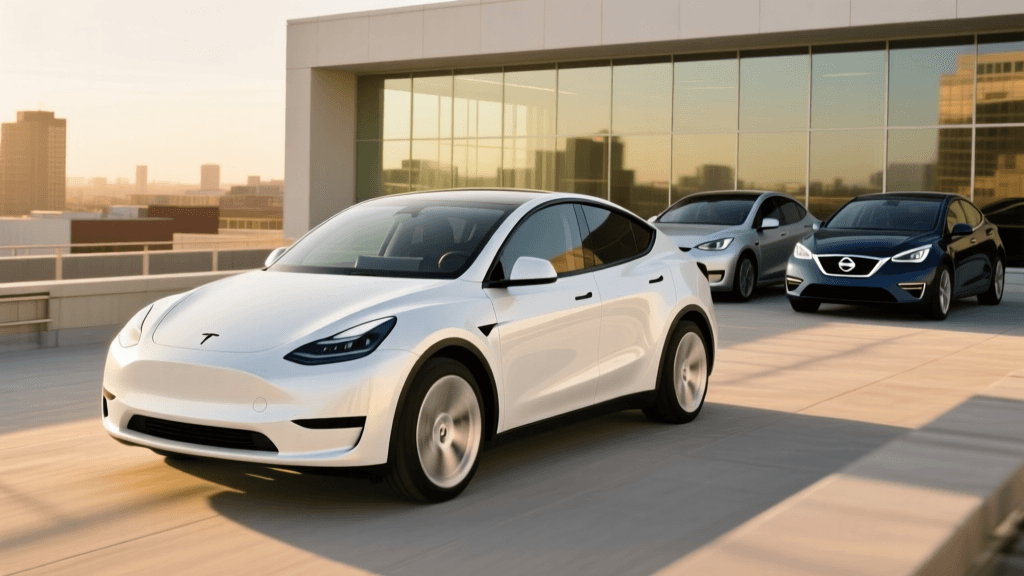
Contender 1: Tesla Model 3 (2018–2021)
The Tesla Model 3 revolutionized the EV market, and its battery management system (BMS) remains one of the most sophisticated in the industry. Tesla utilizes an active liquid cooling and heating system that keeps the battery cells within an optimal temperature window, regardless of whether you are charging at a Supercharger in the Arizona heat or driving through a Minnesota blizzard.
Battery Health & Degradation: Data shows that the Model 3's battery degradation curve flattens out significantly after the initial 10,000 miles. On average, a Model 3 retains roughly 90% to 92% of its original battery capacity after 100,000 miles of driving. The NCA (Nickel Cobalt Aluminum) and later LFP (Lithium Iron Phosphate) chemistries used by Tesla are incredibly resilient when managed by the vehicle's Octovalve thermal system.
Value Proposition: The Model 3 commands a premium on the used market. While you will pay more upfront compared to a similarly aged Bolt or Leaf, the retention of range and the vast Supercharger network make it the safest long-term investment. The risk of needing an out-of-pocket battery replacement before 150,000 miles is statistically minuscule.
Contender 2: Chevrolet Bolt EV (2017–2022)
The Chevy Bolt EV is the undisputed champion of affordable, long-range used EVs. Offering an EPA-estimated 238 to 259 miles of range, it punches well above its weight class. Crucially, the Bolt features an active liquid cooling system, which was a massive advantage over its direct budget rival, the Nissan Leaf.
Battery Health & Degradation: Under normal circumstances, the Bolt's LG Chem battery packs show excellent health, typically retaining over 90% SoH at 60,000 miles. However, the Bolt's history is defined by the massive battery fire recall. General Motors recalled all Bolt EVs to replace defective battery modules. This is a massive advantage for used buyers. If you purchase a used Bolt that has completed its recall repair, you are effectively getting a brand-new, 65-kWh battery pack installed for free, resetting the vehicle's range and battery health to 100%.
Value Proposition: The Bolt offers the best sheer value in the used EV space. Prices have plummeted, making it a sub-$15,000 option in many markets. If you verify the recall replacement has been completed, it is arguably the smartest battery-health purchase you can make.
Contender 3: Nissan Leaf (2018–2022)
The Nissan Leaf is the best-selling used EV by sheer volume, largely due to its incredibly low entry price. The second-generation Leaf (2018+) offers either a 40-kWh or 62-kWh battery. However, it suffers from a fatal flaw in the context of battery health: passive air cooling.
Battery Health & Degradation: Because the Leaf relies on ambient air to cool its battery pack, it is highly susceptible to heat-induced degradation. In hot climates like Texas, Arizona, or Southern California, rapid DC fast charging generates immense heat that the Leaf cannot dissipate. This leads to 'Rapidgate' (throttled charging speeds) and accelerated capacity loss. It is not uncommon to see Leafs in hot climates lose 15% to 20% of their battery capacity within the first 60,000 miles.
Value Proposition: The Leaf is only a good value if you live in a temperate, cool climate (like the Pacific Northwest) and plan to charge exclusively at home on Level 2. Otherwise, the rapid battery degradation destroys the vehicle's value and utility over time.
Battery Degradation & Value Comparison Table
| Vehicle Model (Years) | Thermal Management | Avg SoH at 60k Miles | Avg Used Price (Est.) | Value & Health Rating |
|---|---|---|---|---|
| Tesla Model 3 (2018-2021) | Active Liquid | ~94% | $22,000 - $28,000 | Excellent (Premium) |
| Chevy Bolt EV (Recall Fixed) | Active Liquid | 100% (New Pack) | $14,000 - $18,000 | Outstanding (Budget) |
| Nissan Leaf (2018-2022) | Passive Air | ~85% - 92%* | $12,000 - $16,000 | Poor (High Risk) |
*Note: Nissan Leaf degradation varies wildly based on geography and DC fast-charging frequency.
Actionable Advice: How to Check a Used EV's Battery Health
Never buy a used EV based solely on the odometer reading. You must verify the battery's State of Health (SoH) before handing over your money. Here is your step-by-step showdown checklist:
1. Use an OBD2 Scanner and App
For the Nissan Leaf, purchase or borrow an OBD2 dongle and download the Leaf Spy app. This will give you a precise readout of the battery's Ah (Amp-hour) capacity and identify if any individual cells are severely unbalanced. For the Chevy Bolt, apps like myChevrolet or third-party OBD2 readers can pull the battery health metrics directly from the BMS.
2. Verify Recall and Warranty Status
If you are looking at a Chevy Bolt, run the VIN through GM's recall database. Do not purchase the vehicle unless the dealer provides documentation that the high-voltage battery recall repair has been completed. Furthermore, check if the battery is still covered under the federal mandate for EV warranties (8 years/100,000 miles in most states, or 10 years/150,000 miles in CARB states like California).
3. Perform the 'Dash-to-Empty' Test
During your test drive, charge the vehicle to 100% (unless it's an LFP Tesla, in which case 100% is required regularly). Note the estimated range on the dashboard. Take the car on a 20-mile mixed driving loop. Calculate the ratio of miles driven to miles of range consumed. If you drive 20 miles but the car consumes 35 miles of estimated range, the battery has suffered significant degradation or there is an issue with the drivetrain efficiency.
Final Verdict: Which Used EV Wins?
When ranking the best used electric cars by battery health and value, the Chevrolet Bolt EV takes the crown for the budget-conscious buyer, provided the battery recall has been addressed. Getting a brand-new battery pack in a $15,000 hatchback is an unmatched value proposition that completely eliminates battery degradation anxiety.
However, if you have a higher budget and want premium performance, road-trip capability, and proven long-term degradation curves, the Tesla Model 3 remains the undisputed overall champion. Its active thermal management ensures the battery will likely outlast the rest of the car's components.
As for the Nissan Leaf? It finishes last in our showdown. Unless you are buying it for a hyper-local commute in a cold-weather climate, the lack of liquid cooling makes it a risky financial gamble in the used EV market. Always prioritize liquid-cooled battery packs when shopping for a used electric vehicle to protect your investment and your peace of mind.