The Current State of Alternative Fuel Corridors
The American road trip is undergoing its most significant transformation since the construction of the Interstate Highway System in the 1950s. As electric vehicle (EV) adoption accelerates, the focus has shifted from vehicle range to infrastructure reliability. For mainstream consumers, the viability of an EV hinges entirely on the predictability of public charging networks along major travel routes. This analysis explores the future trends, industry outlook, and coverage realities of US interstate highway EV charging corridors, examining how federal mandates and private investments are reshaping cross-country travel.
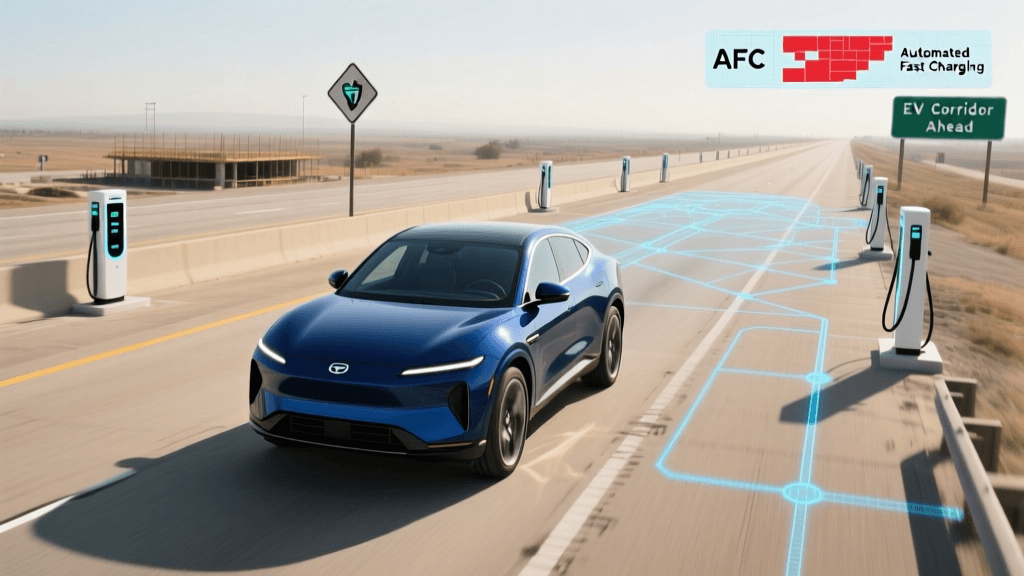
To understand the future, we must examine the regulatory framework shaping today's buildout. The Federal Highway Administration (FHWA) established the Alternative Fuel Corridors (AFC) program to identify key national highway segments capable of supporting EV travel. The cornerstone of this initiative is the "50-mile rule," which mandates that designated corridors must have fast-charging stations spaced no more than 50 miles apart, and located within one mile of the interstate exit.
While early AFC designations relied heavily on existing private networks like Tesla's Superchargers and Electrify America, the future of these corridors is now tethered to federal funding and strict standardization. The ultimate goal is to eliminate "charging deserts"—stretches of highway where drivers face severe range anxiety due to sparse or unreliable infrastructure.
NEVI Funding and the 2025–2030 Rollout Timeline
The National Electric Vehicle Infrastructure (NEVI) Formula Program is the financial engine driving corridor expansion. Administered by the Joint Office of Energy and Transportation, NEVI provides $5 billion in federal funding to states specifically to build out AFCs. This funding is fundamentally altering the economics of interstate charging, making it viable to build plazas in areas that private companies previously deemed unprofitable.
Strict NEVI Station Requirements
Unlike the early days of private deployments, NEVI-funded stations must adhere to strict, future-proof standards designed to maximize traveler throughput and reliability:
- Minimum Ports: At least four 150 kW DC fast charging (DCFC) ports.
- Simultaneous Charging: The station must be able to deliver 150 kW to all four vehicles simultaneously without power splitting or throttling.
- Uptime Reliability: A mandated 97% uptime requirement, addressing the notorious unreliability and broken-screen issues of legacy networks.
- Connector Standardization: Stations must support prevailing standards, increasingly pivoting toward the North American Charging Standard (NACS).
As states move from Phase 1 (filling 50-mile gaps) to Phase 2 (expanding capacity and community charging), interstate corridors will see a massive influx of standardized, highly reliable plazas by 2026.
Interstate Corridor Coverage Analysis
Not all interstates are created equal. Coverage density, local grid capacity, and state-level execution vary wildly across the country. Below is an analysis of four critical US interstate corridors and their projected infrastructure outlook.
| Interstate Corridor | Route Profile | Current DCFC Density | Primary Bottleneck | 2026 NEVI Outlook |
|---|---|---|---|---|
| I-95 (Maine to FL) | High-Traffic East Coast | High (15-25 mi spacing) | Urban grid congestion, peak wait times | High capacity expansion, massive NEVI plaza additions to reduce queues |
| I-80 (CA to NJ) | Cross-Country North | Moderate (30-50 mi spacing) | Rural grid limits in WY/NE | Targeted gap-filling, new utility transmission upgrades required |
| I-10 (CA to FL) | Southern Transcontinental | Moderate to High | Extreme heat battery throttling | Climate-resilient canopy mandates, battery storage integration |
| I-70 (UT to MD) | Mountain West Transit | Low (50+ mi gaps in UT/CO) | High altitude, sparse population | State-subsidized rural hubs, advanced battery buffering |
Future Trends: NACS Standardization and Megawatt Charging
The most disruptive trend in corridor coverage is the industry-wide adoption of the North American Charging Standard (NACS). With major automakers transitioning to NACS and Tesla opening its Supercharger network to non-Tesla vehicles via the Magic Dock and native cable deployments, the fragmented charging experience is ending. By 2025, virtually all new NEVI-funded interstate plazas will feature native NACS connectors, eliminating the need for bulky adapters and improving plug-and-charge reliability.
The Looming Megawatt Charging System (MCS)
Looking further ahead to the 2028–2030 horizon, interstate corridors will need to accommodate electric commercial freight. The Megawatt Charging System (MCS) is currently in development to deliver up to 3.75 MW of power—nearly 10 times the speed of current consumer DCFCs. Future interstate rest stops and trucking corridors are already being surveyed for the massive land and grid requirements MCS will demand, ensuring that passenger EV corridors do not compete with commercial freight for space and power.
Bridging the Rural Interstate Gap
Despite federal funding, rural interstates remain the final frontier. Stretches like I-80 through Wyoming or I-40 through New Mexico suffer from a lack of existing utility transmission capacity. Building a 600 kW NEVI plaza in a remote area often requires millions of dollars in upstream grid upgrades, which can take years to permit and construct.
To combat this, the industry is turning to battery-buffered charging stations. Companies are deploying systems that trickle-charge a large on-site battery pack from a weak rural grid, and then discharge that stored energy into vehicles at 150 kW or higher. According to resources like the USDOT Rural EV Toolkit, states are encouraged to partner with local municipalities and tribal lands to secure right-of-way for these critical buffer stations. This technological workaround is critical for completing the 50-mile AFC map in low-population states without waiting for decade-long utility upgrades.
Actionable Advice for Interstate EV Travelers
While the 2030 corridor vision is promising, drivers navigating the interstates today must be strategic. Here is how to optimize your cross-country travel during this transitional infrastructure phase:
- Leverage Route Planners with Real-Time Data: Do not rely solely on your vehicle's native navigation. Use tools like A Better Routeplanner (ABRP) or PlugShare, filtering specifically for 150 kW+ chargers. Look for user comments regarding broken screens, offline stalls, or ICE-ing (internal combustion engine vehicles blocking chargers).
- Identify "Pilot" NEVI Stations: Many new stations are coming online with NEVI funding but may face initial software handshake issues with non-native vehicles. When planning a trip through a newly completed corridor gap, always identify a backup charger 15-20 miles off your primary route.
- Understand Power Sharing: Many legacy Electrify America and EVgo stations still utilize power-sharing cabinets. If you plug into stall 1A and another car plugs into 1B, your charging speed may be cut in half. Always look for stations with four or more stalls or dedicated liquid-cooled cables to minimize power-splitting risks.
- Prepare for NACS Transitions: If you drive a CCS-equipped vehicle, invest in a high-quality, actively cooled CCS-to-NACS adapter from a reputable brand like A2Z or Lectron. As Tesla Superchargers along interstates increasingly rely on NACS-only stalls, having an adapter ensures you can utilize the most reliable network on the highway.
- Master Battery Preconditioning: On long interstate stretches, manually input your next charging stop into your vehicle's navigation system 30 to 45 minutes before arrival. This warms the battery pack to the optimal temperature, ensuring you hit peak charging speeds immediately upon plugging in, which is vital when traversing high-altitude or cold-weather corridors like I-70 through the Rockies.
Conclusion
The future of US interstate highway EV charging corridors is transitioning from a patchwork of private ventures to a standardized, federally backed utility. While rural gaps and grid constraints present temporary hurdles, the strict reliability mandates of the NEVI program and the unification of the NACS connector guarantee that the cross-country EV road trip will be seamless, predictable, and highly efficient by the end of the decade. By understanding these infrastructure trends and utilizing smart routing strategies, drivers can confidently navigate the evolving landscape of the American interstate system.