The Rise of Public Charging Friction
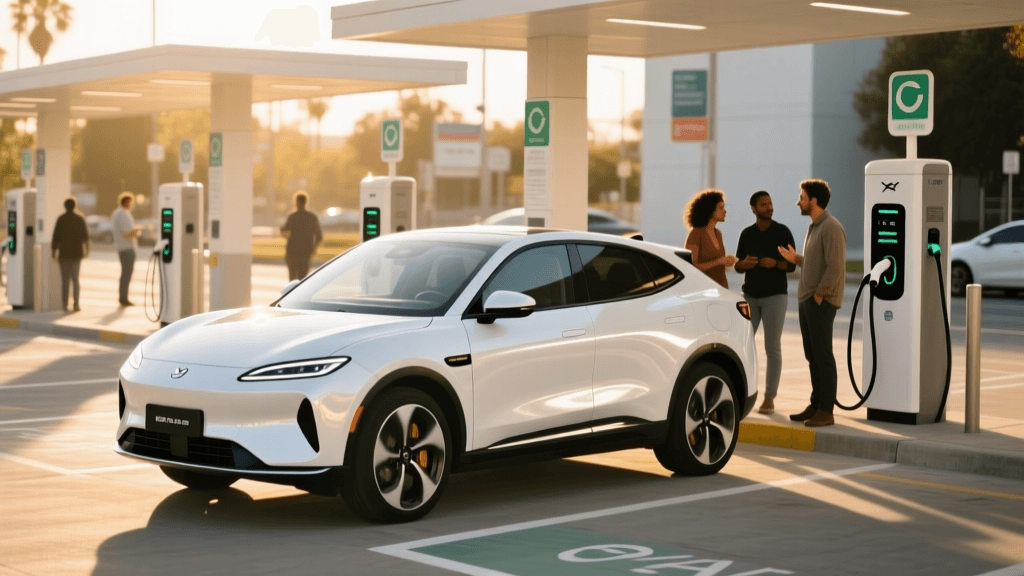
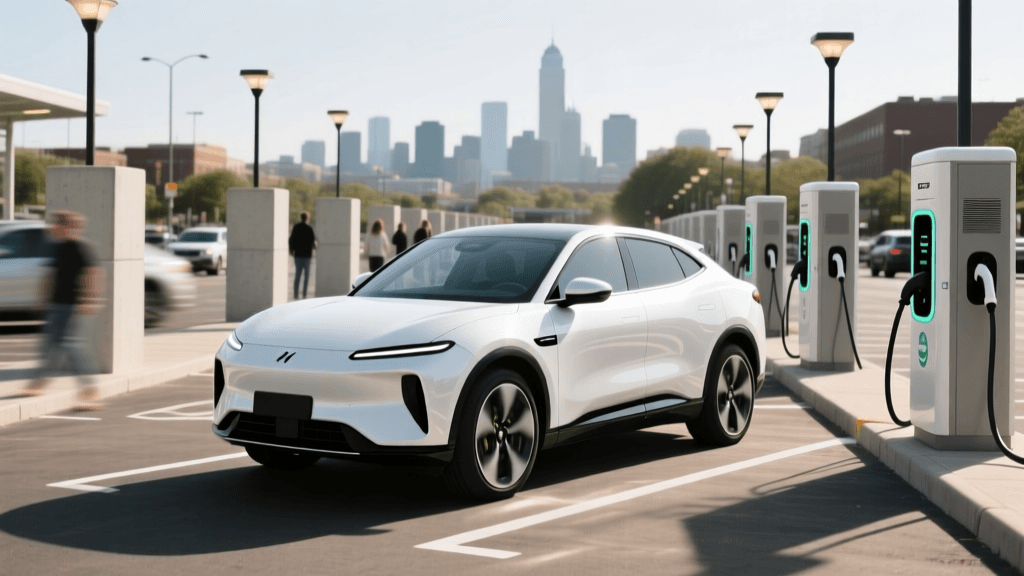
As electric vehicle adoption accelerates across North America, public charging infrastructure is under immense strain. Networks like Electrify America, EVgo, ChargePoint, and the Tesla Supercharger network are busier than ever. While this growth is a triumph for the EV revolution, it has also led to increased friction at public charging plazas. According to the U.S. Department of Energy, understanding how to properly utilize public EV charging infrastructure is just as important as understanding your vehicle's battery management system. When dozens of drivers share a limited number of high-power DC fast chargers, etiquette is no longer just about politeness; it is about maximizing throughput, preserving hardware, and ensuring everyone reaches their destination safely.
In this expert guide, we break down the definitive rules of EV charging etiquette, analyze the technical reasons behind them, and provide actionable strategies for resolving common public charging disputes without losing your cool.
The Golden Rules of Public EV Charging Etiquette
1. The 80% Rule: Why You Must Unplug at DC Fast Chargers
The most sacred rule of highway DC fast charging (DCFC) is to unplug and move your vehicle once you reach 80% State of Charge (SoC). This is not an arbitrary suggestion; it is rooted in lithium-ion battery chemistry. During a fast-charging session, the vehicle's Battery Management System (BMS) utilizes a Constant Current (CC) phase to rapidly push electrons into the battery pack up to roughly 80%. Beyond this threshold, the BMS switches to a Constant Voltage (CV) phase, drastically throttling the charging speed to prevent overheating and battery degradation.
Data compiled by the Alternative Fuels Data Center highlights the dramatic drop-off in charging speeds at higher states of charge. Review the charging curve below to understand why lingering at a stall is highly inefficient:
| Charging Phase | State of Charge (SoC) | Average Time (DCFC) | Power Draw |
|---|---|---|---|
| Fast Charge | 10% to 80% | 20-25 Minutes | 150-250 kW |
| Throttled | 80% to 90% | 15 Minutes | 40-70 kW |
| Trickle | 90% to 100% | 25+ Minutes | Under 20 kW |
Expert Insight: It often takes longer to charge from 80% to 100% than it does from 10% to 80%. By staying plugged in to get that final 20%, you are occupying a high-power stall while drawing minimal electricity, effectively blocking another driver who could have gained a 70% charge in that same timeframe. If you absolutely need a 100% charge for the final leg of a road trip, do so at a Level 2 destination charger overnight, not at a busy highway plaza.
Note on LFP Batteries: If your EV uses a Lithium Iron Phosphate (LFP) battery (common in standard-range Tesla models and some Rivian configurations), the manufacturer recommends charging to 100% regularly for BMS calibration. However, this should still be done at home or via Level 2 charging. LFC chemistry does not exempt you from highway DCFC etiquette.
2. Never Camp or Block a Stall
"Camping" refers to leaving your EV plugged in long after it has finished charging, often while the driver goes shopping, eats a sit-down meal, or sleeps. This is the leading cause of road-trip anxiety and anger among EV drivers. To combat this, networks have implemented aggressive idle fees. On the Tesla Supercharger support page, the company outlines idle fees that can reach up to $1.00 per minute if the station is full and your vehicle is at 100%. Electrify America enforces similar penalties, typically charging $0.40 per minute after a 10-minute grace period.
Furthermore, never block a charging stall with an internal combustion engine (ICE) vehicle, and if you drive a plug-in hybrid (PHEV), do not use a DC fast charger if standard EVs are waiting, as your smaller battery will monopolize the stall for minimal range gain.
3. Cable Management and Hardware Preservation
High-power DC fast charging cables, especially liquid-cooled 350kW cables, are incredibly heavy, expensive, and sensitive. Never drop the connector on the ground. Leaving a CCS, CHAdeMO, or NACS connector in the dirt, snow, or puddles allows debris and moisture to enter the pins. When the next driver plugs in, this debris causes "handshake failures," isolation faults, or damaged vehicle charge ports. Always re-holster the cable securely on the charger unit. If the holster is broken, gently loop the cable over the screen or handle to keep the connector off the ground, and report the damage in the network's app.
4. The Unwritten Rules of Unplugging Another EV
Unplugging someone else's vehicle is highly controversial and should only be done as an absolute last resort. You may consider unplugging another EV only if all the following conditions are met:
- The vehicle has clearly reached 100% SoC (check the dashboard or app if visible).
- The vehicle has been parked there for an extended period (e.g., over two hours).
- All other chargers at the plaza are occupied or broken.
- You leave a highly visible, polite note on their windshield explaining why you unplugged them and providing your contact info.
Best Practice: Before resorting to unplugging, check the PlugShare app. Users often leave check-in notes indicating when they will return. If the car is at a Tesla Supercharger, you can sometimes use the Tesla app's "Move Vehicle" notification feature to alert the owner that their car is finished charging and blocking a stall.
Navigating Common Charging Disputes
Even when you follow the rules, you will inevitably encounter drivers who do not. Here is how to handle common disputes with expert-level de-escalation tactics:
Scenario 1: The Line Jumper
You are waiting in your car for a stall, and a new arrival pulls up and immediately takes the spot that just opened. Action: Do not honk aggressively or block them in. Step out of your vehicle calmly, approach the driver as they are plugging in, and politely say, "Excuse me, I just wanted to let you know I've been waiting in line for that specific stall for about fifteen minutes." Most line jumpers are simply oblivious to the queue system and will apologize and yield. If they refuse, let it go; road rage is never worth a delayed trip.
Scenario 2: The Broken Charger Blocker
A driver parks at a stall, realizes it is broken, but leaves their car parked in the spot while they go to a nearby store, effectively taking a stall out of commission. Action: If they are still nearby, politely inform them that leaving a car in a broken stall prevents tow trucks or technicians from accessing it, and stops others from using the adjacent cable if it has enough reach. If they are gone, use the network's app to report the stall as "Blocked by ICE/EV" so the navigation systems of incoming drivers route them elsewhere.
Scenario 3: The 100% Camper
You arrive with 5% battery, and the only available charger is occupied by a vehicle sitting at 100% with the driver nowhere in sight. Action: First, check for idle fees on the charger screen. If idle fees are not active, try to find the owner by asking inside the adjacent businesses. If you must unplug them (following the strict criteria mentioned in Rule 4), do so carefully. Some vehicles lock the charge port; if the release pin does not disengage, do not force it, as you will break the vehicle's locking mechanism and be held liable for damages.
Expert Tools for a Frictionless Experience
To avoid disputes entirely, rely on data and route planning. Use A Better Routeplanner (ABRP) to time your arrivals at charging plazas during off-peak hours (e.g., early mornings or late evenings). Utilize PlugShare to read recent user check-ins; if a station has multiple recent complaints about broken stalls or long queues, ABRP and PlugShare will help you reroute to a less congested plaza five miles down the road. Finally, always keep the specific network apps (EVgo, ChargePoint, EA) installed and logged in on your phone to easily report hardware issues, which improves the infrastructure for the entire EV community.
Conclusion
Public EV charging etiquette is the social contract that keeps the electric road trip viable. By respecting the 80% rule, managing heavy cables properly, and approaching disputes with patience and data, you contribute to a faster, more reliable charging network for everyone. The transition to electric mobility is a collective effort, and a little courtesy at the plaza goes a long way.