The Great Costco EV Charging Myth: Does Every Warehouse Have Plugs?
For electric vehicle owners, the holy grail of errand-running is finding a location where you can seamlessly charge your car while you shop. Costco, with its massive parking lots, famously cheap gas stations, and legendary rotisserie chickens, seems like the perfect EV charging oasis. But as EV adoption has surged, a web of myths, misconceptions, and outright falsehoods has surrounded Costco EV charging station availability. Are they everywhere? Are they always free? Can you actually get a meaningful charge while buying a year's supply of paper towels and bulk snacks? In this comprehensive guide, we are busting the most common myths and highlighting the critical mistakes EV drivers make when relying on Costco for public charging infrastructure.
Myth #1: Every Costco Warehouse Has EV Chargers
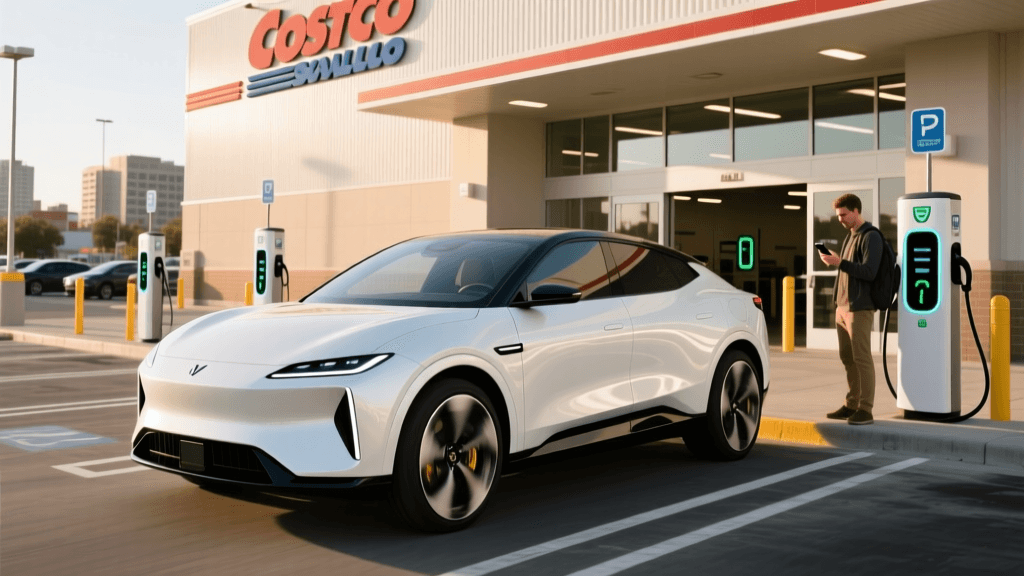
One of the most pervasive myths in the EV community is that Costco has universally rolled out charging stations across all its locations. The reality is far more fragmented. Costco EV charging station availability is highly regional and largely depends on local building codes, state mandates, and the age of the warehouse. Warehouses in California, the Pacific Northwest, and parts of the Northeast are significantly more likely to feature EV chargers due to strict municipal zoning laws that require new commercial builds to include EV infrastructure. Conversely, older warehouses in the Midwest and South rarely have dedicated charging spots. Furthermore, the official Costco Warehouse Locator on their website does not include a filter for EV charging stations, leaving many drivers to arrive at a warehouse blindly, only to find nothing but standard parking spots and ICE vehicles.
Myth #2: Charging at Costco is Always Free
In the early days of EV adoption, many big-box retailers installed Level 2 chargers and offered them for free as a promotional perk to attract affluent, eco-conscious shoppers. While you might still stumble upon a legacy free charger at a rural Costco, the era of complimentary retail charging is largely over. Today, the vast majority of Costco EV charging stations are operated by third-party networks like Blink or ChargePoint. These networks require an account, a mobile app, and a valid credit card. While the cost per kWh is usually reasonable compared to DC Fast Charging networks, it is rarely free. Some locations may offer the first hour free, but this is dictated by the local property management, not a universal Costco corporate policy. Always check the specific station's pricing on your network app before plugging in to avoid unexpected idle fees or per-minute billing structures.
Myth #3: You Can Fast-Charge While You Shop
Many EV drivers mistakenly equate retail charging with the rapid speeds of a Tesla Supercharger or an Electrify America DC Fast Charging (DCFC) plaza. This is a massive misconception that leads to severe range anxiety. Almost all Costco EV charging stations are Level 2 AC chargers, typically delivering between 7.2 kW and 19.2 kW of power. To put that into perspective, a standard 7.2 kW charger will only add about 20 to 25 miles of range per hour of charging. Even if you max out a 19.2 kW dual-port charger, you are only gaining roughly 50 to 60 miles of range per hour. If your typical Costco run takes 45 minutes, you are not going to charge your battery from 10% to 80%. You are essentially engaging in 'destination charging' or 'opportunity charging'—topping off your battery just enough to get you home or to your next dedicated fast-charging stop.
Common Mistakes EV Drivers Make at Costco
Mistake 1: Relying Solely on the Costco App or Website
Because Costco does not officially track or advertise its charging amenities on its main consumer-facing map, relying on their website is a guaranteed way to waste a trip. Instead, savvy EV drivers use crowd-sourced applications. According to data from the U.S. Department of Energy's Alternative Fuels Data Center, retail locations are among the most common public charging hubs, but their operational status fluctuates wildly. Using PlugShare is mandatory for Costco charging. By searching 'Costco' in the PlugShare map view and reading the most recent user check-ins, you can instantly verify if a location actually has chargers, what network they are on, and crucially, whether they are currently broken or blocked by internal combustion engine (ICE) vehicles.
Mistake 2: Ignoring Network Reliability and App Requirements
A frequent and frustrating mistake is arriving at a Costco without the correct network app downloaded and configured. Many Costco locations utilize the Blink network. Blink is notorious in the EV community for having older hardware with faulty touchscreens and card readers. If you arrive without the Blink app on your phone, pre-loaded with a credit card, you may find yourself unable to initiate a charging session because the physical screen on the pedestal is unresponsive or the RFID card reader is broken. Always download the relevant network app, create an account, and verify your payment method before you leave your house.
Mistake 3: The 'Rotisserie Chicken' Time Miscalculation
As mentioned in the myth-busting section, Level 2 charging is slow. A common mistake is parking in an EV spot at Costco, grabbing a cart, and assuming you will get a massive amount of range while you shop. If you are driving a heavy electric truck like the Rivian R1T or Ford F-150 Lightning, your efficiency is lower, meaning a 7.2 kW Level 2 charger might only add 15 miles of range per hour. Drivers must manage their expectations and treat Costco chargers as a supplementary top-up, not a primary charging strategy for road trips.
Costco EV Charging Reality: By the Numbers
To help you plan your next shopping trip, we have compiled a comparison table detailing what drivers expect versus the actual reality of Costco EV charging infrastructure.
| Feature | Common Myth / Expectation | The Reality |
|---|---|---|
| Availability | Every warehouse has them. | Highly regional; mostly in CA, PNW, and Northeast. |
| Charging Speed | DC Fast Charging (150kW+) | Level 2 AC (7.2kW to 19.2kW typical). |
| Cost | Always free for shoppers. | Mostly paid via Blink or ChargePoint apps. |
| Spot Availability | Plenty of open spots. | Often limited to 2-4 spots; frequently ICE'd or occupied. |
| Range Added (1 Hour) | 200+ miles | 20 to 45 miles (depending on vehicle efficiency). |
How to Verify Costco Charging Availability Before You Go
If you want to combine your bulk shopping with some opportunity charging, follow this strict pre-trip checklist to avoid disappointment:
- Step 1: Open PlugShare or your primary network app. Search for the specific Costco warehouse you plan to visit.
- Step 2: Check the Photos and Check-Ins. Look at photos uploaded by users in the last 30 days. This will tell you exactly where the chargers are located in the massive parking lot (often near the garden center or the far edges of the lot).
- Step 3: Read the Recent Reviews. If the last three reviews say 'Blink charger offline' or 'Screen broken,' do not plan your trip around charging there. Have a backup Level 2 or DCFC location in mind.
- Step 4: Verify the Connector Type. While almost all public Level 2 stations in North America use the universal J1772 connector (or the NACS adapter for newer Teslas), it is always wise to confirm, especially if you are driving a vehicle with a unique charging setup.
The Verdict: Is Costco a Reliable Charging Stop?
Costco EV charging stations are a fantastic supplementary resource for local drivers who happen to live near a well-equipped warehouse. They offer a safe, well-lit environment with plenty of amenities to pass the time. However, as a primary charging strategy or a reliable road-trip stop, they fall short due to inconsistent availability, slow Level 2 speeds, and the frequent reliability issues of the third-party networks that manage the hardware. By busting these common myths and avoiding the rookie mistakes outlined above, you can effectively integrate Costco into your local EV charging routine without the frustration of blocked spots or broken screens. Always verify with crowd-sourced apps, bring your own charging adapters, and remember: you are there for the bulk groceries first, and the electrons second.