The Great Costco EV Charging Myth
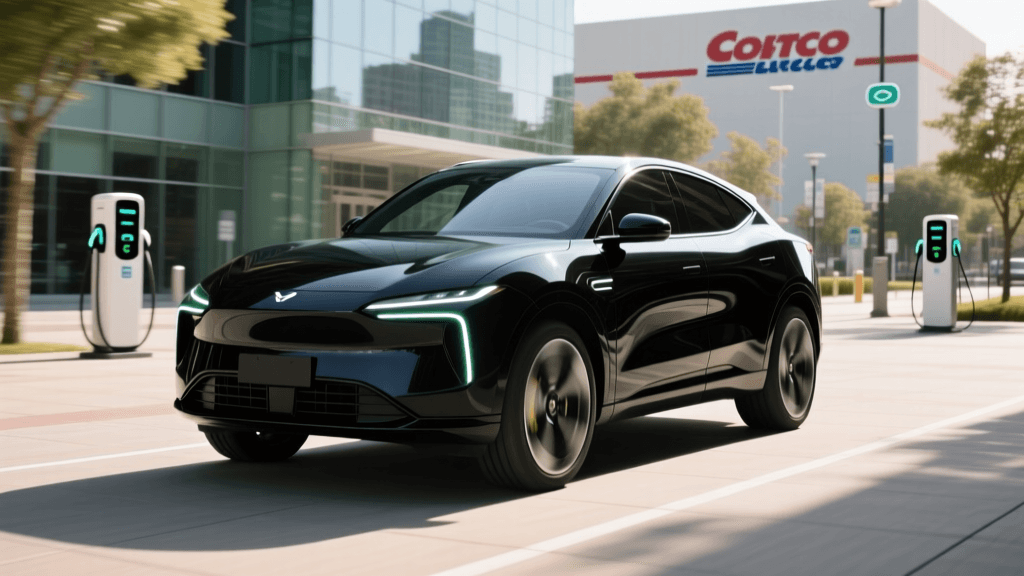
For many electric vehicle (EV) owners, the local Costco warehouse represents more than just bulk groceries and $1.50 hot dogs. Over the past few years, a persistent rumor has circulated through EV forums and social media groups: Costco is the ultimate hidden oasis for free, fast, and ubiquitous EV charging. However, as the EV market has matured and infrastructure has expanded, the reality of Costco EV charging station availability by location tells a very different story.
As a senior analyst for AutoEdgeView, I frequently see drivers stranded in retail parking lots or frustrated by unexpected fees because they bought into common myths about retail charging networks. Today, we are busting the most pervasive myths surrounding Costco EV chargers, breaking down regional availability, and highlighting the common mistakes you must avoid when planning your next grocery-and-charge run.
Myth #1: Every Costco Warehouse Has EV Chargers
The most damaging myth for cross-country road trippers and new EV owners is the assumption that Costco has universally adopted EV infrastructure across all its warehouses. This is demonstrably false. While Costco has partnered with charging networks—most notably the Blink Network—to install Level 2 chargers at select locations, these installations are highly localized.
Out of the roughly 600 Costco warehouses in the United States, only a fraction feature dedicated EV charging stations. The rollout has been largely driven by local municipal mandates, state-level zero-emission vehicle (ZEV) incentives, and regional sustainability initiatives rather than a top-down federal corporate mandate. If you are driving through the Midwest or the Deep South, assuming your next Costco stop will have an available charger is a recipe for range anxiety. Always verify station availability via apps like PlugShare or the Alternative Fuels Data Center before rerouting your trip.
Myth #2: Charging at Costco is Always Free
In the early days of EV adoption, many retailers offered complimentary Level 2 charging as a loss-leader to attract affluent, eco-conscious shoppers. While a handful of legacy chargers at older locations might still be free, the vast majority of Costco EV chargers today are monetized.
Because most Costco locations utilize the Blink Network, drivers are subject to Blink's pricing structures. This typically involves paying per kilowatt-hour (kWh) or a per-hour fee, depending on local utility regulations. Furthermore, to initiate a charge, you often need the Blink mobile app, a Blink RFID membership card, or a major credit card. Arriving at a Costco charger assuming it is free can lead to an unpleasant surprise when the network demands a payment method you aren't prepared to provide, or when the charging fees exceed what you would pay at a dedicated hub like Electrify America.
Myth #3: Costco Offers DC Fast Charging
Another frequent misconception is that Costco parking lots are equipped with DC Fast Chargers (DCFC) capable of delivering 150 kW to 350 kW of power. Drivers often plan a quick 30-minute grocery run, expecting their vehicle's battery to jump from 20% to 80% by the time they reach the checkout line.
The reality? Almost all Costco EV charging stations are Level 2 AC chargers, typically delivering between 7.2 kW and 19.2 kW. While this is perfectly adequate for topping off while you shop for an hour or two, it will not provide a rapid charge. If your vehicle has a 75 kWh battery and you are using a 7.2 kW Level 2 charger, it will take over 10 hours to charge from empty to full. Understanding the difference between Level 2 and Level 3 charging is critical for proper itinerary planning.
Regional Availability: Where Are Costco Chargers Actually Located?
To understand Costco EV charging station availability by location, we must look at regional infrastructure trends. The density of chargers at Costco warehouses closely mirrors state-level EV adoption rates and local building codes that require commercial properties to include EV-ready parking spaces.
| Region | Estimated Charger Density | Primary Network | Charger Type | Common Availability Issues |
|---|---|---|---|---|
| California & West Coast | High (30-40% of locations) | Blink / ChargePoint | Level 2 (7.2 - 19.2 kW) | High competition, frequent ICEing |
| Northeast Corridor | Moderate (15-25% of locations) | Blink / Tesla Destination | Level 2 (7.2 kW) | Urban congestion, broken pedestals |
| Texas & Southwest | Low to Moderate (10-15%) | Blink | Level 2 (7.2 kW) | Wide distances between equipped stores |
| Midwest & Southeast | Very Low (<5% of locations) | Varies | Level 2 | Rely on third-party malls nearby |
As the data illustrates, relying on Costco for charging infrastructure is a viable strategy in states like California, Washington, and New Jersey, but a highly unreliable one in states like Alabama, Nebraska, or the Dakotas.
Common Mistakes Drivers Make at Retail Chargers
Beyond believing the myths, EV drivers frequently make practical errors when utilizing retail charging stations. Avoiding these mistakes will save you time, money, and frustration.
1. Forgetting the J1772 Adapter (Tesla Owners)
The vast majority of Level 2 chargers at Costco locations feature a standard J1772 connector. If you drive a Tesla with only the proprietary NACS (North American Charging Standard) port, you will be unable to plug in unless you have your Tesla J1772 adapter in your trunk. Always keep this adapter in your vehicle if you plan to utilize destination or retail Level 2 networks.
2. Falling Victim to 'ICEing'
'ICEing' occurs when an internal combustion engine (ICE) vehicle parks in a designated EV charging spot, blocking access. Because Costco parking lots are notoriously busy, especially on weekends, EV spots are frequently occupied by non-EVs. A common mistake is driving to a Costco specifically to charge without checking a live app like PlugShare to see if recent users have reported the chargers as blocked.
3. 'Camping' on the Charger
Some EV owners plug in, realize they are only getting 7 kW of power, and decide to leave their car plugged in for three hours while they eat lunch, get a tire rotation, and shop. This 'camping' behavior prevents other shoppers from accessing the limited infrastructure. Furthermore, some networks implement idle fees if your car remains plugged in after reaching its charge limit, turning a cheap top-up into an expensive mistake.
4. Ignoring Maintenance Reports
Retail chargers suffer from high turnover and occasional vandalism or screen malfunctions. A common mistake is assuming a charger on a map is operational. Always read the most recent user comments on charging apps. If the last three reviews at a specific Costco location mention a 'broken screen' or 'connector error,' reroute to a dedicated charging hub.
Best Practices for Costco Charging Runs
If you have verified that your local Costco is equipped with functional, available Level 2 chargers, you can integrate it into your routine efficiently. Here is the optimal strategy:
- Use the Right Apps: Cross-reference the Alternative Fuels Data Center station locator with user-generated apps like PlugShare for real-time status updates.
- Prepare Your Payment: Ensure your Blink or ChargePoint account is funded and linked to a valid credit card before you pull up to the pedestal. Cellular service in large, concrete parking lots can be spotty, making app-based initiation difficult.
- Time Your Charge: Level 2 charging is best utilized when you plan to be inside the warehouse for at least 60 to 90 minutes. This allows you to add roughly 15 to 25 miles of range to your vehicle, which is excellent for local errands but insufficient for highway road trips.
- Have a Backup Plan: Always identify the nearest dedicated DC Fast Charging hub (such as an Electrify America or EVgo station) within a 5-mile radius in case the Costco chargers are blocked, broken, or occupied.
The Verdict on Costco EV Charging
Costco EV charging stations are a fantastic supplementary resource for local drivers who live in well-equipped regions and need to top off their batteries while running weekly errands. However, the myths of universal availability, free power, and fast-charging capabilities are just that—myths. By understanding the reality of Costco EV charging station availability by location, acknowledging the dominance of Level 2 Blink networks, and avoiding common retail charging mistakes, you can shop smarter and drive further without the stress of unexpected range anxiety.