The State of Urban EV Charging Infrastructure
As electric vehicle adoption accelerates across the United States, the conversation has shifted from vehicle range to infrastructure availability. For urban dwellers who lack access to private garages or dedicated home charging setups, public charging density is the single most critical factor in EV ownership satisfaction. However, a city-by-city public EV charging density comparison reveals a highly fragmented landscape. While coastal tech hubs boast robust networks of Level 2 and DC Fast Chargers, sprawling Sunbelt metropolises and dense legacy cities often struggle with charging deserts.
Understanding these regional disparities is essential for prospective EV buyers and current owners alike. According to the Alternative Fuels Data Center (AFDC), the distribution of public charging ports varies wildly based on local government incentives, utility partnerships, and geographic layout. In this guide, we break down the charging density of major U.S. cities and provide expert tips and best practices for navigating both high-density and low-density urban environments.
City-by-City Public EV Charging Density Comparison
To understand the urban charging landscape, we must look beyond total charger counts and examine density metrics—specifically, public charging ports per 100,000 residents. This metric provides a much clearer picture of how accessible public charging truly is for the average city dweller. Below is a comparative analysis of six major U.S. cities, highlighting their approximate infrastructure footprints based on recent regional data trends.
| City | Population (Approx.) | Public Ports (Est.) | Ports per 100k | Dominant Networks |
|---|---|---|---|---|
| San Francisco, CA | 808,000 | 1,650+ | 204 | ChargePoint, Tesla, EVgo |
| Seattle, WA | 737,000 | 950+ | 128 | ChargePoint, Blink, Tesla |
| Los Angeles, CA | 3.8 Million | 4,800+ | 126 | EVgo, ChargePoint, Tesla |
| New York, NY | 8.3 Million | 4,100+ | 49 | Tesla, ChargePoint, EVgo |
| Chicago, IL | 2.7 Million | 1,050+ | 38 | ChargePoint, Tesla, Blink |
| Houston, TX | 2.3 Million | 750+ | 32 | ChargePoint, Tesla, EA |
Analyzing the Data: Coastal Leaders vs. Legacy Hubs
San Francisco and Seattle lead the pack in per-capita charging density. This is largely driven by aggressive municipal climate action plans, high EV adoption rates, and a tech-savvy demographic that demands curbside and retail charging. Los Angeles also performs exceptionally well, bolstered by California's state-level mandates and utility investments in DC fast-charging corridors.
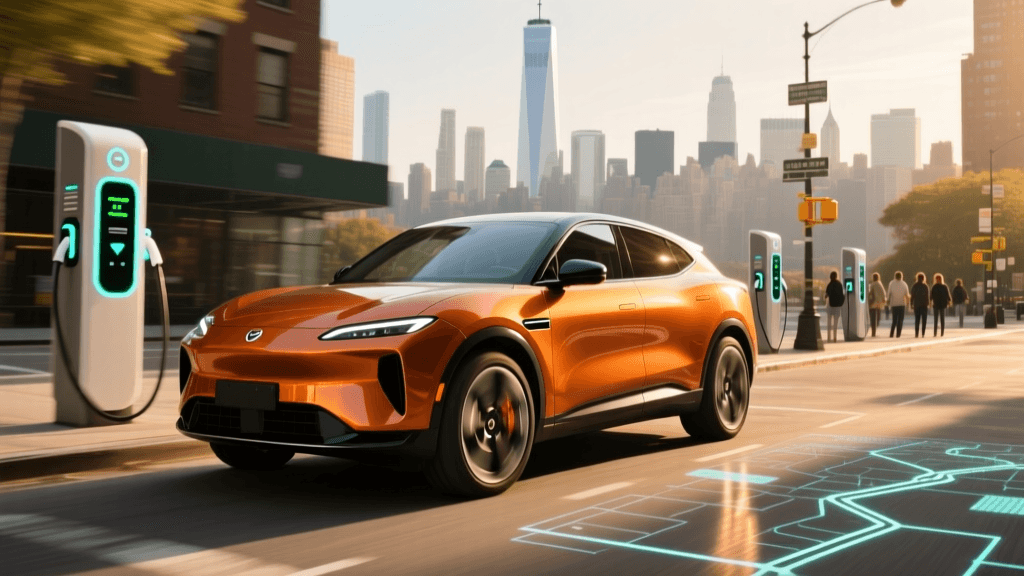
Conversely, New York City presents a unique paradox. Despite having thousands of public ports, its massive population and extreme lack of off-street parking result in a surprisingly low per-capita density. Chicago and Houston reflect the challenges of sprawling, car-centric urban planning, where public charging is heavily concentrated in affluent suburbs or specific retail corridors rather than distributed evenly across residential neighborhoods.
Expert Tips for Navigating High-Density Urban Charging
If you live in a high-density EV hub like San Francisco or Los Angeles, the challenge is rarely finding a charger; it is finding one that is available, functional, and unblocked. Here are the best practices for urban EV veterans.
1. Master Aggregator Apps and Real-Time Filtering
Do not rely solely on your vehicle's native infotainment system for urban charging. Native systems often fail to account for real-time urban obstacles like broken screens, ICEing (internal combustion engine vehicles blocking EV spots), or construction. Download PlugShare and use the community check-in feature. Look for stations with recent positive check-ins (within the last 48 hours). Additionally, use A Better Routeplanner (ABRP) to filter for specific network reliability scores and charger speeds.
2. Leverage the NACS Transition and Adapters
With the industry shifting toward the North American Charging Standard (NACS), urban charging is becoming more unified. If you drive a non-Tesla EV, invest in high-quality adapters. The Lectron NACS to J1772 adapter or the Tesla J1772 Wall Connector adapter can unlock thousands of urban destination chargers previously reserved for Tesla owners. Conversely, Tesla owners should utilize the built-in Magic Dock at urban Superchargers to assist non-Tesla EV drivers, fostering better community relations.
3. Precondition Your Battery for Urban DCFCs
Urban DC Fast Chargers are often situated in dense commercial areas where you want to get in and out quickly. If your EV supports it, always navigate to the charger using your car's native GPS to trigger battery preconditioning. Arriving with a warm battery ensures you hit peak charging speeds immediately, reducing your time spent in crowded urban charging plazas and freeing up the stall for the next driver.
4. Practice Strict Urban Charging Etiquette
In dense cities, charging spots are premium real estate. Follow these golden rules:
- Never camp at a DC Fast Charger: Urban DCFCs are meant for quick top-ups. Once you hit 80% state of charge (SoC), the charging curve slows dramatically. Unplug and move to a standard parking spot.
- Report ICEing and Broken Chargers: Use the PlugShare app to leave a detailed note and a photo if a spot is blocked or broken. This saves fellow EV drivers a wasted trip.
- Utilize Off-Peak Hours: In cities like LA, public chargers at shopping centers are packed on weekends. Schedule your public charging sessions for early Tuesday mornings or late evenings to avoid queues.
Best Practices for Low-Density and Emerging EV Cities
For residents in Houston, Chicago, or outer-borough New York, public charging density requires a more strategic, proactive approach to EV ownership.
1. Secure Workplace or Destination Charging
If your residential neighborhood lacks public Level 2 chargers, your workplace is your best alternative. According to the U.S. Department of Energy, workplace charging is one of the most effective ways to support EV adoption in areas with limited residential infrastructure. Petition your HR department or facilities manager to install Level 2 ChargePoint or Blink stations. Many local utilities offer commercial rebates that cover up to 80% of the installation costs for businesses.
2. Map Out Retail 'Anchor' Chargers
In sprawling cities, public chargers are often anchored to large retail destinations like Whole Foods, Target, or IKEA. Plan your weekly grocery runs or errands around these locations. Networks like EVgo and Electrify America frequently partner with big-box retailers. While you shop for 45 minutes, your vehicle can easily absorb 30-40 miles of range on a Level 2 charger, or fully replenish on a DC fast charger, effectively eliminating the need for dedicated charging trips.
3. Explore Curbside and Streetlight Charging Initiatives
Cities with low off-street parking are beginning to innovate. In New York and parts of London, companies like Republic Services and Ubitricity are retrofitting streetlamps with Level 2 charging sockets. Keep an eye on your local municipal transit authority's website for pilot programs that bring curbside charging to residential streets, allowing you to use your own portable Type 2 or J1772 cable to charge overnight.
The Future of Urban Charging: Federal Funding and NEVI
The urban charging landscape is on the brink of a massive transformation, largely fueled by federal intervention. The Joint Office of Energy and Transportation oversees the National Electric Vehicle Infrastructure (NEVI) Formula Program, which provides $5 billion in funding to states to build out a cohesive national network. While much of the NEVI funding is targeted at highway corridors, subsequent grants and local utility investments are increasingly being directed toward urban charging deserts and disadvantaged communities.
As we look toward the next five years, expect to see a surge in ultra-fast 350kW charging plazas integrated into urban transit hubs, as well as the expansion of automated valet charging and wireless inductive charging pads in premium city parking garages. Until then, mastering the current patchwork of networks, utilizing the right adapters, and practicing flawless charging etiquette will ensure your urban EV experience remains seamless and stress-free.