The EV Charging Dilemma: Plug and Play or Upgrade?
When you take delivery of a new electric vehicle, it almost always comes with a Level 1 charging cable tucked in the trunk. This mobile connector plugs into a standard 120-volt household outlet, offering a seemingly free and effortless way to charge your car at home. However, as the novelty of your new EV wears off and the reality of daily driving sets in, many owners begin to wonder if they should invest in a dedicated Level 2 (240-volt) home charging station.
The decision to stick with Level 1 or upgrade to Level 2 is not just about charging speed; it is a complex calculation involving upfront hardware costs, electrical installation fees, daily convenience, and long-term energy efficiency. In this comprehensive cost and value breakdown, we will compare the daily charging experience of Level 1 versus Level 2 setups, featuring insights from top brands like ChargePoint, Emporia, and Grizzl-E, to help you determine the true return on investment for your specific driving habits.
The Upfront Investment: Hardware and Installation Costs
To evaluate value, we must first look at the initial capital required for both charging levels.
Level 1: The 'Free' Baseline
Level 1 charging utilizes your existing 120V household outlets. If your EV came with a portable charging cord, your hardware cost is zero. If you need to purchase a replacement or a heavy-duty aftermarket Level 1 cord, expect to spend between $150 and $300. The primary caveat here is that your outlet must be in good condition, ideally on a dedicated 15-amp or 20-amp circuit, to prevent tripping breakers or causing electrical fires during multi-day charging sessions.
Level 2: The Premium Upgrade
Upgrading to a Level 2 charger requires purchasing a 240V EVSE (Electric Vehicle Supply Equipment) and hiring a licensed electrician. Hardware costs vary widely based on smart features and cable length:
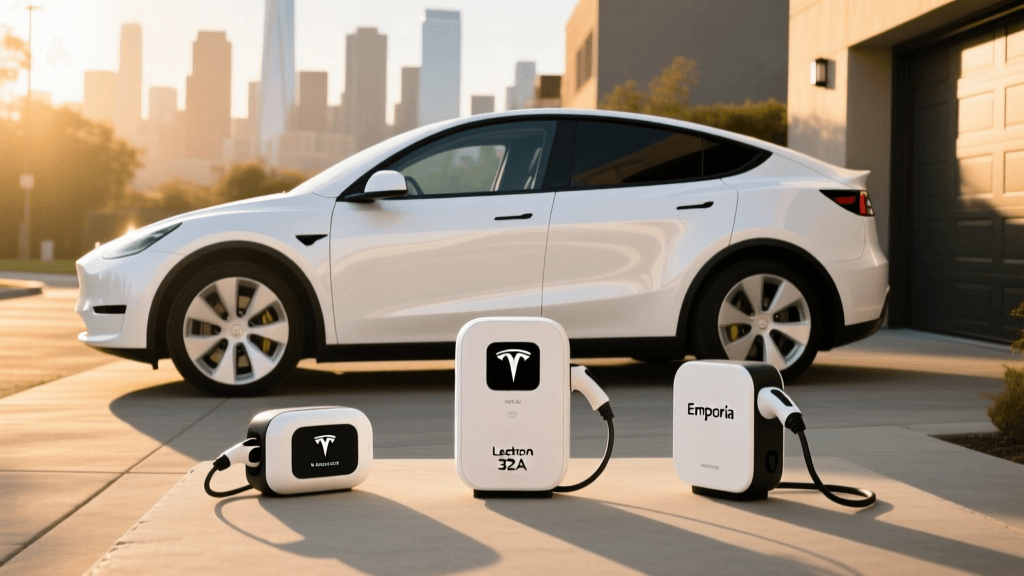
- Emporia Vue Smart EV Charger: Often priced around $399, this is a favorite for budget-conscious buyers who still want robust app-based scheduling and energy monitoring.
- Grizzl-E Smart: Priced around $499, this Canadian-built unit is legendary for its rugged build quality, extreme weather resistance, and excellent value proposition.
- ChargePoint Home Flex: Retailing near $699, this premium option offers a sleek design, a massive 25-foot cable, and seamless integration with smart home ecosystems like Alexa and Apple HomeKit.
According to the Consumer Reports guide on home EV chargers, installation costs can range from $500 to $2,000. If your electrical panel is near the garage and has spare capacity for a 50-amp or 60-amp breaker (to support a NEMA 14-50 outlet or hardwired connection), you will be on the lower end. If you require a main panel upgrade to 200 amps, costs can easily exceed $2,500.
The Daily Time Equation: Miles Per Hour
The most tangible difference between Level 1 and Level 2 is the daily charging experience, measured in miles of range added per hour of charging.
A standard Level 1 charger delivers about 1.4 kW to 1.9 kW of power. In real-world terms, this translates to roughly 3 to 5 miles of range per hour. If you plug in your Chevy Bolt or Tesla Model 3 at 8:00 PM and unplug at 7:00 AM (11 hours), you will gain approximately 33 to 55 miles of range. For a commuter with a 20-mile round trip, this is perfectly adequate. The car is always topped off by morning, and the slow trickle charge is entirely sufficient.
However, the math falls apart if you have a larger battery or a longer commute. Consider the Ford F-150 Lightning or Rivian R1T, which boast massive battery packs exceeding 130 kWh. Recharging a depleted large battery on Level 1 could take upwards of 4 to 5 days of continuous plugging.
Level 2 chargers operate at 240 volts, delivering anywhere from 7.2 kW (30 amps) to 11.5 kW (48 amps). This yields 25 to 45 miles of range per hour. That same 11-hour overnight window on a Level 2 charger will add 275 to 400 miles of range—enough to completely refill almost any EV on the market from empty to full while you sleep. The daily convenience of never having to 'manage' your charging schedule is a massive, albeit intangible, value add.
The Hidden Cost: Charging Efficiency and Overhead Loss
One of the most misunderstood aspects of EV ownership is charging efficiency. Many assume that because a battery holds 75 kWh of energy, it will draw exactly 75 kWh from the grid, regardless of the charging speed. This is false, and it is where Level 2 chargers quietly pay for themselves over time.
When an EV is plugged in, it does not just passively accept electrons. The vehicle's onboard computers wake up, the battery thermal management system (cooling or heating the battery pack) activates, and various control modules remain powered. This is known as 'charging overhead' or 'vampire load.' According to the U.S. Department of Energy's Home EV Charging guidelines, Level 2 charging is generally more efficient than Level 1 charging because the overhead systems run for a significantly shorter period.
If a Level 1 charger takes 15 hours to add 60 miles of range, the car's computers and thermal systems are drawing an extra 100 to 300 watts continuously for those 15 hours. A Level 2 charger might accomplish the exact same task in 2.5 hours, drastically reducing the total overhead energy wasted. Over a year of daily charging, Level 2 can be 10% to 15% more efficient at the wall, saving you money on your monthly utility bill and slightly offsetting the initial hardware cost.
Time-of-Use (TOU) Rates and Smart Charger Value
The financial value of a Level 2 charger skyrockets if your local utility company utilizes Time-of-Use (TOU) pricing. TOU plans offer heavily discounted electricity rates during off-peak hours (typically midnight to 6:00 AM) when grid demand is low.
With a Level 1 charger, you might not have enough time during the off-peak window to fully replenish your daily driving consumption, forcing you to charge during expensive peak afternoon hours. A smart Level 2 charger like the Emporia Vue or ChargePoint Home Flex allows you to plug in when you get home at 6:00 PM, but the charger's internal software will delay the power flow until midnight when rates drop to their lowest. This ability to reliably capture the cheapest electricity on the grid is a massive long-term financial benefit that Level 1 simply cannot match for high-mileage drivers.
Data Breakdown: Level 1 vs. Level 2 Comparison
| Feature | Level 1 (120V Portable) | Level 2 (240V Home Station) |
|---|---|---|
| Hardware Cost | $0 - $300 | $399 - $699 |
| Installation Cost | $0 (Plug into existing outlet) | $500 - $2,000+ |
| Charging Speed | 3 - 5 miles of range / hour | 25 - 45 miles of range / hour |
| Full Charge Time (75kWh) | 45 - 55 hours | 8 - 11 hours |
| Energy Efficiency | Lower (High overhead loss) | Higher (Low overhead loss) |
| TOU Rate Optimization | Poor (May not finish in window) | Excellent (Easily tops off off-peak) |
| Best Suited For | Commuters driving < 30 miles/day | Drivers > 40 miles/day, large EVs |
What About Battery Health and Degradation?
A common myth in the EV community is that slow Level 1 charging is inherently better for battery longevity than Level 2 charging. While it is true that extreme heat and DC Fast Charging (Level 3) can accelerate battery degradation, Level 2 home charging is perfectly safe and falls well within the battery's ideal charging curve.
Modern EV battery management systems (BMS) are incredibly sophisticated. They regulate the temperature and voltage of the cells regardless of whether the power source is 1.4 kW or 11.5 kW. In fact, in extreme cold climates, Level 1 charging can be detrimental because the power output is so low that the battery cannot adequately heat itself, leading to sluggish charging and potential lithium plating. A Level 2 charger provides enough raw power to run the battery's thermal heaters while still delivering a healthy charge to the cells, making it the superior choice for battery health in freezing environments.
The Verdict: Calculating Your Personal ROI
So, is a Level 2 charger worth the cost? The answer depends entirely on your daily mileage and your vehicle's battery size.
Stick with Level 1 if: You drive less than 30 miles a day, you have a smaller battery EV (like a Nissan Leaf or base Chevy Bolt), you park far from your main electrical panel (making installation prohibitively expensive), or you are leasing the vehicle for only a year or two and want to avoid home modification costs.
Upgrade to Level 2 if: Your daily commute exceeds 40 miles, you frequently take weekend road trips and need rapid turnaround times, you own a large-battery vehicle (F-150 Lightning, Tesla Model S/X, Rivian), or your utility offers aggressive TOU rates that require fast, scheduled overnight charging. For the vast majority of homeowners, the $1,000 to $2,500 total investment in a quality Level 2 unit like the Grizzl-E or ChargePoint Home Flex pays for itself in sheer daily convenience, eliminated range anxiety, and long-term energy efficiency savings.