The Rise of the Sub-$300 Portable EV Charger
The transition to electric vehicles has fundamentally changed how we think about refueling. While hardwired home charging stations offer the ultimate convenience, they are not always feasible. For EV owners who rent their homes, live in apartments, frequently travel to rural areas, or simply want a reliable backup for road trips, a high-quality portable EV charger is an absolute necessity. Fortunately, the market has evolved rapidly, and you no longer need to spend upwards of $500 to get a reliable, fast, and safe Level 2 portable charging solution.
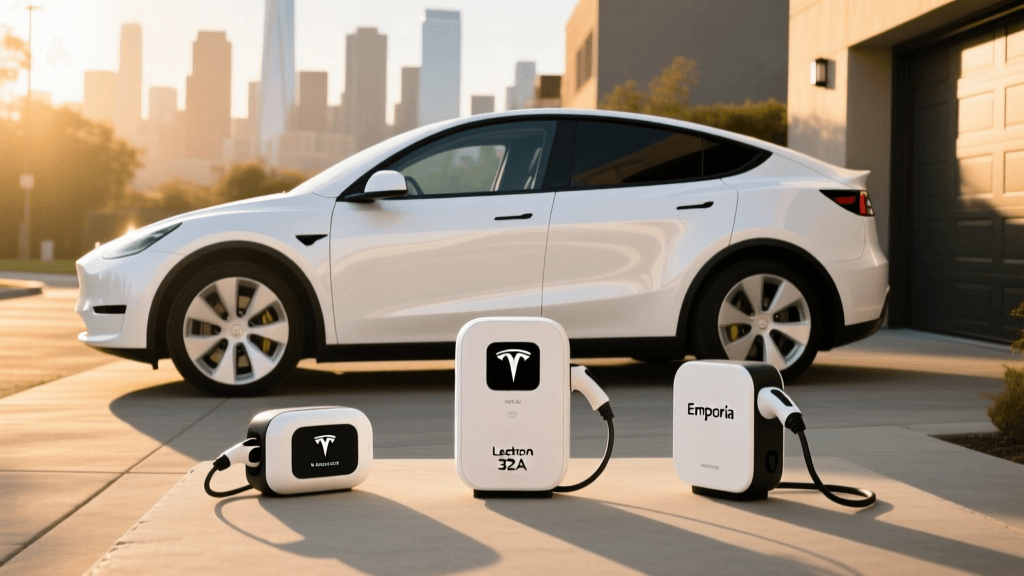
In this head-to-head showdown, we are putting three of the most popular portable EV chargers under $300 to the test. We will evaluate their charging speeds, build quality, smart features, and real-world usability to determine which budget-friendly unit deserves a spot in your trunk.
Meet the Contenders
1. Tesla Mobile Connector (with NEMA 14-50 Adapter)
The Tesla Mobile Connector is the default choice for Tesla owners, but with the proper adapter, it can charge any EV via a J1772 adapter. The base unit retails for around $200. When you add the official NEMA 14-50 adapter (approximately $45), the total package comes in just under $250. It is sleek, lightweight, and integrates seamlessly into the Tesla ecosystem, though it lacks a dedicated app for non-Tesla vehicles.
2. Lectron 32-Amp Portable EV Charger
Priced typically between $239 and $279, the Lectron 32-Amp Portable Charger is a heavy-duty contender aimed at durability. It comes out of the box with a NEMA 14-50 plug, meaning no additional adapter purchases are required. Lectron has built a strong reputation in the budget EV space by offering robust, no-nonsense hardware that prioritizes thick cabling and rugged control boxes over flashy software features.
3. Emporia Portable Level 2 EV Charger
Emporia, widely known for its home energy monitoring systems, offers a portable Level 2 charger that usually hovers right around the $249 to $299 mark. It features a NEMA 14-50 plug and stands out in this price bracket by offering genuine smart-home integration and energy monitoring via the Emporia Vue app, making it a favorite for data-driven EV owners.
Specification Showdown: The Comparison Chart
| Feature | Tesla Mobile Connector | Lectron 32A Portable | Emporia Portable Level 2 |
|---|---|---|---|
| Estimated Price (w/ 14-50) | $245 | $259 | $279 |
| Max Amperage (240V) | 32 Amps | 32 Amps | 32 Amps |
| Max Power Output | 7.68 kW | 7.68 kW | 7.68 kW |
| Cable Length | 20 Feet | 21 Feet | 20 Feet |
| Weather Resistance | IP67 (Control Box) | IP66 | IP65 |
| Smart App Integration | Tesla App (Tesla cars only) | None (Basic LED indicators) | Emporia Vue App (Full monitoring) |
Charging Speed and Real-World Efficiency
When operating on a standard 120V household outlet (NEMA 5-15), all three chargers will default to Level 1 charging, pulling about 12 amps. This yields roughly 1.4 kW of power, translating to about 3 to 5 miles of range per hour of charging. While sufficient for plug-in hybrids or overnight top-offs for low-mileage commuters, it is inadequate for modern long-range EVs.
The true showdown happens at 240V using a NEMA 14-50 outlet. According to the Alternative Fuels Data Center, Level 2 charging is the most practical solution for daily EV replenishment, offering significantly faster turnaround times than standard wall outlets. All three contenders max out at 32 amps on a 240V circuit, delivering 7.68 kW of continuous power. This requires a 40-amp dedicated circuit in your electrical panel to comply with the National Electrical Code (NEC) continuous load rules.
At 7.68 kW, you can expect to add approximately 25 to 30 miles of range per hour, depending on your vehicle's efficiency. For a Tesla Model 3 Long Range or a Hyundai Ioniq 5, a 10-hour overnight session on any of these portable units will easily replenish 250+ miles of range. Because the amperage and voltage are identical across the board, this category results in a three-way tie. The limiting factor will always be your vehicle's onboard charger and the electrical infrastructure of the building you are plugging into, not the portable unit itself.
Build Quality, Ergonomics, and Weather Resistance
Portable chargers live hard lives. They are tossed into trunks, dragged across dirty garage floors, and exposed to rain, snow, and UV radiation. Build quality is where these three units begin to diverge.
The Tesla Mobile Connector is undeniably the most aesthetically pleasing. Its control box is compact, lightweight, and features an IP67 rating, meaning it can withstand temporary submersion in water. However, the cable itself is relatively thin. While this makes it easy to coil and store, it can become quite stiff in freezing winter temperatures, making it frustrating to unspool in sub-zero weather.
The Lectron 32A takes the opposite approach. It is built like a tank. The cable is noticeably thicker and heavier, which provides excellent durability and resistance to being run over or crushed. It carries an IP66 rating, protecting it against powerful water jets. The trade-off is weight and stiffness; the Lectron is bulkier to pack and requires more physical effort to manipulate in cold climates. However, the J1772 connector grip is highly ergonomic and features a satisfying, secure latch mechanism.
The Emporia Portable strikes a middle ground. The cable is more flexible than the Lectron's but feels slightly more robust than the Tesla's. Rated at IP65, it is perfectly safe for outdoor use in heavy rain. The control box features a clear, easy-to-read LED status ring that is visible even in direct sunlight, a small but highly appreciated ergonomic detail.
Smart Features and Ecosystem Integration
If you are a data nerd or want to track your charging costs, the smart features of your EVSE (Electric Vehicle Supply Equipment) matter. The Emporia Portable is the undisputed champion in this category. By connecting to the Emporia Vue app via Wi-Fi, you can schedule charging sessions to take advantage of off-peak utility rates, monitor exact energy consumption, and even integrate the charger with Emporia's home energy panels to charge exclusively using excess solar power. For under $300, this level of smart-home integration is virtually unheard of.
The Tesla Mobile Connector relies entirely on the vehicle's native software. If you drive a Tesla, the car's app handles scheduling, charging limits, and cost tracking. It is a seamless experience, but if you use a third-party J1772 adapter to charge a Ford or Rivian, the Mobile Connector becomes a "dumb" brick with zero software features.
The Lectron is entirely analog. It features a simple LED display on the control box that indicates power status, charging status, and fault codes. While some users prefer the simplicity and reliability of a unit with no Wi-Fi chips to fail, it offers no scheduling or energy tracking capabilities.
Safety Certifications and Peace of Mind
When dealing with high-voltage, high-amperage electricity, safety certifications are non-negotiable. The U.S. Department of Energy strongly recommends using only EV chargers that have been tested and certified by a nationally recognized testing laboratory. All three units in this showdown meet rigorous safety standards. Tesla and Emporia units are generally UL (Underwriters Laboratories) listed, ensuring they meet strict North American safety requirements for electrical equipment. Lectron units are typically ETL listed, which is an Intertek certification that tests to the exact same UL standards. Never compromise on safety by purchasing unbranded, uncertified chargers from overseas marketplaces to save a few dollars; the fire risk is simply not worth it.
The Final Verdict: Which Budget Portable Charger Wins?
Choosing the best portable EV charger under $300 ultimately depends on your specific lifestyle, vehicle, and charging habits.
Choose the Tesla Mobile Connector if: You are a dedicated Tesla owner who values a lightweight, compact design and seamless integration with your vehicle's native app. It is the most elegant solution, provided you are willing to purchase the NEMA 14-50 adapter separately.
Choose the Lectron 32A Portable if: You are a frequent road-tripper, live in an area with harsh winters, or prioritize sheer physical durability. Its thick, rugged cabling and heavy-duty control box make it the ultimate survival tool for EV owners who frequently plug into sketchy or worn-out public RV park outlets.
Choose the Emporia Portable Level 2 if: You want the best overall value and care about energy management. The inclusion of Wi-Fi scheduling, solar integration, and detailed energy monitoring via the Emporia app elevates this charger far beyond its price point. It is the smartest, most versatile option for the tech-savvy EV owner on a budget.
Ultimately, all three chargers deliver identical 7.68 kW Level 2 charging speeds. By selecting the one that best aligns with your durability needs and software preferences, you can enjoy fast, reliable, and safe EV charging anywhere a 240V outlet is available, all without breaking the $300 barrier.