Introduction to the Emporia Energy Ecosystem
As electric vehicle adoption accelerates, the intersection of home energy management and EV charging has become a critical focal point for early adopters and solar enthusiasts. The Emporia VUE Smart Panel (often referred to as the Emporia Vue 2 or Vue 3 energy monitor) paired with the Emporia Level 2 EV Charger represents one of the most cohesive, cost-effective, and data-rich ecosystems available to consumers today. Unlike standalone chargers that operate blindly, the Emporia system communicates in real-time, allowing homeowners to track energy consumption at the circuit level, automate solar-to-EV charging, and prevent main breaker trips through intelligent load shedding.
In this comprehensive review and expert guide, we will explore the best practices for installing, configuring, and optimizing the Emporia VUE Smart Panel alongside their Level 2 EV charger. Whether you are looking to maximize your rooftop solar investment or simply want granular control over your Time-of-Use (TOU) utility rates, this guide provides the actionable technical advice you need.
The Core Advantage: True Solar-to-EV Integration
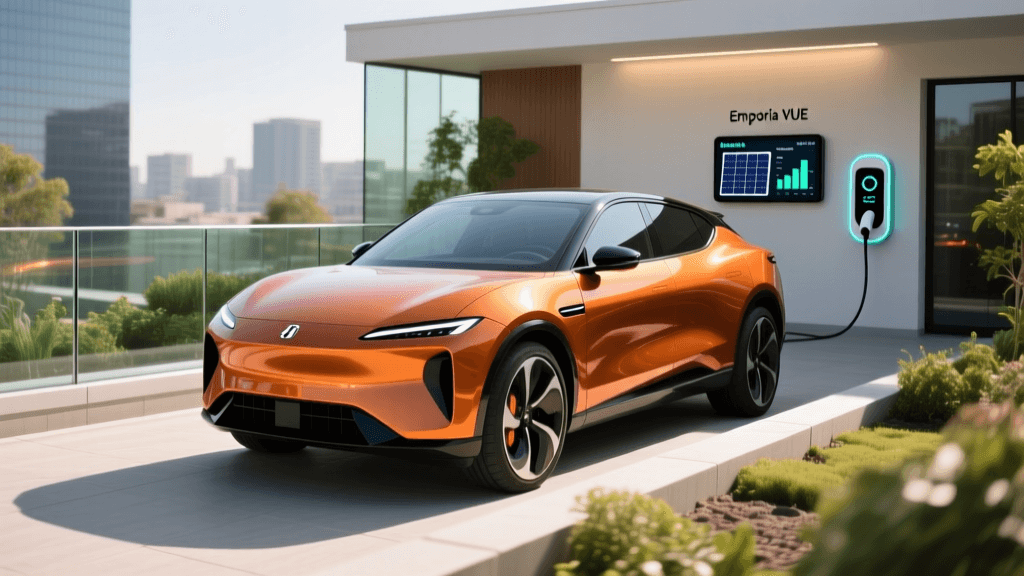
The most compelling reason to integrate the Emporia VUE Smart Panel with the Emporia Level 2 EV Charger is the 'Charge on Excess Solar' feature. Standard EV chargers pull a fixed amperage from your home's electrical panel, regardless of whether that power is coming from your solar array or the utility grid. The Emporia ecosystem changes this dynamic entirely.
By monitoring your home's main electrical lines and your solar inverter's production simultaneously, the VUE Smart Panel calculates your net energy export in real-time. If your solar panels are generating 3 kW of excess power that would normally be sent back to the grid (often at a low utility buyback rate), the Emporia app dynamically adjusts the EV charger's amperage to consume exactly that excess solar. According to the U.S. Department of Energy, pairing solar photovoltaics with electric vehicles is one of the most effective ways to reduce household carbon footprints and maximize the financial return of your solar investment.
Expert Installation Best Practices
Hardware integration is only as reliable as its physical installation. The Emporia VUE requires the installation of Current Transformer (CT) clamps inside your main electrical panel. Because this involves working near live, high-amperage service wires, hiring a licensed electrician is mandatory. However, as an informed homeowner, you should ensure your installer follows these expert best practices:
- CT Clamp Orientation: The most common cause of inaccurate energy data in the Emporia app is backward CT clamps. The 'dot' or arrow on each CT clamp must face the direction of current flow (typically pointing toward the main breaker for the mains, and toward the load for branch circuits).
- Dedicated 60-Amp Circuit: The Emporia Level 2 EV charger is capable of delivering up to 48 Amps of continuous current. According to the National Electrical Code (NEC) Article 625 and guidelines from the Alternative Fuels Data Center (AFDC), EV chargers are considered continuous loads. Therefore, a 48A charger requires a dedicated 60-Amp breaker. Ensure your electrician installs a 60A breaker and uses appropriately rated copper wire (typically 4 AWG or 6 AWG THHN, depending on conduit fill and temperature ratings).
- Hardwired vs. NEMA 14-50: While the Emporia charger can be plugged into a NEMA 14-50 outlet, hardwiring is the expert recommendation. Hardwiring eliminates the points of failure associated with receptacle wear, thermal expansion, and loose connections, ensuring safer, uninterrupted charging over the lifespan of the vehicle.
- Wi-Fi Connectivity: The Emporia VUE operates exclusively on a 2.4 GHz Wi-Fi network. Ensure your router provides a strong 2.4 GHz signal at the electrical panel. If the panel is located in a basement or detached garage, installing a Wi-Fi extender or a dedicated mesh node is highly recommended to prevent data dropouts.
Configuring the App for Maximum Efficiency
Once the hardware is installed and the CT clamps are verified, the software configuration is where you unlock the system's true potential. To optimize your setup, follow these configuration steps in the Emporia app:
- Name and Group Circuits: Take the time to accurately label every individual circuit in the app. Group related circuits (e.g., 'Kitchen Appliances', 'HVAC') to simplify your dashboard.
- Enable Solar Production Tracking: Ensure your solar inverter's CT clamps are correctly assigned to the 'Solar' category in the app. This is the prerequisite for the excess solar charging algorithm.
- Activate 'Charge on Excess Solar': Navigate to the EV Charger settings in the app and toggle on the solar charging feature. You can set a minimum amperage threshold (usually 6 Amps) to ensure the charger's contactor doesn't rapidly cycle on and off during passing clouds, which can degrade the vehicle's onboard charger.
- Set TOU Schedules: If you live in an area with Time-of-Use rates, configure the charger to pull maximum grid power only during off-peak hours (e.g., midnight to 5 AM) when electricity rates are at their lowest.
Smart Panel Comparison Chart
How does the Emporia VUE stack up against other smart energy monitors when integrated with an EV charger? Below is a comparison of the top consumer-grade energy management systems.
| Feature | Emporia VUE 2 / Smart Panel | Sense Flex | SPAN Smart Panel |
|---|---|---|---|
| Individual Circuit Monitoring | Yes (up to 16 individual CTs) | Yes (up to 8 individual CTs) | Yes (every single circuit) |
| Native EV Charger Integration | Yes (Seamless) | Yes (via Sense EV charger) | Yes (via API integrations) |
| Solar-to-EV Diversion | Yes (Dynamic Amperage) | Limited (Relies on ecosystem) | Yes (Advanced routing) |
| Approximate Hardware Cost | $150 - $300 | $300 - $400 | $1,500 - $2,500+ |
| Best For | Value & Solar Integration | AI Appliance Detection | Total Home Replacement |
As the table illustrates, the Emporia ecosystem offers the most aggressive price-to-performance ratio for homeowners specifically looking to integrate solar diversion with EV charging, without the massive upfront cost of a full SPAN panel replacement.
Load Management and Preventing Breaker Trips
Many older homes have 100-Amp or 125-Amp main service panels. Adding a 60-Amp EV charger circuit can push the home's peak demand beyond the main breaker's capacity, especially if the EV charges simultaneously with the electric oven, HVAC system, and electric dryer. The Emporia VUE Smart Panel acts as a digital guardian against this scenario.
Through the app's load management settings, you can establish a 'soft limit' for your main panel. For example, if you have a 100-Amp main panel, you can instruct the Emporia system to throttle or pause the EV charger if the home's total real-time consumption exceeds 80 Amps. This intelligent load shedding ensures that your EV charges efficiently without ever tripping the main utility breaker, saving you from inconvenient power outages and potential utility reset fees.
Financial ROI and Time-of-Use Optimization
The financial return on investment for the Emporia ecosystem is multifaceted. First, by utilizing the 'Charge on Excess Solar' feature, you are effectively fueling your vehicle for free, bypassing the grid entirely during peak daylight hours. Second, by leveraging the app's scheduling tools, you can exploit utility Time-of-Use (TOU) rate structures.
For example, if your utility charges $0.35 per kWh during peak evening hours but only $0.09 per kWh during super-off-peak hours (12 AM to 5 AM), the Emporia charger can be scheduled to exclusively draw grid power during the cheapest window. When combined with the granular cost-tracking features of the VUE Smart Panel, the app will calculate exactly how much each mile driven costs you, factoring in your specific utility rates and solar production. For most users, the hardware cost of the Emporia VUE and charger is recouped within 18 to 24 months through utility savings and optimized solar self-consumption.
Final Verdict & Expert Recommendations
The integration of the Emporia VUE Smart Panel with the Emporia Level 2 EV Charger is a masterclass in accessible home energy management. While the physical installation requires strict adherence to NEC codes and careful CT clamp placement, the software experience is intuitive and deeply rewarding. For homeowners with rooftop solar, the dynamic solar-diversion algorithm is arguably the best in its class, offering a level of control that previously required expensive, custom third-party controllers. By following the expert installation and configuration tips outlined above, you can transform your home into a highly efficient, self-regulating microgrid that powers your life and your vehicle with maximum financial and environmental efficiency.