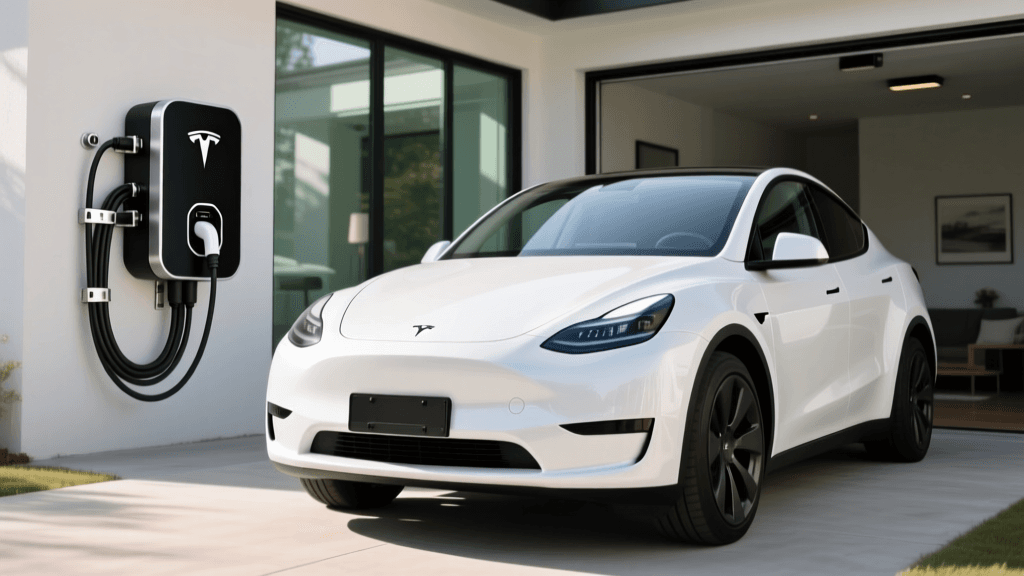
Introduction: Beyond Basic Level 2 Charging
As electric vehicle adoption accelerates, the conversation around home charging has shifted from simply "getting it installed" to optimizing how, when, and how much we pay for our electrons. The Emporia Level 2 Smart EV Charger has emerged as a formidable contender in this space, primarily because it is not just a charging cable with a Wi-Fi chip; it is an integrated component of a broader home energy management ecosystem. For EV owners who also have solar panels or are subject to aggressive Time-of-Use (TOU) utility rates, the value proposition of the Emporia charger extends far beyond its upfront hardware cost.
In this comprehensive cost and value breakdown, we will dissect the true price of owning the Emporia Level 2 EV charger. We will evaluate the hardware costs, installation variables, the financial impact of its granular energy monitoring, and how it stacks up against legacy competitors like ChargePoint and Wallbox. According to the U.S. Department of Energy, home charging accounts for more than 80% of all EV charging events, making the efficiency and cost-management of your Level 2 setup the most critical financial decision you will make as an EV owner.
Upfront Costs: Hardware and Installation Breakdown
When budgeting for a smart home EV charger, the sticker price of the unit is only the tip of the iceberg. To understand the true cost of the Emporia Level 2 charger, we must break down the hardware, the electrical infrastructure requirements, and the labor.
Hardware Costs
The Emporia Level 2 Smart EV Charger typically retails between $599 and $699, depending on the cable length (18-foot vs. 24-foot) and ongoing promotional discounts. Compared to the ChargePoint Home Flex (often hovering around $699) or the Wallbox Pulsar Plus (around $650), the Emporia unit is priced competitively. However, the real hardware value lies in what is included in the box: the charger is inherently designed to communicate with the Emporia Vue energy monitoring system, which is sometimes bundled or available at a steep discount for existing Emporia users.
Installation and Electrical Infrastructure
Installation costs vary wildly based on your home's existing electrical panel. The Emporia charger supports up to 48 amps of continuous charging, which requires a 60-amp dedicated circuit.
- Hardwired vs. NEMA 14-50: While the Emporia charger can be configured with a NEMA 14-50 plug, electrical codes in many jurisdictions now require GFCI breakers for receptacles, which can cause nuisance tripping with EV chargers. Hardwiring the Emporia unit is highly recommended for safety and to achieve the full 48-amp output without the 40-amp continuous limitation of a 50-amp receptacle.
- Labor Costs: If your electrical panel is near your garage and has the capacity for a new 60-amp double-pole breaker, expect to pay between $500 and $800 for a licensed electrician. If you require a panel upgrade (e.g., moving from 100A to 200A service) or a sub-panel installation, costs can easily escalate to $1,500 - $3,000.
Therefore, the total upfront investment for the Emporia ecosystem (charger plus standard hardwired installation) generally lands between $1,100 and $1,500 before any local utility rebates or federal tax credits are applied.
The True Value of Integrated Energy Monitoring
Most smart chargers on the market offer basic app-based scheduling and rudimentary kWh tracking. The Emporia charger differentiates itself through its deep integration with the Emporia Vue home energy monitor. This is where the "Cost & Value" equation shifts dramatically in the consumer's favor.
Granular kWh Tracking and Cost Allocation
By linking the charger to the Vue system, you are not just seeing that your car used 40 kWh last night; you are seeing exactly how that draw impacted your home's overall load profile. The Emporia app allows you to assign specific utility rate plans, including complex TOU tiers. According to data from the U.S. Energy Information Administration (EIA), residential electricity rates vary drastically by state and time of day. The Emporia app calculates your exact charging cost down to the penny, factoring in your specific utility's peak, off-peak, and super-off-peak rates, allowing you to audit your monthly EV fuel costs with absolute precision.
Solar Diversion and Excess Charging
For homeowners with rooftop solar, the Emporia charger offers a feature that justifies its price tag entirely: Solar Diversion. Instead of sending excess solar production back to the grid for a meager net-metering credit, the Emporia system can dynamically adjust the charging amperage to match your home's real-time excess solar generation. If a cloud passes over, the charger throttles down; when the sun peaks, it ramps up to 48 amps. This ensures you are fueling your vehicle with 100% free, self-generated electrons, radically accelerating the ROI of both your solar array and your EV.
Emporia Level 2 vs. Competitors: A Cost-Value Comparison
How does the Emporia stack up against the market leaders when we evaluate features directly tied to cost management? Below is a structured comparison of the top smart chargers on the market.
| Feature | Emporia Level 2 Smart | ChargePoint Home Flex | Wallbox Pulsar Plus |
|---|---|---|---|
| Base MSRP | ~$599 | ~$699 | ~$650 |
| Max Amperage | 48A (Hardwired) | 50A (Hardwired) | 48A (Hardwired) |
| Panel-Level Monitoring | Yes (via Emporia Vue) | No | No (Requires Power Meter) |
| Native Solar Diversion | Yes (Dynamic) | No | Yes (with Power Meter) |
| App Cost Tracking | Advanced (TOU integration) | Basic | Basic |
| Cable Length Options | 18 ft or 24 ft | 18 ft or 23 ft | 13 ft or 25 ft |
While the ChargePoint Home Flex offers a slightly higher maximum amperage (50A), very few residential electrical panels can safely support the 62.5-amp continuous draw required for a 50-amp circuit without a massive service upgrade. The Emporia's 48-amp limit is the practical sweet spot for modern 200-amp residential panels, making its slightly lower hardware cost and superior native solar integration a better value for 95% of homeowners.
Calculating Your ROI: Utility Rates and Efficiency
To determine if the Emporia charger pays for itself, we must look at charging efficiency and utility rate optimization. The U.S. Environmental Protection Agency (EPA) notes that EV charging efficiency can be impacted by thermal management and voltage drops. The Emporia charger's high-quality internal relays and thick copper cabling minimize voltage drop, ensuring that the kWh you pay for actually make it into your battery.
The Time-of-Use (TOU) Arbitrage
Consider a scenario where your utility charges $0.35/kWh during peak hours (4 PM - 9 PM) and $0.09/kWh during super-off-peak hours (12 AM - 5 AM).
- Dumb Charger (Plug in at 5 PM): Charging a 75 kWh battery costs $26.25.
- Emporia Smart Scheduled Charging (1 AM): Charging that same battery costs $6.75.
If you drive an average of 1,000 miles a month, requiring roughly 300 kWh of energy, the difference between peak and off-peak charging is roughly $78 per month, or $936 per year. The Emporia charger's automated scheduling and TOU rate integration effectively pay for the hardware unit in less than eight months. When you add the value of solar diversion, the ROI timeline shrinks even further.
Pros and Cons of the Emporia Ecosystem
No product is without its compromises. Here is a structured look at the advantages and drawbacks of choosing the Emporia Level 2 charger from a value perspective.
Pros
- Unmatched Energy Visibility: The integration with the Vue monitor provides whole-home context, preventing blown main breakers by managing load.
- True Solar Diversion: Dynamically charges using only excess solar, eliminating fuel costs for sunny climates.
- Aggressive Pricing: Frequently available below MSRP during holiday sales or via utility partner programs.
- Compact & Weatherproof: The NEMA 4 indoor/outdoor rating and compact footprint make it ideal for tight garages or exterior walls.
Cons
- Ecosystem Dependency: To unlock the best features (like solar diversion and load balancing), you must also purchase and install the Emporia Vue panel monitor.
- App Learning Curve: The Emporia app is incredibly data-rich, which can be overwhelming for users who just want a simple "plug and charge" experience.
- Cable Stiffness: The 24-foot heavy-duty cable, while durable, is notably stiffer than the Wallbox equivalent, making it slightly harder to coil in freezing temperatures.
Final Verdict: Is the Emporia Charger Worth the Investment?
If you are simply looking for a basic Wi-Fi-enabled charger to schedule off-peak charging, the Emporia Level 2 might be overkill, and a simpler unit like the Wallbox Pulsar Plus could suffice. However, if you view your EV as a component of your home's broader energy strategy, the Emporia Level 2 Smart EV Charger is arguably the best value on the market today.
The upfront cost of the charger—and the potential addition of the Vue energy monitor—is quickly offset by the granular control it provides over TOU rate scheduling and solar diversion. By ensuring you never pay peak utility rates for your EV fuel, and by capturing every stray watt of solar production, the Emporia ecosystem transforms your EV from a monthly utility burden into a masterclass in home energy efficiency. For the data-driven EV owner, the Emporia Level 2 is not just an expense; it is a high-yield investment in your home's energy future.